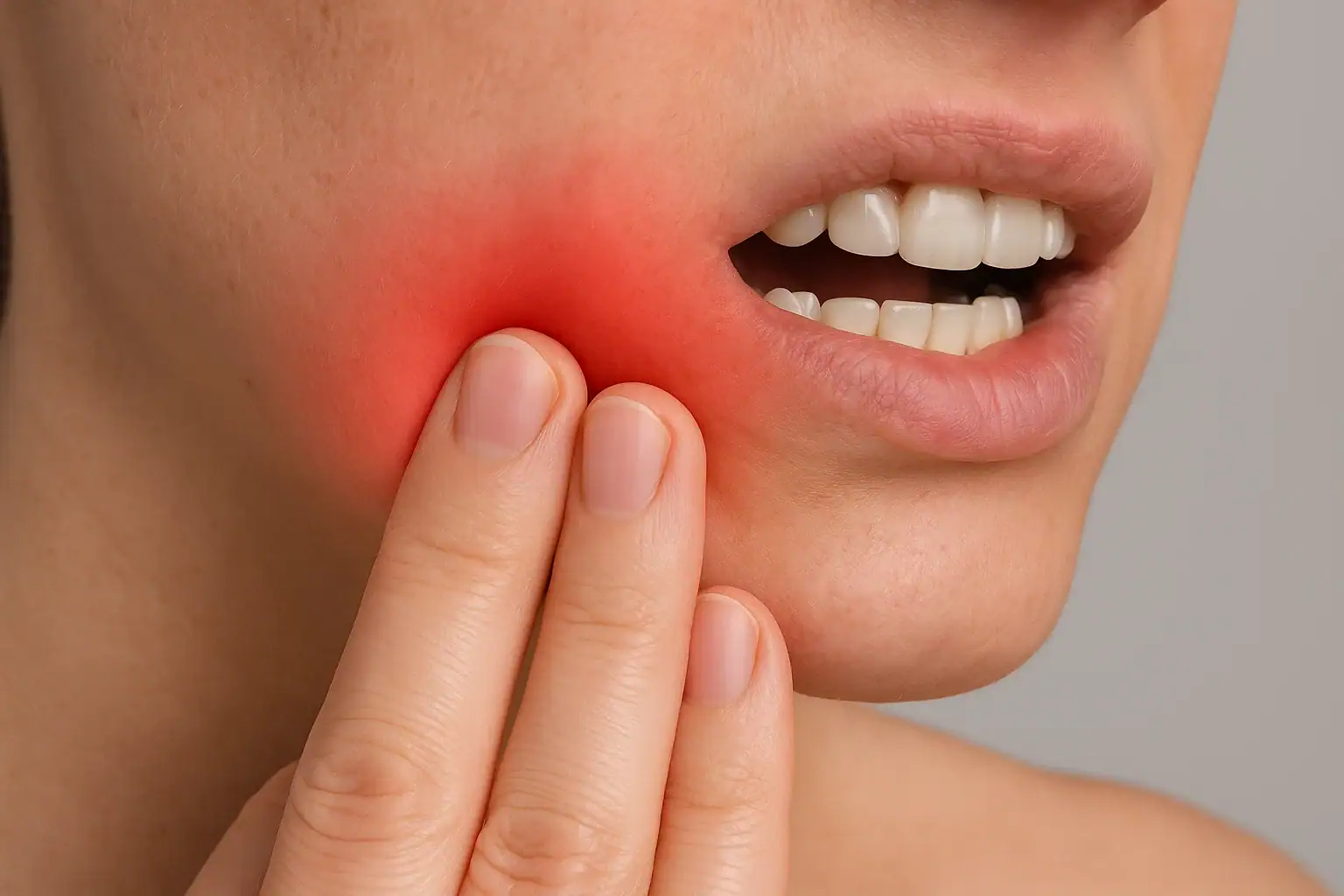
Mild pain or tenderness after root canal treatment is common, particularly during the first two or three days, and it should gradually improve. A systematic review of 72 studies found that pain was reported by 81% of patients before treatment, 40% 24 hours afterwards and 11% after one week (PubMed 21419285). Pain that becomes stronger, affects sleep, or occurs with swelling is not a typical recovery pattern. Contact the dentists at Mosdent if symptoms are worsening or do not settle.
Mild pain after a root canal is usually expected
Once the local anaesthetic wears off, the treated tooth may feel tender or sore. This does not usually mean that something has gone wrong. During root canal treatment, inflamed or infected tissue is removed from inside the tooth, but the tissues around the root can still be irritated by the procedure. The thin connective tissue that holds the root in the jawbone may need several days to settle.
Research gives a useful guide to this recovery pattern. A systematic review of 72 studies found that pain was reported by 81% of patients before treatment, 40% 24 hours afterwards, and 11% after one week. Average pain intensity also fell, from 54 out of 100 before treatment to 24 after 24 hours and 5 after one week (PubMed 21419285). In other words, root canal treatment is intended to remove the source of the original pain. Some tenderness immediately afterwards can reflect healing rather than continuing disease.
The direction of the pain matters more than its mere presence. Mild discomfort that can be controlled with the pain relief recommended by the dentists at Mosdent and becomes less noticeable each day is generally reassuring. Pain that steadily increases, wakes you at night, or is accompanied by swelling should be reported to the clinic.
Where does the pain come from?
After root canal treatment, the nerve tissue inside the tooth has been removed. The sensation of a painful tooth therefore often comes from the tissues around the root. These tissues may have been affected by the original inflammation and by the cleaning process. Tenderness when biting or pressing on the tooth is common during the first few days and should gradually reduce.
A second possible cause is the bite. If a new filling makes the tooth contact the opposing tooth too early, it may receive extra pressure every time you close your mouth. This can cause ongoing pain when biting. It may not settle simply by waiting, but the dentists at Mosdent can often identify and adjust the bite during a check-up.
In a tooth with several roots, inflammation may remain in nearby tissues. If treatment is being completed over more than one appointment, medication placed inside the canals may also be part of the treatment plan. The treating team should explain what to expect in these circumstances.
For information about the procedure itself, see our root canal treatment guide.
What to expect during the first week
Recovery differs from person to person, but the research provides a general timeline.
First 24 hours. Tenderness is often most noticeable after the anaesthetic has worn off. You may feel pressure when chewing, soreness when touching the tooth, or mild throbbing. In the systematic review, about four in ten patients reported some pain at this stage, with average intensity at 24 out of 100 (PubMed 21419285).
Days two and three. Discomfort should begin to ease. Choosing softer foods and chewing on the opposite side can make eating more comfortable. If there is a temporary filling, avoid sticky foods that could dislodge it.
Days four to seven. For many patients, pain becomes minor or disappears. After one week, 11% of patients in the review still reported pain, and average intensity was 5 out of 100 (PubMed 21419285).
After one week. An occasional, mild reminder can still occur if it is improving. Pain that still requires regular pain relief, prevents normal chewing, or starts to worsen should be assessed.
These are guideposts rather than strict deadlines. A downward trend is usually reassuring. A pain pattern that turns upwards warrants a call to the clinic.
Pressure, throbbing, and sensitivity to temperature
The type of pain can offer useful information, although it cannot establish the cause by itself.
Pain when biting or applying pressure is common in the early days. It usually reflects irritation in the tissues around the root. The feeling that you cannot bite on the tooth may simply be a more pronounced version of this early tenderness, especially if it is improving during the first two or three days.
Mild throbbing during the first day or two can also occur. Throbbing that becomes stronger, disturbs sleep, or develops alongside swelling is different and should be reported.
Hot or cold sensitivity is not usually expected from a fully treated tooth because there should no longer be nerve tissue inside it to detect temperature. If hot or cold still triggers pain, the sensation may be coming from a neighbouring tooth, or from an untreated canal area in a tooth with complex root anatomy. It is difficult to identify the source at home. Note which area hurts, what triggers it, and how long the sensation lasts, then tell the dentists at Mosdent.
Pain can also feel as though it is coming from another tooth, the jaw, or the ear on the same side. This is called referred pain and can occur with dental pain, particularly during the early recovery period.
Flare-ups and when to contact the clinic
A sudden increase in pain after treatment, often with swelling, is known as a flare-up. A meta-analysis of six studies involving 982 patients found flare-ups in 8.4% of cases (PubMed 18793915). It is uncommon, but it can be alarming when it happens.
A flare-up does not automatically mean that treatment has failed. Depending on the findings, management may involve further cleaning of the canals, drainage, or a change in medication. However, increasing pain and swelling should not be managed without professional advice. Contact the clinic promptly.
Antibiotics are not a routine treatment for post-treatment pain. A meta-analysis of randomised controlled trials found that antibiotics did not change pain intensity 24 hours after treatment in symptomatic teeth with loss of vitality, and preventive antibiotics did not reduce flare-up rates (PubMed 35165442). The dentists at Mosdent decide whether antibiotics are appropriate when there are signs such as swelling, fever, or a spreading infection. Avoiding unneeded courses also protects the mouth itself: antibiotic use is one of the common risk factors for oral thrush, a Candida infection that often causes burning and an altered sense of taste (PubMed 38530258). Avoiding unneeded courses also protects the mouth itself: antibiotic use is one of the common risk factors for oral thrush, a Candida infection that often causes burning and an altered sense of taste (PubMed 38530258).
When to contact the clinic
Contact the dentists at Mosdent if you notice:
- Pain that increases after two or three days instead of improving
- Growing swelling in the gum or face
- Fever, feeling unwell, or a bad taste in the mouth
- Throbbing that wakes you despite the recommended pain relief
- A tooth that feels noticeably higher, with an altered bite
- A temporary filling that has fallen out or broken
A review may involve examining the tooth and surrounding tissues, checking the bite, and taking a small X-ray if needed. The outcome may simply be reassurance, or it may be a small adjustment or other intervention.
If pain continues for months
A small minority of patients have pain beyond the expected healing period. A meta-analysis of 26 studies involving 5,777 teeth found pain in 5.3% of cases at six months or later after root canal treatment (PubMed 20113779). Persistent pain is not considered routine healing and needs an individual assessment.
Possible explanations include a canal that was not fully treated, complex anatomy, a crack in the tooth, or pain that does not originate from the tooth. Micro-endodontics is used when dentists need enhanced magnification to investigate fine cracks or missed canals. If retreatment is considered, our guide to failed root canal treatment and retreatment explains the main options.
A permanent crown or other restoration should also not be postponed once the tooth is ready. A study identified receiving a crown after root canal treatment as one of four factors associated with the tooth remaining in the mouth longer term (PubMed 20158529).
Cost factors and practical ways to reduce discomfort
For international patients, the cost of root canal treatment depends on factors such as which tooth is involved, the number and shape of its canals, whether treatment requires more than one appointment, and whether a temporary or permanent restoration is needed afterwards. A difficult retreatment, a missed canal, a crack investigation, or microsurgical care may involve a different level of clinical expertise and equipment.
The total treatment plan may also depend on diagnostic imaging, the condition of the existing filling or crown, and whether additional procedures are needed to protect the tooth. Ask for a written plan that separates the root canal procedure from any restoration or follow-up care. You can review our transparent price list before contacting Mosdent.
Practical ways to reduce discomfort
Follow the medication instructions given by the dentists at Mosdent, including the recommended timing and dose. Do not increase the dose because pain has become stronger. During the first days, avoid very hard or very hot foods on the treated side. If you have a temporary filling, avoid sticky foods and keep the area clean. Continue brushing carefully around the tooth rather than avoiding it completely.
If the temporary filling falls out, contact the clinic even if there is no pain. Do not extend the gap between appointments without advice. As tenderness improves, gradually return to normal chewing. If you still cannot use the tooth, mention this during a review.
In summary, some pain after root canal treatment is normal, but it should generally decrease. Improving tenderness is usually part of recovery. Increasing pain, swelling, fever, or a filling that has come out should prompt you to contact the clinic.
Let's plan the right treatment together.
Free Assessment→- 1.Pak JG, White SN. Pain prevalence and severity before, during, and after root canal treatment: a systematic review. J Endod 2011;37:429-38. PubMed 21419285
- 2.Nixdorf DR, Moana-Filho EJ, Law AS, McGuire LA, Hodges JS, John MT. Frequency of persistent tooth pain after root canal therapy: a systematic review and meta-analysis. J Endod 2010;36:224-30. PubMed 20113779
- 3.Tsesis I, Faivishevsky V, Fuss Z, Zukerman O. Flare-ups after endodontic treatment: a meta-analysis of literature. J Endod 2008;34:1177-81. PubMed 18793915
- 4.Milani AS, Froughreyhani M, Taghiloo H, Nouroloyouni A, Jafarabadi MA. The effect of antibiotic use on endodontic post-operative pain and flare-up rate: a systematic review with meta-analysis. Evid Based Dent 2022. PubMed 35165442
- 5.Ng YL, Mann V, Gulabivala K. Tooth survival following non-surgical root canal treatment: a systematic review of the literature. Int Endod J 2010;43:171-89. PubMed 20158529
- 6.Stoopler ET, Villa A, Bindakhil M, Díaz DLO, Sollecito TP. Common Oral Conditions: A Review. JAMA. 2024;331(12):1045-1054. PubMed 38530258