A root canal is usually considered first when the natural tooth can be predictably restored. An implant replaces a tooth that has been lost or cannot be saved. Evidence shows comparable survival for restored root canal teeth and single implants, so the decision should depend mainly on the tooth's remaining structure, root, bone support, and previous treatment history, not on a simple success-rate comparison (PubMed 18437793).
Root canal treatment and implants answer different questions
"Should I have a root canal or an implant?" sounds like a choice between two competing treatments. In clinical terms, they are used at different stages. Root canal treatment aims to preserve an existing natural tooth. An implant replaces a tooth that has already been lost or cannot be restored.
The usual order is therefore important. If the tooth can be saved and restored predictably, preserving it is generally considered first. If the tooth is not restorable, or previous treatment has failed and no further tooth-saving option is suitable, extraction and implant treatment may be appropriate.
This approach also avoids making an irreversible decision too early. Once a tooth has been removed, it cannot be brought back. If root canal treatment does not succeed, an implant may still be considered later. However, placing an implant means that treatment of the natural tooth is no longer possible.
A systematic review comparing studies of single-tooth implants with studies of restored root canal teeth found overlapping survival confidence intervals across the follow-up periods, with no significant difference between the groups. The authors concluded that the decision should depend on factors other than the reported outcome rates of the procedures themselves (PubMed 18437793).
Evidence on keeping a natural tooth
Survival and treatment success are not exactly the same measurement. Survival means that the tooth remains in the mouth. Success may require evidence that inflammation around the root tip has healed on an X-ray.
A pooled review found that root canal treated teeth had survival rates of 86% at two to three years, 93% at four to five years, and 87% at eight to ten years (PubMed 20158529). A newer review of 42 longitudinal studies found endodontic success of 82.0% using stricter criteria, and 92.6% using less strict criteria (PubMed 35334111).
The lower figure at eight to ten years should not be read as proof that teeth suddenly fail during that period. These percentages come from different groups of studies and follow-up windows. The practical message is that, even with follow-up extending towards ten years, approximately nine out of ten treated teeth remain in the mouth in the available pooled evidence.
The final restoration matters. A crown or another suitable protective restoration after root canal treatment is associated with a higher chance of the tooth remaining in the mouth. In a review of 14 studies, crown restoration was one of four factors significantly associated with tooth survival (PubMed 20158529).
Options after failed root canal treatment
The most difficult comparison is often between further treatment of a previously treated tooth and extraction followed by an implant. Options may include root canal retreatment and, in suitable cases, endodontic microsurgery. The exact choice depends on why the original treatment failed and whether the tooth can still be restored.
A 2025 meta-analysis assessed endodontic microsurgery and single implants using comparable outcome criteria. It included 22 studies of endodontic microsurgery and six studies of single implants. Pooled success was 89% for microsurgery, including 90% with follow-up shorter than five years and 80% with follow-up of five years or longer. The pooled figure for single implants was 78%. The authors reported that the rates were comparable over similar follow-up periods and suggested considering microsurgery first when both options are clinically possible (PubMed 39979225).
This is again a question of treatment order. If microsurgery fails, implant treatment may remain available. If the tooth is extracted, the natural tooth cannot be treated later. More information about the procedure is available on our endodontic surgery page. We also discuss the full sequence of options after failed root canal treatment in our guide to failed root canal treatment and retreatment.
There is an important limitation to this evidence. There are no randomised trials directly assigning patients to keep a natural tooth or replace it with an implant, and such a trial would be difficult to conduct ethically. Much of the evidence comes from pooled observational studies. Even so, the overall discussion in review literature supports preserving a treatable natural tooth where possible (PubMed 24065635).
Situations where an implant is more appropriate
Preserving the natural tooth does not mean that every tooth can or should be saved. An implant may be the more appropriate option when:
- The tooth cannot be restored. Extensive decay or a fracture extending below the gum may leave too little sound tooth structure to support a reliable crown.
- There is a vertical root fracture. A crack running along the root is generally not corrected by root canal treatment.
- There is advanced periodontal destruction. If much of the bone supporting the tooth has been lost, the main problem may be the foundation rather than the root canal system.
- Several appropriate treatments have failed. If retreatment and suitable endodontic microsurgery have been attempted without healing, extraction and replacement may become the next step.
This assessment cannot be made reliably without an examination and appropriate imaging. Dental X-rays are essential, and in borderline cases the dentists at Mosdent may consider three-dimensional imaging or assessment under magnification. The clinical question is not simply whether an implant can be placed, but whether the natural tooth can be predictably restored and maintained.
Natural tooth differences and clinical decision factors
Even when survival figures appear similar, a natural tooth and an implant are not functionally identical. A natural tooth is connected to the surrounding bone by the periodontal ligament. This thin tissue helps absorb chewing forces and provides sensory feedback about pressure and the texture or hardness of food.
An implant is directly integrated with the bone and does not have a periodontal ligament. Many patients function comfortably with implants, but the sensory feedback and small movement associated with a natural tooth are different. This is one reason why an implant, even when successful, is not an exact biological replacement for a natural tooth (PubMed 24065635).
Maintenance is also different. A root canal treated tooth can still develop decay and requires the same careful oral hygiene as neighbouring teeth. An implant cannot develop tooth decay, but the tissues around it can become inflamed. Both options require cleaning, regular reviews, and a suitable final restoration.
What drives the clinical decision?
The dentists at Mosdent will usually assess several factors together:
- The amount of sound tooth structure remaining and whether a crown can be securely supported.
- The condition of the root, including any concern about a vertical fracture.
- The quality of the bone and gum support around the tooth.
- The tooth's position, chewing load, and exposure to clenching or grinding.
- Previous root canal treatment and whether retreatment or microsurgery is feasible.
- General health, medication, smoking, and the ability to maintain regular care.
No single factor automatically decides every case. A useful consultation should explain why the tooth is considered restorable or non-restorable, what success and failure would mean, and what alternatives would remain.
Cost drivers and questions before choosing
The cost depends on the complexity of the tooth and the treatment stages required. For root canal treatment, factors may include the number and shape of the canals, whether the tooth has already been treated, the need for specialist techniques or additional imaging, and the type of restoration required afterwards.
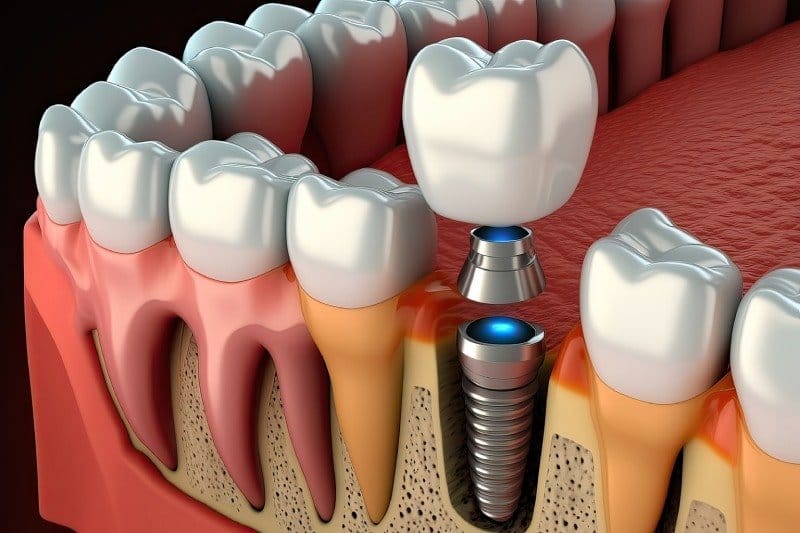
For implant treatment, the plan may include extraction, implant placement, the abutment, the final crown, imaging, and any procedures needed because of the available bone or gum condition. The number and position of missing teeth also affect the overall plan. International patients should ask whether the quoted treatment includes the temporary and final restorations, scans, follow-up appointments, and any necessary preparatory procedures. You can review our transparent price list, then ask the treatment team to explain which items apply to your case.
Questions to ask before choosing
A consultation should answer three practical questions:
- 01Why can this tooth be saved, or why can it not be saved?
- 02If tooth-saving treatment is attempted, what are the likely benefits, limitations, and remaining options if it fails?
- 03If the tooth is removed, what replacement is planned and when?
At Mosdent, the dentists can coordinate endodontic and surgical assessments in the same center. This means an implant recommendation should not be based simply on implant availability. If root canal treatment is advised, it should be because the natural tooth is considered suitable for preservation. A second opinion is reasonable when the explanation is unclear or only one option is presented without discussing alternatives.
Let's plan the right treatment together.
Free Assessment→- 1.Iqbal MK, Kim S. For teeth requiring endodontic treatment, what are the differences in outcomes of restored endodontically treated teeth compared to implant-supported restorations? Int J Oral Maxillofac Implants 2007;22 Suppl:96-116. PubMed 18437793
- 2.Ng YL, Mann V, Gulabivala K. Tooth survival following non-surgical root canal treatment: a systematic review of the literature. Int Endod J 2010;43:171-89. PubMed 20158529
- 3.Burns LE, Kim J, Wu Y, Alzwaideh R, McGowan R, Sigurdsson A. Outcomes of primary root canal therapy: An updated systematic review of longitudinal clinical studies published between 2003 and 2020. Int Endod J 2022;55:714-731. PubMed 35334111
- 4.Ko MJ, Park JH, Lee NR, Yoon JH, Kim YT, Cho SY. Success rates comparison of endodontic microsurgery and single implants with comprehensive and explicit criteria: a systematic review and meta-analysis. Restor Dent Endod 2025;50:e8. PubMed 39979225
- 5.Setzer FC, Kim S. Comparison of long-term survival of implants and endodontically treated teeth. J Dent Res 2014;93:19-26. PubMed 24065635