Skip to content
MosdentISTANBUL 1992
// Endodontics

When Is Root Canal Treatment Needed?

Mistaken for extraction and delayed because it is assumed to hurt. Across ten studies pooled in a meta-analysis, post-operative pain was reported in 39 to 45 percent of cases and fell to a 10 to 25 percent band within 48 hours. When it is needed, and what waiting costs.

Dr Anıl Çetin, PhDWritten by
Published
4 minread
Dr Ferit Kaval, PhDmedical review
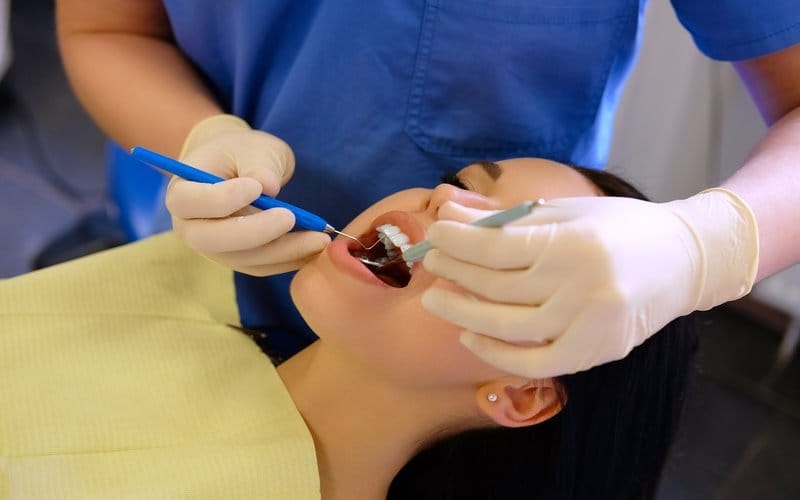
Dentist examining a patient with mirror and probe in the clinic
Endodontics·4 min
// Quick answer

Root canal treatment is needed when the tooth nerve (pulp) is infected or irreversibly inflamed. In its modern form it is microscope-assisted, uses rotary systems under local anaesthesia, and completes in one or two sessions; it is the alternative to extraction.

// Key takeaways
  • 01Root canal is needed when the pulp is infected or irreversibly inflamed; it was developed as the alternative to extraction.
  • 02Signs include prolonged pain to hot or cold, discomfort that worsens at night, tenderness on biting, and sometimes facial swelling.
  • 03If left untreated, infection spreads to the bone, an abscess forms and the tooth is lost. At which point an implant becomes necessary.
  • 04Micro endodontics rescues previously failed cases by making lateral canals and complex anatomy visible under the surgical microscope.

A guest arrived recently after six months of sleepless nights from tooth pain. First question: "Will it need extraction?" Second: "Will the root canal hurt?"

root treatment

Seen through the window of modern endodontics, the answer to both is most likely no. Root canal treatment was born as the alternative to extraction. In its modern form, microscope-assisted, with rotary systems, under local anaesthesia, it completes in one or two sessions. Pain during the procedure is no different from a standard filling.

When is it needed? When the tooth nerve (pulp) is infected or irreversibly inflamed. Signs: prolonged pain to hot or cold, discomfort that worsens at night, tenderness on biting, sometimes facial swelling.

What happens if not treated? Infection spreads to the bone, an abscess forms, and the tooth is eventually lost. At which point implant treatment becomes necessary. So: root canal treatment is always cheaper, faster and less invasive than an implant.

Micro endodontics, root canal under the surgical microscope, is used to rescue cases that previously failed. Lateral canals, calcified zones, complex anatomy invisible to conventional endodontics: all visible at up to five hundred times magnification.

Let’s plan the right treatment together.

Free Assessment
EndodonticsRoot CanalMicro Endodontics
// Written by
Anıl Çetin
Dentist, PhD Anıl Çetin
Endodontics · Restorative Dentistry
Medically reviewed by: Dr Ferit Kaval, PhD

Let’s plan the right treatment together.

Your personal data is processed as described in our .

Message on WhatsApp
// Frequently Asked

Frequently asked questions

Is root canal treatment very painful?+

No. It is performed under local anaesthesia, and the sensation during the procedure is no different from a standard filling. Mild tenderness afterwards is normal: across ten studies pooled in a meta-analysis, post-operative pain was reported in 39 to 45 percent of cases, fell to a 10 to 25 percent band by 48 hours, and the most frequently recorded score was "no pain" (PubMed 37466716).

How many sessions does a root canal take?+

In its modern, microscope-assisted form with rotary systems, treatment completes in one or two sessions.

What happens if I don't get a root canal?+

It does not resolve on its own; it waits. In a study following 449 root-filled teeth for 20 years, 42% of the teeth that had apical periodontitis at baseline were left untreated, and the lesion still persisted in 57% of those teeth two decades later; in the same cohort 65% of root-filled teeth survived (PubMed 26139565). Left alone, the infection spreads into the bone, an abscess forms and the tooth is eventually lost — at which point the option is no longer a root canal but an implant or a bridge.

What is micro endodontics and when is it used?+

It is root canal treatment performed under the surgical microscope, which reveals lateral canals, calcified zones and complex anatomy at high magnification. Rescuing previously failed cases is its most common use. Where the root tip needs a surgical approach instead, endodontic microsurgery under the microscope succeeded in 91.3 percent of 115 cases at one year and 87.8 percent at four years or more (PubMed 24666897).

It begins with a conversation

Discuss the questions with your doctor.

WhatsApp

Not sure which treatment fits? Tell us what’s wrong →