Gum pain is a signal of a specific process under the tissue, most often plaque-driven inflammation, infection, mechanical trauma, or a tooth problem radiating outward. The severe end of that spectrum is not rare: a meta-regression of 72 studies covering 291,170 people aged 15 and over made severe periodontitis the sixth most prevalent condition worldwide, at an age-standardised prevalence of 11.2 percent, with incidence peaking around the age of 38 (PubMed 25261053). Gingivitis is fully reversible with treatment, while periodontitis causes structural damage that can be halted but not undone.
- 01Gingivitis and periodontitis differ in reversibility, not just severity: gingivitis resolves completely with plaque control, periodontitis leaves structural damage that treatment can halt but not reverse.
- 02Severe periodontitis is the sixth most prevalent condition worldwide at 11.2 percent age-standardised prevalence, from 72 studies covering 291,170 people in 37 countries (PubMed 25261053).
- 03Incidence peaks around the age of 38, after a steep rise between the third and fourth decades of life (PubMed 25261053).
- 04Periodontal probing depth measured at multiple points around every tooth, not visual inspection, is the measure that grades disease severity.
- 05Treatment choice follows pocket depth: in a meta-analysis of six randomized trials, open flap surgery gave 0.6 mm more pocket depth reduction than scaling and root planing in pockets deeper than 6 mm, while scaling and root planing gave 0.4 mm more attachment gain in 4 to 6 mm pockets (PubMed 12787211).
What Gum Pain Usually Signals
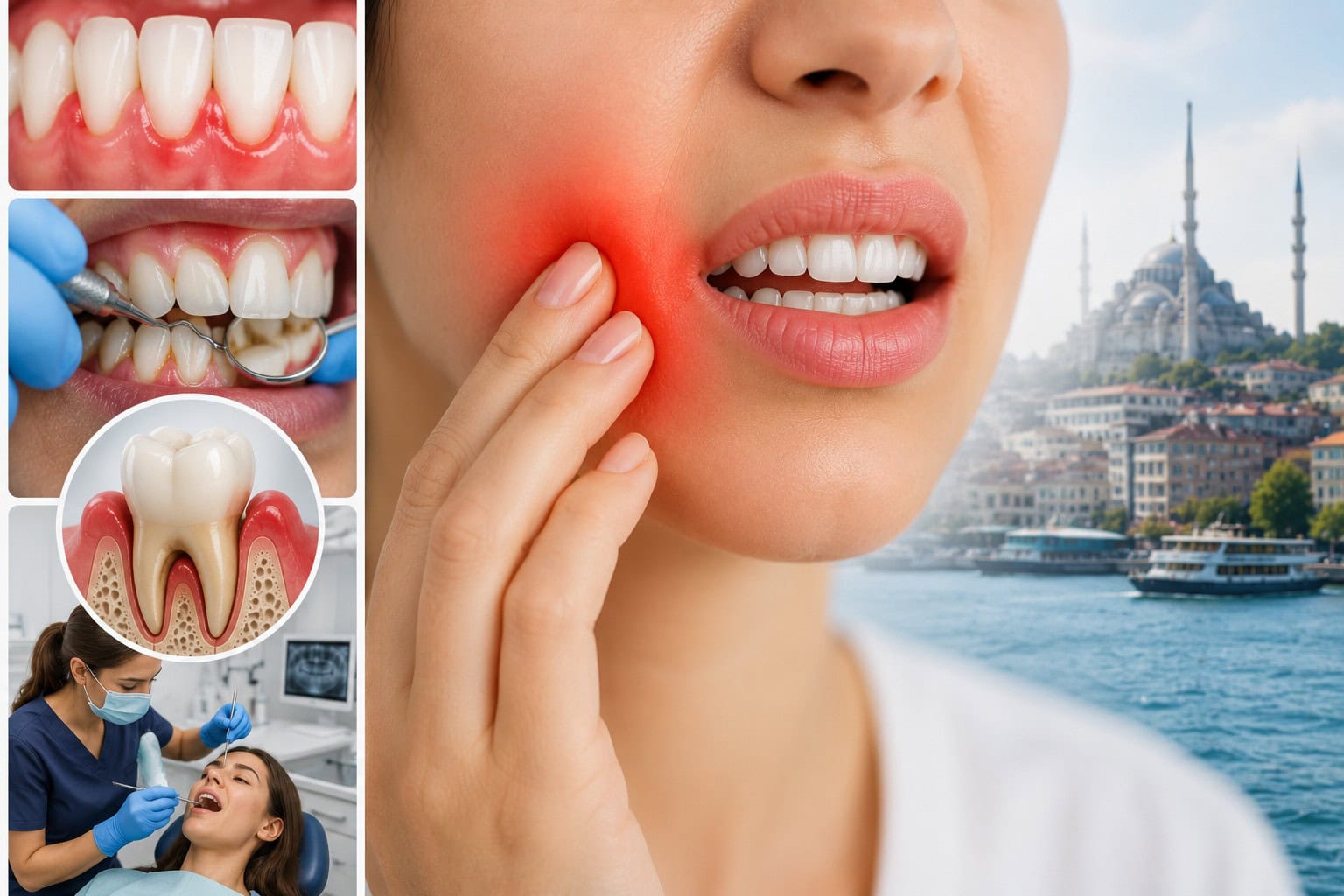
Gum pain is usually a sign of a specific process under the tissue: inflammation from plaque, an infection, mechanical irritation, or a problem in a tooth that spreads discomfort into the gum around it. People often dismiss it as a little soreness while brushing, a twinge with something hot or an ache that comes and goes. It is rarely random, and the pattern of the pain often points to its cause.
Gum pain presents in several ways. It can be a dull, persistent ache in one area, or a sharp pain when a particular spot is brushed or flossed. It can throb, sometimes worse at night. The gum can be tender and swollen around one or more teeth, or there can be a burning or tingling feeling across a wider area. Pain with bleeding during brushing is one of the most common combinations.
Where the pain sits, when it appears and what it feels like are all diagnostic clues. A throbbing pain with swelling around one tooth suggests something different from a mild, widespread tenderness that bleeds when you brush. Soreness that is worst on waking points in yet another direction. These clues narrow the possibilities, and they are most useful when read together with an examination, because several causes can feel alike.
Knowing what the discomfort means, and when it calls for a professional examination instead of home care, can make the difference between a short, simple treatment and a longer one later. At Mosdent in Istanbul, the periodontology team treats gum pain as a clinical signal to be explained first, and then treats the cause it finds. The sections below go through the common causes, the warning signs, how the cause is identified and how each is treated.
Gingivitis and Periodontitis Compared
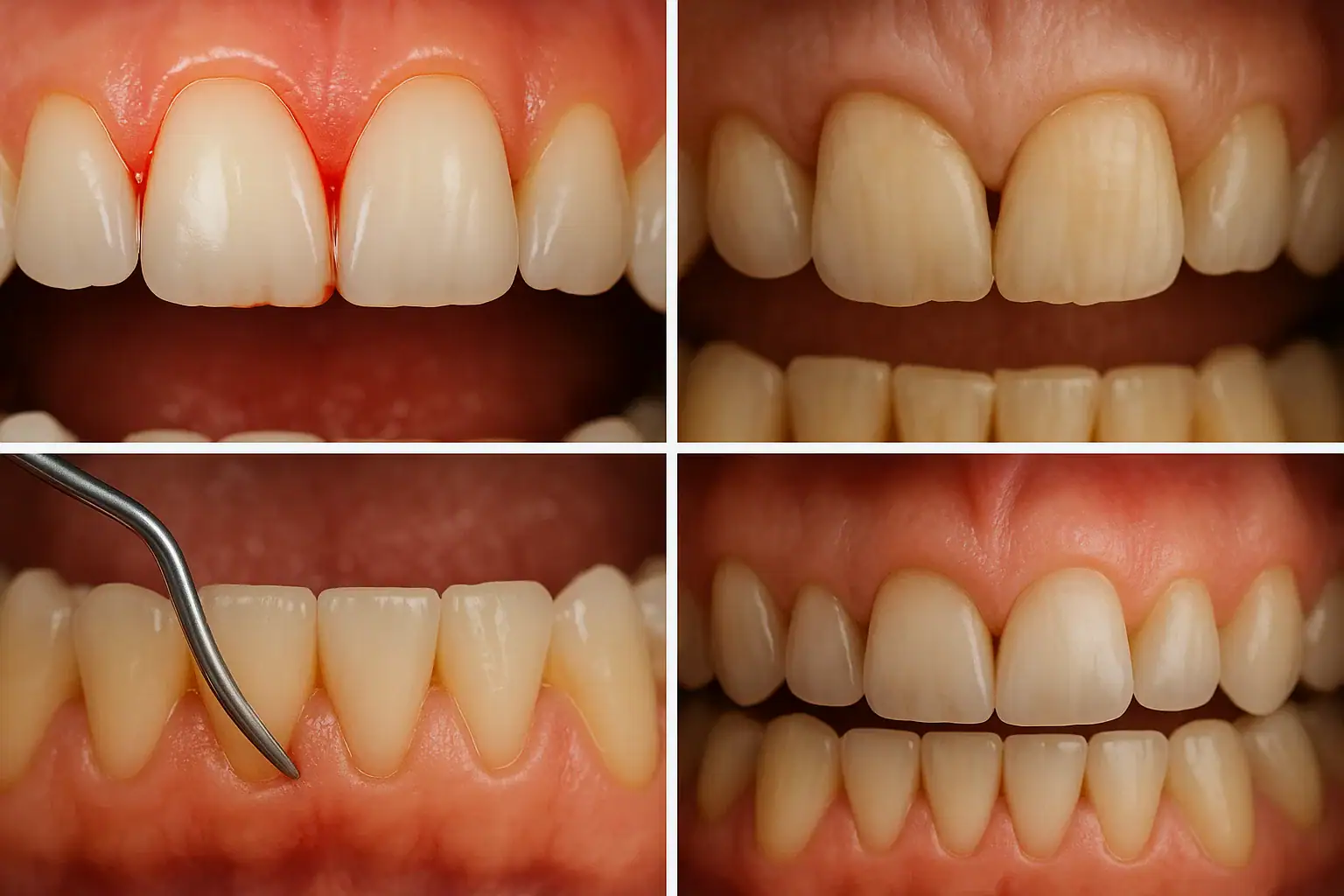
The most common source of gum pain is gum disease, and its two stages differ in whether the damage can be reversed. Gingivitis is inflammation limited to the gum, caused by plaque at the gum line. Bacteria in the plaque trigger an inflammatory response, and the gum becomes red, swollen and tender, and bleeds easily, especially when brushed. Gingivitis resolves completely with treatment and better cleaning, and it leaves no lasting damage to the bone or supporting tissue.
When gingivitis is left untreated, the inflammation can progress to periodontitis, a more severe form of gum disease that reaches the deeper supporting structures of the teeth, including the bone. Periodontitis tends to cause deeper and more persistent pain, gum recession and, in advanced cases, loose teeth. The bone lost in periodontitis does not grow back on its own. With treatment, the progression can be stopped and the condition controlled over the long term, but the structural loss remains.
Severe periodontitis is common. A meta-regression of 72 studies covering 291,170 people aged 15 and over in 37 countries found severe periodontitis to be the sixth most prevalent condition in the world, with an age-standardised prevalence of 11.2 percent (PubMed 25261053). The same study found that prevalence rose steeply between the third and fourth decades of life, driven by a peak in incidence at around the age of 38 (PubMed 25261053).
Those figures describe the severe end of the spectrum. Milder gum disease is more widespread still, and much of it causes little pain until it is advanced. Bleeding gums, even without pain, are therefore worth having checked.
Abscesses, Brushing Trauma and Hormonal Changes
Beyond gum disease itself, several causes produce gum pain, and some of them have nothing to do with infection.
A dental or periodontal abscess, a localised pocket of infection, causes some of the most intense gum pain. It usually throbs, the swelling is visible, and there may be a small bump on the gum that releases fluid. In more advanced cases fever and swelling of the face can follow. An abscess needs prompt professional treatment. It does not resolve by itself, and the infection can spread if it is left.
Mechanical trauma is a common and easily corrected cause. Brushing too hard, using a hard-bristled toothbrush or flossing with a sawing motion can irritate the gum and make it sore without any infection underneath. Switching to a soft brush and a gentler technique usually settles it. It is still worth an examination, because the same habits can also cause recession, and other causes may be present alongside.
Hormonal changes affect the gum as well. Pregnancy, menstruation and menopause all involve hormonal shifts that can make the gum more sensitive and more prone to inflammation. In pregnancy this is sometimes called pregnancy gingivitis. The gum responds to plaque more strongly during these periods, so the same amount of plaque that caused no symptoms before can now cause bleeding and tenderness. Hormonal gum sensitivity usually responds well to professional cleaning and careful home care, and dental cleaning is safe to have during pregnancy.
Dental Work, Nutrition, Ulcers and Grinding
A crown, filling or denture that does not fit well can create a constant pressure point or trap food and bacteria against the gum, leading to local pain and inflammation. This cause is often overlooked, particularly when the dental work was done years ago or in another clinic. The gum around the restoration is usually the only place that hurts, and the pain often returns after eating.
Nutrition plays a part in some cases. Vitamin C deficiency in particular is associated with bleeding and tender gums. In its extreme form this is scurvy, which is now rare; milder deficiency with gum sensitivity is more common and less dramatic, and it is usually picked up from the diet history.
Small ulcers, such as canker sores, on the gum can cause sharp, localised pain, especially with acidic or spicy food. They usually heal by themselves, but ulcers that keep coming back, or one that does not heal, should be examined.
Teeth grinding, which often happens during sleep, places heavy force on the teeth and on the gum and bone around them. It can show as general gum soreness, especially on waking, together with jaw tension and worn teeth.
Sometimes the gum is not the source at all. A deep cavity, a cracked tooth or a tooth that needs root canal treatment can cause pain that spreads into the surrounding gum, so the gum seems to be where the problem lies. An X-ray and tests on the tooth usually separate this from gum disease, and treating the tooth resolves the gum pain.
Signs That Need a Prompt Examination
Mild, occasional gum tenderness is common and often settles with better cleaning. Certain signs, however, show that the process has gone beyond simple irritation and should be examined promptly.
Pain that lasts more than a week despite good cleaning is the first such sign. Visible swelling, especially if it is growing, is another. Pus or discharge from the gum points to infection, and fever together with gum pain or swelling suggests that the infection is affecting the body more widely. Teeth that feel loose, or a bite that has changed, suggest that the bone support has been affected. Gums that have receded and exposed the roots, bleeding that starts without any brushing or other trigger, and persistent bad breath together with gum discomfort all belong on the same list.
These signs indicate a process more advanced than simple irritation. Waiting allows conditions such as periodontitis or an abscess to progress further, and an abscess in particular does not wait for a routine appointment. Swelling that spreads into the face or neck, difficulty swallowing or a high fever needs urgent care the same day.
It also helps to note down what you have noticed before the appointment: when the pain started, whether it is constant or comes and goes, what makes it worse, whether the gum bleeds, and any recent dental work, new medication or change in health. That history, combined with the examination, often points to the cause quickly.
How the Cause Is Found at the Examination
A periodontal examination goes beyond looking at the gum. At Mosdent's periodontology department, the process usually has four parts.
The first is a clinical examination. The dentist looks at the colour and texture of the gum and for swelling, recession or lesions, and checks whether the teeth move.
The second is periodontal probing. A thin, marked instrument measures the depth of the space between the tooth and the gum, called the pocket, at several points around every tooth. Healthy gum forms a shallow pocket, and deeper pockets indicate that the attachment between gum and tooth has been lost. This measurement grades the severity of gum disease more reliably than the appearance of the gum, and it is recorded so that later measurements can be compared against it.
The third is dental X-rays. They show bone loss around the teeth, abscesses and problems within the teeth that cannot be seen by eye, such as decay under a filling or an infection at the tip of a root.
The fourth is a review of contributing factors. Cleaning habits, existing dental work, medical history and medication are all considered, since several medicines and conditions affect the gum. Diabetes and smoking are among the factors that change how gum disease behaves and how it responds to treatment.
Taken together, these findings show whether the pain comes from gingivitis, periodontitis, an abscess, a restoration, a tooth or another source, and they decide which treatment follows. Treatment then targets the cause itself, with pain relief as part of it.
Cleaning, Deep Cleaning and Flap Surgery
Gum treatment depends on the cause, and for gum disease it follows the depth of the pockets. There is no single treatment for all gum pain.
For gingivitis and early inflammation, professional cleaning to remove plaque and tartar, together with better home care, is often enough to settle the pain and inflammation. The dentist or hygienist also shows which areas are being missed at home.
For established periodontal disease, scaling and root planing, often called deep cleaning, removes plaque and tartar from below the gum line and smooths the root surface so that the gum can heal against it. It is usually done under local anaesthesia and often spread over more than one appointment.
When deep pockets remain after non-surgical treatment, periodontal flap surgery gives direct access to clean the root surfaces and, where needed, to reshape the underlying bone so that the pocket becomes shallower and heals better.
The choice between deep cleaning and surgery is guided by pocket depth, and the evidence shows why. A meta-analysis of six randomised trials found that, 12 months after treatment, surgery produced 0.6 mm more pocket depth reduction and 0.2 mm more attachment gain than non-surgical therapy in pockets deeper than 6 mm (PubMed 12787211). In pockets of 4 to 6 mm, scaling and root planing produced 0.4 mm more attachment gain than surgery (PubMed 12787211). The authors concluded that both approaches are effective for chronic periodontitis, and that open flap surgery gives greater benefit in deep pockets (PubMed 12787211).
Treatments Aimed at a Specific Cause
Several causes of gum pain need their own treatment, alongside or in place of cleaning.
Where the gum has receded, or where it needs reshaping for health and appearance, gum surgery can restore a healthier gum contour and cover exposed root surfaces. Covered roots are less sensitive and less prone to decay, and a stable gum line also protects the teeth from further recession.
An abscess needs the infected material drained, followed by treatment of what caused it. Depending on the source, that may mean root canal treatment, deep cleaning of the pocket or, where the tooth is too badly damaged to keep, extraction. Antibiotics are used when the infection has spread or when the patient has fever, as an addition to drainage.
When a poorly fitting crown, filling or denture is identified as the cause, adjusting or replacing it removes the source of irritation. A denture can often be relined or adjusted at the same visit, and a crown with a faulty margin is usually remade.
For gum pain caused by grinding, a custom night guard reduces the load on the teeth and the tissue around them during sleep. It is made from an impression or scan of the teeth so that it fits closely and spreads the force evenly.
When the pain comes from a tooth, such as a deep cavity or a cracked tooth, treating the tooth itself resolves the gum pain. For ulcers, the treatment is aimed at relieving pain while they heal, and recurring ulcers are investigated for an underlying cause. Where a nutritional deficiency is suspected, the dentist refers you to your doctor for tests.
What Untreated Gum Disease Leads To
Untreated gum disease tends to progress. Gingivitis that is left advances to periodontitis, and periodontitis that is left leads to continued loss of the bone that supports the teeth. This bone loss is largely irreversible, and in advanced cases it leads to loose teeth and eventually to tooth loss.
The effects reach beyond the mouth. A large body of research has found associations between untreated periodontal disease and general conditions, including cardiovascular disease and difficulty in controlling diabetes. The mechanisms are still being studied, and association does not prove that one causes the other, but the connection is one reason gum health is treated as part of general health.
Gum health also decides what other dental treatment is possible. Veneers, crowns, dental implants and smile makeovers all need healthy, stable gum tissue before the work begins. A crown or veneer margin placed against inflamed gum is exposed when the gum recedes as the inflammation settles or the disease progresses, and the exposed edge collects plaque and invites decay. An implant placed in a mouth with active periodontitis faces a higher risk of inflammation around it. For this reason gum treatment is done first, and restorative work waits until the tissue is stable.
Treatment at an early stage is usually shorter and simpler. Gingivitis can be reversed completely, and periodontitis caught early needs less treatment than periodontitis found after the teeth have become loose. Persistent or worsening gum pain is therefore worth examining early.
Gum Treatment at Mosdent for Patients Travelling In
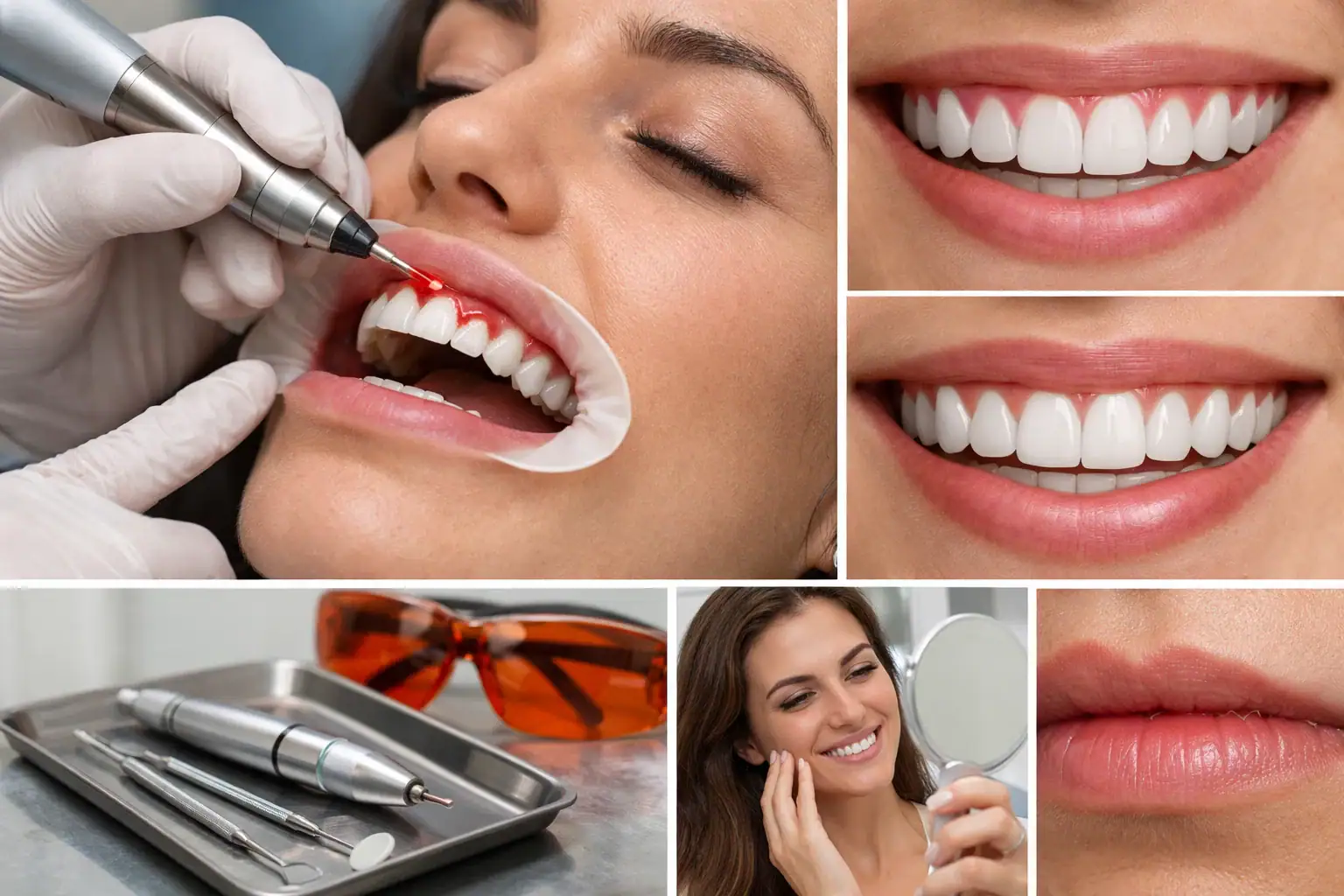
Mosdent's treatment planning includes a periodontal assessment as a first step, whether the main concern is pain, function or appearance. For patients planning Hollywood smile design, pink dental aesthetics procedures can also be included so that the gum line is healthy, symmetrical and in harmony with the new restorations.
Mosdent, operating since 1992, has a dedicated periodontology department. Gum treatment is planned together with any restorative or cosmetic work from the start, because the condition of the gum decides when a crown or veneer margin can be placed at all.
For a patient travelling in, this has practical consequences. The periodontal assessment comes first, with pocket depths recorded and bone levels measured on X-rays, so the plan rests on measurements taken in the chair. Non-surgical treatment is usually staged over more than one appointment, and the healing interval before re-assessment is counted in weeks. Surgical treatment, where it is indicated, needs its own healing period before any prosthetic work begins. Interpreting is available during appointments, and the treatment record given at discharge states what was done and when the review is due.
For patients combining gum treatment with implants, crowns or a full smile makeover, treatment is coordinated within a single visit where that is clinically appropriate, and a second visit is planned where healing requires it. If you have persistent or worsening gum pain, you can contact us to arrange an examination and a plan based on the cause that is found.
Let's plan the right treatment together.
Free Assessment→- 1.Kassebaum NJ, Bernabé E, Dahiya M, Bhandari B, Murray CJ, Marcenes W. Global burden of severe periodontitis in 1990-2010: a systematic review and meta-regression. J Dent Res. 2014;93(11):1045-1053. doi:10.1177/0022034514552491. PubMed 25261053
- 2.Heitz-Mayfield LJ, Trombelli L, Heitz F, Needleman I, Moles D. A systematic review of the effect of surgical debridement vs non-surgical debridement for the treatment of chronic periodontitis. J Clin Periodontol. 2002;29 Suppl 3:92-102. doi:10.1034/j.1600-051x.29.s3.5.x. PubMed 12787211
- 3.Aggarwal K, Gupta J, Kaur RK, Bansal D, Jain A. Effect of anxiety and psychologic stress on periodontal health: a systematic review and meta-analysis. Quintessence Int 2022;53:144-154. PubMed 34595909
- 4.Mauland EK, Neupane SP. The Influence of Psychological Stress and Stress-Related Disorders in the Treatment Outcome of Periodontitis: A Systematic Review and Meta-Analysis. J Clin Periodontol 2025;52:1760-1778. PubMed 40855968