Laser gum aesthetics, also called laser gum contouring or laser gingivectomy, is the reshaping of excess or uneven gum tissue with a soft tissue dental laser instead of a scalpel, so the gum line is sculpted while the laser seals blood vessels and sterilises the treated area. The procedure takes 30 to 60 minutes depending on how many teeth are involved, requires no stitches, and the new gum line is visible immediately. Swelling lasts 24 to 48 hours and full gum healing takes 2 to 4 weeks. In gum enlargement caused by orthodontic treatment, a systematic review of seven randomised trials found significantly less bleeding and pain with diode laser than with scalpel surgery (PubMed 37738371).
- 01Laser gum contouring reshapes the gum line in gummy smiles, uneven gum lines, excess tissue covering the teeth, asymmetry and gum overgrowth from medication.
- 02The visit is short at 30 to 60 minutes depending on the number of teeth treated, and the new gum line is visible at the end of the same appointment.
- 03Healing runs on a two-stage clock: 24 to 48 hours of mild swelling and about a week until most discomfort resolves, then 2 to 4 weeks to full gum healing.
- 04Across seven randomised trials in orthodontic treatment-induced gum enlargement, diode laser gingivectomy produced significantly lower intraoperative and postoperative bleeding and pain than conventional scalpel surgery (PubMed 37738371).
- 05Active periodontal disease is treated before contouring, and results hold as long as gum disease stays controlled, although gums can regrow slightly with some medications or genetic predisposition.
Why Gum Shape Matters in a Smile
The gums frame the teeth, so their shape, height and health decide a large part of how a smile looks. In smile aesthetics the teeth and the gum line are read together. Teeth that are white and well aligned can still look out of balance when too much gum shows, when the gum line sits at different heights from one tooth to the next, or when excess tissue covers part of the crowns.
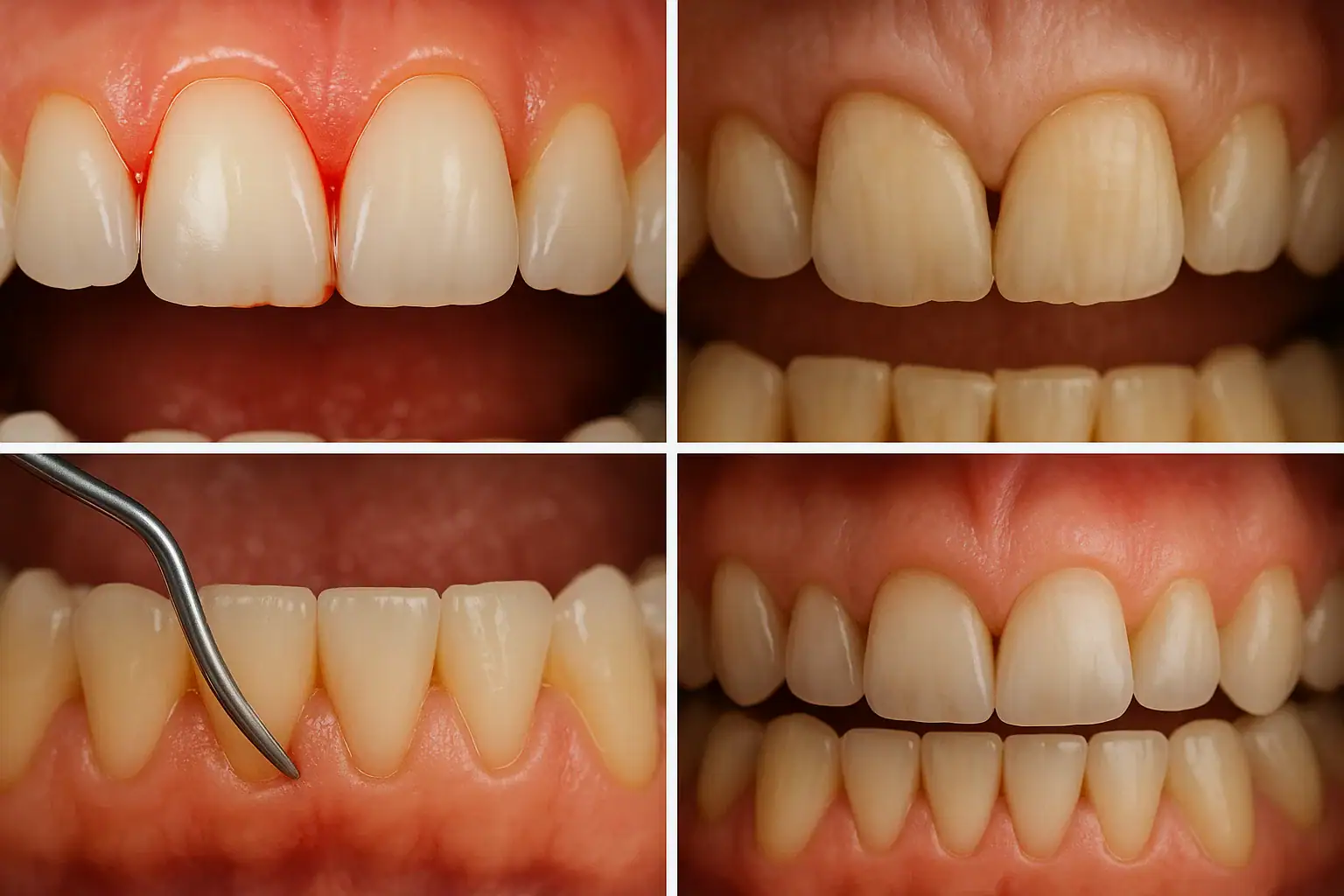
The most familiar example is the gummy smile. When excess gum tissue covers part of each tooth, the teeth look short or square even though they are healthy and correctly aligned. The person often notices it in photographs, or starts to smile with the lips held down. Uneven gum heights have a similar effect on a smaller scale. One front tooth looks longer than its neighbour, and the eye reads the difference as a problem with the tooth.
Gum shape also has a practical side. Thick or overgrown gum tissue creates deeper pockets around the teeth, which are harder to keep clean with a toothbrush and floss. Plaque that stays in those areas keeps the gum inflamed, and inflamed gum tends to swell further.
Laser gum aesthetics, also called laser gum contouring or laser gingivectomy, addresses this part of the smile directly. The gum line is reshaped with a soft tissue dental laser instead of a scalpel, so excess or uneven tissue is sculpted while the laser seals small blood vessels and sterilises the treated area. The teeth themselves are not touched. For many patients the change in gum line is the step that makes the rest of the smile look proportionate, and for others it is the first step before veneers or crowns.
What Laser Gum Contouring Treats
Laser gum treatment of this kind is aimed at the amount and shape of gum that shows. The typical indications are a gummy smile, an uneven gum line, excess gum tissue covering the teeth, asymmetry between the left and right sides, and gum overgrowth caused by medication or by genetics. Gum enlargement that develops during orthodontic treatment with fixed braces is another common reason, and it is the situation studied most closely in the trials comparing laser and scalpel.
A good candidate usually has one or more of these features. The gum shows more than the patient would like when smiling, the gum heights are uneven, the teeth look too short, or the gums are healthy but not symmetrical. Patients preparing for veneers or crowns are often assessed at the same time, because the restorations will be made to the new gum line and the two need to match.
Two conditions change the order of treatment. The first is active periodontal disease. Inflamed gums bleed easily, change shape as they heal and can shrink back once the infection is controlled. Contouring inflamed tissue would sculpt a line that moves afterwards, so active gum disease is treated first and contouring follows once the gums are stable.
The second is the cause of the excess gum. When the gum covers the teeth because the underlying bone sits too close to the crown, removing soft tissue alone may not hold and a more extensive procedure may be needed. When the excess is soft tissue only, laser contouring is well suited. The examination, with gum measurements and radiographs where needed, decides which of these applies before any reshaping is planned.
How the Laser Works on Gum Tissue
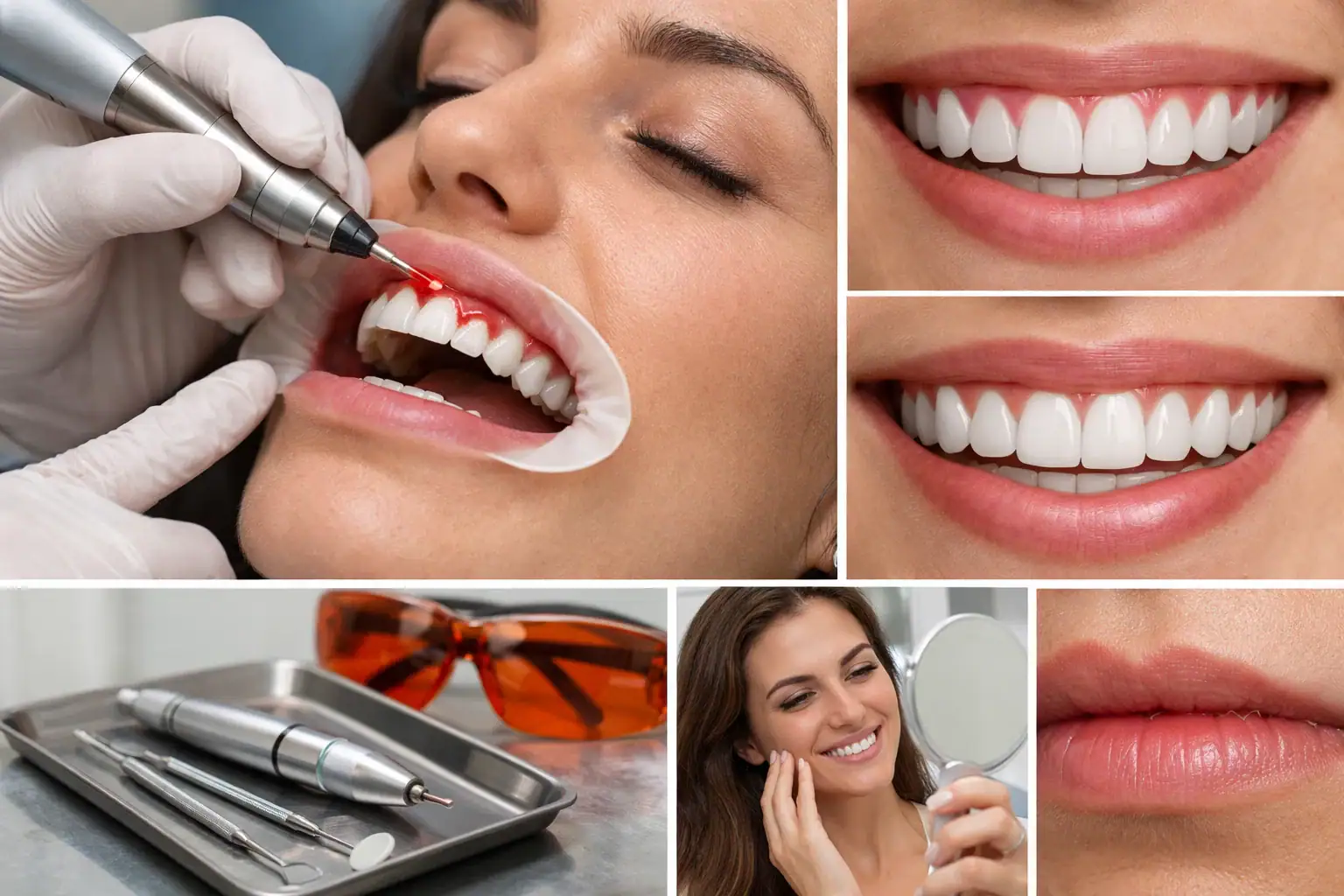
A soft tissue dental laser delivers concentrated light energy that is absorbed by the water and pigment in the gum. The energy vaporises a thin layer of tissue at the point of contact, which lets the dentist remove excess gum and shape the new margin in small, controlled steps. Lasers allow very fine control of how much tissue is taken, which matters when the difference between two gum heights is only a millimetre or two.
The same energy has two further effects at the edge of the cut. It seals small blood vessels as it goes, so the field stays largely free of bleeding and the dentist can see the gum line clearly while shaping it. It also sterilises the treated surface. Because the margin is sealed and there is no open incision to close, laser contouring typically does not need stitches, and there is no separate visit to remove sutures.
Low-power laser light has uses in the mouth beyond reshaping. It is applied to painful canker sores, the small recurrent ulcers that appear on the inside of the lips and cheeks. A 2025 meta-analysis of 21 randomised trials with 810 patients found that low-level laser therapy reduced pain and shortened the healing time of minor recurrent aphthous ulcers (PubMed 41286369). The same review found no consistent benefit on ulcer size or functional recovery (PubMed 41286369). This is a separate application from contouring, using lower energy and removing no tissue.
Laser Compared With Scalpel Surgery
The main measured difference between laser and scalpel gum surgery lies in bleeding and pain. A systematic review compared diode laser gingivectomy with conventional scalpel surgery and with non-surgical periodontal therapy in patients whose gums had enlarged during orthodontic treatment. Of 288 articles retrieved, 7 randomised clinical trials met the inclusion criteria (PubMed 37738371). Intraoperative and postoperative bleeding and pain were significantly lower in the laser group (PubMed 37738371).
The practical differences follow from how each tool works. Scalpel surgery cuts the gum with a blade, the cut edges bleed and are usually closed with sutures, and the patient returns to have them removed. Laser contouring removes tissue without a blade, seals the margin as it works and usually needs no stitches. For the patient this generally means a drier procedure, less discomfort in the first days and a simpler recovery.
The evidence has limits that are worth knowing. The trials in the review studied gum enlargement caused by orthodontic treatment, which is one specific group, and the risk of bias was judged moderate, with five studies scoring 2 and two studies scoring 3 out of 6 (PubMed 37738371). The authors framed their conclusion within the limitations of the review and the quality of the evidence (PubMed 37738371). The results support laser contouring as a comfortable option, but they do not measure long-term stability of the gum line.
The scalpel still has a place. Where bone needs to be reshaped along with the gum, or where a large amount of tissue has to be removed, conventional surgery or a combined approach may be the right choice. The decision is made on the anatomy of the case.
The Laser Gum Contouring Procedure
The procedure usually takes 30 to 60 minutes, depending on how many teeth are involved, and is completed in a single appointment.
It begins with a consultation and smile analysis. The dentist looks at how much gum shows when the patient smiles and speaks, measures the gum heights and pocket depths around each tooth, and checks the health of the tissue. Where the contouring is part of a wider smile design, digital planning is used to set the target gum line in relation to the planned shape of the teeth. The patient sees the proposed change before any tissue is removed.
On the day of treatment, the area is numbed with local anaesthesia. Patients typically describe mild pressure and a slight warmth from the laser during the work. The dentist then uses the laser to remove excess gum and sculpt the new margin tooth by tooth, checking the symmetry between the two sides as the work progresses. The sealed margin means there is little bleeding to obscure the view.
The new gum line is visible immediately at the end of the session. No stitches are placed, so the patient leaves without sutures and without a follow-up visit just to remove them. The treated gum may look slightly raw or white at first, which is the normal appearance of freshly contoured tissue and changes over the following days.
Before leaving, the patient receives aftercare instructions covering food, brushing and smoking, together with a date for the follow-up appointment at which the settled gum line will be checked.
Recovery and Aftercare
Recovery after laser gum contouring runs in two stages. In the first stage, mild swelling lasts 24 to 48 hours, often with slight gum tenderness and little or no bleeding. Sensitivity is usually mild on the first and second days. Between days three and five the gum tissue begins to stabilise, and by the end of the first week most discomfort has resolved.
The second stage is slower and less noticeable. Full gum healing takes 2 to 4 weeks, during which the new margin firms up and takes on its final colour and texture. The final result is the shape the gum holds at the end of this window. This is why the follow-up appointment is scheduled after the tissue has settled.
A few habits keep this timetable on track. Soft foods are recommended for the first days, and spicy or acidic foods are avoided because they irritate the healing tissue. Brushing continues with a soft-bristled toothbrush around the treated area, since plaque control is part of healing and stopping altogether allows the gum to become inflamed. Smoking slows healing and should stop at least for this period. The dentist may also give specific instructions on rinsing and on how to clean the treated margin in the first days.
Pain relief needs are usually modest, and ordinary pain relievers are enough for most patients. Swelling that increases after the second day, bleeding that does not stop with gentle pressure or fever should be reported, since these are not part of the normal healing course.
Follow-up appointments confirm that the gum line has settled where it was sculpted and that the tissue has healed evenly on both sides.
Results, Combined Treatments and Safety
In most cases the result of laser gum contouring is lasting, provided three conditions hold. Gum disease stays controlled, oral hygiene is maintained and regular dental visits are kept. In a minority of patients the gums can regrow slightly, usually because of a genetic tendency or because of medications that cause gum overgrowth. When that happens, a touch-up procedure is considered once the cause has been reviewed.
Laser contouring is often combined with other aesthetic treatments. Veneers and crowns are frequent partners, because they are made to the new gum line and the proportion between tooth and gum is planned together. Teeth whitening is another common pairing, and full smile makeovers often include gum contouring as one of the early steps. The usual order is to shape the gums first, let them heal and then complete the restorations, so that the edges of veneers or crowns sit on a stable margin.
Performed by an experienced dentist on a correctly selected case, laser gum contouring is a safe procedure. Complications are uncommon and are usually linked to technique or to poor oral hygiene during healing. The most important safety step comes before the laser is used, in the examination that confirms the gums are healthy, identifies whether bone as well as soft tissue is involved and sets a realistic target gum line.
For patients unhappy with how much gum shows or with an uneven gum line, the starting point is that examination. It shows whether laser contouring alone will reach the goal, whether gum treatment is needed first, and how the result will fit with any planned work on the teeth.
Let’s plan the right treatment together.
Free Assessment→- 1.Maboudi A, Fekrazad R, Shiva A, Salehabadi N, Moosazadeh M, Ehsani H, et al. Gingivectomy with Diode Laser Versus the Conventional Scalpel Surgery and Nonsurgical Periodontal Therapy in Treatment of Orthodontic Treatment-Induced Gingival Enlargement: A Systematic Review. Photobiomodul Photomed Laser Surg 2023;41:449-459. PubMed 37738371
- 2.Ma Y, Yang M, Sun J, Qu X, Qu Z, Qu W. The effectiveness of lower-level laser therapy on the treatment of minor recurrent aphthous ulcers: a systematic review and meta-analysis. Lasers Med Sci. 2025;40(1):493. PubMed 41286369