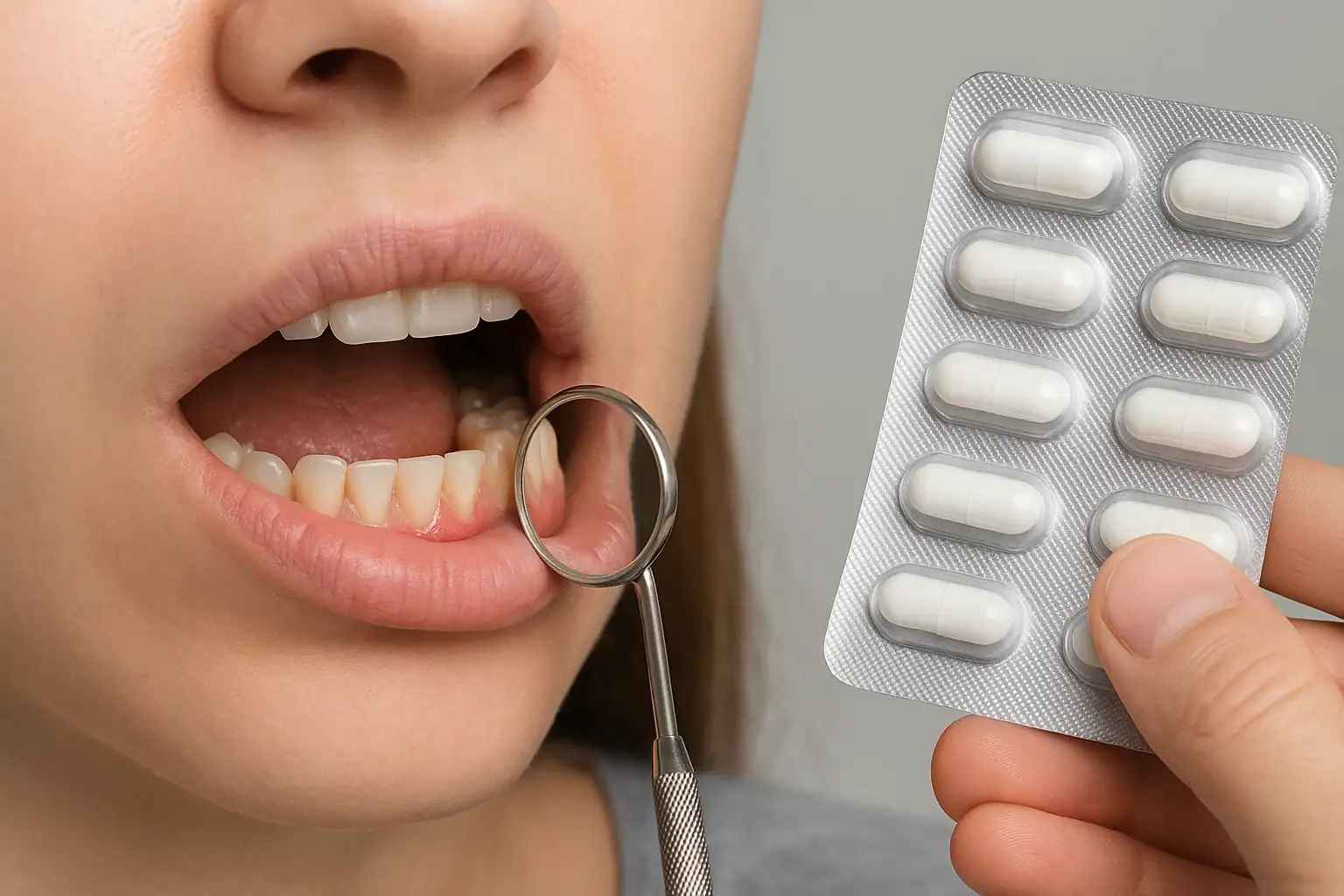
Antibiotics are not the first-line treatment for most gum infections. Gingivitis, the stage with inflammation but no bone loss, is reversible with professional scaling and daily plaque control, typically within 7 to 14 days, and antibiotics add nothing because the bacteria sit inside plaque and calculus that only mechanical removal takes away. A Cochrane review of 45 trials in 2664 adults rated the evidence for adjunctive systemic antibiotics in periodontitis as very low certainty, with only some outcomes reaching a minimally important clinical difference (PubMed 33197289). Antibiotics belong to abscesses, spreading infection, fever, facial swelling and medically compromised patients.
- 01Gingivitis and periodontitis are different stages: gingivitis affects soft tissue only and reverses within 7 to 14 days with scaling and plaque control, while periodontitis involves bone loss and can be controlled but not fully reversed.
- 02A Cochrane review of 45 randomised trials in 2664 adults rated adjunctive systemic antibiotics for periodontitis as very low certainty evidence; with amoxicillin plus metronidazole only closed pockets and bleeding on probing reached a minimally important clinical difference (PubMed 33197289).
- 03The EFP S3 level guideline builds treatment as a stepwise protocol resting on 15 commissioned systematic reviews, placing behaviour change, supragingival biofilm control and subgingival instrumentation ahead of any adjunct (PubMed 32383274).
- 04Antibiotics are indicated for a gum abscess, spreading infection, fever or facial swelling and in medically compromised patients; in an abscess the decisive step is drainage, with medication as support.
- 05None of the Cochrane trials reported antimicrobial resistance or patient-reported quality of life outcomes, so the harms side of the adjunct decision is measured less well than the benefits (PubMed 33197289).
Most Gum Infections Do Not Need Antibiotics
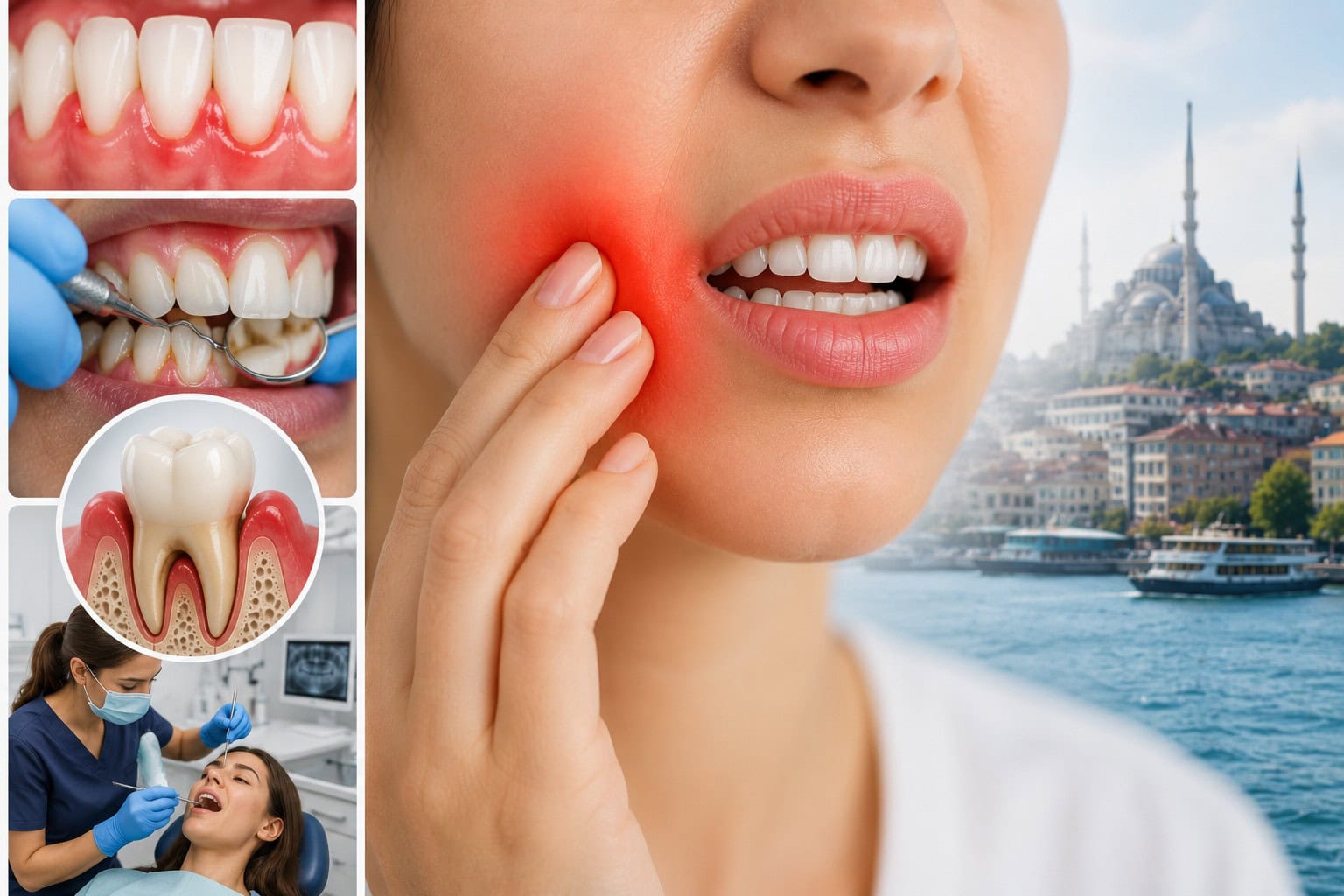
Most gum infections are treated without antibiotics. Gums that bleed on brushing, look red at the margin and feel slightly swollen are usually showing gingivitis, the early stage in which the inflammation sits in the soft tissue and no bone has been lost. That stage is treated by removing plaque and calculus, first professionally and then every day at home, and the tissue typically settles within 7 to 14 days. A tablet cannot do that work, because the bacteria responsible live inside a sticky biofilm and hardened deposits attached to the tooth, where a drug carried in the blood reaches them poorly.
Antibiotics enter the plan in a narrower set of situations: a gum abscess, an infection spreading into the face or neck, fever or general illness, and patients whose medical condition makes a spreading infection more dangerous. Even in those cases the drug supports cleaning and drainage and does not stand in for them.
Taking antibiotics without an indication has costs of its own. It can delay the diagnosis and cleaning that would resolve the problem, it exposes the patient to side effects, and every unnecessary course adds to the pressure that selects resistant bacteria. For this reason current periodontal care follows a stepwise protocol. The European Federation of Periodontology guideline for stages I to III places behaviour change, supragingival biofilm control, gingival inflammation and risk factor control ahead of instrumentation below the gum, and considers adjunctive therapies only within that sequence (PubMed 32383274). The guideline was built on 15 specifically commissioned systematic reviews (PubMed 32383274).
The practical question for a patient is therefore which stage is present and whether any of the warning signs that change the picture are there. That is decided by examination, pocket measurement and radiographs, and the answer is different for a bleeding gum than for a swollen face. This guide was written by Dr Ferit Kaval, PhD.
Gingivitis and Periodontitis Are Different Stages
A gum infection is an inflammatory reaction to bacteria collecting along and beneath the gum line. The bacteria organise into a biofilm, better known as plaque, and the substances they release inflame the surrounding gum. Left alone, the process can move from the soft tissue into the ligament and bone that hold the tooth, and whether antibiotics are ever relevant depends on which of the two stages is present.
Gingivitis is the early, superficial stage. Typical signs are red and irritated gum margins, bleeding when brushing or flossing, mild swelling and occasional bad breath, with no deep pockets and no loose teeth. It is reversible. Once plaque and calculus are removed and daily cleaning is effective, the gum returns to health, usually within 7 to 14 days, and medication has nothing to add.
Periodontitis is the destructive stage. The infection damages the periodontal ligament, the alveolar bone and the connective tissue attachment, and the signs change accordingly: persistent bleeding, deep pockets, pus at the gum line, teeth that loosen or drift, discomfort on chewing, changes in the bite and gum recession. Periodontitis can be controlled and stabilised, but lost bone and attachment do not grow back by themselves. The wider picture of gum disease covers both stages and the conditions in between.
The distinction decides the role of medication. Gingivitis is handled entirely by cleaning. Periodontitis is the stage in which a periodontist may consider an adjunctive antibiotic for selected patients, and then only together with cleaning below the gum line. A course of tablets taken for bleeding gums, without that cleaning, treats the wrong layer of the problem and leaves the deposits that caused it in place.
What the Evidence Shows for Adjunctive Antibiotics
The largest pooled analysis of the question is a Cochrane review of antibiotics added to scaling and root planing. It included 45 trials involving 2664 adults with untreated periodontitis (PubMed 33197289). Of these, 14 trials were at low, 8 at high and 23 at unclear overall risk of bias (PubMed 33197289). The certainty of the evidence for long-term follow-up was rated very low across the comparisons (PubMed 33197289).
The results were mixed. For amoxicillin plus metronidazole added to scaling, only the results for closed pockets and bleeding on probing reached a minimally important clinical difference (PubMed 33197289). For metronidazole alone, the difference that reached that threshold was in clinical attachment level and pocket depth. For azithromycin, the review found no evidence of a difference in closed pockets, attachment level, pocket depth or bleeding (PubMed 33197289). The authors concluded that there was insufficient evidence to decide whether some antibiotics are better than others when used alongside scaling.
The harm side is measured less well than the benefit side. None of the included studies reported data on antimicrobial resistance or on changes in patient-reported quality of life (PubMed 33197289). Most trials of amoxicillin, metronidazole and azithromycin reported adverse events such as nausea, vomiting, diarrhoea, mild gastrointestinal disturbance and a metallic taste, while no serious adverse events were reported.
Read together, the review supports a narrow place for adjunctive antibiotics in periodontitis. They may add a modest gain in some measures for some patients, the certainty of that gain is very low, and the cleaning they are added to carries the treatment. The guideline logic matches this reading, with instrumentation first and adjuncts considered afterwards (PubMed 32383274).
Situations in Which Antibiotics Are Indicated
Antibiotics are indicated when the infection has moved beyond what cleaning alone can contain, or when the patient's health makes a spreading infection more dangerous. The usual situations are a gum abscess, a rapidly progressing form of periodontitis, an infection spreading into the deeper soft tissues of the face or neck, and systemic signs such as fever, facial swelling, general fatigue or difficulty swallowing.
A second group is defined by the patient more than by the gum. People with reduced immune defence, for example those with poorly controlled diabetes, those receiving cancer treatment, organ transplant recipients and people with autoimmune disease, may need antibiotics at a lower threshold. Patients with certain heart conditions, including a history of infective endocarditis, are assessed with their physician before invasive dental treatment.
A gum abscess is a localised collection of pus caused by an advanced bacterial infection in the gum or a periodontal pocket. It typically brings severe throbbing pain, local swelling, pus discharge and a bad or metallic taste, and sometimes fever. The decisive step in an abscess is drainage, which relieves pressure and removes the pus; the antibiotic is the support that limits spread. An abscess rarely settles on tablets alone, and a course taken at home without drainage often only postpones the problem.
Swelling that spreads across the face, closes the eye or rises over the cheekbone, difficulty swallowing or breathing, and a high fever are signs that need same-day assessment. These are uncommon in gum infections, but they are the situations in which antibiotics and urgent care matter most.
Treating a Gum Infection Through Cleaning
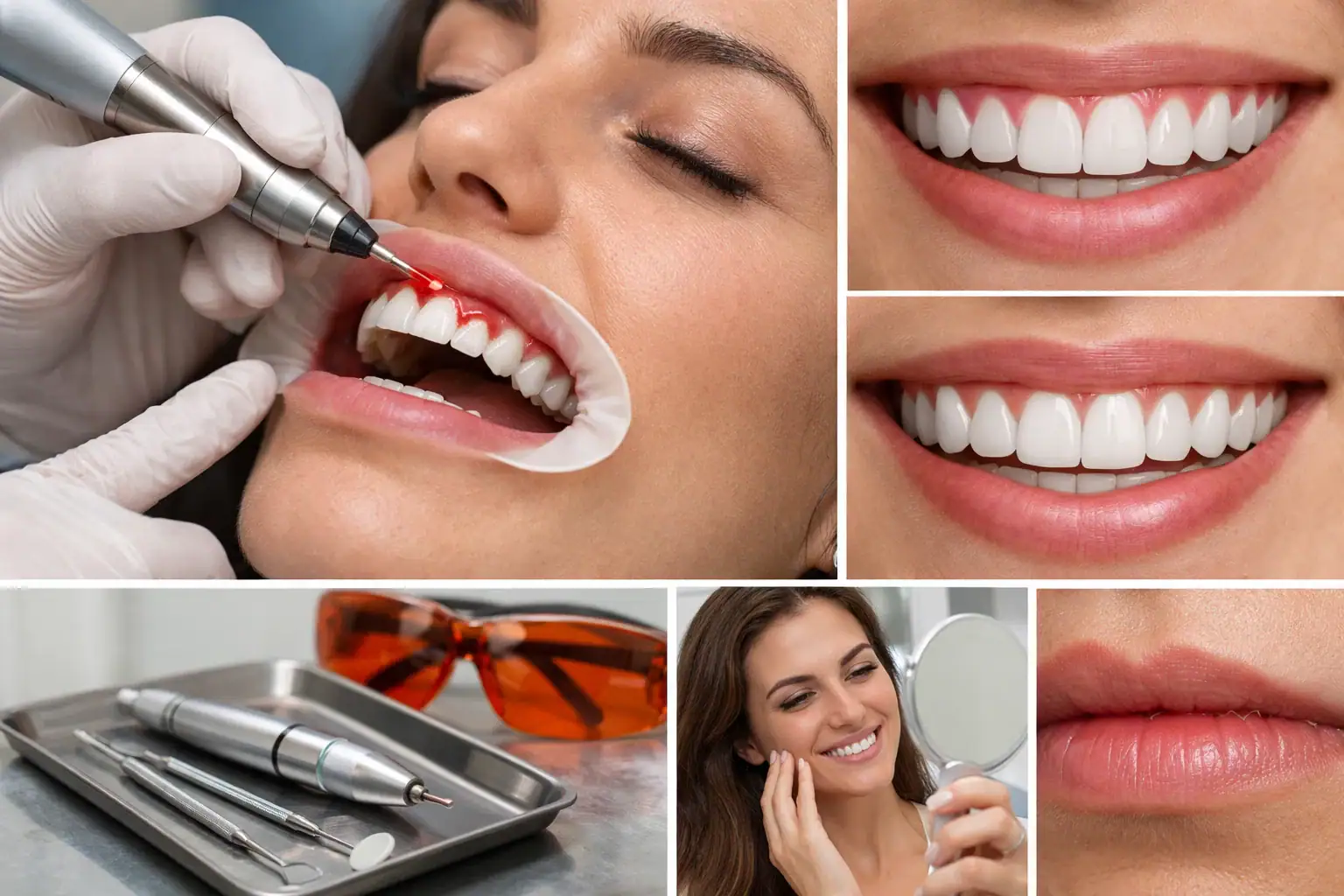
For gingivitis and for most periodontitis, treatment is mechanical. Professional cleaning above the gum removes plaque and calculus from the visible surfaces, and cleaning below the gum, often called scaling and root planing or subgingival instrumentation, removes deposits from the root surfaces inside the pockets. This disrupts the biofilm that antibiotics struggle to reach and gives the gum a clean surface to reattach against. In deeper disease the work is usually divided into sessions under local anaesthesia, and the pockets are measured again some weeks later to see how the tissue has responded. The details of these steps are described under periodontal treatment.
Antibacterial mouthwashes such as chlorhexidine gluconate or povidone iodine can reduce the bacterial load for a limited period, for example after cleaning. They are a short-term aid and are not a treatment for periodontitis on their own. Long use of chlorhexidine can stain teeth and alter taste, which is another reason it is prescribed for a set period.
Home care is what keeps the result. A soft-bristled toothbrush used with a gentle technique, interdental brushes sized to the gaps, and floss where the gaps are tight remove the plaque that would otherwise rebuild within days. Without this daily step, professional cleaning buys only a short interval.
Home remedies such as salt-water rinses, aloe vera, green tea, turmeric or oil pulling may feel soothing, but they do not remove calculus or clean a pocket, and they do not treat an infection. Relying on them while pus, swelling or loose teeth are present delays the treatment that works. The same applies to leftover antibiotics from an earlier prescription, which can mask symptoms and complicate the diagnosis at the next visit.
Choosing and Taking Antibiotics Safely
When an antibiotic is needed, the choice depends on the type of infection, the patient's health, other medicines and any allergy, and it is made by a dentist or physician. Amoxicillin, metronidazole and the combination of the two are the common choices. Clindamycin is used when there is a penicillin allergy, and azithromycin is an alternative in some cases. The bacteria most associated with periodontitis, such as Porphyromonas gingivalis, Tannerella forsythia, Aggregatibacter actinomycetemcomitans and Treponema denticola, thrive in the low-oxygen environment of deep pockets, which is part of why metronidazole, active against such anaerobic bacteria, appears so often in these regimens.
A few rules make a prescribed course safer. Antibiotics are not self-prescribed or taken from a previous course, because the wrong drug or dose can hide symptoms without clearing the infection and adds to resistance. The course is taken as instructed, at the stated dose and interval. Alcohol is avoided with metronidazole, which can cause a severe reaction when combined with it. Pregnancy and breastfeeding, kidney or liver disease and other regular medicines are mentioned before the prescription is written.
Patients are also told what side effects to expect. In the Cochrane review, most trials of amoxicillin, metronidazole and azithromycin reported nausea, vomiting, diarrhoea, gastrointestinal disturbance or a metallic taste (PubMed 33197289). A rash, swelling of the lips or tongue, or difficulty breathing is a different matter and needs urgent medical attention as a possible allergic reaction.
The antibiotic is also given a clear end point. It is prescribed alongside drainage or cleaning, for a defined number of days, and the gum is reviewed afterwards. If symptoms return after the course ends, that usually means the source, a deep pocket, an undrained abscess or a tooth problem, has not been dealt with, and a second course is rarely the answer.
Healing Time and Signs That Need Prompt Care
Healing time depends on the stage. Mild gingivitis clears in about 7 to 14 days after professional cleaning if home care is consistent. Moderate periodontitis usually needs 1 to 3 months of treatment and review, because pockets are re-measured after the tissue has had time to respond. Severe periodontitis moves into long-term maintenance with regular supportive visits, without a fixed finish date. A drained abscess usually improves within days. Smoking and uncontrolled diabetes slow healing at every stage.
Untreated periodontal infection follows a predictable path. Bone around the teeth is destroyed, pockets deepen, teeth loosen and may eventually be lost, and in some cases the infection spreads into the jaw, the sinuses or the bloodstream. The EFP guideline treats periodontitis as a condition to be staged and managed over time, with supportive periodontal care built into the protocol to extend the benefit of treatment (PubMed 32383274). Gums that continue receding after treatment are one of the findings those maintenance visits are designed to catch.
Some signs call for an appointment without waiting for a routine check. Facial swelling, fever, pus discharge from the gum, severe or throbbing pain, teeth that have started to feel loose, and a bad taste that does not go away all point beyond simple gingivitis. Bleeding on brushing alone usually does not need antibiotics, but it does need a cleaning and a look at the pockets.
At the appointment, the questions that decide treatment are measurable ones: the depth of the pockets, the amount of bone loss on radiographs, whether there is a localised collection of pus, and whether general health raises the risk of spread. With those answers the plan becomes clear, whether that is cleaning alone, cleaning with a short adjunctive course, or drainage of an abscess followed by periodontal treatment.
Let’s plan the right treatment together.
Free Assessment→- 1.Khattri S, Kumbargere Nagraj S, Arora A, Eachempati P, Kusum CK, Bhat KG, et al. Adjunctive systemic antimicrobials for the non-surgical treatment of periodontitis. Cochrane Database Syst Rev 2020;11:CD012568. PubMed 33197289
- 2.Sanz M, Herrera D, Kebschull M, Chapple I, Jepsen S, Beglundh T, et al. Treatment of stage I-III periodontitis-The EFP S3 level clinical practice guideline. J Clin Periodontol 2020;47 Suppl 22:4-60. PubMed 32383274
- 3.Katebi K, Eslami H, Jabbari S. Prevalence and causes of self-medication for oral health problems: a systematic review and meta-analysis. BMC Oral Health 2024;24:1115. PubMed 39300478