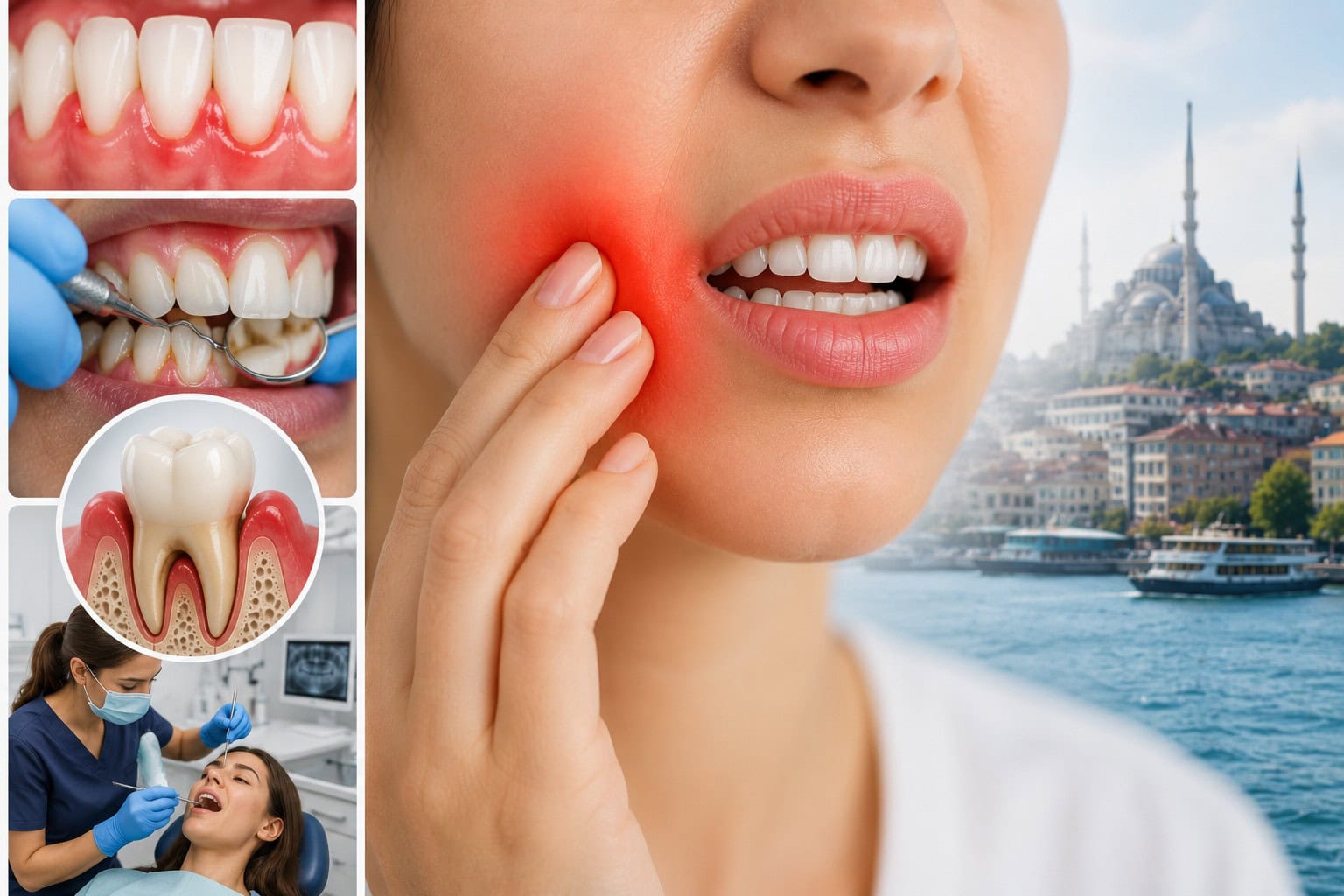
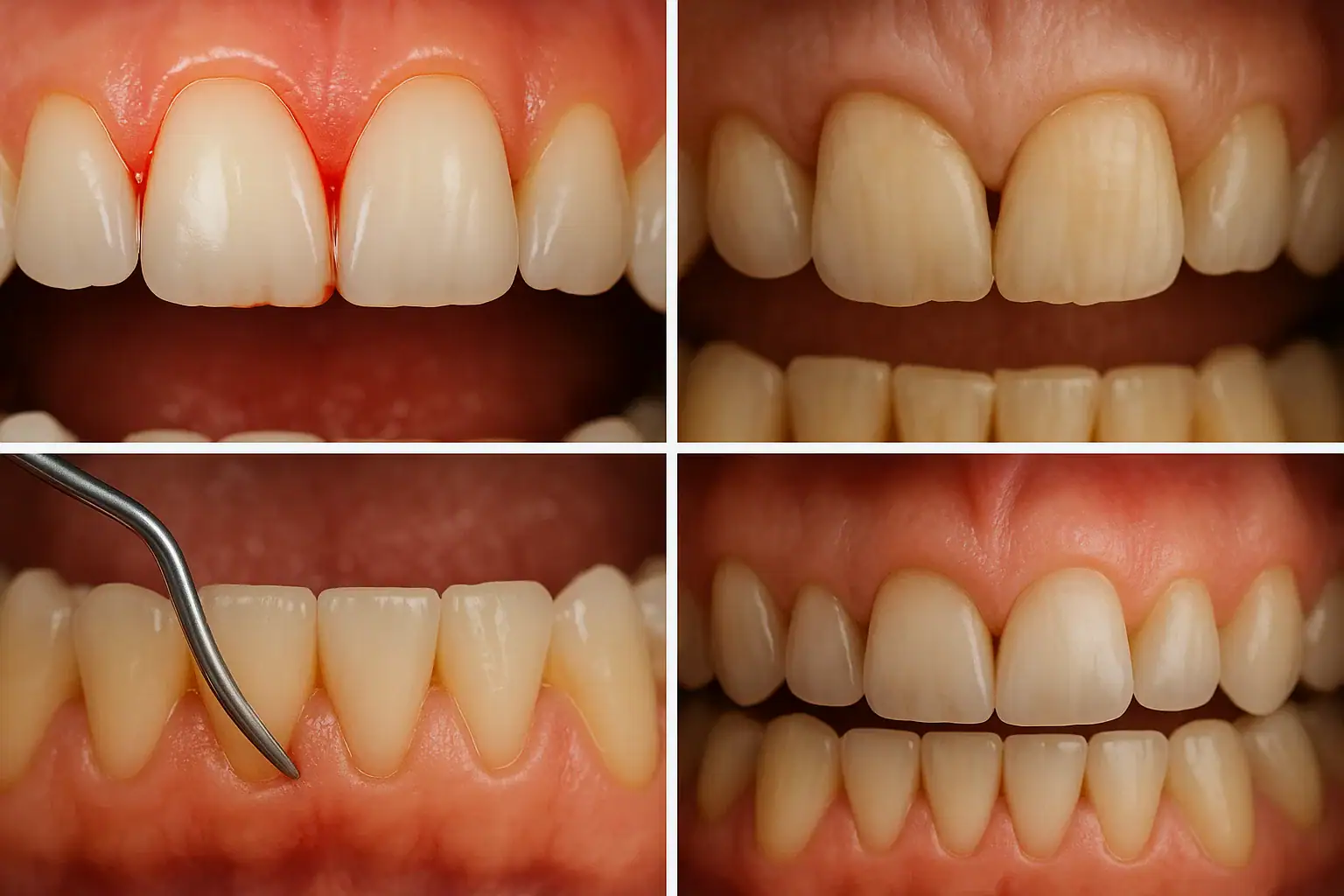
Gum bleeding is a sign of inflammation of the gingival tissue and gum recession is the apical migration of that tissue exposing the root surface. Healthy gums do not bleed on brushing, so bleeding is a signal of inflammation. Recession is common, and cross-sectional surveys report one or more recession sites in about 50% of people aged 18 to 64 and 88% of those aged 65 and over (PubMed 12636127). Lost gum tissue does not regrow by itself, but the process can be stopped and exposed roots can be covered surgically.
- 01Healthy gums are firm and pink and do not bleed during brushing; bleeding means bacterial plaque is driving inflammation.
- 02Recession is widespread: one or more sites of 1 mm or more affect more than 50% of the population, rising to 88% at age 65 and over (PubMed 12636127).
- 03Severe periodontitis, the destructive stage, carries a global age-standardised prevalence of 11.2% and peaks in incidence around age 38, modelled from 291,170 individuals in 37 countries (PubMed 25261053).
- 04Receding tissue does not regenerate spontaneously; treatment stops progression and, where indicated, covers exposed roots with a graft.
- 05Interdental cleaning belongs in daily care: the European workshop on primary prevention names interdental brushes the device of choice wherever they pass without trauma (PubMed 25639826).
Bleeding Gums and Gum Recession Are Warning Signs

Gum bleeding is a sign that the gum tissue is inflamed, and gum recession is the gradual movement of that tissue away from the tooth until the root surface is exposed. Healthy gums are firm and pink and do not bleed during brushing, so bleeding is a signal to act on.
Both problems are common. Cross-sectional surveys reviewed in one analysis found one or more recession sites in 50 percent of people aged 18 to 64 and in 88 percent of people aged 65 and older (PubMed 12636127). The same review notes that recession was found in patients with good oral hygiene as well as in those with poor hygiene, and that it becomes more frequent and more extensive with age (PubMed 12636127).
Recession is often treated as a cosmetic concern because teeth look longer. The biological side matters as much. An exposed root is prone to sensitivity, abrasion and root caries (PubMed 12636127). Bleeding and recession often appear together, since the inflammation that causes bleeding is also one of the processes that destroys the tissue holding the gum in place.
The two conditions differ in one practical respect. Bleeding from early inflammation can be reversed with better cleaning and professional care. Gum tissue that has already receded does not grow back by itself, although its progression can be stopped and exposed roots can be covered surgically. That difference is the reason to act while the problem is still bleeding alone.
What Causes Gum Bleeding
The usual cause of gum bleeding is bacterial plaque along the gum line. Plaque is a sticky film of bacteria that triggers inflammation in the neighbouring gingival tissue. When plaque is left in place it hardens into tartar (calculus), which cannot be removed at home and keeps irritating the gum.
The first stage of this inflammation is gingivitis. The gums turn red and swollen, bleed on brushing or flossing and may feel tender. Gingivitis is reversible, and once plaque is controlled and tartar is removed the tissue can return to health. Left untreated, gingivitis can progress to periodontitis, where the attachment between gum, bone and tooth is destroyed. Bleeding then becomes persistent, gums pull away from the teeth and bone is lost. Periodontitis is described as irreversible and as a major cause of tooth loss, with effects on speech, nutrition and quality of life (PubMed 25639826). A global analysis estimated the age-standardised prevalence of severe periodontitis at 11.2 percent and ranked it sixth in prevalence among all conditions worldwide (PubMed 25261053). This guide was written by Ferit Kaval.
Several other factors make bleeding more likely or harder to notice. Brushing too hard or with a hard-bristled brush can injure the gum. Hormonal changes during pregnancy, puberty and menopause increase gum sensitivity. Smoking and vaping reduce blood flow to the gums, which can mask bleeding while the disease continues. Systemic factors include diabetes, vitamin C deficiency, blood disorders and certain medicines such as blood thinners and some anticonvulsants. Persistent bleeding therefore needs an examination to find which of these applies.
Why Gums Bleed Even With Daily Brushing
Gums can bleed in people who brush every day because brushing alone does not reach every surface where plaque collects. The areas between the teeth and the pocket just below the gum margin are the usual places where plaque survives a daily routine. Tartar that is already attached below the gum line also stays where it is, whatever the brushing effort. The bleeding comes from the inflammation that this remaining biofilm keeps alive.
A European workshop on the primary prevention of periodontitis supports brushing twice a day for at least 2 minutes with fluoridated toothpaste, and notes the expert view that 2 minutes is likely insufficient for people with periodontitis (PubMed 25639826). For people with gingivitis the workshop recommends cleaning between the teeth once a day (PubMed 25639826).
The choice of tool matters. The same workshop names interdental brushes the device of choice for removing plaque between teeth, and it limits the recommendation for floss to sites where an interdental brush cannot pass without trauma (PubMed 25639826). The workshop also found that professionally administered plaque control significantly improves gingival inflammation and lowers plaque scores (PubMed 25639826).
Bleeding may increase for a few days when someone starts cleaning between inflamed teeth. This is the inflamed tissue reacting to the cleaning, and it usually settles as the inflammation subsides. Brushing harder does not help. Bleeding comes from bacterial inflammation, and aggressive brushing is recognised as one of the non-disease causes of recession (PubMed 12636127).
What Causes Gum Recession
Gum recession has several causes, and more than one is often present in the same mouth. The epidemiological studies reviewed by Kassab and Cohen linked recession to trauma, sex, malpositioned teeth, inflammation and tobacco use, and described recession as multifactorial, with one type associated with anatomical factors and another with physiological or pathological factors (PubMed 12636127).
Untreated gum disease is one route. Long-standing inflammation destroys the gum and the bone that support the tooth, and the gum margin follows the bone downwards. Aggressive brushing is another. Scrubbing with a hard brush wears the thin gum on the outer surfaces, which is consistent with the finding that recession appears more often on buccal surfaces than on other sides of the teeth (PubMed 12636127).
Anatomy plays a part. Some people have thin gum tissue by nature and are more prone to recession even with careful cleaning. Teeth that sit outside the arch, whether from crowding or orthodontic movement, may have very little bone covering the root on one side. Grinding and clenching (bruxism) place heavy forces on the teeth and are thought to contribute to gum and bone loss in susceptible areas.
Recession develops slowly and is often painless until it is advanced. The early signs are teeth that look longer, visible root surfaces, small gaps near the gum line and tooth sensitivity to cold or touch. Bleeding or tenderness may appear at the same sites when inflammation is part of the cause.
Can Receding Gums Grow Back
Receding gums do not grow back on their own. Once gum tissue and its attachment are lost, the body does not regenerate them spontaneously. Treatment changes the direction of travel. Recession can be stopped, its progression can be slowed, and lost coverage can be restored surgically at suitable sites.
Stopping recession starts with removing its cause. Where inflammation is driving the loss, professional cleaning and root surface debridement remove the plaque and tartar that keep the tissue inflamed. Where brushing trauma is the cause, the fix is a soft brush and a gentler technique. Where grinding is involved, the forces on the teeth are reduced.
Covering exposed roots is a surgical step. The review by Kassab and Cohen lists gingival grafting, guided tissue regeneration and orthodontic therapy as treatments for recession, and reports that such treatments typically result in aesthetic improvement, relief of sensitivity and a lower risk of root caries (PubMed 12636127). A connective tissue graft moves a small piece of tissue, usually from the palate, to the recession site to thicken the gum and cover the root. Whether a site is suitable depends on how much bone and gum remain between the teeth, how deep the recession is and whether the cause has been controlled.
Since more than half of adults already carry at least one recession site (PubMed 12636127), the realistic aim for many people is stabilisation. Grafting is reserved for sites where the root is sensitive, at risk of decay or visible in the smile. A periodontal examination measures each site, so the decision is made tooth by tooth.
Treatment Options for Bleeding and Receding Gums
Treatment follows the stage of the problem, from cleaning alone to surgery. Every plan starts with the same foundation, which is removal of plaque and tartar above and below the gum line.
Professional cleaning
A professional cleaning removes the plaque and tartar that home care cannot reach. In gingivitis this is often enough, together with better daily cleaning, for the bleeding to stop. Reinforcing oral hygiene at these visits provides further benefit.
Scaling and root planing
Deep cleaning is a non-surgical periodontal treatment for pockets that have formed below the gum. The root surfaces are cleaned of hardened deposits and bacteria so the gum can heal against a clean surface. It is usually done under local anaesthesia, one area at a time.
Antibacterial support
Antibacterial rinses or locally applied agents can support mechanical cleaning. For people with gingivitis, adjunctive chemical plaque control offers advantages, while anti-inflammatory agents in the management of gingivitis have no robust evidence base (PubMed 25639826).
Gum grafting
Grafting is the surgical option for advanced recession. It thickens thin tissue, covers exposed roots where the site allows it and protects them from sensitivity and decay.
Bite protection
Where grinding or clenching adds force to weakened teeth, a night guard or a bite adjustment reduces the load. This protects the gum and bone while other treatment takes effect.
Home Care and When to See a Dentist
Home care supports treatment and keeps results stable, but it does not replace an examination when bleeding persists. The routine that fits the evidence is simple. Use a soft-bristled brush, brush gently along the gum line twice a day for at least two minutes, and clean between the teeth once a day with interdental brushes, using floss only where a brush does not pass. An alcohol-free antimicrobial mouthwash can be added if your dentist recommends it. Stopping smoking removes a factor that both worsens gum disease and hides its signs.
Bleeding that persists beyond 7 to 10 days needs an examination, as do swollen or painful gums, teeth that feel loose, visible recession and persistent bad breath. Timing matters because gingivitis is reversible while attachment loss is not. At the examination the dentist measures pocket depths and the position of the gum margin on each tooth, checks for tartar below the gum and, where needed, takes radiographs to assess the bone. These findings decide whether the plan is cleaning alone, deep cleaning or referral for surgical treatment of recession.
With diagnosis, professional treatment and consistent home care, gum bleeding can usually be stopped and recession can be kept under control. Regular reviews after treatment help catch early changes before they cost more tissue.
Let's plan the right treatment together.
Free Assessment→- 1.Kassab MM, Cohen RE. The etiology and prevalence of gingival recession. J Am Dent Assoc 2003;134:220-5. PubMed 12636127
- 2.Kassebaum NJ, Bernabé E, Dahiya M, Bhandari B, Murray CJ, Marcenes W. Global burden of severe periodontitis in 1990-2010: a systematic review and meta-regression. J Dent Res 2014;93:1045-53. PubMed 25261053
- 3.Chapple IL, Van der Weijden F, Doerfer C, Herrera D, Shapira L, Polak D, et al. Primary prevention of periodontitis: managing gingivitis. J Clin Periodontol 2015;42 Suppl 16:S71-6. PubMed 25639826