Cleaning a dental implant means removing biofilm from the crown margin, the gumline and the spaces beside the implant every day, because implants do not decay but the tissue around them can become inflamed. That risk is not rare: a meta-analysis of 57 studies estimated peri-implantitis in 19.53% of patients (95% CI 12.87-26.19) and 12.53% of implants (PubMed 36261829). The daily routine is a soft-bristled brush twice a day, an interdental brush or implant-specific floss once a day, and professional maintenance visits, whose interval was shown to influence peri-implantitis incidence (PubMed 26701350).
- 01Implants do not decay, but the tissue around them can become inflamed: a 57-study meta-analysis put peri-implantitis at 19.53% of patients (95% CI 12.87-26.19) and 12.53% of implants (PubMed 36261829).
- 02Peri-implant mucositis is inflammation limited to the soft tissue and is reversible; peri-implantitis includes bone loss and needs professional intervention. The distinction decides how urgent the visit is.
- 03Maintenance intervals are not a formality: in a meta-analysis of 13 clinical trials the mean interval of peri-implant maintenance therapy influenced peri-implantitis incidence at implant level, and a history of periodontal disease raised risk at both implant and patient level (PubMed 26701350).
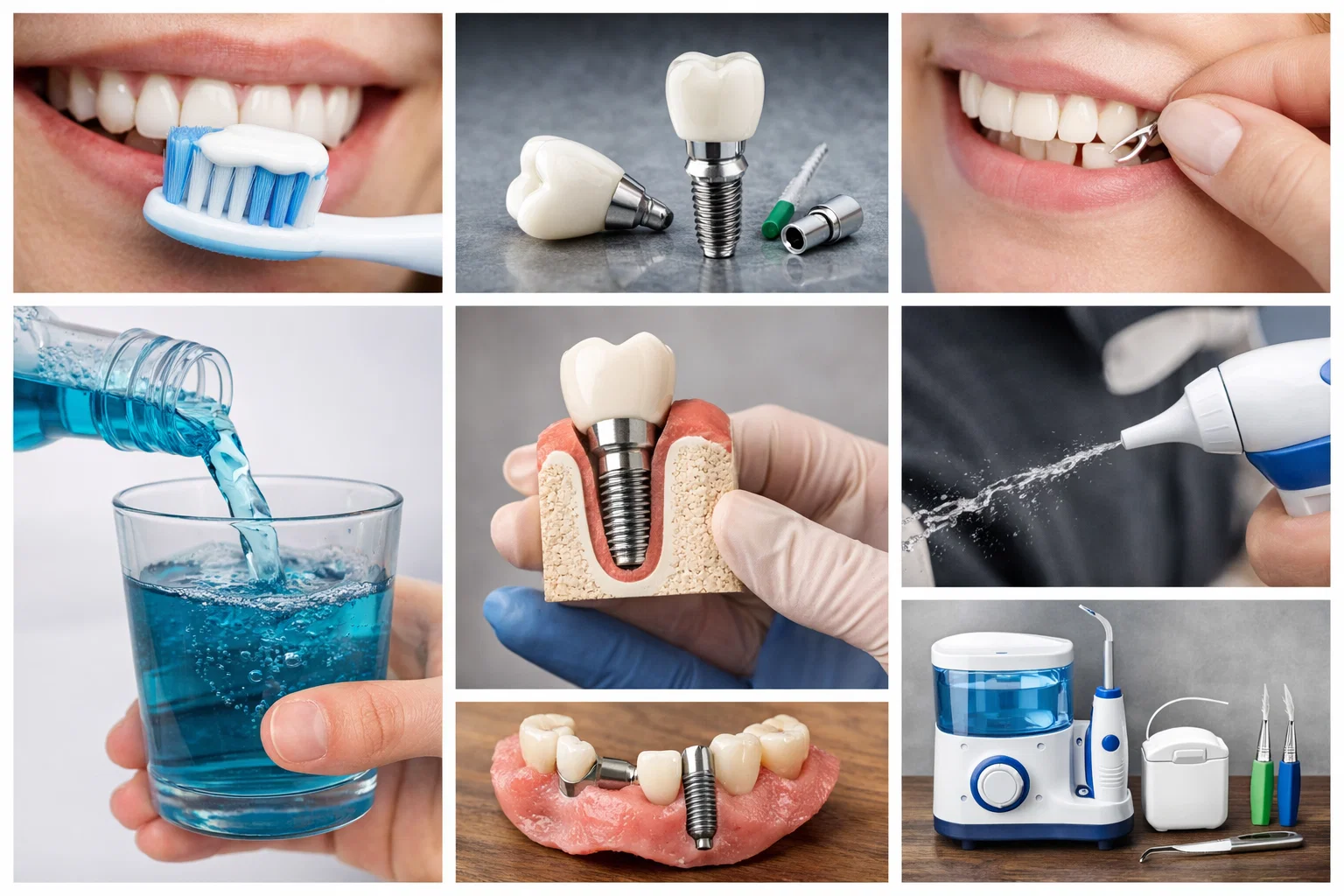
- 04Tool choice is mechanical, not cosmetic: soft-bristled brush, non-metal interdental brushes and implant-specific floss; hard bristles, metal picks and heavily abrasive pastes can scratch the implant surface.
- 05A water flosser flushes debris and is gentle over inflamed tissue but does not mechanically remove adherent plaque, so it supplements brushing and interdental cleaning rather than replacing them.
/ Implant Cleaning, Maintenance, Oral Hygiene & Long-Term Success
Dental implants are one of the most successful dental treatments available today. Their long-term survival is well documented, and how long each one lasts depends on implant care and daily hygiene. A common concern among patients, however, is:
How to clean dental implants properly?
What oral hygiene routine should I follow after implants?
Is implant care different from natural teeth?
What tools and techniques should I use?
Why Implant Care Matters
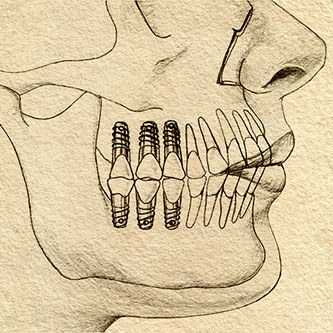
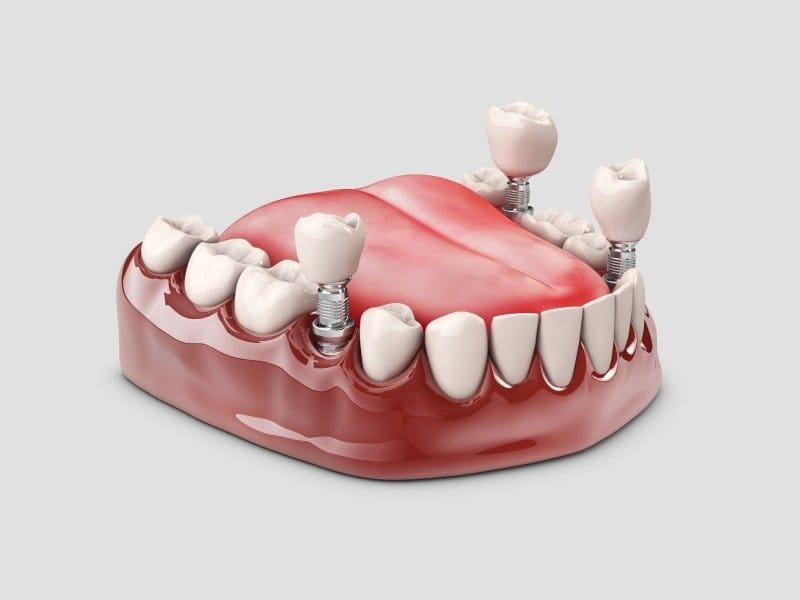
Dental implants act as artificial tooth roots that support crowns, bridges, or full arch restorations. Unlike natural teeth, implants:
✔ Do NOT decay
✔ Can still accumulate plaque and bacteria
✔ Can develop peri-implant diseases if not cleaned properly
The critical goal of implant cleaning is not only cosmetic brightness, but preventing inflammation around the implant, particularly:
Peri-implant mucositis • Reversible gum inflammation
Peri-implantitis • Bone loss-associated inflammation
Both conditions are largely preventable with a correct hygiene routine.
Understanding Implant Hygiene: How Is It Different From Natural Teeth?
Cleaning natural teeth and cleaning dental implants are similar in principle, but there are some key differences:
Similarities
- Brushing daily is essential
- Plaque and biofilm must be removed
- Professional cleanings are important
Differences
✔ Implant surfaces can be scratched by hard hygiene tools
✔ Gum structures around implants differ from natural teeth
✔ Special interdental brushes or floss may be required
✔ Implants require specific cleaning techniques to prevent peri-implant disease
In other words, implant care is not just brushing it’s targeted hygiene plus professional monitoring.
/ Daily Implant Care: Step-by-Step Routine
Here’s a full daily routine that covers both cleaning and maintenance:
1. Soft Toothbrushing
Use a soft-bristled toothbrush (manual or electric) at least twice daily.
Why soft?
✔ Prevents scratching the implant surface
✔ Protects gum tissue
✔ Removes plaque safely
Electric toothbrushes with soft bristles can be particularly effective.
2. Flossing Around Implants
Standard floss may not reach around implants as effectively as specialized products. Options include:
✔ Threaded implant floss
✔ Super floss
✔ Waxed floss for implants
How to floss implants:
- Gently slide under the gumline
- Wrap around the implant crown
- Remove plaque between tooth and implant space
3. Interdental Brushes
Interdental brushes are excellent for cleaning between implants or between an implant and a natural tooth.
✔ Use non-metal brushes
✔ Choose appropriate diameters (smallest that fits comfortably)
✔ Brush gently without forcing
These brushes remove biofilm from spots that toothbrushes miss.
4. Antibacterial Mouthwash
In high-risk cases or after surgery, an antibacterial mouth rinse may be recommended.
Important notes:
- Do not rely solely on mouthwash
- Use only as directed by your dentist
- Avoid overly harsh rinses
5. Tongue Cleaning
Bacteria also accumulate on the tongue. A tongue scraper or soft brush helps reduce overall oral biofilm.
/ Dental Implant Cleaning Beyond Daily Care
Daily routine is essential, but long-term implant success also depends on:
Weekly
✔ Inspection of implant area
✔ Gentle interdental clean
✔ Observation of any redness, swelling or bleeding
Professional Cleanings
At least twice a year, or more often if needed.
Professional tools can:
- Remove hardened deposits (calculus)
- Detect early signs of inflammation
- Prevent progression of peri-implant disease
Best Tools for Cleaning Dental Implants
Using the right tools can make implant maintenance more effective and prevent complications:
Recommended Tools
✔ Soft toothbrush (manual or electric)
✔ Interdental brushes (non-metal)
✔ Implant-specific floss (super or threaded)
✔ Water flossers (oral irrigators). With caution
✔ Antibacterial rinses (when advised)
Tools to Avoid
❌ Hard-bristled brushes
❌ Metal picks or abrasive tools
❌ Toothpastes with heavy abrasives
Using the wrong tools can scratch the implant surface and make biofilm buildup more likely.
Cleaning Around Different Types of Implant Restorations
The method varies slightly depending on the restoration type:
Single Implant Crown
Focus on:
- Crown margins
- Gumline
- Interdental space
Use soft brush + interdental brush + floss regularly.
Implant-Supported Bridge
This restoration replaces multiple teeth but creates areas where food can trap.
Recommended:
✔ Interdental brushes
✔ Floss threaders
✔ Water flosser (if advised)
Full-Arch Fixed Prostheses ( All-on-4 / All-on-6 )
These systems are stable but require attention under the bridge area.
Best approach:
- Water flosser daily
- Interdental brushes
- Specialized floss
/ Water Flossers for Peri-Implant Care
Water flossers (oral irrigators) are very popular, but they are not a substitute for brushing and flossing.
✔ Benefits
- Excellent at flushing food particles
- Gentle around inflammation
- Good for patients with limited dexterity
❌ Limitations
- Does not remove sticky plaque mechanically
- Must be used with proper technique
Best practice: combine water flosser with brushing and interdental cleaning.
Peri-Implant Disease: Prevention Through Cleaning
One of the most serious risks for implants is peri-implant disease, which includes:
Peri-implant Mucositis
Inflammation limited to soft tissues reversible with cleaning.
Peri-implantitis
Inflammation with bone loss requires professional intervention.
Signs to watch for:
✔ Bleeding on brushing
✔ Persistent bad breath
✔ Red or swollen gums around implant
✔ Pus or discharge
✔ Implant mobility (late stage)
Early hygiene and frequent maintenance significantly reduce these risks.
Common Myths About Implant Cleaning
Here are some searched phrases and their clarifications:
❌ “Implants don’t get plaque.”
✔ False. Implants can accumulate biofilm just like natural teeth.
❌ “Only brushing is enough.”
✔ False. Interdental cleaning and professional maintenance are required.
❌ “Implants never fail.”
✔ False. Improper hygiene increases failure risk over time.
/ Implant Care After Surgery, Follow-Up and Lifestyle Factors
Implant Care After Surgery
In the immediate healing phase (first few weeks), focus on:
✔ Gentle cleansing around the implant area
✔ Avoiding vigorous rinsing
✔ No tobacco or alcohol
✔ Cold compress for swelling when needed
✔ Soft diet to avoid irritation
How Often Should You Visit Your Dentist?
Most implant patients are advised:
Every 6 months for regular checkup
Every 3–4 months if history of gum disease
Sooner if any signs of inflammation occur
Professional monitoring ensures early detection of complications.
How Mosdent Helps Patients Maintain Implant Health
At Mosdent Hospital, implant care is part of a comprehensive treatment package:
✔ Personalized hygiene education
✔ Demonstration of correct brushing/flossing techniques
✔ Professional cleaning by implant specialists
✔ Digital monitoring (photography & scans if needed)
✔ Long-term maintenance plans
Personalized care significantly improves outcomes and reduces the risk of peri-implant complications.
Lifestyle Factors That Support Implant Health
Daily hygiene is vital, but systemic and lifestyle factors also matter:
Good Oral Hygiene
Daily brush, floss, and interdental cleaning.
Balanced Nutrition
Avoid sticky sugars that feed bacteria.
Tobacco Cessation
Smoking increases the risk of peri-implantitis.
Hydration
Saliva helps clean bacteria naturally.
/ FAQs
What is the best way to clean dental implants?
Daily brushing, interdental cleaning, and regular professional checkups.
Can the tissue around implants get infected like the gums around natural teeth?
Yes peri-implantitis is a gum and bone infection around implants.
Should I floss around implants?
Yes floss or interdental brush is essential to clean around implant edges.
How often should implant cleaning be done?
Brush twice daily and use interdental tools once daily, plus professional cleaning every 3–6 months.
Are water flossers good for implants?
Yes as a supplement to mechanical cleaning, not a substitute.
Final Takeaway: Implant Care for Long-Term Success
Dental implants are a long-lasting solution if cleaned properly.
✔ Brush gently but thoroughly
✔ Clean between teeth and implants daily
✔ Visit your dentist regularly
✔ Use the right tools
✔ Address inflammation early
At Mosdent, implant care is not an afterthought it’s a core part of treatment success.
Let’s plan the right treatment together.
Free Assessment→- 1.Diaz P, Gonzalo E, Villagra LJG, Miegimolle B, Suarez MJ. What is the prevalence of peri-implantitis? A systematic review and meta-analysis. BMC Oral Health 2022;22:449. PubMed 36261829
- 2.Monje A, Aranda L, Diaz KT, Alarcón MA, Bagramian RA, Wang HL, et al. Impact of Maintenance Therapy for the Prevention of Peri-implant Diseases: A Systematic Review and Meta-analysis. J Dent Res 2016;95:372-9. PubMed 26701350
- 3.Galarraga-Vinueza ME, Pagni S, Finkelman M, Schoenbaum T, Chambrone L. Prevalence, incidence, systemic, behavioral, and patient-related risk factors and indicators for peri-implant diseases: An AO/AAP systematic review and meta-analysis. J Periodontol 2025;96:587-633. PubMed 40489307
- 4.Heitz-Mayfield LJA, Salvi GE. Peri-implant mucositis. J Clin Periodontol 2018;45 Suppl 20:S237-S245. PubMed 29926488