Nobel Biocare is a Zurich-headquartered dental implant manufacturer that grew out of Per-Ingvar Branemark's osseointegration research and supplies implant lines, prosthetic components and the DTX Studio planning software. Its fixtures use grade 4 and grade 5 (Ti-6Al-4V) titanium, or zirconia in the metal-free NobelPearl line, most of them carrying the anodised TiUnite surface. A meta-analysis of 106 prospective studies reported 95.14% implant-level and 91.50% patient-level survival at 10 years with that surface, and peri-implantitis in 5.20% of patients (PubMed 28708905). Which line suits a case depends on bone volume, site and the prosthetic plan.
- 01TiUnite is an anodised, moderately rough titanium surface introduced in 2000; pooling 106 prospective studies out of 32,519 screened publications, survival was 99.50% at 1 year and 95.14% at 10 years at the implant level (PubMed 28708905).
- 02Marginal bone level change with the same surface averaged -0.409 mm at 1 year and -0.886 mm at 5 years at the implant level (PubMed 28708905).
- 03Peri-implantitis was reported in 64 of 1,229 patients across 19 studies, a patient-level prevalence of 5.20% over a mean follow-up of 47.89 months (PubMed 28708905).
- 04Long-term data are thinner and come from small series: 133 implants in 46 patients followed prospectively for 20 years gave 94.7% survival with average marginal bone loss of 0.543 mm, and 5 of the 7 failures were in patients who both smoked and bruxed (PubMed 38607359).
- 05Material and torque spec: grade 4 and grade 5 titanium for the titanium lines, zirconia for NobelPearl, with component torque typically in the 15 to 35 Ncm range.
Nobel Biocare and the Origin of Osseointegration
Nobel Biocare is a dental implant manufacturer headquartered in Zurich, Switzerland, whose range covers implant fixtures, abutments, prosthetic components, guided surgery kits and the DTX Studio planning software. It works across restorative and aesthetic dentistry, and the company states that it is active in more than 80 countries. That figure is company information about distribution; the clinical literature documents something else, which is how the implants perform in patients.
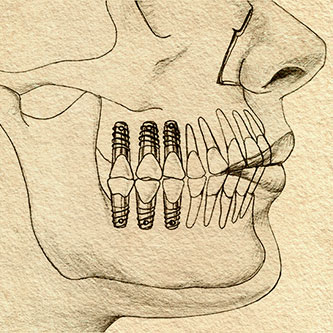
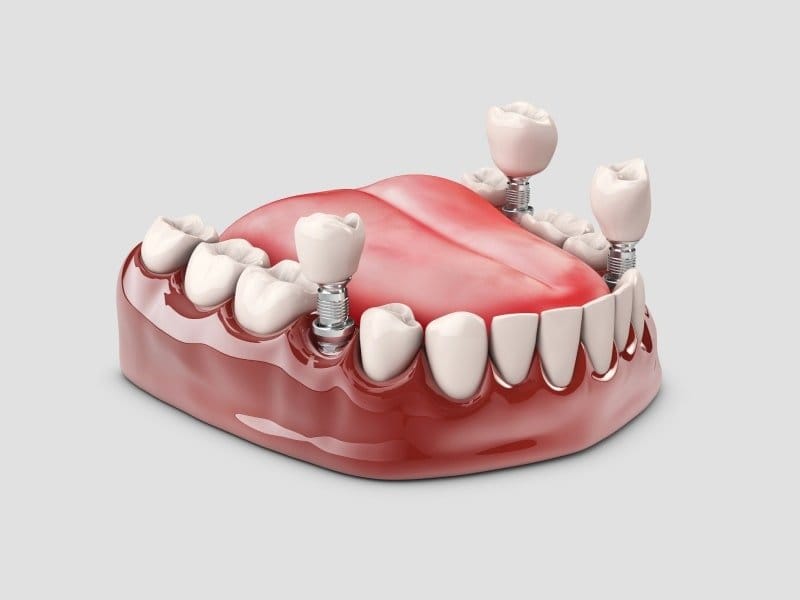
The company's origin lies in the research of Professor Per-Ingvar Brånemark, who described osseointegration, the direct and load-bearing bond between living bone and a titanium surface. Almost every modern dental implant relies on this principle. A titanium screw is placed in the jawbone, bone cells grow onto its surface over the following weeks, and once that bond has formed the screw can carry a crown, a bridge or a full-arch prosthesis.
The practical meaning for a patient is that Nobel Biocare implants are among the most studied fixtures in the field. The surface used on most of its titanium implants has been the subject of a meta-analysis that pooled over a hundred prospective studies, and single cohorts have been followed for two decades. Those data are summarised further on, together with their limits.
A long publication record does not decide on its own whether a given system suits a given mouth. Bone volume, the position of the gap, the planned restoration and the patient's general health still determine the plan. The brand is one line in that plan, and the value of choosing a well documented one lies mainly in the predictability of outcomes and in access to matching components years later.
Nobel Biocare Fixture Lines and Materials
Nobel Biocare offers several implant lines, each designed around a different surgical situation. NobelActive is a tapered implant built for high primary stability, particularly in soft bone, and is often chosen when an implant is placed directly into an extraction socket. NobelReplace has a root-form design intended to keep the surgical steps simple and predictable. NobelParallel has parallel walls and is a general-purpose fixture for a wide range of sites. NobelPearl is a metal-free ceramic implant for patients who prefer to avoid titanium; the ceramic used in fixtures is zirconia, the same material family used in zirconia crowns.
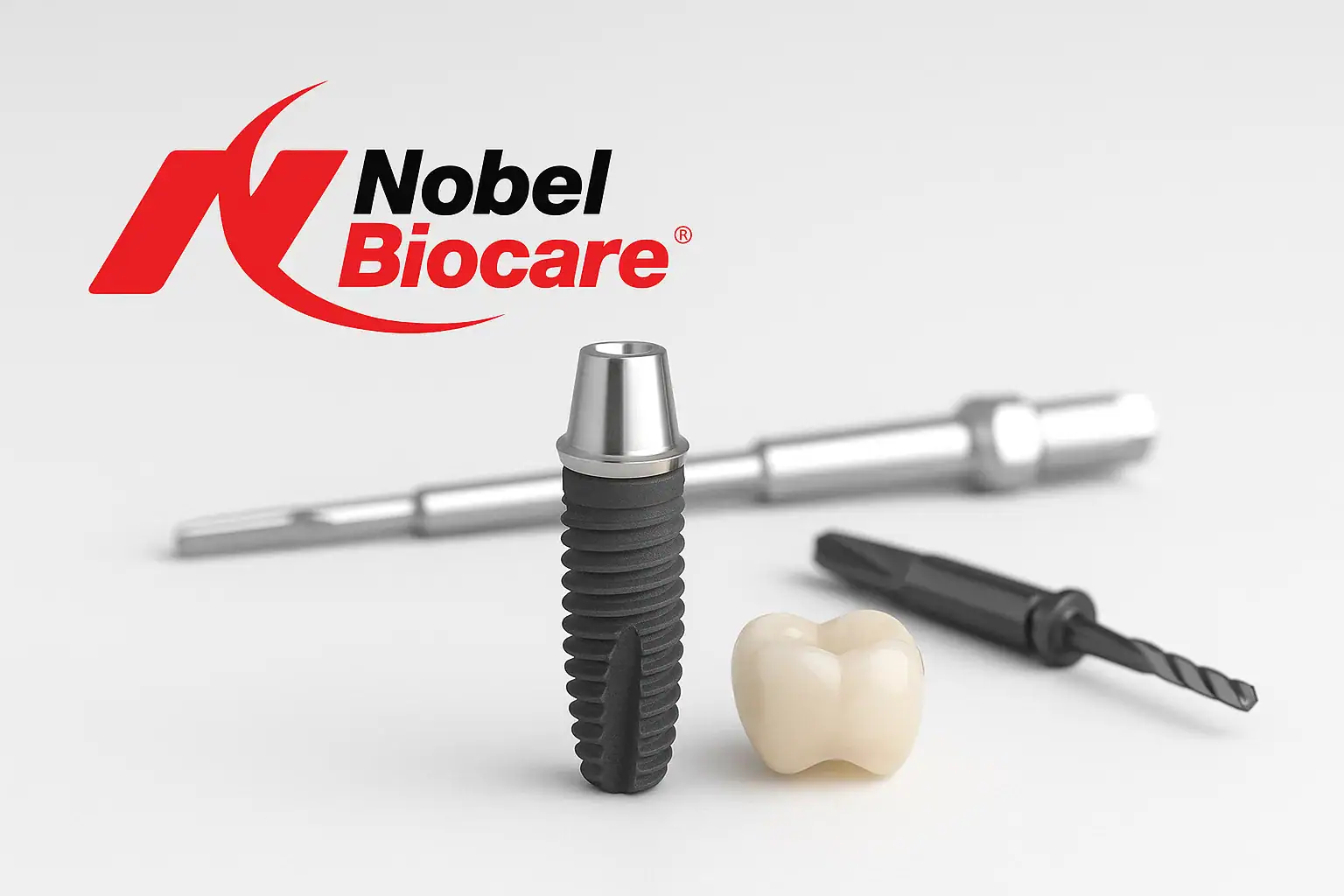
The titanium lines are made from commercially pure grade 4 titanium and from the grade 5 alloy Ti-6Al-4V. Grade 4 is the classic implant material with a long clinical record. Grade 5 adds aluminium and vanadium, which raise the strength of the metal. Zirconia, used in NobelPearl, is a high-strength ceramic with a tooth-coloured appearance.
Most titanium fixtures carry the TiUnite surface, an anodised titanium oxide layer described in the literature as moderately rough. Surface roughness matters because it influences how readily bone cells attach during healing. A newer surface, TiUltra, is also part of the current range.
Which line is chosen depends on the site. Soft bone in the upper back jaw, a fresh extraction socket in the front, a narrow ridge and a patient who asks for a metal-free option each point toward a different fixture. That choice is made on the scan, once the width, height and density of the bone are known.
What the TiUnite Surface Data Show
The TiUnite surface has one of the larger bodies of prospective data in implant dentistry. A meta-analysis that screened 32,519 publications included 106 prospective studies, each with at least 20 patients and at least 12 months of follow-up after loading (PubMed 28708905). Survival at 1 year was 99.50% at the implant level and 99.12% at the patient level (PubMed 28708905). At 10 years, survival was 95.14% at the implant level and 91.50% at the patient level (PubMed 28708905).
The difference between those two figures deserves a moment. Implant-level survival counts each implant separately. Patient-level survival asks whether a patient lost any implant at all, so a person with several implants who loses one is counted as a failure. For someone with multiple implants, the patient-level figure is the one closer to their own experience.
The same meta-analysis measured the change in bone level around the implants. Mean marginal bone level change was -0.409 mm at 1 year and -0.886 mm at 5 years at the implant level (PubMed 28708905). Some bone remodelling after placement is expected, and the figures show it continuing slowly over the first years.
Peri-implantitis, the inflammatory disease that destroys bone around an implant, was reported in 19 of the included studies. Across those studies it affected 64 of 1,229 patients over a mean follow-up of 47.89 months, a patient-level prevalence of 5.20% (PubMed 28708905). Because only a minority of studies reported this outcome, the figure is an estimate, and routine maintenance remains part of implant care.
Twenty-Year Results and What Drives Failure
Data beyond ten years come from smaller series. One prospective study followed 133 implants placed in 46 patients at a single clinic in Sweden for 20 years (PubMed 38607359). Seven implants failed over that period, four of them in the same patient, and the 20-year survival rate was 94.7% (PubMed 38607359). Average marginal bone loss at 20 years was 0.543 mm, and 9 implants showed more than 2 mm of bone loss (PubMed 38607359).
The pattern of failures in that series points to the patient as much as to the implant. In 5 of the 7 failed implants, failure was associated with a combination of smoking and bruxism, the habit of clenching or grinding the teeth (PubMed 38607359). A small cohort cannot settle cause and effect, but the finding fits the wider literature on risk factors.
A meta-analysis of 51 studies covering more than 40,000 implants found smoking associated with a higher risk of implant failure, with a pooled relative risk of 1.92 (PubMed 23940794). The same analysis found no clear effect of diabetes on implant failure and called for further study of diabetes and osteoporosis (PubMed 23940794).
These results are relevant whichever brand is placed. A well documented surface narrows one source of uncertainty, while smoking, grinding and gum health remain in the patient's hands and are addressed before and after surgery. Night guards for bruxism, a plan to stop smoking and treatment of gum disease belong to the same treatment plan as the implant itself.
Full-Arch Work and the All-on-4 Concept
Nobel Biocare workflows include full-arch treatment and digital dentistry support. The full-arch protocol most associated with the company is All-on-4, in which a complete fixed bridge is carried by four implants. The two back implants are usually placed at an angle, which lets them use the available bone and often avoids grafting, and the arch is frequently fitted with a provisional fixed bridge soon after surgery.
Long-term data on the concept exist. A retrospective study of 471 patients treated with 1,884 implants in the lower jaw, followed for 10 to 18 years, reported cumulative prosthetic survival of 98.8% and implant survival of 93% up to 18 years (PubMed 30924309). The same study recorded mechanical complications, such as fractures or loosening in the prosthesis, in 36.7% of cases, and linked smoking to greater bone loss around the implants (PubMed 30924309). A large share of patients in that study were lost to follow-up, which the reader should keep in mind.
All-on-4 is one prosthetic plan among several. Whether four implants are enough, or whether six are better, depends on bone volume, bite force, the opposing jaw and the planned prosthesis. The shape and length of the new teeth are also part of the design, which is why full-arch cases are often planned together with a smile makeover so that the result fits the face.
Planning Software, Guided Surgery and Torque Settings
A Nobel Biocare implant case follows a sequence that most modern implant workflows share. It starts with a clinical examination and three-dimensional imaging. The images are loaded into planning software, in Nobel Biocare's case DTX Studio or a comparable program, where the implant position is chosen in relation to the bone, the nerve canal and the sinus. For guided surgery, the plan is turned into a printed surgical guide that directs the drill to the planned depth and angle. After the implants have healed, the final prosthesis is designed and fitted.
The digital chain also covers the restoration. Intraoral scans replace many conventional impressions, abutments and crowns can be designed with CAD/CAM software, and custom abutments shape the gum contour around the new tooth. These steps are available in many systems. What matters for a patient is that the plan and the final restoration are built from the same data.
Component torque is a technical detail that has a real effect on the life of a restoration. The screws that hold abutments and prosthetic parts are tightened with a torque wrench, and in this system the tightening values usually sit in the range of 15 to 35 Ncm, set by the specific component and the manufacturer's instruction for that part. The wrench is calibrated, used with the matching implant driver, and cleaned and autoclaved after each use. Placement torque during surgery is a separate value, judged by the surgeon for each implant.
Deciding Whether This System Fits Your Case
Choosing Nobel Biocare, or any system, starts with the mouth. Tooth loss from trauma, decay or periodontal disease, a fully edentulous jaw and a missing front tooth in the aesthetic zone each call for a different plan. Before the brand is discussed, the examination answers practical questions about how much bone there is, whether the gums are healthy, and what kind of restoration will sit on top.
The published data on this system are extensive and reassuring, and they also set sensible expectations. Survival figures are averages from study populations and describe likelihoods, so they cannot promise an individual result. Bone remodelling continues slowly, peri-implant disease can develop, and smoking and grinding raise the risk of failure. Regular check-ups and professional cleaning are part of the treatment, just as the surgery is.
Access to parts is the other practical consideration. Screws loosen and abutments occasionally fracture over the life of a restoration. A widely distributed system with long production continuity makes it easier to find an original-specification part years later, wherever the patient lives. That is one of the reasons the implant system is worth recording in the treatment plan.
The final choice between Nobel Biocare lines, or between Nobel Biocare and another documented system, is made once the scan and the prosthetic plan are on the table. At that point the surface, the fixture shape and the component range can be matched to the case.
Let's plan the right treatment together.
Free Assessment→- 1.Karl M, Albrektsson T. Clinical Performance of Dental Implants with a Moderately Rough (TiUnite) Surface: A Meta-Analysis of Prospective Clinical Studies. Int J Oral Maxillofac Implants 2017;32:717-734. PubMed 28708905
- 2.Östman PO, Chrcanovic BR, Albrektsson T. A Prospective Report of the Clinical Outcome of TiUnite Implants at 20 Years of Follow-up. Int J Oral Maxillofac Implants 2024:389-395. PubMed 38607359
- 3.Chen H, Liu N, Xu X, Qu X, Lu E. Smoking, radiotherapy, diabetes and osteoporosis as risk factors for dental implant failure: a meta-analysis. PLoS One 2013;8:e71955. PubMed 23940794
- 4.Maló P, de Araújo Nobre M, Lopes A, Ferro A, Botto J. The All-on-4 treatment concept for the rehabilitation of the completely edentulous mandible: A longitudinal study with 10 to 18 years of follow-up. Clin Implant Dent Relat Res 2019;21:565-577. PubMed 30924309
- 5.Babbush CA, Brokloff J. A single-center retrospective analysis of 1001 consecutively placed NobelActive implants. Implant Dent 2012;21:28-35. PubMed 21986453
- 6.Pettersson P, Sennerby L. A 5-year retrospective study on Replace Select Tapered dental implants. Clin Implant Dent Relat Res 2015;17:286-95. PubMed 23815482
- 7.Friberg B, Ahmadzai M. A prospective study on single tooth reconstructions using parallel walled implants with internal connection (NobelParallel CC) and abutments with angulated screw channels (ASC). Clin Implant Dent Relat Res 2019;21:226-231. PubMed 30779294
- 8.Tartsch J, Chrcanovic B, Wennerberg A, Kohal RJ, Albrektsson T. Two-Piece Zirconia Implants: An Office-Based Retrospective Study with up to 7 Years and Mean 3 Years of Follow-up. Int J Oral Maxillofac Implants 2026;41:1-16. PubMed 40736783