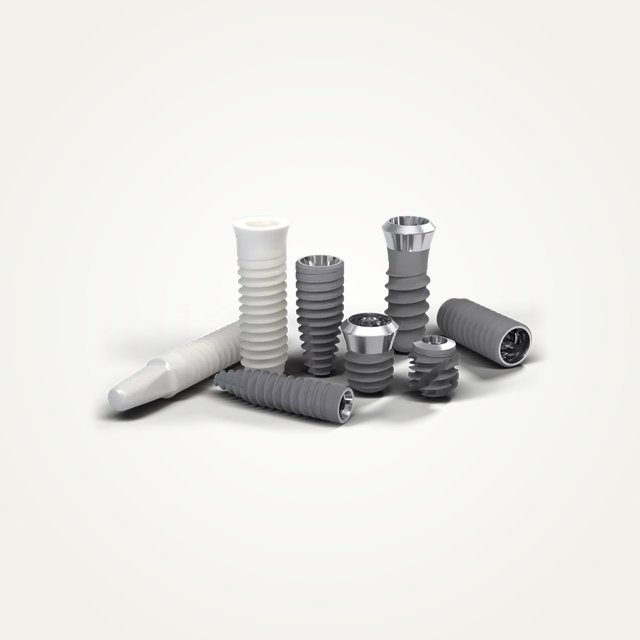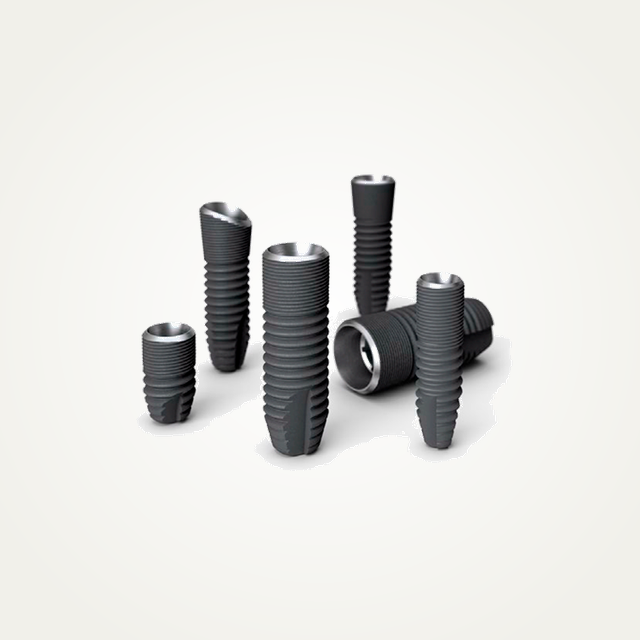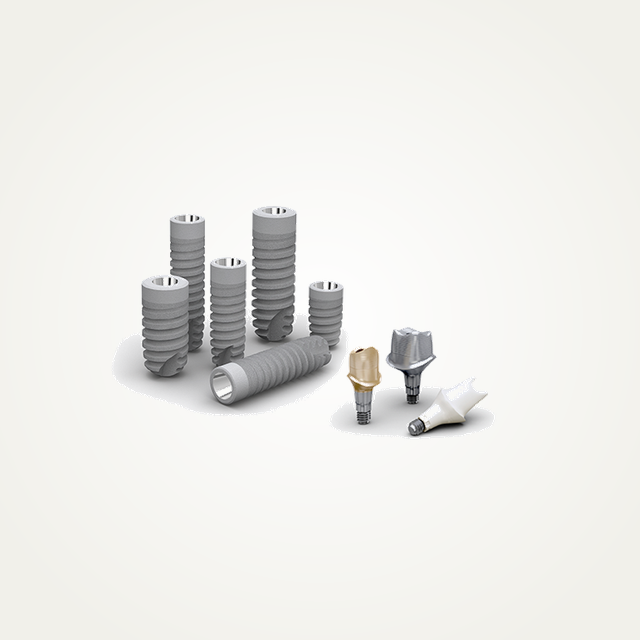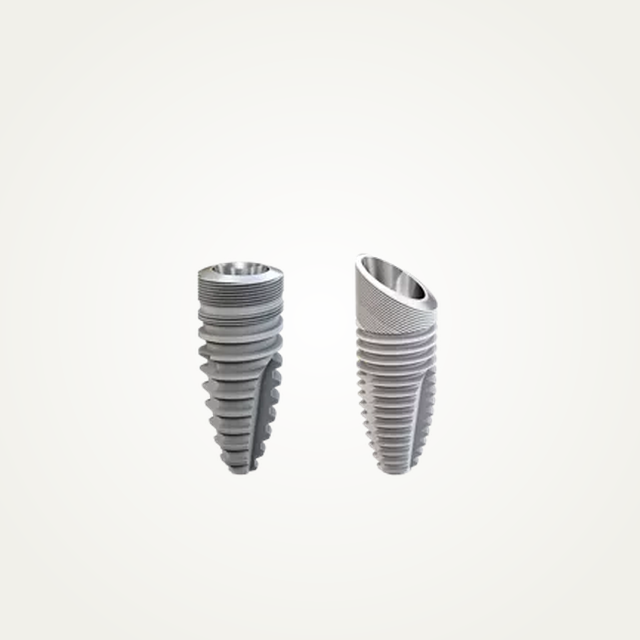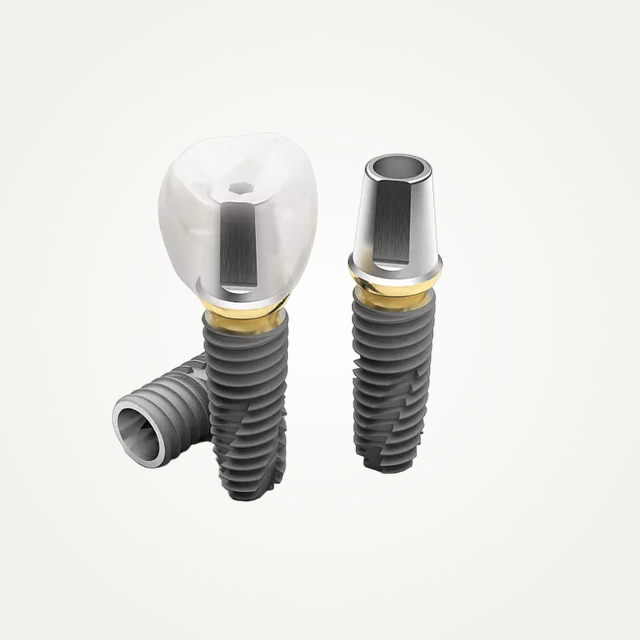
MegaGen implants are made by MegaGen Implant Co., Ltd., a South Korean manufacturer founded in 2002 and headquartered in Daegu, where its main plant sits. The fixture body is commercially pure grade 4 titanium, as three separate FDA 510(k) summaries state. Its XPEED® surface is a calcium-incorporated layer over a sandblasted and acid-etched base, though the BlueDiamond line is filed with an SLA surface, and the connection is a 5-degree Morse taper the manufacturer calls Magic Five. A four-year multicentre prospective series reported 98.1% implant survival (PubMed 29732018), and an all-MegaGen retrospective series reported 96.5% patient-level survival at 10 years, though only 10 patients reached that point (PubMed 30161062). No brand-specific systematic review exists yet.
- 01MegaGen is South Korean, founded 2002 in Daegu. Of its 41 FDA 510(k) records, the 24 decided since 2015 carry a Korean applicant address and the 17 from 2005 to 2014 a California one; the most recent, K251232, was cleared in June 2026.
- 02The fixture body is commercially pure grade 4 titanium. The Ti-6Al-4V alloy named in the same FDA documents is the abutment material, not the implant body.
- 03AnyRidge keeps the core diameter fixed and varies thread depth instead. The manufacturer states a Ø5.0 mm fixture can be seated in a 2.9 mm osteotomy in D4 bone.
- 04XPEED is not hydrophilic and this has been measured: contact angle 118.2 ± 1.91 degrees, with no statistically significant difference from SLA (PMC11173531).
- 05A retrospective series using only MegaGen implants reported 96.5% cumulative patient-level survival at 10 years (PubMed 30161062); a four-year prospective series reported 98.1% survival (PubMed 29732018). There is no systematic review for this brand.
The name MegaGen, or the product name AnyRidge, usually reaches patients on a treatment quote. What those names commit you to can be verified from regulatory records, manufacturer technical documents and published clinical studies, and the same sources show where the evidence stops.
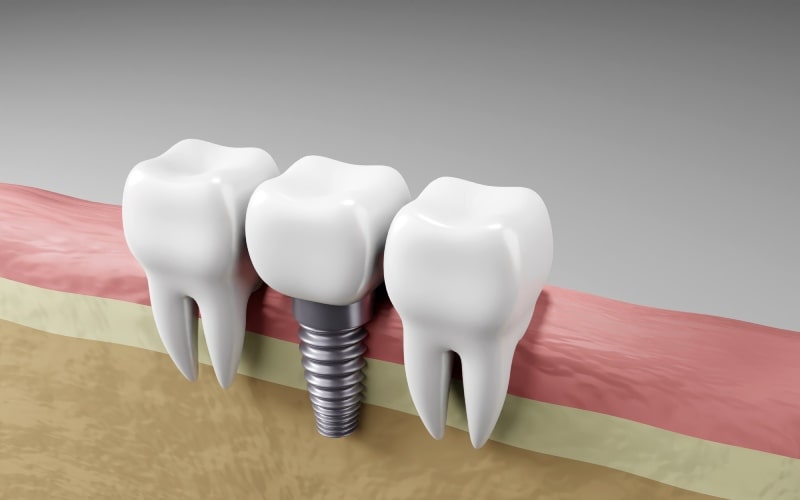
/ Where MegaGen implants are made and who owns the company
MegaGen Implant Co., Ltd. was founded in 2002 and is headquartered in Daegu, South Korea, where its principal manufacturing plant is located. The origin is verifiable outside the company's own marketing: the FDA 510(k) database holds 41 records filed by MegaGen; the 24 decisions since 2015 carry a Korean applicant address (23 of them in Daegu), while the 17 records from 2005 to 2014 carry the company's California address. The most recent, K251232, was cleared on 18 June 2026.
Ownership runs in an unusual direction for this category. MegaGen was not acquired; it was the acquirer. BIOLASE, the American dental laser manufacturer, states in its own corporate announcement that a new chapter in its history opened following its acquisition by MegaGen Implant, and names MegaGen founder Dr. Kwang Bum Park as chief executive. SEC EDGAR filings for BIOLASE, INC corroborate the timeline independently: a notification of delisting dated 6 September 2024, an 8-K on 1 October 2024 filed under Item 1.03 for bankruptcy or receivership, and no exchange listing today. MegaGen's own 2026 shareholding is not verifiable from a primary source because the company is not listed in the United States, so no percentage is quoted here.
For a patient the relevant consequence is supply continuity rather than corporate history. A manufacturer whose founder is still in charge and which is expanding is a more predictable source of abutments and screws a decade from now than one that has changed hands. That is an observation about supply risk, not a ranking; the same question is worth asking of any implant system.
/ Grade 4, not grade 5: what the FDA documents say
AnyRidge fixtures are not grade 5 titanium, and the regulatory record does not support the claim that they are.
Three separate 510(k) summaries state the fixture material explicitly. K182448 describes the AnyRidge Octa 1 fixture as made of CP Ti Grade 4 with an SLA-treated surface. K122231, from 2012, states the system is made from CP Titanium Gr.4 and Ti-6Al-4V ELI with sandblasted, large-grit, acid-etched surface treatment. K241972, from 2024, defines the BlueDiamond body as CP Ti Grade 4 to ASTM F67. The alloy appears in the same documents, but as the abutment material. Every documented MegaGen fixture body is grade 4.
The comparison worth drawing is that grade 4 is the highest-strength unalloyed class under ASTM F67 and the most widely used fixture material across the whole category, so it is the shared baseline rather than a differentiator. Grade 5 is not pure titanium at all; it is the Ti-6Al-4V alloy containing roughly 6% aluminium and 4% vanadium. The mechanical difference between the two classes is set out in more detail on our Osstem spec page. Notably, MegaGen's own product communication presents grade 4 as an advantage on fatigue grounds rather than as a compromise, so describing MegaGen as grade 5 contradicts the manufacturer as well as the file.
/ What an AnyRidge implant is: the KnifeThread idea
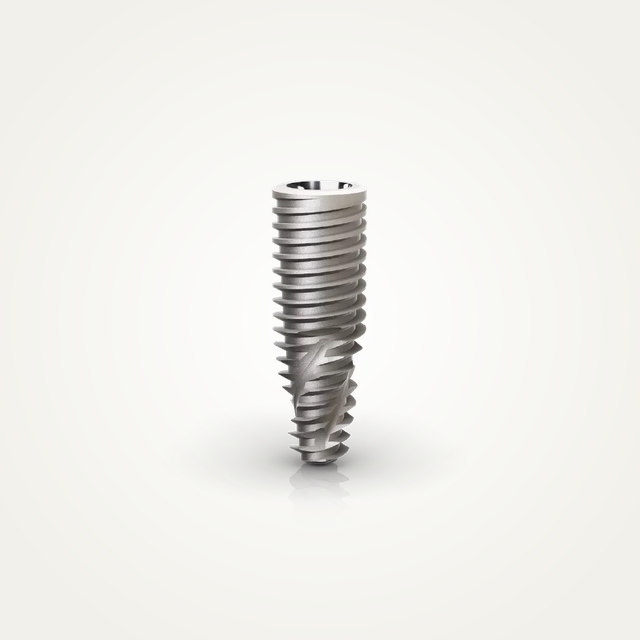
AnyRidge is the line MegaGen launched in 2009 and it carries most of the brand's published clinical data. The design idea reduces to one sentence: the core diameter stays fixed and only the thread depth changes.
Conventional practice in soft bone is to choose a wider implant to gain grip, which requires a wider osteotomy and removes more bone. AnyRidge instead keeps a slim core and deepens the threads, so a broad gripping profile is delivered into a narrow socket. The manufacturer's own figure is concrete: a Ø5.0 mm fixture can be placed in a 2.9 mm osteotomy in D4 bone. The blade-profile, self-tapping thread gives the design its name, KnifeThread.
The geometry has been measured, though not under the brand name. A digital model study comparing a progressive knife-edge thread against ISO metric threads found the knife-edge profile increased external surface area by 9.9% at 4.6 mm diameter, with the apical half showing gains between 9.3% and 23.5%, while at 3.8 mm diameter the ISO self-tapping model was ahead by 1.5% (PubMed 41303958). The authors state directly that whether this surface-area difference translates into measurable stability remains to be investigated.
/ The measured benefit and the measured cost of deeper threads
The clinical half of that question has now been tested under the brand name, and it cuts both ways.
A 2026 randomised controlled trial compared two MegaGen BlueDiamond fixtures identical in macro and micro design and differing only in thread depth, 0.40 mm against 0.65 mm, placed in 54 patients with fully guided surgery and followed for one year. Deeper-thread implants recorded higher insertion torque and a larger proportion clearing the 40 Ncm threshold. In the direct subgroup comparison of the two fixtures that differ only in thread depth, the deeper-thread group showed significantly greater angular deviation, particularly at molar sites (p = 0.029). At twelve months, marginal bone levels did not differ between groups (PubMed 41978331).
Read plainly: deeper threads buy primary stability, which is what immediate loading and soft bone protocols need, and they cost accuracy in guided placement. That is a trade-off decided by bone density and site, not a badge. The study was supported by a MegaGen research grant, which is worth knowing while reading it, and it also reported the unfavourable finding, which is worth noting too.
/ XPEED, the calcium layer, and why the implant looks blue
XPEED® is a calcium-incorporated layer applied hydrothermally over a sandblasted, acid-etched titanium base. This is not only the manufacturer's description. A peer-reviewed characterisation study using X-ray diffraction and electron microscopy found a crystalline calcium titanate (CaTiO₃) layer on XPEED surfaces with calcium evenly distributed and penetrating the implant, and reported higher cell density and viability for XPEED and SLA than for hydroxyapatite-coated surfaces after four weeks of healing in a rabbit model (PubMed 38893971). The boundary matters: that is an animal and cell-culture study, so it evidences what the surface is, not what it survives.
The colour is the part patients actually notice, and it comes from the surface treatment. The manufacturer's own product page states that the blue appearance is a quality check indicating the absence of acid residue. That is a manufacturer statement; no independent publication confirms or contradicts it. Separately, MegaGen sells a line called BlueDiamond, and that name refers to the product line rather than to the colour of any implant. Its 2024 FDA file declares CP Ti Grade 4 with an SLA surface, so "I had a MegaGen placed" does not tell you which line or which surface you received. Ask for the product code.
/ Wettability: XPEED is conventional, and that has been measured
Wettability describes how readily an implant surface engages blood. For the XPEED surface it has been measured.
The contact angle of the XPEED surface was measured at 118.2 ± 1.91 degrees, against 121.1 ± 2.20 degrees for SLA and 123.7 ± 2.72 degrees for hydroxyapatite, with no statistically significant difference between the three groups (PMC11173531, Table 3). For scale, surfaces classed as hydrophilic generally fall below 90 degrees and superhydrophilic surfaces below 10 degrees. So 118 degrees is in the hydrophobic range and XPEED shows no measurable wettability advantage over the SLA base beneath it. The authors attribute the high values across all groups to gamma irradiation of the samples. MegaGen makes no hydrophilicity claim for XPEED in its own official material either.
There is a clinically relevant exception. Titanium surfaces accumulate hydrocarbons over time and lose wettability; plasma treatment reduces that deposit. MegaGen's Plasma X Motion device activates the implant immediately before placement, and the treated version is called XPEEDActive. A four-week human histologic study found bone-to-implant contact of 38.7% with plasma treatment against 22.4% without (p = 0.002), on a very small sample of seven and five implants (PubMed 38793397). A stronger record arrived in 2025: an independent, self-funded, single-blind split-mouth randomised trial placed two contralateral AnyRidge implants in each of 24 patients, one plasma-activated. All 48 implants osseointegrated at 90 days, insertion torques did not differ, and plasma-treated implants showed significantly higher stability quotients at 60 and 90 days (p = 0.04 and p = 0.03), though the authors note the absolute difference between groups remained limited (PubMed 40693123). Whether your clinic uses the device is a fair question to ask.
/ The published survival record, and where it stops
One brand-specific study with a named product and a real survival percentage is a multicentre prospective series from 2018: 57 AnyRidge fixtures in 46 patients across six centres, immediately loaded and followed for four years. One fixture was lost, giving 98.1% implant-based and 97.6% patient-based survival, with 0.38 ± 0.21 mm of marginal bone loss over the period. The authors close by stating that long-term data are needed (PubMed 29732018).
Three further records fill in the picture. A maxillary overdenture series of 132 AnyRidge implants in 31 patients reported 98% overall survival at a mean 4.4 years, with peri-implantitis incidence of 1% and subgroup survival of 100%, 97.8% and 93.3% for six, four and three implants respectively (PubMed 35456347). A prospective cohort of 215 AnyRidge implants in 24 patients restored with 36 full arches lost two fixtures over one to three years, reported as 95.9% patient-based survival (PubMed 28246595). And a randomised trial of 45 calcium-incorporated implants in 30 patients recorded no implant or prosthesis failures five years after loading, with 1.19 ± 0.48 mm of marginal bone loss and no significant difference from the control surface (PubMed 29234748).
Ten-year data exist, but in retrospective form: a series of 250 immediate implants placed with the root membrane technique in 182 patients, all of them MegaGen (EzPlus and AnyRidge) according to the full text, with a mean follow-up of 49.94 months and 96.5% cumulative patient-level survival at 10 years (PubMed 30161062). The series is tied to one surgical technique and only 10 patients reached the 10-year mark, so it is not prospective 10-year evidence. There is also no published systematic review or meta-analysis of MegaGen implants. That does not make the system poor, it makes the evidence base young, so "proven" cannot be applied to it in the same sense as to systems with thirty years of data.
/ A documented indication: atrophic and narrow ridges
The best-documented use case for the MegaGen system sits where bone is scarce.
In a two-centre randomised controlled trial, 80 patients with atrophic posterior jaws were allocated either to 5 × 5 mm implants with a calcium-incorporated surface or to implants at least 10 mm long placed in grafted bone. Five years after loading there was no significant difference in prosthesis or implant failures. Complications were significantly more frequent at grafted mandibular sites (17 patients against 9, p = 0.013), and longer implants showed greater five-year bone loss in both jaws (p = 0.004 mandible, p = 0.024 maxilla). The authors add that 10-year data are needed before firm recommendations (PubMed 31116187).
Practically, this puts ultra-short implants on the table as an alternative to bone grafting or a sinus lift for patients with limited bone height, with a shorter treatment and less morbidity. Whether it applies to your anatomy is a CBCT question, decided alongside guided surgical planning rather than from a brand page.
/ What determines the cost of MegaGen implant treatment in Turkey
The cost of MegaGen implant treatment is a structure rather than a single figure. No figure appears here because a price quoted before a CBCT scan describes a product rather than your treatment, and because the line placed changes the answer.
That last point is specific to this brand and it is where most quotes go wrong. AnyRidge, AnyOne, ST, ARi and BlueDiamond are different products at different costs, so a single figure labelled "MegaGen implant" leaves the patient unsure what they bought. Beyond the line, four layers set the total. Diameter, length and surface, including whether plasma activation is used. The number of stages and what is included, since a fixture price is not a treatment price once a healing abutment, a final abutment and a restoration are added; the restoration material is its own line item, and the choice of a zirconia crown moves the total independently of the implant. Additional surgery, which imaging determines. And the scale of the case, which separates a single implant from a four-implant arch, a six-implant arch and a full-mouth restoration by an order of magnitude in surgical and laboratory time. Where a single missing tooth is concerned, the alternative route is compared on our implant versus bridge page.
Two costs sit outside the quote and belong in the comparison anyway: component availability over the next decade and the review schedule. The travel side is set out on our dental implants in Istanbul page.
/ Warranty, spare parts and service after you fly home
A warranty comes into play years after treatment, and for MegaGen the manufacturer side cannot be verified from a primary source.
MegaGen has not published a patient-facing, verifiable manufacturer warranty period. The warranty document published through European channels is a commercial specification between distributor and clinician. If you are told the manufacturer warranty lasts three years, ten years or a lifetime, none of those durations has a primary source, and relying on one may mean relying on a right you do not have.
A manufacturer warranty covers the product and in practice runs through the clinician. A clinic warranty covers workmanship, reviews and remake, and it is the one that pays for surgical and laboratory time. Ask for both in writing, with duration and exclusions listed separately, before treatment begins.
On components, MegaGen's position is stronger than most value-tier brands and weaker than the market leaders, and both halves are true. The manufacturer maintains its own Turkish company, operating since 2008 with seven regional offices, is registered with the MHRA in the United Kingdom through a Manchester-based authorised representative, and runs a Dutch subsidiary. Against that, a general dental practice in Manchester or Berlin is less likely to hold MegaGen components in stock than the leading systems. That is solvable, but only with the right paperwork. Leave with the product code and serial number, not just the brand name, and with the line recorded; our patient journey page lists what is handed over at discharge.
/ Verifying the MegaGen implant you actually received
The general verification procedure applies to every system and is set out step by step on our Straumann spec page: European medical device law obliges the manufacturer to supply an implant card carrying the device name, serial number, lot number, Unique Device Identification, model and manufacturer details (Regulation (EU) 2017/745, Article 18), and the card is what makes any claim checkable.
Two checks are specific to this brand. First, the line and surface written on your paperwork must be a real combination, since AnyRidge, AnyOne, ST, ARi and BlueDiamond are distinct products and not every surface belongs to every line. Second, the manufacturer must be named as the legal entity MegaGen Implant Co., Ltd. rather than a distributor trade name; the public record behind that name is 41 FDA 510(k) clearances and European certification through notified body DNV. A clinic that cannot produce this documentation is a problem whatever brand is on the quote, and our clinical team issues it as standard.
/ Maintenance decides the tenth year, not the brand
MegaGen's best published outcomes come from four and five-year follow-ups. What determines the tenth year is the same across systems.
The systematic review of peri-implant epidemiology calculates weighted mean prevalences of 43% for peri-implant mucositis and 22% for peri-implantitis, with meta-regression showing prevalence rising with function time (PubMed 25495683). The mechanism that ends an implant's service is inflammation in the surrounding tissue rather than fatigue in the titanium, which is covered in detail on our peri-implantitis page.
Maintenance is the part with measured benefit. A systematic review and meta-analysis found lower incidence of peri-implant disease among implants enrolled in supportive programmes and concluded that a recall interval of at least five to six months is warranted, with a history of periodontal disease significantly influencing incidence (PubMed 26701350). Daily technique matters alongside the recall schedule and is set out on our implant cleaning guide.
MegaGen is not one of the six systems on our comparison table, which carries Straumann, Osstem, Neodent, Ankylos, Astra Tech and Medentika side by side. Which system suits a given case is decided by bone volume, site and prosthetic plan, and our clinicians will work through those variables with you rather than hand you a ranking.
Let’s plan the right treatment together.
Free Assessment→- 1.Raes F, Eccellente T, Lenzi C, Ortolani M, Luongo G, Mangano C, et al. Immediate functional loading of single implants: a multicenter study with 4 years of follow-up. J Dent Res Dent Clin Dent Prospects 2018;12:26-37. PubMed 29732018
- 2.Naeini EN, De Bruyn H, Bronkhorst EM, D'haese J. Case Series on the Long-Term Effect of Three Different Types of Maxillary Implant-Supported Overdentures on Clinical Outcomes and Complications. J Clin Med 2022;11. PubMed 35456347
- 3.Bechara S, Lukosiunas A, Dolcini GA, Kubilius R. Fixed Full Arches Supported by Tapered Implants with Knife-Edge Thread Design and Nanostructured, Calcium-Incorporated Surface: A Short-Term Prospective Clinical Study. Biomed Res Int 2017;2017:4170537. PubMed 28246595
- 4.Gastaldi G, Grusovin MG, Felice P, Barausse C, Ippolito DR, Esposito M. Early loading of maxillary titanium implants with a nanostructured calcium-incorporated surface (Xpeed): 5-year results from a multicentre randomised controlled trial. Eur J Oral Implantol 2017;10:415-424. PubMed 29234748
- 5.Esposito M, Barausse C, Pistilli R, Piattelli M, Di Simone S, Ippolito DR, et al. Posterior atrophic jaws rehabilitated with prostheses supported by 5 × 5 mm implants with a nanostructured calcium-incorporated titanium surface or by longer implants in augmented bone. Five-year results from a randomised controlled trial. Int J Oral Implantol (Berl) 2019;12:39-54. PubMed 31116187
- 6.Yang KR, Hong MH. Improved Biocompatibility and Osseointegration of Nanostructured Calcium-Incorporated Titanium Implant Surface Treatment (XPEED(®)). Materials (Basel) 2024;17. PubMed 38893971
- 7.Makary C, Menhall A, Lahoud P, Yang KR, Park KB, Razukevicius D, et al. Bone-to-Implant Contact in Implants with Plasma-Treated Nanostructured Calcium-Incorporated Surface (XPEEDActive) Compared to Non-Plasma-Treated Implants (XPEED): A Human Histologic Study at 4 Weeks. Materials (Basel) 2024;17. PubMed 38793397
- 8.Stacchi C, Rapani A, Montanari M, Martini R, Lombardi T. Effect of Vacuum Plasma Activation on Early Implant Stability: a Single-Blind Split-Mouth Randomized Clinical Trial. J Oral Maxillofac Res 2025;16:e4. PubMed 40693123
- 9.Kwon NY, Jung JY, Ko KA, Park SH, Strauss FJ, Lee JS. Thread Depth Effects on Stability and Positional Accuracy in Guided Immediate Implants: A Randomized Controlled Trial. Clin Implant Dent Relat Res 2026;28:e70145. PubMed 41978331
- 10.Farronato D, Poncia L, Vidotto M, Maurino V, Romano L. Implant Surface Variability Between Progressive Knife-Edge Thread Design and International Organization for Standardization Thread with and Without Tapping Area: A Model Analysis. Materials (Basel) 2025;18. PubMed 41303958
- 11.Camps-Font O, Rubianes-Porta L, Valmaseda-Castellón E, Jung RE, Gay-Escoda C, Figueiredo R. Comparison of external, internal flat-to-flat, and conical implant abutment connections for implant-supported prostheses: A systematic review and network meta-analysis of randomized clinical trials. J Prosthet Dent 2023;130:327-340. PubMed 34776267
- 12.Derks J, Tomasi C. Peri-implant health and disease. A systematic review of current epidemiology. J Clin Periodontol 2015;42 Suppl 16:S158-71. PubMed 25495683
- 13.Monje A, Aranda L, Diaz KT, Alarcón MA, Bagramian RA, Wang HL, et al. Impact of Maintenance Therapy for the Prevention of Peri-implant Diseases: A Systematic Review and Meta-analysis. J Dent Res 2016;95:372-9. PubMed 26701350
- 14.FDA 510(k) records K182448, K122231, K241972, K192347, K242030; openFDA applicant:"MegaGen" returns 41 records.
- 15.MegaGen AnyRidge product catalogue (AnyRidge_engweb.pdf, 128 pages, 2019): "Magic Five (5° Internal connection)", "5 degree morse taper".
- 16.MegaGen Türkiye product page (megagen.com.tr/anyridge), accessed 9 August 2026.
- 17.MegaGen Türkiye branch list (megagen.com.tr/about/contact/subeler), accessed 9 August 2026: seven regional offices.
- 18.Anadolu Agency, 26 February 2024: MegaGen's Istanbul plant decision, 15 million USD initial investment, CEO Kwang Bum Park statement.
- 19.biolase.com corporate statement on acquisition by MegaGen Implant; SEC EDGAR CIK 0000811240 filings for BIOLASE, INC.
- 20.DNV (notified body 2460) European medical device regulation certificates; MHRA registration via MDSS-UK RP Limited, Manchester.
- 21.Regulation (EU) 2017/745, Article 18: implant card and information supplied to the patient.
- 22.Siormpas KD, Mitsias ME, Kotsakis GA, Tawil I, Pikos MA, Mangano FG. The Root Membrane Technique: A Retrospective Clinical Study With Up to 10 Years of Follow-Up. Implant Dent 2018;27:564-574. PubMed 30161062