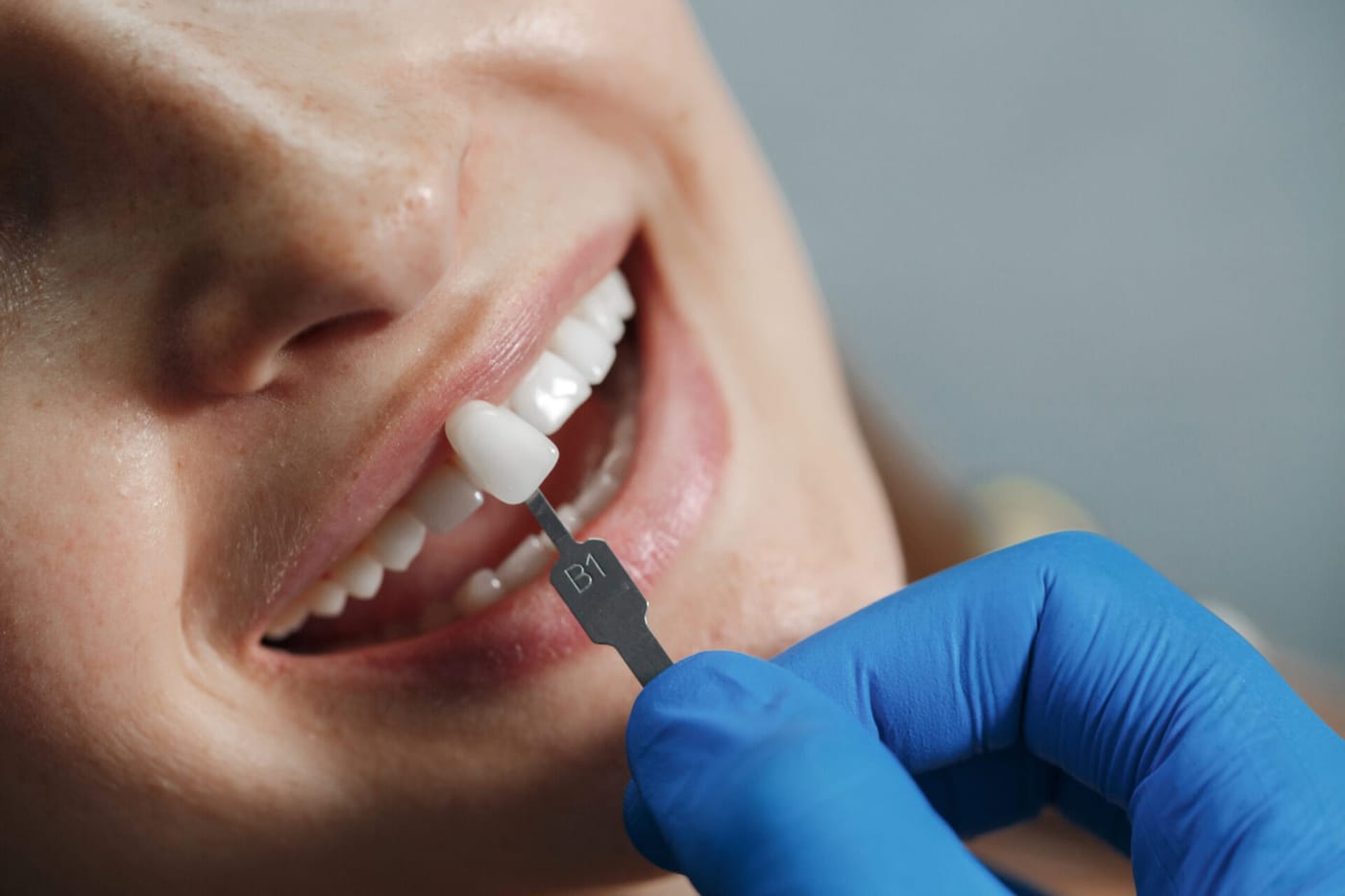
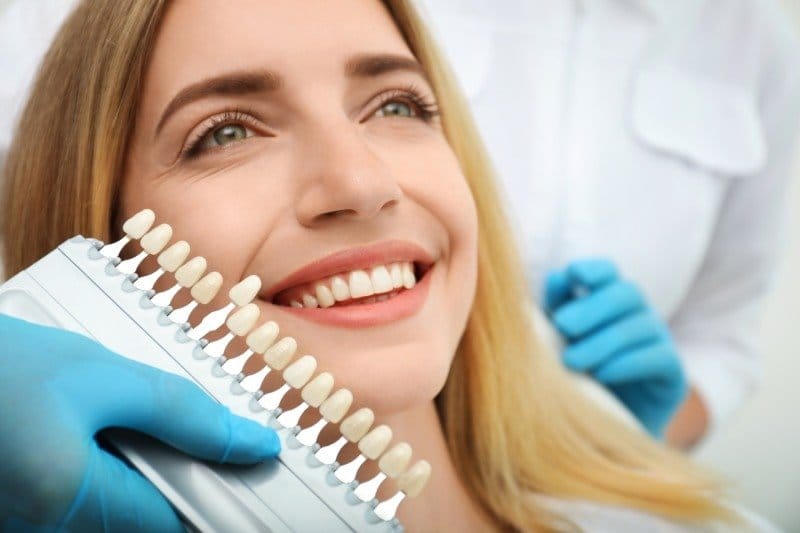
"Turkey teeth" is UK slang for the very uniform, very white smiles associated with cosmetic dental trips to Türkiye, usually full sets of crowns or veneers. The phrase spread through social media and UK press coverage, especially after a BBC documentary in 2022. The genuine problem behind the worst cases is not geography but indication: full-coverage crowns cut away roughly two thirds of each tooth, and placing them on healthy, intact teeth for colour alone is over-treatment with lifelong consequences, wherever it is done. The same treatment is legitimate for heavily damaged or worn teeth. Safety therefore lives in the treatment plan, not the destination. This guide explains how the decision should be made, what we refuse to do, and the exact written questions that protect you in Türkiye, in the UK, or anywhere else.
- 01The term is a media and social-media phenomenon as much as a clinical one: a 2025 British Dental Journal review analysed 131 UK newspaper articles on dental tourism and found tabloid coverage often amplified social media posts and stigmatised patients rather than informing them (PubMed 40021870).
- 02The central clinical criticism is real and specific: patients told they were getting "veneers" who actually received full-coverage crowns. A crown preparation removes roughly 63-72% of the visible tooth structure; veneer-type preparations remove roughly 3-30% (PubMed 12070513).
- 03Cutting teeth has a measurable biological price: in a classic radiographic study, 19% of crowned teeth that were vital at preparation showed signs of periradicular (root-end) disease (PubMed 9744239).
- 04Enamel is the asset to protect: porcelain veneers kept within enamel showed 99% survival at up to 12 years, while veneers bonded to dentine failed about 10 times more often (PubMed 23342345).
- 05Full sets of crowns are the right treatment for some mouths and over-treatment for others; the protection is not avoiding a country but demanding the restoration type, the tooth-by-tooth justification and the material in writing before you commit.
/ What "Turkey teeth" means and where the phrase came from
"Turkey teeth" is not a clinical term. It is British slang for a recognisable look: a full arch of very uniform, very white prosthetic teeth acquired on a short trip abroad, most often to Türkiye, usually as a set of crowns or veneers. The phrase carries a smirk; it entered the language through TikTok and Instagram transformation videos and was pushed into general awareness by UK press coverage, including a BBC documentary in 2022 that examined young Britons' experiences. A 2025 review in the British Dental Journal, which analysed 131 articles from the ten most-read UK newspapers, traces this arc in detail: coverage clustered after celebrity smile reveals in 2018, leaned heavily on individual social media posts, and split between genuine warnings from dentists and tabloid pieces that mocked the very patients they reported on (PubMed 40021870).
The scale behind the slang is real. Drawing on Office for National Statistics passenger survey data, the same review reports that the number of UK residents travelling abroad for dental care rose from 48,000 in 2014 to 144,000 in 2016, and the trend has continued since. Türkiye is the destination most associated with the phenomenon, which is why the phrase attached itself to us and not to the several other countries running the same industry.
We are a Turkish dental hospital, so you should know our position before reading on: we think the phrase points at something true. There are disaster cases, they are not media inventions, and pretending otherwise would tell you everything about that clinic. What the slang gets wrong is the diagnosis. The worst outcomes are not caused by longitude. They are caused by a specific, identifiable clinical decision, and that decision can be examined before a single tooth is touched. The rest of this page is about that decision.
/ The real fault line: crowns sold as veneers
Strip away the headlines and one confusion sits at the centre of almost every "Turkey teeth gone wrong" story: the difference between a veneer and a crown. A laminate veneer is a thin restoration bonded to the front surface of a tooth after minimal preparation. A crown wraps the entire tooth, which must first be cut down all the way around into a stump. Marketing flattens both into "veneers" because the word sounds gentle. The BDJ media review quotes an NHS dentist making exactly this point: patients "talk about veneers... but in reality, they are crowns, meaning much more aggressive tooth reduction" (PubMed 40021870).
The difference has been quantified. In the laboratory study that measured it, complete-coverage crown preparations removed approximately 63% to 72% of the coronal tooth structure by weight, while veneer-type and adhesive preparations removed approximately 3% to 30%; a metal-ceramic crown preparation cost 4.3 times as much tooth as a facial veneer preparation (PubMed 12070513). That is the entire scandal in two numbers. A patient who believes they are getting the 3-30% procedure and receives the 63-72% procedure twenty times over has lost most of twenty teeth without informed consent, and no refund policy returns enamel.
So the first written question, anywhere on earth, is: for each tooth, is the plan a veneer or a crown? Not "smile makeover", not "Hollywood smile", not a package name. The restoration type per tooth, in writing. A clinic that resists this question has answered a different, more important one. Our terminology decoder unpacks the vocabulary in detail, and our laminate veneer page shows what minimal preparation actually means.
/ What cutting a healthy tooth costs, biologically
The reason over-crowning matters is not aesthetic philosophy; it is biology with a published record. A tooth prepared for a crown loses its enamel shell and much of its dentine. The living pulp inside does not always tolerate this. In a radiographic study of 802 crowned teeth in an adult Scottish population, 19% of the teeth that had been vital, meaning alive with no root canal treatment, at crown placement showed radiographic signs of periradicular disease, trouble at the root end that typically signals a dying or dead pulp; the authors concluded that pulpal damage may occur during crown procedures and that crowned teeth need routine radiographic follow-up (PubMed 9744239).
Read that number for what it measures: it does not mean one in five crowns fails quickly, and it comes from an era and a population, not from any single technique. But it establishes the direction of the trade. Every full-coverage preparation gambles a percentage of pulp vitality, and a dead pulp means root canal treatment through your new crown, or worse. Multiply a per-tooth risk across a twenty-tooth "package" bought at age 25, then run the arithmetic over the five to seven decades that mouth still has to live, including replacement cycles, and the real price of over-treatment emerges. It is paid in your forties and fifties, long after the transformation video is filmed.
The counter-asset is enamel. Adhesive dentistry holds best on enamel, and the data is unusually clean: in a 12-year study of 580 porcelain veneers, restorations whose preparation stayed entirely within enamel survived at 99%, while veneers bonded to dentine were roughly 10 times more likely to fail (PubMed 23342345). Preserved enamel is not sentimentality. It is the measurable foundation of every future restoration you might ever need.
/ Whether Turkey teeth are safe, stated plainly
Asked as written, the question has no answer, because "Turkey teeth" bundles together good dentistry and bad dentistry performed in the same country. The answerable version is: what makes a full-mouth cosmetic treatment safe or unsafe? Four things, none of them a nationality.
Indication comes first and outweighs the rest: the right procedure for the actual condition of your teeth, which is the subject of the next section. Diagnosis comes second: a plan built on radiographs, periodontal assessment and bite analysis rather than on a WhatsApp photo. A quote produced without imaging is a guess with a price tag. Execution comes third: materials, laboratory quality, and the clinician's skill, questions on which you are entitled to specifics such as the material family and brand per tooth, covered across our material guides from zirconia crowns to e.max veneers. Aftercare comes fourth: who reviews you, who fixes what fails, and in which country, a problem structural to all dental tourism and addressed line by line in our all-inclusive pricing guide.
None of the four is geographically determined, which cuts both ways. Türkiye has clinics that would horrify you and clinics operating at a standard most patients have never experienced; so does the UK. What Türkiye specifically offers is a regulatory floor you can check: facilities treating international patients require an International Health Tourism Authorization Certificate from the Ministry of Health, and the official English-language registry of certified providers is public at healthturkiye.gov.tr. On the UK side, the General Dental Council publishes measured guidance for patients considering treatment abroad: talk to your own dentist first, research the destination's regulation, ask hard questions, and never feel obliged to commit on the day. We endorse every line of it, including the parts that cost us bookings.
/ When a full set of crowns is the right answer, and when it is not
Here is the part of this story almost nobody writes, because each half of the market only needs one side of it: full-mouth crown work is neither always a scam nor always fine. It has real indications.
Crowning many or all teeth can be the correct, sometimes the only, treatment for mouths with widespread damage: teeth broken down by decay, large failing fillings on most units, dentitions flattened by years of grinding, failing older crown work, or teeth already root-treated and fragile. In such mouths, full-coverage restorations are not cosmetic extravagance; they are structural rebuilding, and refusing them would be the malpractice. The materials for this work have solid published records: across a 64-study meta-analysis of tooth-supported single crowns, five-year survival ran between 90.4% and 98.5% depending on material (PubMed 41489982), figures we unpack per material in our zirconia and PFM guides.
The same treatment aimed at a different mouth becomes the problem the slang describes. A person in their twenties with intact, healthy, unrestored teeth who dislikes their colour or minor irregularities does not have a condition that full-coverage crowns treat. That person has options that remove little or nothing: professional whitening, composite bonding, minimal-preparation laminate veneers where suitable, or orthodontic alignment including clear aligners when position is the real complaint. Reversible and additive options exist precisely for this patient, and the ethical gradient runs: whitening, then additive bonding, then enamel-preserving veneers, then, only where structure is already lost, crowns.
The test we suggest is brutally simple. Ask the clinic, tooth by tooth: what is wrong with this tooth, and why does that justify this restoration? Healthy enamel is not a defect. "It will look better in the photos" is not a diagnosis.
/ How we decide how much to cut
Since this page will be read as our answer to the phenomenon, here is our cutting philosophy in plain terms, stated so you can hold us to it.
The least invasive option that solves your actual complaint comes first. If whitening solves a colour complaint, that is the recommendation, and it costs a fraction of what a crown set would earn us. Where restoration is justified, preparation depth follows the evidence: we aim to keep veneer preparations within enamel, because the 10-fold failure difference between enamel-bonded and dentine-bonded veneers (PubMed 23342345) is not a detail, it is the difference between a 12-year restoration and a serial repair. Restoration type is written per tooth, crown or veneer, before you commit, with the material family and brand named, and our per-unit prices are published rather than assembled into fog; the current figures live on the treatment pages.
We also say no. Patients ask for twenty crowns on intact teeth because a video promised a shade of white that natural enamel does not produce. Our answer is the boring one: we will show you what whitening plus bonding achieves, we will explain what a crown costs a healthy tooth over fifty years, and if a full white set on intact teeth is still the requirement, we will decline the crowning and lose the booking. A clinic that will cut anything you can pay for is not offering you dentistry; it is renting you a drill.
Finally, bite protection and follow-up are part of the plan, not upsells: heavy grinders get night guard planning with their restorative work, and every treatment plan states its review schedule and warranty terms in writing. Our clinicians are published by name; anonymous dentistry is a red flag we refuse to model.
/ The question list that protects you anywhere
Print this section, and use it on us as readily as on anyone. A legitimate clinic answers all of it in writing without friction.
Restoration type: for each tooth, is it a crown or a veneer? What does each remove from my tooth? Justification: what is the diagnosis, tooth by tooth? Which of my teeth are currently healthy and unrestored, and why is each of those included? Alternatives: what would whitening, bonding or alignment achieve in my case, and why are they insufficient? Materials: which material family, which brand, monolithic or layered, per unit, as covered in our terminology decoder. Imaging: is my quote based on radiographs and a clinical examination, or on photographs? Endodontic risk: if a prepared tooth loses vitality later, who treats it and who pays? Provisionals and timeline: what do I wear between preparation and delivery, how many days, how many visits, how many trips, with temporary crowns specified? Aftercare and warranty: what exactly is covered, for how long, in writing, and what happens from the UK if something fails in year three? Regulation: is the facility on the official Turkish registry at healthturkiye.gov.tr, and what does the GDC's abroad checklist suggest I verify?
Notice what is not on the list: nothing about choosing a country. Every question works in Istanbul, London or Manchester, because the failure mode they screen for, over-treatment behind vague language, is portable. The UK profession's own journal has debated this phenomenon in its own pages, including commentaries titled simply "Turkey teeth" and "Controversies about so-called 'Turkey teeth'" (PubMed 38001203, 38001205); the professional argument, on all sides, is conducted in exactly these terms of indication and consent, not passports.
/ Cost, and why the cheapest full set can be the most expensive purchase
Cost is the engine of the entire phenomenon, and the BDJ review is frank that high UK private fees and constrained NHS access are the push factors sending six-figure patient volumes abroad (PubMed 40021870). It would be absurd for a Turkish provider to pretend price does not matter; price advantage is real, ours included, and there is nothing embarrassing about seeking it.
The trap is elsewhere. The lifetime cost of a smile is not the invoice; it is the invoice plus every consequence of the plan. A set of crowns on intact teeth is a lifetime subscription: restorations have service lives, replacement rounds are costlier than first rounds because each cycle starts with less tooth, and any pulp that dies along the way adds root canal work to the bill. An over-treated cheap smile therefore costs more, in money alone, than a correctly indicated conservative one at a higher day-one price, before counting biology. This arithmetic, including what package prices exclude and how trip counts change totals, is worked through properly in the all-inclusive guide.
The practical conclusion is not "spend more". It is: compare complete, itemised plans rather than package headlines, weight plans by how much of your own tooth structure they preserve, and treat "we can do it cheaper because we will crown everything" as the most expensive sentence in dentistry. Existing pieces in our journal cover adjacent angles, including costs and risks and the trend itself; this page is the framework that those details hang on.
Let’s plan the right treatment together.
Free Assessment→- 1.Doughty J, Moore D, Ellis M, Jago J, Ananth P, Montasem A, Holden ACL, Johnson I. Contemporary dental tourism: a review of reporting in the UK news media. Br Dent J. 2025;238(4):230-237. doi:10.1038/s41415-025-8330-2
- 2.Edelhoff D, Sorensen JA. Tooth structure removal associated with various preparation designs for anterior teeth. J Prosthet Dent. 2002;87(5):503-509. doi:10.1067/mpr.2002.124094
- 3.Saunders WP, Saunders EM. Prevalence of periradicular periodontitis associated with crowned teeth in an adult Scottish subpopulation. Br Dent J. 1998;185(3):137-140. doi:10.1038/sj.bdj.4809750
- 4.Gurel G, Sesma N, Calamita MA, Coachman C, Morimoto S. Influence of enamel preservation on failure rates of porcelain laminate veneers. Int J Periodontics Restorative Dent. 2013;33(1):31-39. doi:10.11607/prd.1488
- 5.Pjetursson BE, Pitta J, Balet A, Bjarnadottir GR, Sailer I, Romandini P. A systematic review and meta-analysis evaluating the survival, failure, and complication rates of metal-ceramic, veneered, and monolithic all-ceramic tooth-supported single crowns, Part 1. Int J Prosthodont. 2026;39(3):308-324. doi:10.11607/ijp.9633
- 6.D Cruz L. Turkey teeth. Br Dent J. 2023;235(10):801. doi:10.1038/s41415-023-6500-7
- 7.Kelleher M. Controversies about so-called 'Turkey teeth'. Br Dent J. 2023;235(10):804-805. doi:10.1038/s41415-023-6562-6
- 8.General Dental Council (UK). Going abroad for dental treatment. https://www.gdc-uk.org/standards-guidance/information-for-patients-public/going-abroad-for-dental-treatment
- 9.Republic of Türkiye Ministry of Health, HealthTürkiye portal. Certified Healthcare Providers & Certified Facilitators. https://healthturkiye.gov.tr/certificated-health-service-providers