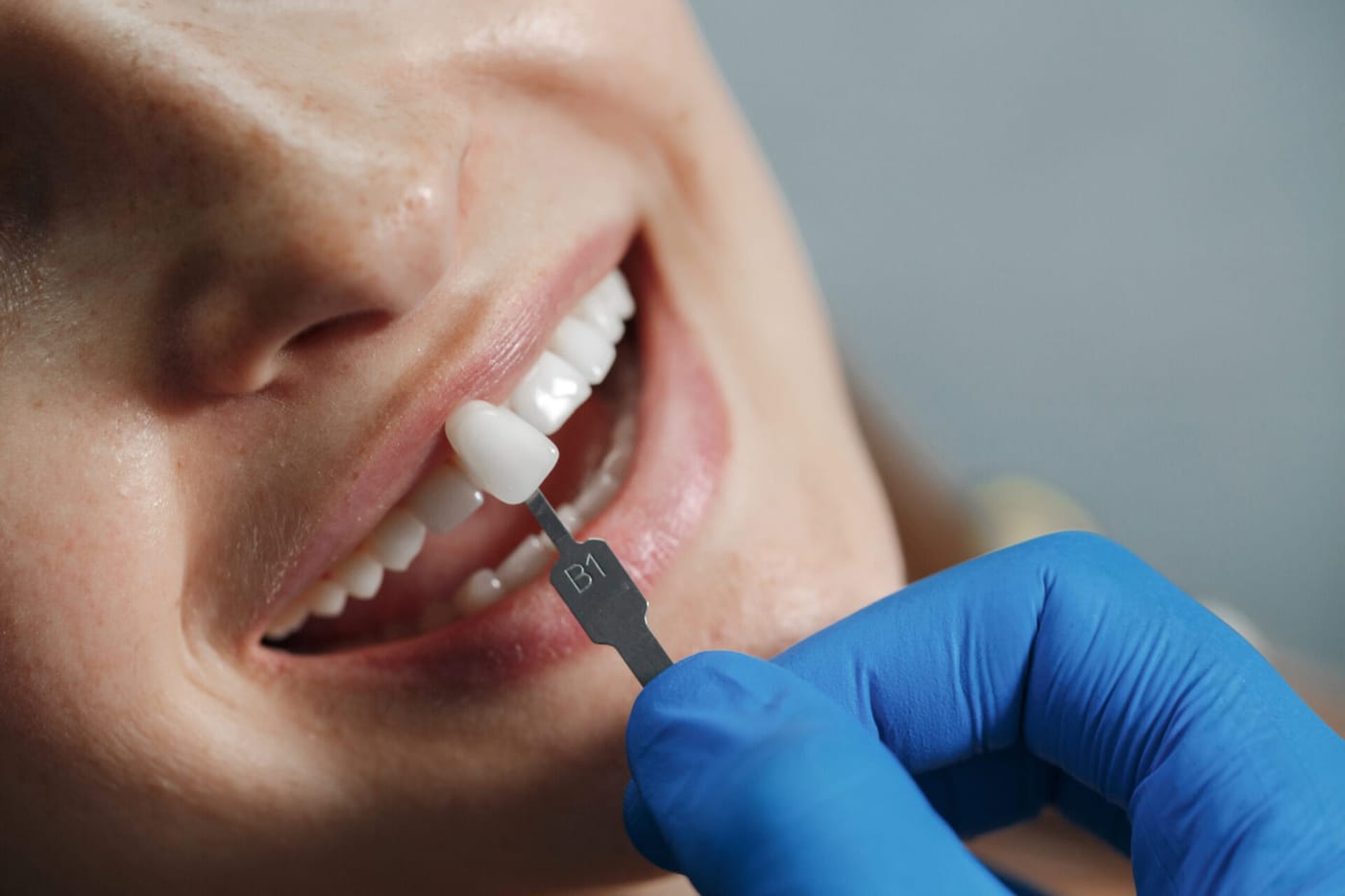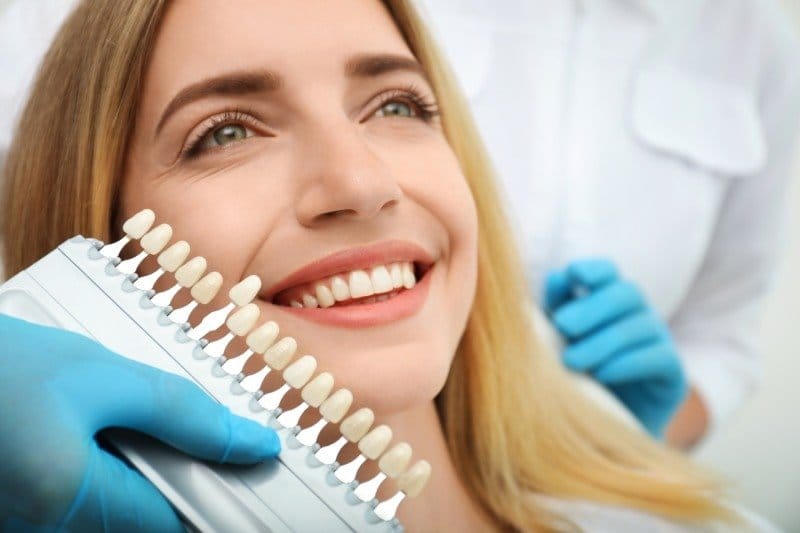
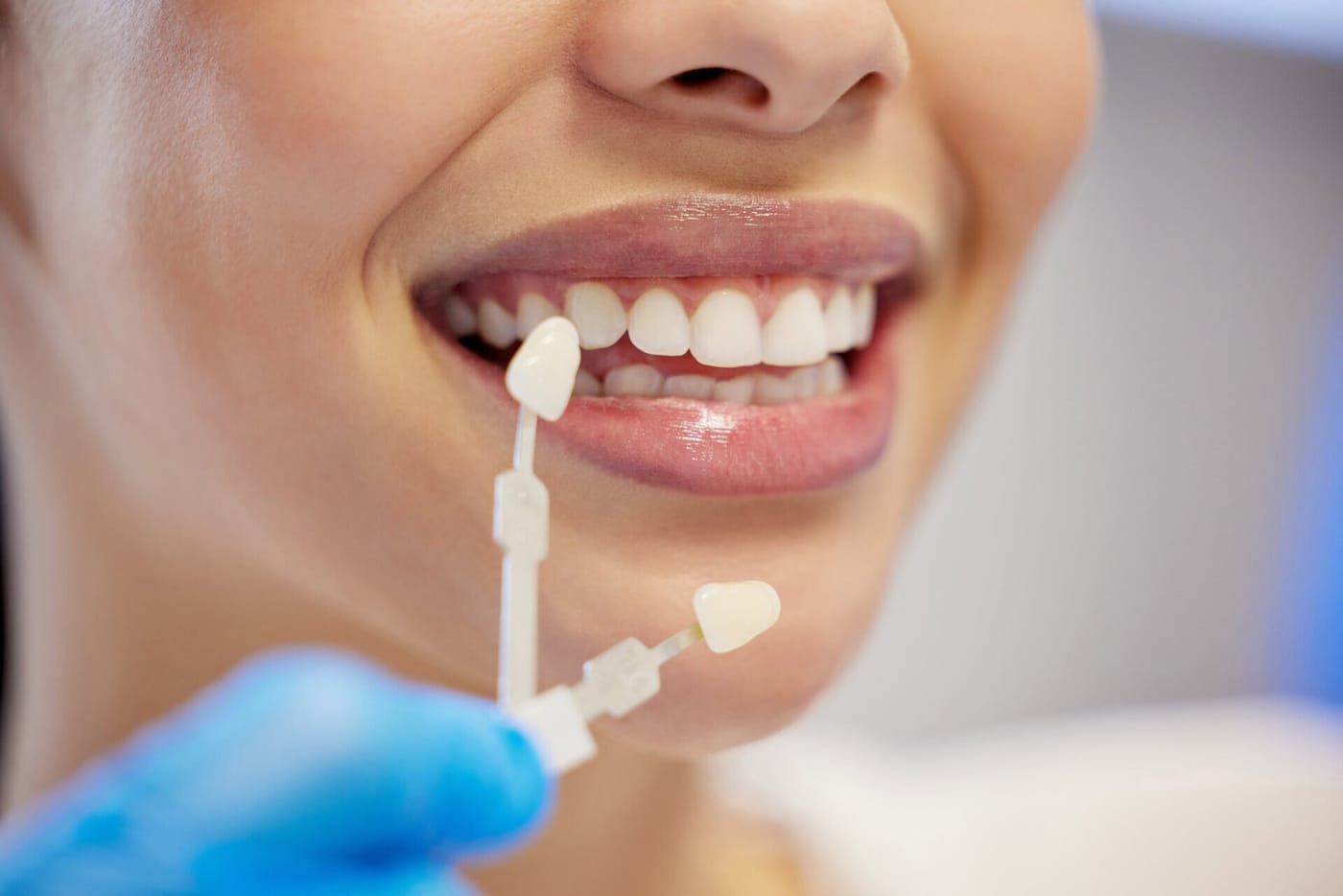
Neither zirconia nor Emax is universally better; the right choice depends on the tooth. Lithium disilicate, sold under the Emax name, is often chosen for highly aesthetic, enamel-supported restorations, especially at the front. Zirconia is often preferred for molars, bridges, limited tooth structure, darker underlying teeth, or heavier bite forces. For single crowns, a meta-analysis reported five-year survival of 98.5% for monolithic lithium disilicate crowns and 96.8% for monolithic zirconia crowns (PubMed 41489982). Bridges are a different case: in one study, the 10-year survival of lithium disilicate fixed dental prostheses was 70.9% (PubMed 24674802).
Zirconia or Emax decision and front-tooth aesthetics
"Zirconia or Emax" sounds like a simple choice between two products. In practice, the dentists at Mosdent assess the tooth first and then select the material that suits its clinical demands. The two materials can also be used together in the same mouth. This is common in larger treatment plans, where front teeth may require a different approach from molars.
Emax is a brand name commonly used for lithium disilicate glass ceramic. Zirconia is a ceramic material based on zirconium oxide. You can read more about each material in our guides to Emax dental crowns and zirconia dental crowns.
Five main factors usually guide the decision: the tooth's position, whether the restoration is a single crown or bridge, how much enamel remains, the colour beneath the restoration, and the condition of the opposing tooth.
For a front tooth, the most difficult task is often matching the appearance of the neighbouring natural teeth. Natural enamel allows some light to pass through it. If a restoration does not reproduce a similar light effect, it may look artificial even when its shape and fit are clinically satisfactory.
In a study comparing the translucency of veneer materials, zirconia-based materials were among the least translucent, while lithium disilicate allowed more light through (PubMed 24969410). This is one reason lithium disilicate is frequently considered for aesthetic front tooth restorations.
Tooth position and single crown or bridge planning
The most visible upper front teeth require especially careful planning. A single restored tooth between two natural teeth is one of the most demanding situations because the restoration is judged against both neighbours. In this setting, colour, translucency and surface character may be more important than maximum strength.
For molars, the priorities often change. These teeth receive substantial chewing forces, so strength and the way the restoration manages load become more important than light transmission. Monolithic zirconia is therefore commonly considered for posterior crowns. Zirconia itself is available in different forms, with a general balance between greater translucency and strength. The details are discussed in our zirconia crown guide.
The number of teeth being replaced is one of the most important questions to ask when comparing treatment plans. For single crowns, both materials can provide strong clinical results. A meta-analysis of 64 studies reported five-year survival of 98.5% for monolithic lithium disilicate crowns and 96.8% for monolithic zirconia crowns (PubMed 41489982). This difference is relatively small and should not decide the case on its own.
Bridges place different demands on a material because the restoration has to span an area where one or more teeth are missing. In one study, the 10-year survival of lithium disilicate fixed dental prostheses was 70.9% (PubMed 24674802). A separate meta-analysis of 41 studies found five-year survival for lithium disilicate bridges was 82.5%, below metal-ceramic alternatives, while zirconia options were measured more favourably in that analysis (PubMed 41650383).
The practical point is that zirconia, or sometimes a metal-supported option, may be considered more suitable when several connected teeth are required. Lithium disilicate may still be discussed for selected short-span bridges, but it is not automatically the first choice for every bridge.
When comparing quotations, ask how many units are included. A single crown and a multi-unit bridge are not comparable simply because the same material name appears in both descriptions.
Remaining enamel and the colour underneath
Lithium disilicate is particularly well suited to thin restorations that can be bonded to sound enamel. The ceramic surface can be treated and bonded with resin cement, making the adhesive connection an important part of the restoration's support.
This advantage depends on the presence of enamel. In a study following 580 veneers for up to 12 years, restorations prepared entirely within enamel had 99% survival. When the preparation extended onto dentine, the risk of failure increased substantially, by approximately tenfold in that study (PubMed 23342345).
If much of the enamel has already been lost, the tooth contains a large filling, or it has received root canal treatment, the plan may need to change. The aim may no longer be to cover only the front surface. A full crown may be needed to surround the remaining tooth structure and distribute forces. Zirconia is often considered in this situation because it does not depend on the same type of adhesive bonding and can also be conventionally cemented.
The key question is not simply which material is stronger. It is how much healthy tooth structure can be preserved and supported.
Translucency is not always an advantage. A translucent material can also reveal the colour beneath it. A darkened tooth after root canal treatment, a metal post, or a strongly discoloured foundation may show through a highly translucent glass ceramic.
In these cases, a more masking material or an opaque supporting design may provide a more predictable appearance. Zirconia's greater opacity can be useful rather than undesirable when the underlying tooth is dark.
The opposite may be true for a healthy, light-coloured front tooth. More opaque zirconia can appear flatter beside translucent natural enamel. The underlying colour should therefore be assessed during the examination, alongside photographs and the shade of the neighbouring teeth.
The opposing tooth, grinding and veneer comparisons
The tooth receiving the crown is not the only tooth involved. The natural tooth or restoration opposite it also affects the material decision. A network meta-analysis measuring opposing enamel wear found additional vertical enamel loss over up to 24 months of 5.0 micrometres with lithium disilicate, 40.1 micrometres with monolithic zirconia, and 82.5 micrometres with metal-ceramic crowns (PubMed 38211687). These findings place zirconia between the other two groups, while the lithium disilicate result should not be treated as proof of universal superiority because the confidence interval was wide.
Teeth grinding and clenching make this assessment more important. Thin glass ceramic restorations may be exposed to higher fracture risk in uncontrolled bruxism. For posterior teeth, monolithic zirconia may be considered, and a night guard may be included when clinically appropriate. Material selection should be part of a wider plan to manage the grinding habit.
Emax veneers or zirconia crowns?
"Emax veneers or zirconia" compares a technique with a material, so it needs to be rephrased. A laminate veneer is a restoration that covers mainly the front surface of a tooth, while zirconia is a ceramic material. The more accurate comparisons are lithium disilicate versus zirconia, or veneers versus full crowns.
Glass ceramic is the standard material used for many laminate veneers. A meta-analysis of 29 studies reported 10.4-year survival of 96.81% for lithium disilicate veneers. Long-term evidence for zirconia veneers remains limited, with the reported 100% survival coming from a shorter follow-up of 2.6 years (PubMed 39523553). For more information, visit our laminate veneer treatment page.
Cost factors and the decision at Mosdent
For international patients, the cost of treatment depends on more than the word Emax or zirconia. Important factors include the number of crowns or bridge units, whether the restoration is monolithic or layered, laboratory design and finishing, the number of fitting appointments, and any treatment needed before the crowns are made.
The underlying condition of the teeth can also affect the plan. Gum treatment, replacement of large fillings, root canal treatment, temporary restorations, or additional diagnostic work may be required before definitive crowns are placed. Two quotations using the same material name may therefore describe different procedures.
When comparing plans, ask for the number of units, the type of restoration, the zirconia generation or design where relevant, and whether Emax refers to a veneer or a full crown. You can review the items included in our transparent price list.
How the decision is made at Mosdent
The final decision comes from examining the individual tooth. The dentists at Mosdent consider its location, the number of units, the remaining enamel, the colour underneath, the opposing teeth, gum health and the patient's bite habits. This is why the same mouth may receive lithium disilicate in the front and zirconia at the back.
To discuss an individual treatment plan, you can contact Mosdent. Information about our dental team is available on the dentists page, and our treatment pages cover zirconia crowns and Emax restorations.
Let's plan the right treatment together.
Free Assessment→- 1.Pjetursson BE, Pitta J, Balet A, Bjarnadottir GR, Sailer I, Romandini P. A Systematic Review and Meta-analysis Evaluating the Survival, Failure, and Complication Rates of Metal-Ceramic, Veneered, and Monolithic All-Ceramic Tooth-Supported Single Crowns, Part 1. Int J Prosthodont 2026;39:308-324. PubMed 41489982 (accessed 6 September 2026)
- 2.Romandini P, Pjetursson BE, Pitta J, Balet A, Ikumi R, Sailer I. A Systematic Review and Meta-analysis Evaluating the Survival, Failure, and Complication Rates of Metal-Ceramic, Veneered, and Monolithic All-Ceramic Tooth-Supported Multiple-Unit Fixed Dental Prostheses (FDPs), Part 2. Int J Prosthodont 2026. PubMed 41650383 (accessed 6 September 2026)
- 3.Pieger S, Salman A, Bidra AS. Clinical outcomes of lithium disilicate single crowns and partial fixed dental prostheses: a systematic review. J Prosthet Dent 2014;112:22-30. PubMed 24674802 (accessed 6 September 2026)
- 4.Klein P, Spitznagel FA, Zembic A, Prott LS, Pieralli S, Bongaerts B, et al. Survival and Complication Rates of Feldspathic, Leucite-Reinforced, Lithium Disilicate and Zirconia Ceramic Laminate Veneers: A Systematic Review and Meta-Analysis. J Esthet Restor Dent 2025;37:601-619. PubMed 39523553 (accessed 6 September 2026)
- 5.Mao Z, Beuer F, Hey J, Schmidt F, Sorensen JA, Prause E. Antagonist enamel tooth wear produced by different dental ceramic systems: A systematic review and network meta-analysis. J Dent 2024;142:104832. PubMed 38211687 (accessed 6 September 2026)
- 6.Barizon KT, Bergeron C, Vargas MA, Qian F, Cobb DS, Gratton DG, et al. Ceramic materials for porcelain veneers: part II. Effect of material, shade, and thickness on translucency. J Prosthet Dent 2014;112:864-70. PubMed 24969410 (accessed 6 September 2026)
- 7.Gurel G, Sesma N, Calamita MA, Coachman C, Morimoto S. Influence of enamel preservation on failure rates of porcelain laminate veneers. Int J Periodontics Restorative Dent 2013;33:31-9. PubMed 23342345 (accessed 6 September 2026)
- 8.Ivoclar, IPS e.max CAD technical product data (530 MPa) (accessed 6 September 2026)
- 9.Ivoclar, IPS e.max ZirCAD technical product data (850-1,200 MPa) (accessed 6 September 2026)