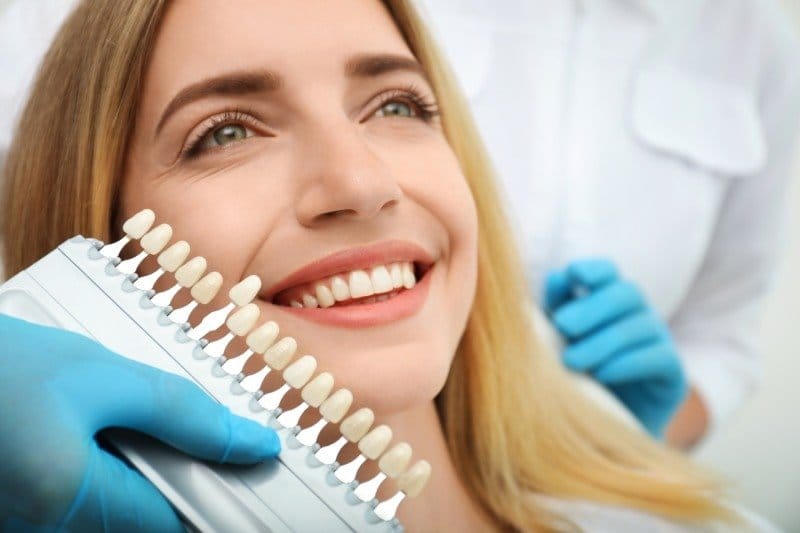
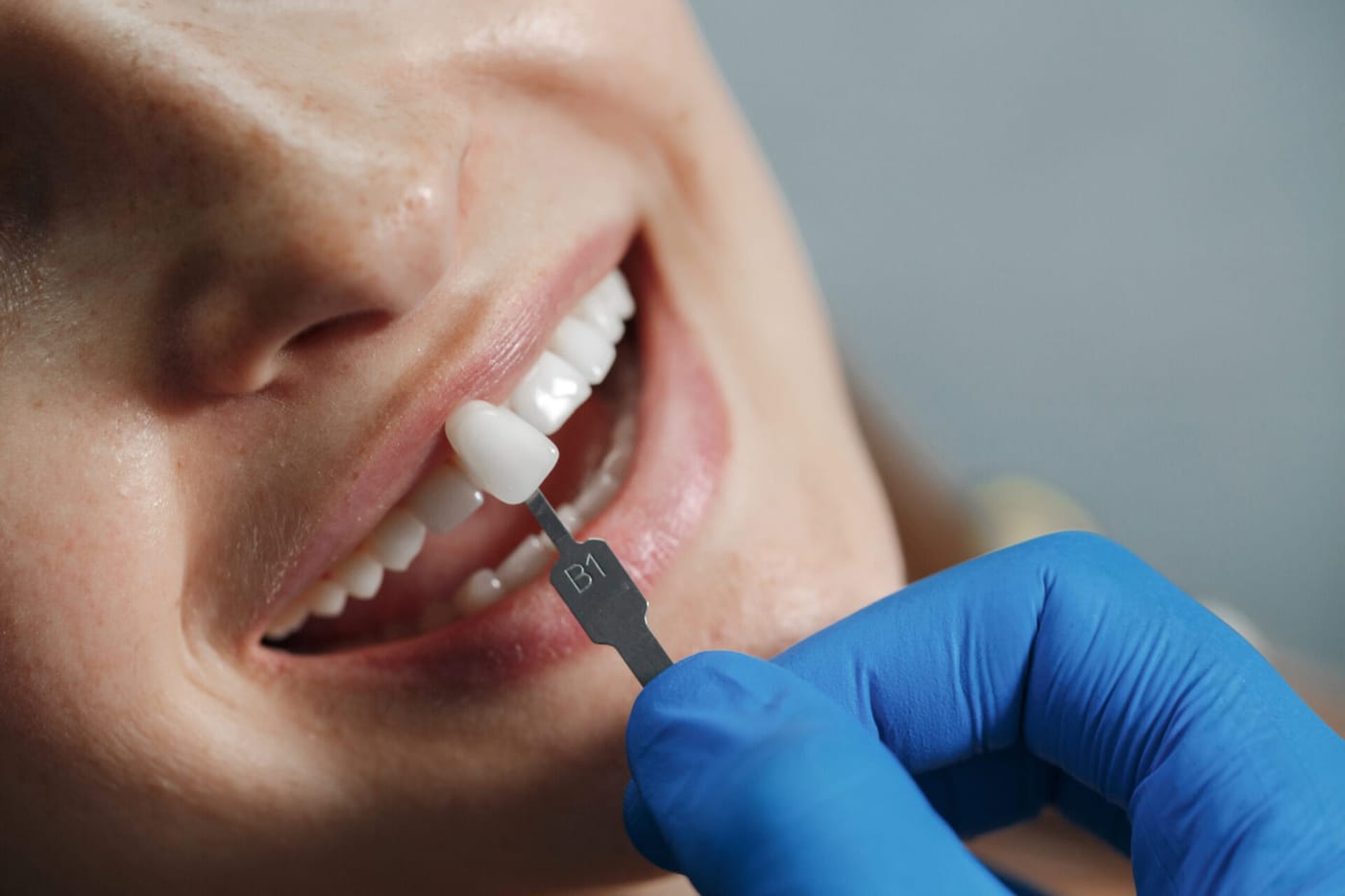
A temporary crown is the restoration that covers a prepared tooth between the appointment where the tooth is cut and the appointment where the definitive crown is fitted. It is usually made from an acrylic polymer, most often polymethyl methacrylate (PMMA), or from a bis-acryl composite. Its purpose is not cosmetic. A clinical review sets out four jobs it does at once: protecting the pulp, securing positional stability, maintaining function and aesthetics, and maintaining gingival health (PubMed 37291303). Acrylic is not a definitive crown material. In a clinical study of CAD/CAM milled PMMA bridges used as long-term temporaries, survival estimated at 16 months was 90.4% (PubMed 25898895), and no five-year or ten-year data exists for this class of material. How long yours should stay in place is set by the treatment plan, and extending that period beyond what the plan requires has a measured cost.
- 01A temporary crown does four jobs at once, not one: it protects the pulp, holds the tooth in position, maintains function and appearance, and protects gingival health (PubMed 37291303).
- 02Acrylic and PMMA are provisional materials rather than definitive crown materials. Milled PMMA bridges used as long-term temporaries recorded 90.4% survival estimated at 16 months (PubMed 25898895, 27 patients, 45 units), and no five-year or ten-year data exists.
- 03One-year real-world data on long-term temporary restorations records 14.1% fracture and 18.1% decementation (PubMed 40069515, 71 restorations, median 362 days).
- 04How a temporary is made changes how it fits. Milled CAD/CAM PMMA measured a 22.2 µm marginal gap against 62.6 µm for a hand-made PMMA crown in vitro (PubMed 39924435), and milled crowns fitted best in a 22-patient clinical comparison (PubMed 42177549).
- 05A longer provisional phase is linked to a higher risk of the tooth losing pulp vitality, in a retrospective study of 15,879 restorations (PubMed 35105459, p < 0.001).
/ The role of a temporary crown
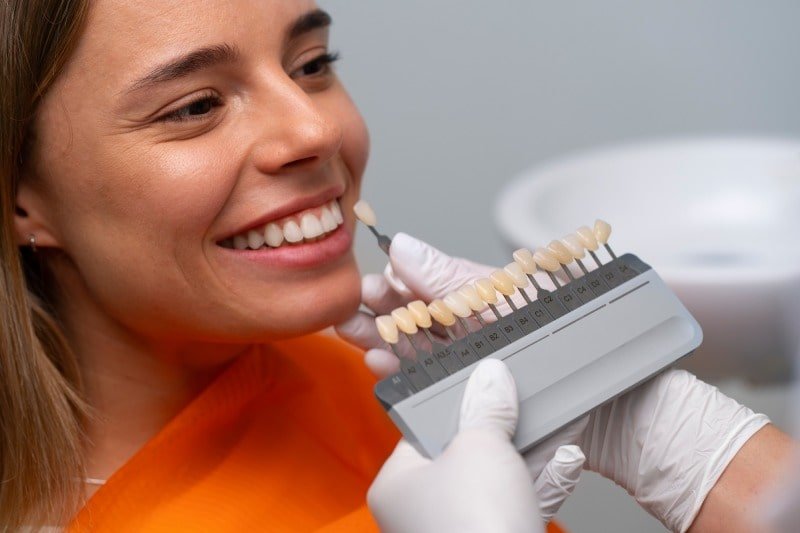
A temporary crown is the restoration that sits on your tooth between the appointment where the tooth is prepared and the appointment where the definitive crown is fitted. Preparation removes part of the enamel and opens the dentinal tubules to the mouth. That tooth cannot be left uncovered while a laboratory makes the final restoration, and the temporary fills the gap.
A clinical review in the British Dental Journal sets out four reasons for placing one, and all four run at the same time: to protect the pulp, to secure positional stability, to maintain function and aesthetics, and to maintain gingival health (PubMed 37291303). Each of those has a failure mode behind it. An uncovered prepared tooth becomes sensitive to hot and cold. Neighbouring teeth drift into the space and the definitive crown no longer seats. The opposing tooth over-erupts. The gum creeps over the preparation margin and the final impression becomes difficult to take.
The most practical difference between a temporary and a definitive crown is that the temporary is deliberately less retentive. A definitive crown is not designed to come off. A temporary has to be removable, so it is luted with a provisional cement that holds it firmly enough to function and loosely enough to be taken away without damaging the preparation underneath. A temporary crown that does not feel as solid as a finished crown is behaving as designed. Our aftercare guide for prepared teeth covers the first days in more detail, and the full range of definitive options is set out on our prosthetics and crowns page.
/ Temporary crown against permanent crown: the differences that actually matter
A temporary crown and a permanent crown differ in five ways: material, retention, fit, longevity and cost, and the differences run in the same direction each time.
The material is the first. A temporary is a polymer, most often polymethyl methacrylate or a bis-acryl composite. A definitive crown is a ceramic or a metal-ceramic. Polymers are softer, wear faster and take up stain more readily than sintered ceramics. The retention is the second, and it is deliberate as described above. The fit is the third: a chairside temporary is shaped in the mouth in minutes, while a definitive crown is made from a precise impression or scan, so the marginal accuracy is not comparable.
Longevity is where the numbers separate most clearly. Monolithic zirconia single crowns showed 96.8% survival at five years in a meta-analysis of 64 clinical studies covering 3,509 metal-ceramic and 8,051 all-ceramic crowns (PubMed 41489982). Long-term temporary restorations, followed for a median of 362 days, recorded a 14.1% fracture rate and an 18.1% decementation rate (PubMed 40069515). These are not competing options. They are two stages of one treatment, and the temporary is measured in months while the definitive is measured in years.
The last difference is what each is allowed to promise. A definitive crown is a treatment outcome. A temporary is a placeholder with a job list, and if anyone offers you an acrylic crown as a permanent solution, the material specification is the question to ask in writing. Our zirconia crown profile, e.max veneer guide and PFM crown profile set out what the definitive options actually record.
/ The material has a name: acrylic, PMMA, bis-acryl and printed resin
Temporary crowns are not all made of the same thing, and the differences have been measured. Acrylic, properly polymethyl methacrylate and usually abbreviated to PMMA, is the best-known member of the family. Bis-acryl composite is the second option, a resin dispensed and mixed from a two-part cartridge. The third is a restoration milled from a PMMA blank that was polymerised under pressure in a factory. The fourth is a 3D-printed resin.
Laboratory comparisons point consistently in the same direction. An in vitro study of provisional resin materials reported flexural strength ranging from 68.2 to 150.6 MPa, with all three bis-acryl materials tested showing significantly higher flexural strength and elastic modulus than the PMMA material. In the same study's 200,000-cycle wear test, the deepest wear facet was 70.5 µm on PMMA and the shallowest 22.4 µm on a bis-acryl material (PubMed 25405905). A separate in vitro study reported 118.23 ± 16.26 MPa for bis-acryl against 49.87 ± 7.55 MPa for a printed resin, and measured porosity at 1.369% for hand-mixed acrylic, 6.339% for bis-acryl and 0.002% for the milled CAD blank (PubMed 36933047). Every one of those numbers comes from a laboratory rather than from a patient; they indicate direction, not outcome.
Material choice therefore follows the indication rather than a ranking. A long-standing review states that bis-acryl materials are typically best suited to single-unit restorations, while PMMA is generally suited to multi-unit, complex and long-term interim fixed prostheses (PubMed 15172612). So the useful question is not which material is better. It is how many units, for how long, and under what load. Our composite bonding article covers how the same logic applies to definitive polymer restorations, and our PFM crown profile covers the metal-ceramic end of the same reasoning.
/ Chairside, milled or printed: how your temporary was made
Temporary crowns are produced three ways. In the direct technique the temporary is shaped in the mouth during the appointment. In the second, it is milled from a pre-polymerised PMMA blank using a digital scan. In the third, it is 3D printed. If your provisional phase is going to last months rather than days, which of the three you have matters.
Marginal fit is where the gap shows most clearly. An in vitro study using optical coherence tomography measured mean vertical marginal gaps of 22.2 ± 4.7 µm for milled CAD/CAM PMMA crowns, 62.6 ± 2.2 µm for hand-made PMMA crowns and 57.6 ± 5.2 µm for hand-made bis-acryl crowns (PubMed 39924435). A prospective clinical study that gave each of its 22 participants all three crown types found the same ranking in patients: milled crowns showed the best marginal adaptation, at 30.2 µm buccally and 27.2 µm lingually, and the highest fracture resistance at 1,059.6 N, while self-cure PMMA recorded the largest colour change at ΔE 10.591. The study was short-term, colour was assessed to day seven, and fracture resistance was tested on resin models rather than in the mouth (PubMed 42177549).
/ Comparative literature on temporary crown fabrication methods
The comparative literature agrees on direction but rests on a thin evidence base. A systematic review of CAD/CAM interim fixed dental prostheses included 19 studies, of which 18 were in vitro and one was a randomised clinical trial; heterogeneity prevented a meta-analysis, and most studies favoured milled restorations (PubMed 36903109). A meta-analysis pooling prosthetic polymers found higher flexural strength for milling than for 3D printing (Hedges' g = -3.88; 95% CI -7.20 to -0.58; P = .02) but no significant difference between the two in marginal discrepancy, internal fit, hardness or roughness (PubMed 35934576). An umbrella review of 14 systematic reviews concluded that printed resins generally show lower flexural strength, elastic modulus, fatigue resistance and colour stability than milled materials, that fit is typically within clinically acceptable limits but depends heavily on washing, curing and print orientation, and that clinical evidence extends only to 6 to 24 months (PubMed 41819275).
Only one randomised trial has tested this question in patients. In 33 patients receiving 42 anterior implant provisional crowns, 3D-printed provisionals showed a significantly higher rate of catastrophic fracture than conventional ones (p = 0.05), production was faster (p < 0.001), and patients reported no difference in aesthetics, phonetics, chewing or comfort (PubMed 38103959).
/ Acrylic temporary crown safety: heat and monomer
The direct chairside technique carries one further side effect: acrylic setting in the mouth releases heat, because polymerisation is an exothermic reaction. An in vitro measurement recorded pulp chamber temperature rises of 3.4 to 5.5 °C with a putty matrix and 4.0 to 8.2 °C with a polyvinyl matrix, falling to zero when the putty had been pre-cooled (PubMed 18817967). In a tooth with circulation the picture is gentler: with simulated pulpal blood flow at 0.5 or 1 mL per minute, the rise did not exceed the critical threshold of 5.6 °C (PubMed 27977866). None of this makes chairside temporisation unsafe. It explains why cooling the matrix and irrigating the tooth are routine rather than optional, and why building the provisional outside the mouth on a model keeps both the heat and the unset monomer away from the tooth.
There is a real subject behind the question of whether acrylic temporaries are safe. PMMA is formed by polymerising methyl methacrylate monomer, polymerisation is never complete, and a small quantity of unreacted monomer remains in the material.
/ Curing and cell-level monomer data
How much of that monomer is released depends less on the material than on how it was cured. An in vitro study of autopolymerised PMMA found that curing in hot water, with or without pressure, significantly reduced residual methyl methacrylate elution by up to 80% and increased microhardness by up to 50%; curing in water was the key factor for the monomer, temperature for the hardness (PubMed 12013564). At cell level, the risk sits in the setting phase rather than in the finished crown. Testing a self-curing resin used for provisional crowns, an in vitro study measured 73.4% cell viability at a 0.2% concentration of the liquid resin polymer, against 91.3% for the solid resin polymer and 100% for hand-mixed set resin, all above the 70% viability standard. The authors conclude that because the polymerisation process may affect the oral mucosa, the solid resin should be produced indirectly on a model (PubMed 37098682).
/ Methacrylate allergy and patch-test data records
Acrylic dental materials can also cause allergy, and patch testing gives the figures. A multicentre analysis selected 2,730 patients with suspected dental-material allergy from 169,834 people patch tested between 2005 and 2019. Among the 444 women with confirmed allergic contact stomatitis, sensitisation rates were highest for metals (nickel 28.6%, palladium 21.4%, amalgam 10.9%), with 2-hydroxyethyl methacrylate at 4.8%, and the authors conclude that allergic contact stomatitis to dental materials is rare (PubMed 38123140). A patch-test series in southern Sweden recorded positive (meth)acrylate reactions in 2.3% of dental patients (30 of 1,322) and 5.8% of dental personnel (18 of 310) (PubMed 16958920). Both figures come from people already being investigated for allergy rather than from the general population, and the higher rate among staff reflects who actually handles unpolymerised monomer.
Residual monomer released from a temporary crown has not been measured in a patient's mouth; all of this evidence is in vitro. If you have a known methacrylate allergy, declare it before treatment, because material selection can be changed.
/ Lifespan of a temporary crown in published data
The auditable evidence on how long a temporary crown lasts is limited but it exists, and it comes from three clinical studies.
A prospective clinical study of CAD/CAM milled PMMA fixed dental prostheses used as long-term temporaries placed 45 restorations in 27 patients, with observation running from 2 to 26 months and a median of 13 months. In the standard, terminally supported design group of 37 units, survival estimated at 16 months was 90.4% with a complication-free rate of 88.3%. Three of the eight cantilever designs had to be removed within eight months, and across all 45 restorations there were 11 complications in 9 units: 4 losses of retention and 5 complete fractures (PubMed 25898895). Design changed the outcome more than the material did.
The second study includes single crowns and is closer to what most patients wear. A retrospective clinical study of long-term temporary restorations made from CAD/CAM resin-based composite followed 71 restorations in 44 patients, comprising 12 partial-coverage crowns, 31 crowns and 28 bridges, for a median of 362 days. Fracture occurred in 14.1% and decementation in 18.1% (PubMed 40069515).
The third shows where the limit sits. A three-year prospective clinical trial of 3D-printed resin composite three-unit posterior bridges in 49 patients, with a mean observation of 22.36 months, calculated survival of 40.7% against mechanical failures and 36.2% once biological complications were counted. The authors concluded that such restorations should be regarded as long-term provisionals rather than definitive work (PubMed 40490049).
No systematic review or meta-analysis pooling the survival of provisional restorations has been published, and the longest verifiable follow-up in this literature is three years. Any five-year or ten-year figure quoted for an acrylic or PMMA crown has no published basis.
/ Long-term provisionals for patients travelling for treatment
There is a second category behind the phrase "temporary crown": the long-term provisional, planned deliberately and measured in months rather than weeks. The same British Dental Journal review treats it separately and gives the reason, which is to assess aesthetic, occlusal and periodontal changes before committing to definitive restorations (PubMed 37291303).
The indications are specific. Waiting for an implant to integrate with bone is one, and it follows the timeline set out in our implant healing guide. Testing a new vertical dimension before building it in ceramic is another, because whether a patient can chew, speak and sleep comfortably at a changed bite height is only discovered by living with it. Allowing gum tissue to settle after periodontal or surgical treatment is a third. Trialling the shape of the final restoration with the patient is the fourth.
This matters more, not less, for anyone flying in for treatment. A treatment plan split across two trips means the provisional stage is not a few days in a waiting room, it is weeks or months at home in another country. That period should be planned rather than improvised, and the material used for it should be chosen accordingly. Ask before the first trip which provisional you will be wearing between visits, how it is made, and who you contact if something happens to it while you are home. Our patient journey page sets out how those trips are scheduled, and our Turkey teeth guide covers the wider set of questions to settle before booking.
The evidence has a gap here. A systematic review asking whether providing an interim restoration before a definitive implant-supported prosthesis changes the outcome found only two eligible studies and concluded that there is insufficient evidence to support or refute the practice (PubMed 33148400). The clinical logic for provisionalisation is sound; the comparative trial evidence is thin. Implant-supported restorations in general are covered in our implant-supported prosthesis article.
/ Temporary crown appearance compared with the final crown
Comparing the colour, translucency and surface gloss of a temporary against the definitive crown is a reliable route to disappointment, and the reason is material rather than workmanship. A temporary is a polymer; a definitive crown is a ceramic. A polymer surface does not seal as tightly, does not refract light the same way, and takes up dietary pigment more readily.
The colour shift has been measured. A randomised clinical trial comparing two materials for implant-supported interim fixed partial prostheses placed 49 restorations in 21 participants and reviewed them at six months. Colour change is reported as ΔE\\*ab, where a larger number means a larger difference from the starting shade; PMMA recorded 7.18 and the polyoxymethylene comparator 8.58. The same trial found a significant increase in wear for both materials over six months of function, and fractures at the implant connection in 10 prostheses (PubMed 31810613).
The practical consequence is that a temporary will not hold its first-day appearance for months, and that this is expected rather than a defect. Coffee, tea, tobacco and strongly coloured spices accelerate it. It also explains why the shade for the definitive restoration is not chosen by looking at the temporary: shade selection happens at a separate appointment, under suitable lighting, before the final crown is made. If the shape of the temporary is close to what you want, say so at that appointment rather than after, because the provisional is the easiest place in the whole sequence to change your mind. Our cosmetic dentistry overview places that conversation in the wider sequence.
/ Pulp data on wearing a temporary for months
The strongest evidence that a prolonged provisional phase carries a cost comes from a large retrospective study of 15,879 restorations placed by 174 dentists, of which 1,136 (7.2%) failed. A nested comparison of 250 failed against 250 non-failed cases found that an increased duration with the interim replacement was linked to a higher risk of loss of pulp vitality, at p < 0.001, and the authors describe extended time with an interim restoration as a contributing factor to that loss (PubMed 35105459).
Loss of pulp vitality means, in practice, that the tooth may go on to need root canal treatment. So an extended provisional phase is not only a comfort question. It can add a procedure to the treatment plan. Our root canal treatment guide sets out what that involves if it becomes necessary.
Mechanical risk accumulates over the same period. In the one-year real-world dataset, 14.1% of long-term temporaries fractured and 18.1% came loose (PubMed 40069515), and a temporary that has come loose without being noticed leaves the prepared tooth exposed.
There is no published figure for the rate of caries developing under a provisional restoration, or for marginal leakage. The verifiable finding concerns pulp vitality: there is a measured reason not to extend the provisional phase further than the treatment plan requires, so a delayed definitive restoration is worth raising with your dentist.
/ A loose temporary crown away from the clinic
A temporary coming loose is common, and the rate has been measured: 18.1% of long-term temporary restorations decemented over a median of 362 days. The same study found that the probability of decementation was significantly higher in restorations luted with provisional or self-adhesive cements than in those luted adhesively (PubMed 40069515).
The reason retention is so modest has a number attached to it. An in vitro study comparing eight provisional cements on 80 human premolars measured mean tensile strength from 20.1 N for the weakest to 67.5 N for the strongest (PubMed 21049254). Separate work measured the force needed to fracture a temporary crown at between 1,196.4 and 1,598.3 N (PubMed 32583239). Those two figures come from different laboratories and are not directly comparable, but the order of magnitude between them makes the point: the weak link in a temporary is the cement, not the crown. That is why sticky food is a bigger threat than hard food.
What to do is short. Keep the piece, because the same temporary can usually be cleaned and recemented. Contact the clinic the same day; a prepared tooth should not be left uncovered. Do not use household glue, superglue or any adhesive not made for dental use. That last instruction is not squeamishness: a systematic review and meta-analysis of temporary cements found that under delayed dentine sealing, provisional cementation significantly reduced the bond strength of the definitive restoration (p = 0.002), and that aluminium oxide abrasion of the preparation largely restored it (p = 0.07, and better than hand instruments alone at p = 0.04) (PubMed 36422719). How the preparation is cleaned before the final crown is bonded is part of the outcome, and it is clinic work.
/ Tooth movement while a temporary crown is off
Tooth movement while a temporary crown is off deserves its own heading, because this particular fear pushes people into unnecessary panic and unnecessary flights. The idea that teeth will shift overnight is overstated. A randomised clinical trial in 50 prepared teeth found that placing a temporary significantly reduced tooth movement between appointments in maxillary molars (p = 0.002), though it was carried out on overlay preparations and published no displacement values (PubMed 41133456). Meanwhile a retrospective study following untreated gaps for a median of 6.9 years found that most patients lost 1 mm or less of the distance between adjacent teeth and that opposing-tooth extrusion was 1 mm or less in 99% of cases (PubMed 10986832). Movement is real, but it is measured in years, not hours. Ring the clinic the same day; do not book an emergency flight. If you are between trips, ask whether a local dentist can recement it and whether your clinic will send the records to make that possible. Our guidance on what to do after tooth reduction covers the interim period, and there is one further published cause of dislodgement worth knowing if your trip includes the coast: a case report describes a provisional crown displaced by barotrauma during scuba diving, and notes that changes in ambient pressure during flying, diving or hyperbaric oxygen therapy can all produce it (PubMed 23984113).
/ Eating with a temporary crown, and what the evidence behind the advice actually is
There is no published randomised clinical trial testing dietary restrictions in patients wearing temporary crowns. The standard advice does not come from the top of the evidence hierarchy; it comes from how the material and the cement behave. The nearest thing to an audit of comparable advice exists for denture wearers, and it reached the same verdict: a scoping review screening 4,591 records and 258 websites found that the most-cited advice, to eat soft food, avoid hard and sticky food, cut food small and chew slowly on both sides, was not supported by reference to peer-reviewed evidence and its efficacy has not been tested (PubMed 35886697). That does not make the advice useless; it rests on mechanism and experience rather than trial data.
Two mechanisms cover most of it. Sticky foods such as chewing gum and toffee apply a pulling force that tries to lift the crown off the tooth, and a provisional cement is deliberately weaker than a definitive one, so it gives way sooner. Hard foods such as ice, nut shells and bone apply a breaking force, and provisional materials sit in a flexural strength band of roughly 68.2 to 150.6 MPa (PubMed 25405905), well below a sintered ceramic. Avoiding both, and chewing on the other side where you can, follows directly from that. The same reasoning explains the flossing instruction: pull floss out sideways rather than back up through the contact, because upward removal applies exactly the lifting force the provisional cement is least able to resist.
/ Cleaning a temporary crown, and why it matters more during this phase
The cleaning side, unlike the dietary advice, does have measured backing. An in vitro study comparing provisional materials against a definitive ceramic found that zirconia had the lowest surface roughness and significantly less adhesion of Streptococcus mutans and Candida albicans than every provisional material tested (p < 0.001), and that milled PMMA was significantly smoother and collected significantly less microbial growth than conventional PMMA (p < 0.001) (PubMed 41294479). Why that matters is established clinically: a surface roughness threshold of Ra 0.2 µm has been described, above which plaque accumulation rises (PubMed 11696906), and a systematic review restricted to clinical intraoral studies confirms the same threshold from split-mouth data (PubMed 16968383). A temporary crown is a plaque-friendlier surface than the crown that will replace it, so brushing and interdental cleaning matter more during this phase, not less.
Grinding deserves its own line. The same nightly force lands on a material weaker than the ceramic that will replace it, so a night guard during the provisional phase is part of the plan rather than an upsell; our bruxism guard guide and night guard treatment page cover it.
No published study has measured how much a temporary crown wears the opposing natural tooth; the available wear tests used a steel antagonist rather than enamel. Claims in either direction are unsupported. For definitive materials that data does exist, and we report it in microns in our zirconia crown article.
/ Emergency signs with a temporary crown
Not everything that goes wrong with a temporary is urgent, and separating the two saves a great deal of unnecessary worry. A temporary that has come off, fractured, developed an edge sharp enough to catch the tongue or cheek, or that feels noticeably high when you bite needs the clinic to know, and these are same-day or next-day problems rather than middle-of-the-night ones. A swallowed temporary usually passes through the digestive tract without incident; it is not refitted, and a replacement is made.
The picture that is genuinely urgent looks different. Throbbing pain that wakes you at night or does not respond to over-the-counter analgesics, swelling of the face or gum, fever, difficulty opening the mouth, or sharp pain on biting point to the tooth or the surrounding tissue rather than to the temporary itself, and they should not be left. Our emergency dentist page is the route in, and our guide to stopping tooth pain fast covers the interim.
Sensitivity to hot and cold for a few days after preparation is expected and usually settles; tooth sensitivity explains the mechanism. Numbness or discomfort in the lip after the definitive crown is fitted has its own guide in lip pain after dental crowns. If you are back home between trips, the practical question is who reviews your case remotely and on what schedule; establish that before you fly rather than after, and check whether a local dentist can be sent your records if a temporary needs recementing where you live.
/ The provisional stage in a treatment quote
The provisional stage appears as a separate line on most treatment plans, and that is not a hidden charge; it is a necessary part of the sequence. What varies between quotes is not usually the honesty of the clinic but what has been counted.
Six things move the figure. Fabrication method comes first, since a chairside temporary shaped in the mouth and a milled PMMA unit produced from a digital scan represent different materials and different chair and laboratory time. Unit count is second, because pricing is per unit and a bridge charges for pontics as well as abutments. The planned length of the provisional phase is third: a restoration expected to serve for several months is designed and made differently from one expected to serve for two weeks. The number of intermediate appointments is fourth, since every try-in and every recementation is a visit. Additional procedures are fifth, because root canal treatment, post and core build-up or gingival recontouring are separate items. Warranty and remote follow-up are sixth.
For an international quote, four questions separate a comparable price from an incomparable one. Are temporaries included, and for how many units? Is recementation charged if one comes off between trips? If the provisional phase runs longer than planned and a new provisional is needed, whose account does that go on? And is the provisional chairside or milled? Our veneer cost guide works through the same arithmetic on the veneer side, our crowns in Istanbul guide covers the crown side, current figures for definitive work sit on the zirconia crown treatment page and across the prosthodontics section, the clinicians who would carry out the work are listed on our team page, and a specific plan can be raised through our contact page.
/ Terms that get confused: temporary crowns, acrylic dentures and acrylic jacket crowns
The word acrylic describes several different things in a mouth: temporary crowns, acrylic dentures and older acrylic jacket crowns share a material family but are different treatments.
A temporary crown is a fixed restoration cemented onto a prepared tooth and not removed by the patient. An acrylic denture is a different category altogether: a removable appliance for an edentulous or partially edentulous jaw, usually built on a pink acrylic base, taken in and out by the wearer. The only thing the two share is a material family. Removable options are covered in our partial dentures guide, and the adhesive question in our denture adhesive article.
The acrylic jacket crown is a legacy term. It describes a restoration type that was once made as definitive work, and it still appears in older records and occasionally in older quotes. By current standards acrylic is not a definitive crown material. If a quote lists an acrylic crown as the finished result rather than as the provisional stage, the material specification for the definitive restoration is the thing to request in writing before anything is booked. Our guide to replacing older crowns and veneers covers what happens when legacy work reaches the end of its service, and our dental coverings overview maps the categories against each other.
Let’s plan the right treatment together.
Free Assessment→- 1.Field J, Wassell R. Provisional restorations (Part 1). Br Dent J. 2023;234(11):805-809. doi:10.1038/s41415-023-5974-7
- 2.Huettig F, Prutscher A, Goldammer C, Kreutzer CA, Weber H. First clinical experiences with CAD/CAM-fabricated PMMA-based fixed dental prostheses as long-term temporaries. Clin Oral Investig. 2016;20(1):161-168. doi:10.1007/s00784-015-1475-7
- 3.Dold F, Mueller K, Butz M, Hahnel S. Clinical performance of long-term temporary fixed dental prostheses fabricated from CAD/CAM resin-based composite. Clin Oral Investig. 2025;29(4):179. doi:10.1007/s00784-025-06259-8
- 4.Hobbi P, et al. Assessing the performance of 3D-printed resin composite posterior fixed dental prostheses: A 3-year prospective clinical trial. J Dent. 2025;160:105887. doi:10.1016/j.jdent.2025.105887
- 5.Díez-Quijano C, et al. Evaluation of the clinical behavior of 2 different materials for implant-supported interim fixed partial prostheses: A randomized clinical trial. J Prosthet Dent. 2020;124(3):351-356. doi:10.1016/j.prosdent.2019.09.021
- 6.Nilsson G, et al. Loss of pulp vitality correlated with the duration of the interim restoration and the experience of the dentist: A retrospective study. J Prosthet Dent. 2023;130(6):833-839. doi:10.1016/j.prosdent.2021.11.029
- 7.Gratton DG, Aquilino SA. Interim restorations. Dent Clin North Am. 2004;48(2):487-497. doi:10.1016/j.cden.2003.12.007
- 8.Al-Humood H, Alfaraj A, Yang CC, Levon J, Chu TG, Lin WS. Marginal Fit, Mechanical Properties, and Esthetic Outcomes of CAD/CAM Interim Fixed Dental Prostheses (FDPs): A Systematic Review. Materials (Basel). 2023;16(5):1996. doi:10.3390/ma16051996
- 9.Rosli SR, Radzi NDM, Razak MAA, Abdul Aziz A. Effects of different fabrication techniques on the marginal gap of interim crowns as assessed by optical coherence tomography: An in vitro study. J Prosthet Dent. 2025;133(4):1057.e1-1057.e7. doi:10.1016/j.prosdent.2025.01.030
- 10.Sarfaraz H, Shetty M, Hussain S, Shetty R. Evaluation and comparison of marginal adaptation, colour stability and fracture resistance of provisional resin crowns fabricated with conventional, CAD-milled and 3D printed techniques: a prospective within-subject clinical study. BMC Oral Health. 2026 (online ahead of print). doi:10.1186/s12903-026-08670-3
- 11.Valenti C, Isabella Federici M, Masciotti F, Marinucci L, Xhimitiku I, Cianetti S, Pagano S. Mechanical properties of 3D printed prosthetic materials compared with milled and conventional processing: A systematic review and meta-analysis of in vitro studies. J Prosthet Dent. 2024;132(2):381-391. doi:10.1016/j.prosdent.2022.06.008
- 12.de Souza FA, Blois MC, Collares K, Dos Santos MBF. 3D-printed and conventional provisional single crown fabrication on anterior implants: A randomized clinical trial. Dent Mater. 2024;40(2):340-347. doi:10.1016/j.dental.2023.12.004
- 13.Takamizawa T, Barkmeier WW, Tsujimoto A, Scheidel D, Erickson RL, Latta MA, Miyazaki M. Mechanical Properties and Simulated Wear of Provisional Resin Materials. Oper Dent. 2015;40(6):603-613. doi:10.2341/14-132-L.1
- 14.Ribeiro AKC, de Freitas RFCP, de Carvalho IHG, et al. Flexural strength, surface roughness, micro-CT analysis, and microbiological adhesion of a 3D-printed temporary crown material. Clin Oral Investig. 2023;27(5):2207-2220. doi:10.1007/s00784-023-04941-3
- 15.Chiodera G, Gastaldi G, Millar BJ. Temperature change in pulp cavity in vitro during the polymerization of provisional resins. Dent Mater. 2009;25(3):321-325. doi:10.1016/j.dental.2008.08.006
- 16.Farah RI. Effect of simulated pulpal blood flow rate on the rise in pulp chamber temperature during direct fabrication of exothermic provisional restorations. Int Endod J. 2017;50(11):1097-1103. doi:10.1111/iej.12735
- 17.Daly A, McCracken G, Abdulmohsen B. Differences in treatment outcomes of definitive fixed implant-supported restorations with or without an interim restoration: A systematic review. J Prosthet Dent. 2021;126(6):735-741. doi:10.1016/j.prosdent.2020.10.002
- 18.Pjetursson BE, Pitta J, Balet A, Bjarnadottir GR, Sailer I, Romandini P. A Systematic Review and Meta-analysis Evaluating the Survival, Failure, and Complication Rates of Metal-Ceramic, Veneered, and Monolithic All-Ceramic Tooth-Supported Single Crowns, Part 1. Int J Prosthodont. 2026. doi:10.11607/ijp.9633
- 19.Lee SY, Lai YL, Hsu TS. Influence of polymerization conditions on monomer elution and microhardness of autopolymerized polymethyl methacrylate resin. Eur J Oral Sci. 2002;110(2):179-183. doi:10.1034/j.1600-0722.2002.11232.x
- 20.Ko JW, Sakong J, Kang S. Cytotoxicity of dental self-curing resin for a temporary crown: an in vitro study. J Yeungnam Med Sci. 2023;40(Suppl):S1-S8. doi:10.12701/jyms.2023.00080
- 21.Forkel S, Schubert S, Corvin L, et al. Contact allergies to dental materials in patients. Br J Dermatol. 2024;190(6):895-903. doi:10.1093/bjd/ljad525
- 22.Goon AT, Isaksson M, Zimerson E, Goh CL, Bruze M. Contact allergy to (meth)acrylates in the dental series in southern Sweden: simultaneous positive patch test reaction patterns and possible screening allergens. Contact Dermatitis. 2006;55(4):219-226. doi:10.1111/j.1600-0536.2006.00922.x
- 23.Kontakiotis EG, Filippatos CG, Stefopoulos S, Tzanetakis GN. A prospective study of the incidence of asymptomatic pulp necrosis following crown preparation. Int Endod J. 2015;48(6):512-517. doi:10.1111/iej.12340
- 24.Rego MRM, Santiago LC. Retention of provisional crowns cemented with eight temporary cements: comparative study. J Appl Oral Sci. 2004;12(3):209-212. doi:10.1590/s1678-77572004000300009
- 25.Sari T, Usumez A, Strasser T, Şahinbas A, Rosentritt M. Temporary materials: comparison of in vivo and in vitro performance. Clin Oral Investig. 2020;24(11):4061-4068. doi:10.1007/s00784-020-03278-5
- 26.Ding J, Jin Y, Feng S, Chen H, Hou Y, Zhu S. Effect of temporary cements and their removal methods on the bond strength of indirect restoration: a systematic review and meta-analysis. Clin Oral Investig. 2023;27(1):15-30. doi:10.1007/s00784-022-04790-6
- 27.Del Bianco F, Mancuso E, Mazzitelli C, Maravic T, Mazzoni A, Breschi L. Does Tooth Position Change Between Preparation and Cementation in Overlay Restoration? A Clinical Evaluation With/Out Interappointment Provisionalization. J Esthet Restor Dent. 2026;38(3):391-399. doi:10.1111/jerd.70051
- 28.Shugars DA, Bader JD, Phillips SW Jr, White BA, Brantley CF. The consequences of not replacing a missing posterior tooth. J Am Dent Assoc. 2000;131(9):1317-1323. doi:10.14219/jada.archive.2000.0385
- 29.Moynihan P, Varghese R. Eating Advice for People Who Wear Dentures: A Scoping Review. Int J Environ Res Public Health. 2022;19(14):8846. doi:10.3390/ijerph19148846
- 30.Al Hatem O, Ontiveros JC, Belles DM, Gonzalez MD, van der Hoeven R. Surface Roughness and Microbial Adhesion on Four Provisional Prosthodontic Restorative Materials. Dent J (Basel). 2025;13(11):498. doi:10.3390/dj13110498
- 31.Bollen CM, Lambrechts P, Quirynen M. Comparison of surface roughness of oral hard materials to the threshold surface roughness for bacterial plaque retention: a review of the literature. Dent Mater. 1997;13(4):258-269. doi:10.1016/s0109-5641(97)80038-3
- 32.Teughels W, Van Assche N, Sliepen I, Quirynen M. Effect of material characteristics and/or surface topography on biofilm development. Clin Oral Implants Res. 2006;17(Suppl 2):68-81. doi:10.1111/j.1600-0501.2006.01353.x
- 33.Dascanio R, Kury M, Özcan M, Cavalli V. How durable are 3D-printed dental resin-based composites? An umbrella review. J Dent. 2026;168:106626. doi:10.1016/j.jdent.2026.106626
- 34.Gulve MN, Gulve ND. Provisional Crown Dislodgement during Scuba Diving: A Case of Barotrauma. Case Rep Dent. 2013;2013:749142. doi:10.1155/2013/749142