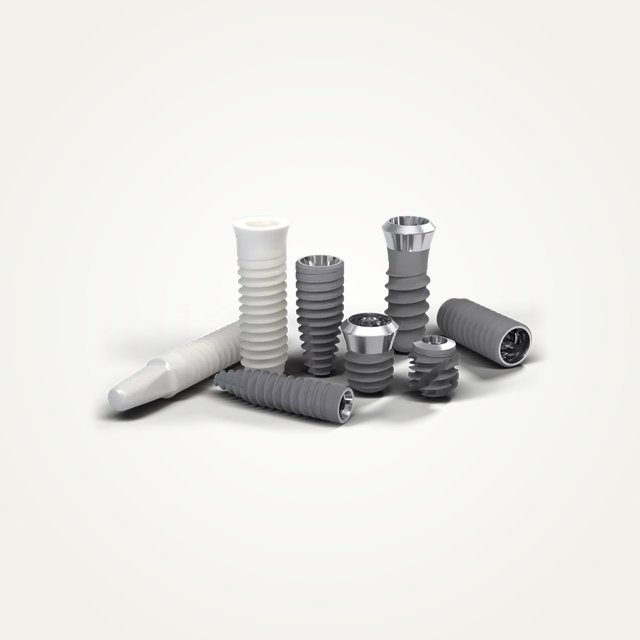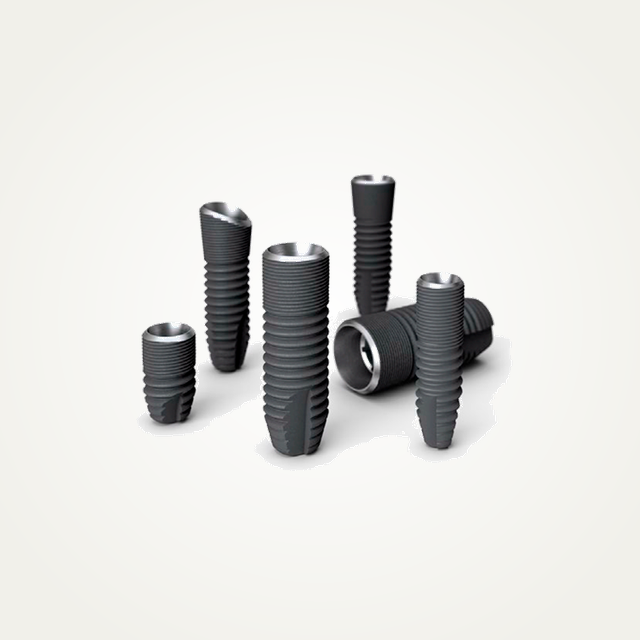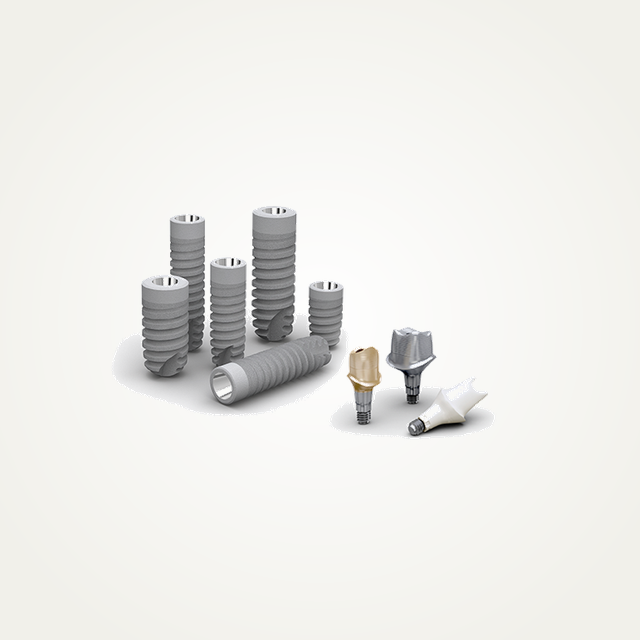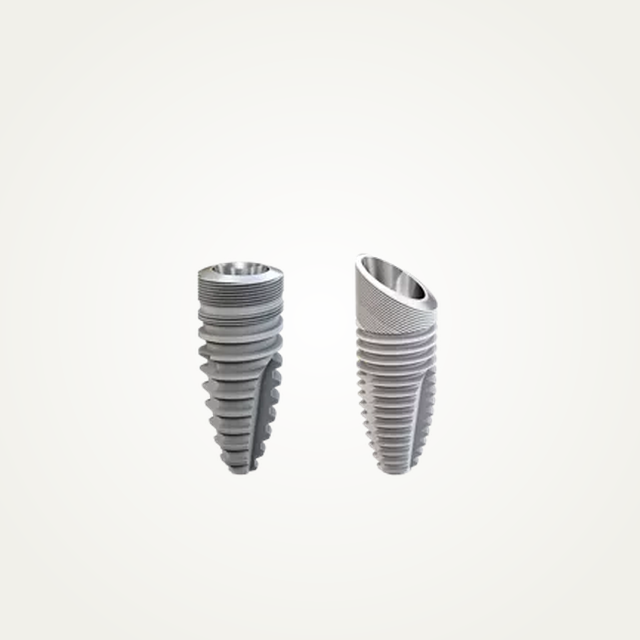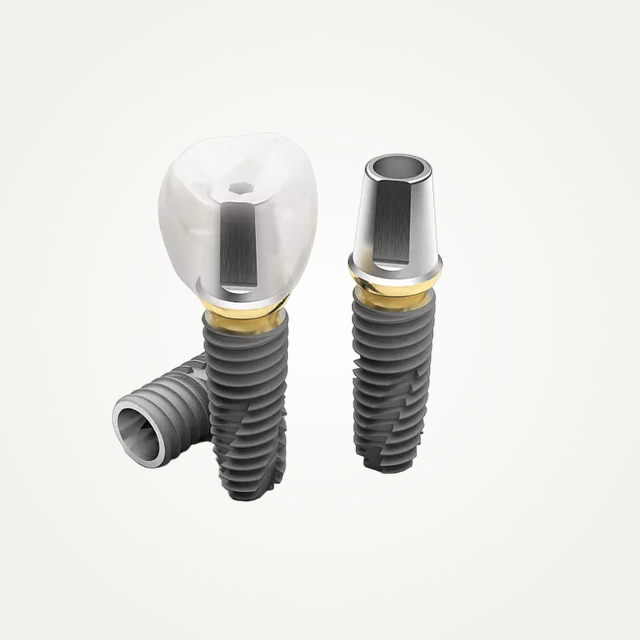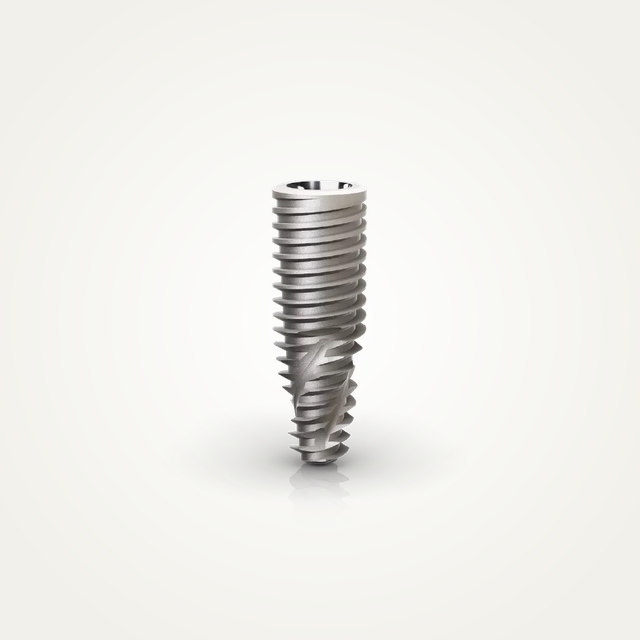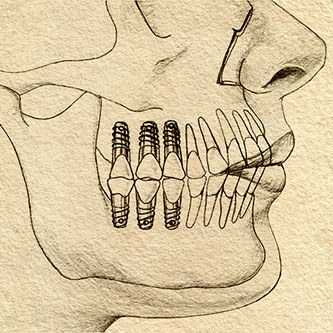
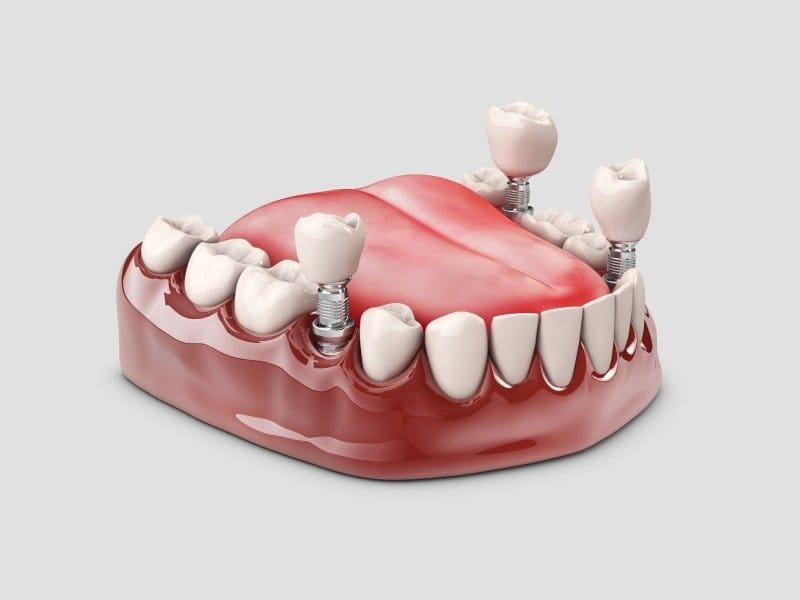
A Nobel Biocare implant has no single country of origin: the headquarters is in Kloten, Switzerland, manufacturing and regulatory filings sit with Nobel Biocare AB in Gothenburg, Sweden, and the owner is Envista Holdings, a US company listed on the NYSE as NVST. The fixture body is commercially pure titanium, stated as grade 4 in the manufacturer's instructions for use. The published long-term evidence belongs to the earlier TiUnite surface, not the current TiUltra one: 10-year survival was 95.14% at implant level and 91.50% at patient level across a meta-analysis of 106 prospective studies (PubMed 28708905), and 94.7% at 20 years in a single-centre cohort of 133 implants (PubMed 38607359). Cost in Turkey is driven by the implant line and surface, the number of treatment stages, the abutment and restoration, and whether grafting or zygomatic anchorage is needed, which is why a figure quoted before a CBCT scan is not a real quote.
- 01Three countries, three roles: headquarters in Kloten, Switzerland; manufacturing and FDA filings under Nobel Biocare AB in Gothenburg, Sweden; ownership by Envista Holdings (NYSE: NVST), confirmed by a 10-Q filed on 5 August 2026.
- 02The fixture is commercially pure titanium. FDA 510(k) K202344 states verbatim that "the material used for all devices is commercially pure titanium"; the Ti-6Al-4V alloy appears only in screws and instruments.
- 03All 10, 15 and 20-year data belong to the TiUnite surface. TiUltra was cleared by the FDA on 16 November 2020. The only clinical study naming it in PubMed follows 60 implants in 10 patients for a mean of 16.2 months (PubMed 33470044).
- 04In a meta-analysis of three premium surfaces, five-year marginal bone loss was 1.19 mm for TiUnite against 0.35 mm for Astra Tech OsseoSpeed, a statistically significant difference (P = .0240); against Straumann SLA the difference did not reach significance (P = .0769) (PubMed 33270049).
- 05The manufacturer warranty is issued to the treating provider, not to the patient, and covers the product only. Surgical, laboratory and treatment costs are excluded, and non-original components void it entirely.
Nobel Biocare is an implant brand headquartered in Switzerland, manufactured in Sweden and owned by US-based Envista. The brand's material, surface treatment and survival figures are documented in FDA filings, in the manufacturer's own published terms and in peer-reviewed literature. The implant system comparison table carries the equivalent specifications for the lines we place side by side.
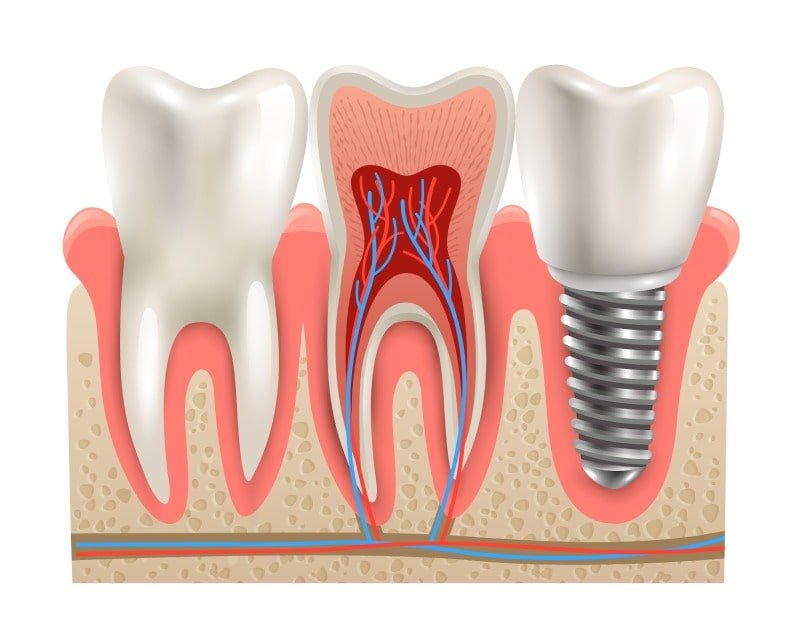
/ Who owns Nobel Biocare and where Nobel Biocare implants are made
Nobel Biocare implants do not come from a single country: three countries hold three distinct roles, with headquarters in Switzerland, manufacturing in Sweden and ownership in the United States.
Switzerland holds the headquarters. The legal entity in Kloten, near Zurich, is Nobel Biocare Services AG, and it is the registered owner of the brand's trademarks. The FDA record matches: clearance K211109 for the N1 TiUltra TCC Implant System, decided 21 December 2021, lists Nobel Biocare Services AG in Kloten, Switzerland.
Sweden holds manufacturing and the regulatory filings. Clearance K202344 for TiUltra Implants and Xeal Abutments, decided 16 November 2020, lists Nobel Biocare AB at Västra Hamngatan 1 in Gothenburg. So does K243834 for the NobelZygoma TiUltra system in August 2025, and so does the most recent clearance, K252197, decided 18 February 2026. This is the continuation of Per-Ingvar Brånemark's Gothenburg lineage, not a marketing reference to it.
The United States holds ownership. Danaher acquired Nobel Biocare in 2014 and spun its dental segment out as Envista Holdings in 2019. Envista is headquartered in Brea, California, trades on the New York Stock Exchange under NVST, and filed its most recent quarterly report with the Securities and Exchange Commission on 5 August 2026. A company that files 10-Qs and trades publicly is independent and verifiable.
For a patient, the practical consequence is narrow but real: a system whose regulatory filings, trademarks and corporate accounts are all public is a system whose claims you can check yourself, which is not true of every brand you will be quoted.
/ What a Nobel Biocare implant is actually made of
Nobel Biocare implants are not made from both grade 4 and grade 5 titanium: the regulatory record does not support that, and the distinction matters because the two are not variants of one material.
The materials row in FDA 510(k) summary K202344 reads verbatim: "The material used for all devices is commercially pure titanium." Commercially pure titanium is unalloyed by definition. What is commonly called grade 5 is Ti-6Al-4V, an alloy containing roughly 6% aluminium and 4% vanadium. The manufacturer's instructions for use specify the fixture as grade 4 and publish the composition: titanium balanced with a maximum of 0.50 wt.% iron, 0.40 wt.% oxygen, 0.08 wt.% carbon, 0.05 wt.% nitrogen and 0.015 wt.% hydrogen.
The alloy does exist in the box, just not in the fixture. Cover screws, clinical screws and surgical instruments are made from Ti-6Al-4V. That is why the contraindication paragraph in the manuals lists both commercially pure titanium and the alloy: it covers everything supplied, not the implant body alone. Reading that line as evidence of an alloy fixture line is an easy mistake and a documented one.
The comparison worth drawing is that grade 4 commercially pure titanium is the shared baseline across the field rather than a differentiator, so material is not where systems separate. They separate on surface treatment and connection geometry, and both are covered below. The screw that joins the fixture to the abutment is a separate component made from the Ti-6Al-4V alloy.
/ TiUnite and TiUltra are two surfaces, and the long-term data belong to the older one
The surface being placed today is not the surface behind the published long-term data.
TiUnite is an anodised, moderately rough surface introduced in 2000. Every 10, 15 and 20-year survival figure published for this brand belongs to it, because it was the surface in the mouths being followed.
TiUltra is the current line, cleared by the FDA on 16 November 2020 under K202344. The difference is not naming. In the manufacturer's own comparison table filed with that clearance, TiUltra is a multi-level anodisation whose roughness and oxide thickness change gradually from collar to body, while standard TiUnite is described as a single-level surface.
The second difference is wettability, and it is documented rather than claimed. The same FDA table carries a "surface preservation" row reading "hydrophilic surface, sodium dihydrogen phosphate dihydrate and magnesium chloride hexahydrate salt" for TiUltra, and "N/A" for the TiUnite predicate devices. The manufacturer's own instructions for use draw the same line: the TiUltra materials entry lists the water-soluble salt layer, the TiUnite entry does not, and the two surfaces carry separate contraindication lists.
The practical consequence is that a quote reading only "Nobel Biocare" does not tell you which surface you are getting. The instructions for use issued on 18 February 2026 still name products in the paired form "TiUltra/TiUnite", meaning both surfaces remain on sale. Ask for the product code, not the brand name, and get the answer in writing before treatment rather than after.
/ The TiUltra surface, measured: three zones on one fixture
The manufacturer publishes TiUltra surface roughness in full, zone by zone, in its FDA filing. TiUltra is specified in three zones: at the collar, areal roughness Sa is 0.5 ± 0.3 micrometres with an oxide thickness of 0.166 ± 0.008 micrometres; at the transition, Sa is 0.8 ± 0.3 micrometres with a thickness of 7.5 ± 0.3 micrometres; at the body, Sa is 1.5 ± 0.4 micrometres with a thickness of 12.0 ± 1.2 micrometres.
Those numbers only mean something against a reference band. The standing review of implant surface topography defines the moderately rough band as Sa 1.0 to 2.0 micrometres and reports it as the range producing the strongest bone response (PubMed 15543910). The TiUltra body sits at 1.5 micrometres, inside that band. The collar sits at 0.5 micrometres, deliberately well below it, which is the design intent of a graded surface: rough where bone is wanted, smoother where soft tissue and plaque control matter.
For comparison, the same filing lists TiUnite in its single-level form at Sa 1.2 ± 0.5 micrometres with an oxide thickness of 12.5 ± 2.5 micrometres. So the body roughness of the two surfaces is close; the redesign is concentrated in the collar zone and in the salt layer.
The same review adds a caveat, because a number is not an outcome: the clinical advantages of moderately rough surfaces over smoother or rougher ones are small and often not statistically significant. Roughness is a measurable physical property. What happens in your jaw also depends on bone quality, loading protocol and maintenance, each of which shapes the healing period after placement.
/ What the published survival data actually says
Nobel Biocare has one of the deepest long-term literatures in the field, and the figures come from several different scales rather than one flattering study.
The strongest brand-specific record is a meta-analysis of implants with the anodised TiUnite surface. It screened 32,519 publications and included 106 prospective studies, each with at least 20 patients and at least 12 months of follow-up after loading. Survival at one year was 99.50% at implant level and 99.12% at patient level. At ten years it was 95.14% at implant level and 91.50% at patient level. Mean marginal bone change was 0.409 mm at one year and 0.886 mm at five years at implant level (PubMed 28708905).
Single-centre cohorts report higher figures, and the difference is methodological rather than contradictory. A prospective Swedish cohort followed 133 implants in 46 patients at one county clinic for 20 years and reported 94.7% survival. Seven implants were lost, four of them in the same patient, and five of the seven failures were associated with a combination of smoking and bruxism. Mean marginal bone loss at 20 years was 0.543 ± 1.193 mm (PubMed 38607359). An earlier report from the same lineage followed 121 TiUnite Brånemark implants in 46 patients and recorded 99.2% survival at ten years (PubMed 22642261). These two are the same clinical tradition and should not be counted as independent evidence.
Two further records study the anodised surface without naming a brand. A retrospective analysis of 129 single-tooth implants placed at the Brånemark Clinic in Gothenburg in 2003 and 2004, mean follow-up 13.4 ± 4.8 years, reported a 15-year cumulative survival of 97.4% (PubMed 36773332). A meta-analysis of eight observational studies summarised cumulative survival for anodised surfaces at 0.98 (PubMed 36582952). Neither names the manufacturer in its abstract, so both are surface-class evidence, not brand evidence.
Survival and success are also not the same measurement, a distinction drawn in the systematic review of success criteria in implant dentistry (PubMed 22157097) and one that applies equally to the Straumann figures. Every figure on this page is a survival figure.
/ The marginal bone loss finding, and what the manufacturer did about it
Marginal bone loss is a measured finding that does not favour the brand: in a meta-analysis comparing three premium surfaces, mean bone loss at five years was highest for TiUnite.
A systematic review and meta-analysis compared marginal bone level change across three premium surfaces: Astra Tech OsseoSpeed, Straumann SLA and SLActive, and Nobel Biocare TiUnite. It included 37, 23 and 53 publications respectively. At five years, weighted mean bone loss was 0.35 mm for Astra Tech across 1,168 implants, 0.74 mm for Straumann across 202 implants, and 1.19 mm for TiUnite across 1,683 implants. The difference between Astra Tech and TiUnite was statistically significant (P = .0240). The difference between Straumann and TiUnite was not (P = .0769). The authors concluded that the three surface preparations differed significantly and that the Astra Tech surface showed superior marginal bone maintenance (PubMed 33270049).
The boundaries of that finding belong with it. What was measured is bone level change, not implant loss, and survival for the same surface remained high over the same period. On peri-implantitis, the TiUnite meta-analysis reported a patient-level prevalence of 5.20%, but that figure comes from a mean follow-up of 47.89 months (PubMed 28708905) and cannot be read directly against the 22% weighted mean prevalence calculated for the general implant population (PubMed 25495683), because the follow-up windows and case definitions differ.
The manufacturer's response to this literature was to change the surface. The graded TiUltra design, with a markedly smoother collar zone, reached the market around the period this meta-analysis was published. Whether that changes bone behaviour has not been shown, which is the subject of the next section. What a patient should take from this is not a verdict on the brand but a question for the clinic: which surface is being placed, and why that one.
/ How much clinical evidence TiUltra itself has
A renewed surface is not evidence that the renewal worked. What exists for TiUltra today is small enough to count.
PubMed indexes five records with TiUltra in the title or abstract. Only one is a clinical study: a proof-of-concept prospective series in which 60 TiUltra implants, 32 NobelParallel TiUltra and 28 NobelActive TiUltra, were placed in 10 patients and followed for a mean of 16.2 ± 1.7 months. One implant failed, cumulative success was 98.3%, and mean marginal bone loss was 0.53 ± 0.28 mm (PubMed 33470044). Ten patients at sixteen months cannot be read on the same axis as 46 patients at twenty years.
The remaining four are not clinical. The only study comparing TiUltra directly against TiUnite is a three-dimensional cell culture experiment, which found higher osteogenic gene expression in the TiUltra group and no difference in cell viability or proliferation (PubMed 40096517). On wettability, an independent laboratory measured contact angles on 15 implants and reported that BTI UniCa, Nobel TiUltra and Straumann Roxolid SLActive showed the highest hydrophilicity of the group tested (PubMed 40333410). That is a measurement of a surface property. "Integrates faster" is a claim about outcomes, and these studies do not demonstrate it.
In short, the long-term evidence behind the surface being placed today is the evidence for the previous surface. This is not specific to this manufacturer; every surface generation has the same calendar problem, and any brand claiming otherwise is claiming something it cannot have. The decision-relevant question is which line and which surface your clinic places, and whether that appears on your quote.
/ The connection: internal conical with a hex index, and no published cone angle
The interface between fixture and abutment differs between systems, and it is the variable most often linked to long-term marginal bone behaviour.
Across the mainstream Nobel Biocare lines the connection is an internal conical connection combined with a hex index. The device description in K202344 reads verbatim: "an internal conical connection (CC) with hex interface". The same filing lists platforms as NP, RP and WP, diameters from 3.0 to 5.5 mm and lengths from 6.5 to 18 mm. The manufacturer's prosthetic manual adds built-in platform shifting.
One line is a separate family. The N1 instructions for use describe a "trioval conical connection (TCC)" with a three-lobed coronal zone, so if your clinic places N1 the connection line on your paperwork should read differently from the CC lines.
The internal cone angle of the Nobel Biocare conical connection is not published in the manufacturer's documents: the NobelParallel CC manual, the K202344 FDA summary and the 2026 instructions for use do not give it, so the 12 degree figure sometimes quoted for this system cannot be verified. Every degree value in K202344 is a prosthetic angulation (0, 17 and 30 degrees for abutments). The 45 and 25 degree "bevel angle" column in the manual describes the implant neck chamfer, not the internal cone.
The measured effect of connection type is brand-independent. A network meta-analysis of randomised clinical trials found conical interfaces produced less marginal bone loss and fewer prosthetic complications than external hexagonal connections, while finding no significant difference between connection types in survival or biological complication rates (PubMed 34776267).
/ All-on-4 is a Nobel Biocare trademark, but Nobel Biocare did not invent it
The sentence "Nobel Biocare invented All-on-4 in 1998" is wrong on both the inventor and the date.
The All-on-4 treatment concept was developed by Dr Paulo Maló in the early 1990s. The first patient documented in the first scientific study was treated in 1998. Nobel Biocare's role was support and scale rather than invention: the company backed the work through Dr Bo Rangert and launched the concept commercially in 2004. Those dates come from the manufacturer's own announcement. All-on-4 is today a registered trademark of Nobel Biocare Services AG, as are TiUnite, TiUltra, NobelActive, NobelParallel, NobelReplace, NobelPearl, NobelProcera and NobelZygoma.
The practical consequence is that the trademark attaches to the name, not to the evidence. The clinical record for full-arch rehabilitation on four implants is brand-independent. A systematic review and meta-analysis pooling 55 studies reported survival of 99.20% at one year, 99.66% between one and five years, and 98.14% at five years and beyond for four-implant arches, against 100%, 98.55% and 97.50% for six-implant arches. Marginal bone loss at five years was 1.28 mm and 0.94 mm respectively. The authors' own caution is that heterogeneity between studies was high and the conclusions should be read carefully (PubMed 42031576).
Very long follow-ups exist too, and they come from the clinic that developed the concept. In the maxilla, 4,288 implants in 1,072 patients reported cumulative implant survival of 94.7% with up to 13 years of follow-up (PubMed 30924250). In the mandible, 724 implants in 181 patients with a mean follow-up of 264 months reported 90% implant and 92% prosthetic survival out to 25 years, although 100 of the 181 patients were lost to follow-up and the authors declare funding and speaker relationships with Nobel Biocare Services AG (PubMed 41354261). Neither abstract names the implant system, so both are cited here as concept data rather than brand survival. Our full-mouth implant guide covers what these protocols involve in practice.
/ What a Nobel Biocare implant costs and what actually moves the number
The cost of a Nobel Biocare implant is a structure rather than a single figure. No price is published on this page, because a number quoted before a CBCT scan describes a product rather than your treatment, and because published clinic figures for this brand vary by several multiples with no methodology attached.
Six layers set the total. The first is the fixture itself, and the brand name alone does not define it: which line (N1, NobelActive, NobelParallel CC, NobelReplace CC, NobelZygoma), which diameter and length within the 3.0 to 5.5 mm and 6.5 to 18 mm ranges, which surface, which platform. The second is the number of stages and what is included, since a fixture price is not a treatment price once a healing abutment, a final abutment and a restoration are added. On1 base components, where used, are a further line.
The third layer is the restoration, chosen independently of the implant system. A zirconia implant crown and other materials move the total on their own, and our dental crown guide for Istanbul sets out the material choices. The fourth is additional surgery: insufficient bone volume means grafting, a low sinus floor in the posterior maxilla means sinus augmentation, and advanced maxillary atrophy may mean zygomatic anchorage, each of which is a separate item that imaging decides.
The fifth is the scale of the case, which changes surgical time and laboratory work by an order of magnitude between a single molar implant, an implant-supported prosthesis and a full-mouth reconstruction. The sixth never appears on the quote at all: component availability, warranty scope and the annual review schedule. Our general implant pricing structure page covers the layers common to every system, and a written itemised quote after examination is the only version worth comparing between clinics. Book a consultation and ask for it line by line.
/ Why UK and US price comparisons are rarely like for like
Comparing a Nobel Biocare quote from Turkey with a UK or US price is worth doing, but only if the baseline is understood.
In the United Kingdom the NHS publishes fixed treatment charges in three bands: £27.90 for band 1, £76.60 for band 2 and £332.10 for band 3. The examples the NHS lists under band 3 are crowns, dentures and bridges. Dental implants are not named among them, so for most patients an implant in the UK is a private fee that the published NHS band table does not describe at all. That is the reason a UK patient cannot anchor on an official number the way they can for a crown.
The second reason comparisons drift is that quotes are rarely itemised the same way. One clinic's figure may cover the fixture only, another's the fixture and abutment, another's the entire restored unit, and a fourth may quote a full-arch package with a temporary prosthesis included. Before comparing any two numbers, confirm which of these six things each covers: fixture, healing abutment, final abutment, restoration, imaging and follow-up reviews.
The third reason is that additional surgery is genuinely unpredictable before imaging. A quote that includes grafting and a quote that excludes it are not competing offers; they are answers to different clinical questions. Our guide to dental implants in Istanbul sets out how the trip is structured, and treatment planning determines which of these items apply to you before any figure is meaningful.
/ The Nobel Biocare warranty: what it covers, and who it is issued to
What the Nobel Biocare warranty covers, and who it is issued to, decides which costs are met if a component fails years later. The terms are published on the manufacturer's own warranty page.
The coverage reads as follows. An implant that fails to remain in bone is replaced under a lifetime warranty. Non-temporary, non-provisional restorative components carry lifetime coverage. Abutments placed on a non-Nobel Biocare implant are limited to ten years from the date of placement. NobelProcera products are region-dependent: the international page states five years, while the US page states ten years for products purchased after 1 February 2023. So "the Nobel warranty" is not one document but a set of regional documents, and the one that applies to you is the one covering the market where the product was purchased.
The decisive point is not duration but the beneficiary. The warranty is issued to eligible treatment providers, defined by the manufacturer as dentists, physicians and dental technicians. It is not issued to the patient. The exclusions are equally explicit: trauma and patient-caused damage, temporary implant systems, custom-modified products, attachments and riders for implant bars, and every cost beyond product replacement. Surgical fees, laboratory costs and treatment expenses are outside the warranty. Using non-original components voids coverage entirely.
The practical translation is short. Lifetime replacement is real, and it covers the screw, not the operation. The procedure to place a replacement is covered by the clinic's own guarantee, which is a separate document with its own duration and its own exclusions. Ask for both in writing before treatment starts, not after. We issue ours at the treatment planning stage, and our clinical team will explain what each one does and does not include.
/ The Nobel Biocare warranty form and who files the claim
In most cases a patient cannot claim on the Nobel Biocare warranty with a form of their own, and the reason is structural rather than obstructive.
Because the warranty is issued to the treatment provider, the claim is filed by the clinic that placed the implant, using its own account with the manufacturer, referencing the product's lot and reference numbers. A patient submitting a form directly has no account to file against. If you have lost contact with the original clinic, the route back runs through your implant card and a new provider willing to file on your behalf, not through a form you complete yourself.
There is one documented exception worth knowing. The manufacturer issues a patient-facing guarantee for NobelProcera implant bar overdentures, delivered as a Patient Guarantee Card. If your restoration is that specific product type, you should have received a card, and it is worth asking for it if you did not.
Everything else is an argument for keeping the paperwork. Three documents make any future claim possible: the implant card with the serial, lot and unique device identification numbers, the itemised treatment record showing which line and surface were placed, and the clinic's written guarantee. All three are handed over at discharge as part of the patient journey, and the clinical side of that guarantee depends on the maintenance routine you keep afterwards.
/ The implant card, traceability and confirming you received what you paid for
Counterfeit and grey-market implants are a real risk category, and any patient can run a verification procedure against it in five minutes.
European medical device law requires the manufacturer of an implantable device to supply an implant card and specifies what it must carry: device name, serial number, lot number, Unique Device Identification, model, and the manufacturer's name and address, together with information on the expected lifetime of the device and any necessary follow-up care (Regulation (EU) 2017/745, Article 18). That card is what makes a claim checkable.
Three checks follow. Confirm that the serial or lot number on the card matches the sticker peeled from the sterile packaging, which is normally attached to your record during surgery. Confirm that the line and surface written down form a real combination, since names pair in specific ways such as NobelActive TiUltra or NobelParallel CC TiUnite. And confirm the manufacturer name is one of the two legal entities, Nobel Biocare AB or Nobel Biocare Services AG, rather than a distributor trade name.
The manufacturer's own region selector does not carry a Turkey page. That does not mean the product is unavailable in Turkey, but it does mean the component supply and service chain should be confirmed with the clinic in writing rather than inferred. Ask who supplies replacement components, and whether a dentist in your own country can order them against the product codes on your card. Our contact page is the right place to put that question before treatment, not after.
/ NobelPearl, the metal-free option, and its limits
For patients who do not want titanium, the brand has a separate line, and its evidence base is not the same as the titanium lines.
NobelPearl is a two-piece ceramic implant milled from hot isostatic-pressed alumina-toughened zirconia. The connecting screw is metal-free as well: a carbon fibre reinforced polymer screw marketed as VICARBO. So the system is genuinely metal-free rather than metal-free only where it shows.
No clinical survival study published under the NobelPearl name is listed in PubMed. The closest evidence is at class level: a systematic review and meta-analysis of zirconia implants covering 25 studies, 2,083 patients and 4,017 implants reported a 10-year cumulative survival rate of 95.1%. Two of its findings apply directly to this line. Two-piece zirconia implants showed statistically significantly lower survival than one-piece designs (p = 0.017), and of the 172 recorded failures, 26 were implant fractures, mostly in narrow-diameter implants (PubMed 38135804).
There is also a measured difference in wettability. In the contact angle study cited earlier, zirconia implants showed markedly lower hydrophilicity than the premium titanium group, and within that zirconia group Nobel Pearl produced smaller contact angles than the comparator ceramic implant (PubMed 40333410). A metal-free option is a genuine option, and for a patient who wants one it may be the right choice. It is not evidentially equivalent to the titanium lines, and that trade-off belongs on the consent form rather than in a footnote.
/ What decides the ten-year result
how long do nobel biocare implants last invites a number, and the defensible answer is a set of conditions. The clearest signal comes from the 20-year cohort itself, where five of the seven failures were associated with a combination of smoking and bruxism rather than with the implant (PubMed 38607359).
Peri-implant disease is common across all systems. The standing epidemiology review calculates weighted mean prevalences of 43% for peri-implant mucositis and 22% for peri-implantitis, and its meta-regression shows prevalence rising with function time (PubMed 25495683). The longer an implant is in service, the more risk accumulates, which is why a survival figure at ten years and a survival figure at twenty are not interchangeable.
Maintenance is the variable with measured benefit. A systematic review and meta-analysis of maintenance therapy found lower incidence of peri-implant disease among implants enrolled in supportive programmes and concluded that a recall interval of at least five to six months is warranted; the same analysis identified a history of periodontal disease as a significant influence (PubMed 26701350). That is why gum health is settled before implant planning rather than after, and why peri-implantitis and its treatment has its own page here.
Brand choice shapes the first day. Maintenance shapes the tenth year. That holds for this system and for every other one in our comparison table, including Straumann, Osstem, Neodent, Astra Tech, Ankylos and Medentika.
/ Who a Nobel Biocare implant is chosen for
The distinguishing property of the Nobel Biocare system is the depth of its long-term literature: follow-up data exist at 10, 15 and 20 years, which can be a legitimate reason to choose it when documented long-term predictability is what a case needs.
Indications differ by line. NobelActive's back-tapered coronal design, reverse-cutting flutes and double lead threads are engineered toward primary stability in soft bone and in fresh extraction sockets. NobelParallel CC's parallel walls suit sites where bone volume is limited or adjacent roots are close. NobelReplace CC is the single lead thread tapered line. NobelZygoma addresses advanced maxillary atrophy where a conventional fixture has nothing to anchor into. NobelPearl is reserved for cases where titanium is not wanted, with the evidence limits described above.
The variables that decide are bone volume and density, the position of the edentulous site, the opposing arch, bite load, systemic health and the planned restoration. They are measured with CBCT imaging and clinical examination rather than chosen from a brand list. For a single missing tooth, the prior question is often implant against bridge, and where a case is planned digitally, guided surgery changes how the plan is executed rather than which brand is used.
A statement that one brand is better than another is clinically wrong, because the correct system varies by case. Our clinicians will take you through the specification of whichever system is proposed for you, including the ones that are not on this page.
Let’s plan the right treatment together.
Free Assessment→- 1.Karl M, Albrektsson T. Clinical Performance of Dental Implants with a Moderately Rough (TiUnite) Surface: A Meta-Analysis of Prospective Clinical Studies. Int J Oral Maxillofac Implants 2017;32:717-734. PubMed 28708905
- 2.Östman PO, Chrcanovic BR, Albrektsson T. A Prospective Report of the Clinical Outcome of TiUnite Implants at 20 Years of Follow-up. Int J Oral Maxillofac Implants 2024:389-395. PubMed 38607359
- 3.Östman PO, Hellman M, Sennerby L. Ten years later. Results from a prospective single-centre clinical study on 121 oxidized (TiUnite™) Brånemark implants in 46 patients. Clin Implant Dent Relat Res 2012;14:852-60. PubMed 22642261
- 4.Kowar J, Lund H, Stenport VF. Long-term performance of implants with moderately rough anodized surface supporting single-tooth restorations: A retrospective analysis with an up to 15-year follow-up. Clin Oral Implants Res 2023;34:367-377. PubMed 36773332
- 5.Husain F, Gupta S, Sood S, Bhaskar N, Jain A. To evaluate the effect of anodized dental implant surface on cumulative implant survival and success. A systematic review and meta-analysis. J Indian Soc Periodontol 2022;26:525-532. PubMed 36582952
- 6.Norton MR, Åström M. The Influence of Implant Surface on Maintenance of Marginal Bone Levels for Three Premium Implant Brands: A Systematic Review and Meta-analysis. Int J Oral Maxillofac Implants 2020;35:1099-1111. PubMed 33270049
- 7.Pozzi A, Hansson L, Carosi P, Arcuri L. Dynamic navigation guided surgery and prosthetics for immediate loading of complete-arch restoration. J Esthet Restor Dent 2021;33:224-236. PubMed 33470044
- 8.Ayyildiz BG, Kocak A, Bozoglan E. Comparison of Osteogenic Differentiation of Anodized Gradually and Nongradually Surface-Roughened Novel Implant Surfaces by 3D Cell Culture: In Vitro Study. Int J Oral Maxillofac Implants 2025;40:613-624. PubMed 40096517
- 9.Čivljak T, Ban T, Kopić V, Petrović V, Morelato L, Vuletić M, et al. Comparison of Hydrophilic Properties of Titanium and Zirconia Dental Implants' Surfaces. Materials (Basel) 2025;18. PubMed 40333410
- 10.Mohseni P, Soufi A, Chrcanovic BR. Clinical outcomes of zirconia implants: a systematic review and meta-analysis. Clin Oral Investig 2023;28:15. PubMed 38135804
- 11.Shao WH, Chen R, Wang S, Duan SY, Zhang XD, Tang YL. All-on-4 and All-on-6 implant-supported fixed prostheses for the edentulous jaw: a systematic review and meta-analysis. Int J Oral Maxillofac Surg 2026;55:1098-1112. PubMed 42031576
- 12.Maló P, de Araújo Nobre M, Lopes A, Ferro A, Nunes M. The All-on-4 concept for full-arch rehabilitation of the edentulous maxillae: A longitudinal study with 5-13 years of follow-up. Clin Implant Dent Relat Res 2019;21:538-549. PubMed 30924250
- 13.de Araújo Nobre M, Lopes A, Ferro A, Nunes M, Gouveia M, Santos D, et al. Immediate full-arch mandibular rehabilitation supported by four implants: A retrospective study with 20 to 25 years of follow-up. J Dent 2026;165:106286. PubMed 41354261
- 14.Camps-Font O, Rubianes-Porta L, Valmaseda-Castellón E, Jung RE, Gay-Escoda C, Figueiredo R. Comparison of external, internal flat-to-flat, and conical implant abutment connections for implant-supported prostheses: A systematic review and network meta-analysis of randomized clinical trials. J Prosthet Dent 2023;130:327-340. PubMed 34776267
- 15.Albrektsson T, Wennerberg A. Oral implant surfaces: Part 1--review focusing on topographic and chemical properties of different surfaces and in vivo responses to them. Int J Prosthodont 2004;17:536-43. PubMed 15543910
- 16.Papaspyridakos P, Chen CJ, Singh M, Weber HP, Gallucci GO. Success criteria in implant dentistry: a systematic review. J Dent Res 2012;91:242-8. PubMed 22157097
- 17.Derks J, Tomasi C. Peri-implant health and disease. A systematic review of current epidemiology. J Clin Periodontol 2015;42 Suppl 16:S158-71. PubMed 25495683
- 18.Monje A, Aranda L, Diaz KT, Alarcón MA, Bagramian RA, Wang HL, et al. Impact of Maintenance Therapy for the Prevention of Peri-implant Diseases: A Systematic Review and Meta-analysis. J Dent Res 2016;95:372-9. PubMed 26701350
- 19.FDA 510(k) K202344, TiUltra Implants and Xeal Abutments, Nobel Biocare AB (Gothenburg, Sweden), decided 16 November 2020: material statement, three-level Sa and oxide thickness values, hydrophilic salt composition, internal conical connection with hex interface, diameter and length ranges.
- 20.FDA 510(k) K211109, N1 TiUltra TCC Implant System, Nobel Biocare Services AG (Kloten, Switzerland), 21 December 2021; K243834, NobelZygoma TiUltra Implant System, 25 August 2025; K252197, Nobel Biocare S Series Implants, 18 February 2026.
- 21.Nobel Biocare warranty programme pages, international and United States versions, read 9 August 2026: coverage durations, issuance to treatment providers, the NobelProcera implant bar overdenture patient guarantee card, and the exclusion list.
- 22.Nobel Biocare trademark listing: All-on-4, TiUnite, TiUltra, NobelActive, NobelParallel, NobelReplace, NobelPearl, NobelProcera and NobelZygoma are registered to Nobel Biocare Services AG.
- 23.Nobel Biocare corporate announcement on the All-on-4 treatment concept: development by Dr Paulo Maló, first documented case in 1998, commercial launch in 2004, support through Dr Bo Rangert.
- 24.Nobel Biocare product page for NobelPearl: hot isostatic-pressed alumina-toughened zirconia, two-piece design, metal-free VICARBO carbon fibre reinforced polymer screw.
- 25.US Securities and Exchange Commission EDGAR filing index, CIK 0001757073: Envista Holdings Corp, NYSE: NVST, headquarters Brea, California, 10-Q filed 5 August 2026.
- 26.NHS published dental charges: band 1 £27.90, band 2 £76.60, band 3 £332.10, with crowns, dentures and bridges listed as band 3 examples.
- 27.Regulation (EU) 2017/745, Article 18: implant card and information to be supplied to the patient.