Peri-implantitis is inflammation of the tissue around a dental implant that has progressed into the supporting bone, showing as bleeding, suppuration, deepening pockets and radiographic bone loss; the earlier stage confined to the mucosa, and reversible, is peri-implant mucositis. It is common rather than rare. An AO/AAP systematic review of 102 studies covering 13,030 patients reported patient-level prevalence of 21% for peri-implantitis and 46% for mucositis, with weighted incidence of 22% and 53% within 20 years of function (PubMed 40489307). Periodontitis, smoking, diabetes and alcohol consumption were identified as risk indicators.
- 01The two peri-implant diseases differ by tissue and reversibility: mucositis is inflammation limited to the soft tissue and can be resolved, while peri-implantitis has already reached bone and can be controlled but not fully reversed.
- 02Patient-level prevalence is 46% (95% CI 41-51) for peri-implant mucositis and 21% (95% CI 17-24) for peri-implantitis across 102 studies and 13,030 patients (PubMed 40489307).
- 03Incidence keeps rising with service time: weighted incidence within 20 years of function was 53% for mucositis and 22% for peri-implantitis, so a single healthy check does not settle the question (PubMed 40489307).
- 04Identified risk indicators are periodontitis, diabetes mellitus, smoking and alcohol consumption for peri-implantitis, and periodontitis, obesity and smoking for mucositis (PubMed 40489307).
- 05Surgical reconstruction outperforms debridement alone on some outcomes only: across 18 randomised trials with 635 patients and 687 implants, reconstructive therapy reduced probing depth, limited recession and gained radiographic bone level, but added no benefit for bleeding on probing or suppuration (PubMed 40476895).
/ What Is Peri-Implantitis?
Definition and Medical Background
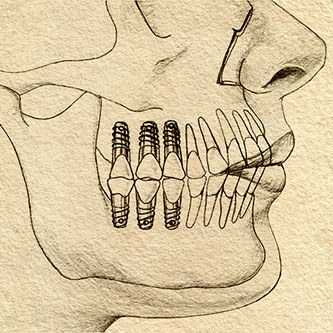
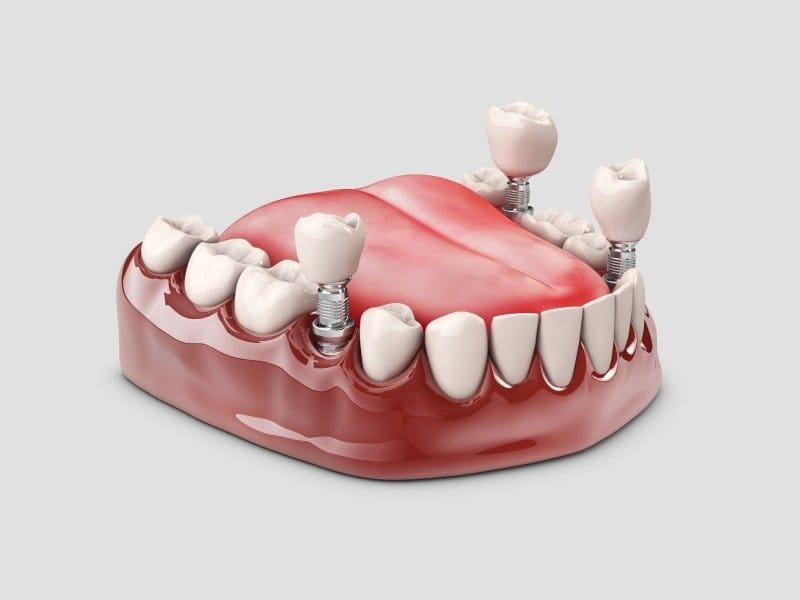
Peri-implantitis is the progressive infection that affects the soft and hard tissues surrounding a dental implant. Often, this infection involves the chronic inflammation of multiple tissues that can ultimately result in bone loss or implant failure if left untreated.
Peri-Implantitis vs. Peri-Implant Mucositis
The most crucial aspect of peri-implantitis is that it’s not a sudden condition. Before impacting the alveolar bone around the implant and causing all its consequences, the disease must go through an initial phase called mucositis.
Unlike peri-implantitis, which irreversibly involves all the structures around the implant, mucositis is a reversible condition influencing only gum tissues, making this initial stage significantly more manageable and easier to treat. As a result, early detection is crucial to allow a quick recovery and prevent further complications.
Common Causes of Peri-Implantitis
The most important and frequent cause for peri-implantitis is dental plaque and tartar build-up induced by inadequate oral hygiene. Therefore, most cases are preventable with the appropriate hygiene routine and healthy habits.
Other causes can include:
● Systemic diseases like diabetes.
● Harmful habits, such as smoking or severe grinding.
● Strong medications and therapies, such as chemotherapy and radiotherapy.
● Some medications that could interfere with the osseointegration.
● Biomechanical overload due to inadequate planning or prosthetic rehabilitation.
/ Key Symptoms of Peri-Implantitis
The most common symptoms of peri-implantitis include:
● Bleeding and swollen gums : They’re the first symptoms to appear, caused by the inflammation of the soft tissues surrounding the implant. This sign can appear when brushing or spontaneously, and it’s the first sign of alarm to schedule a check-up appointment.
● Bad breath: Once bacteria get trapped between your tissues and the implant, they can produce a bad smell and even a bad, metallic taste.
● Pus: When the infection spreads to other hard tissues, your body tries to trap as much of it as possible, creating purulent exudate.
● Implant mobility: It is a more severe sign that indicates involvement of the bone surrounding the implant.
Bleeding around an implant is worth acting on because peri-implant disease is common. An AO/AAP systematic review of 102 studies with 13,030 patients reported a patient-level prevalence of 46% for peri-implant mucositis and 21% for peri-implantitis (PubMed 40489307). The same review identified periodontitis, diabetes mellitus, smoking and alcohol consumption as risk indicators for peri-implantitis, so patients with any of these have more reason to report bleeding, swelling or pus early.
If you notice any of these symptoms in your mouth, but more importantly, associated with your new implant, seek professional care as soon as possible. Don’t wait for the symptoms to worsen, as it can affect the peri-implantitis treatment and lead to multiple complications.
/ Prevention: How to Protect Your Dental Implants
Your implant treatment doesn’t end with your final prosthesis; it continues with you at home by taking the appropriate measures to take care of it and extend its lifetime to the maximum and in the best shape possible. Here are some practical pieces of advice you can take to maximize the life of your implants and prevent peri-implantitis.
Prioritize Excellent Oral Hygiene
Daily oral hygiene is the most crucial aspect to look for as a bearer of dental implants . It’s essential that you brush your teeth at least twice daily, but preferably after each meal, using fluoride toothpaste and dental floss. Keep in mind that oral hygiene is even more important for implant patients than for natural teeth.
Also, incorporating antimicrobial rinses, such as alcohol-free chlorhexidine mouthwashes, can decrease bacterial count and prevent multiple issues, including peri-implantitis.
Use Implant-Safe Tools
The tools you use for home hygiene are almost as critical as the technique itself. Experts recommend using a specialized soft-bristled, implant toothbrush and avoiding medium or hard bristles entirely. Additionally, the use of water flossers has been highly indicated for implant patients as it makes the cleaning in difficult areas easier while preventing damage to the implant.
Avoid abrasive or hard materials, such as metallic interdental brushes, when you clean the area around your implant, as it can damage the implant surface and promote plaque build-up and even more inflammation.
Eat for Implant Health
Due to the considerable link between nutrition and oral health, experts recommend avoiding sugary meals, acidic foods, and excessively hard foods, including bones, hard nuts, and similar. On the other hand, foods rich in vitamins C and D, calcium, and proteins are highly valuable to keep the bone and soft tissues healthy.
/ Peri-Implantitis Treatment by Disease Stage
Peri-implantitis treatment depends on the severity and stage of the disease. As a result, intervening at early stages makes the management of the disease relatively easy and less complex. However, its treatment can range from a simple cleaning to removing the implant.
Non-Surgical Therapies
The first line of defense is removing the local irritants, dental plaque and tartar, with a professional dental cleaning, using specialized cleaning bits to avoid damage to the implant’s surface. Your dentist will also indicate antiseptic rinses and other hygienic measures.
Other modern treatment alternatives to deal with peri-implantitis include the use of laser-assisted therapy, which uses a powerful beam of light to clean the surface and remove bacteria and plaque.
Surgical Solutions
Advanced stages, on the contrary, will require surgical alternatives, such as:
● Regenerative surgery, to produce new bone.
● Flap surgery, to correct gum recession around the implant and protect its surface.
● Bone grafting, placing new bone to restore bone loss.
However, the exact treatment will depend on your evaluation and the stage of the disease. Some patients will require the combination of two or more of these alternatives to obtain the desired results. In severe cases, the surgeon might opt to remove the implant entirely, place new bone, and then place a new one after the recovery.
/ Modern Treatment Options for Peri-Implantitis
The European Federation of Periodontology's S3-level clinical practice guideline, developed from 13 commissioned systematic reviews, treats peri-implant care as a sequence of steps. Prevention starts when implants are planned, placed and loaded. Once they are in function, a supportive peri-implant care programme with periodical assessment of the tissues follows, and mucositis or peri-implantitis found at those visits is treated (PubMed 37271498).
Additions to non-surgical cleaning have also been measured. A systematic review of controlled clinical trials with at least 6 months of follow-up included 9 investigations of local antimicrobials, systemic antimicrobials and probiotics. Systemic antimicrobials gave significantly greater reductions in probing depth and bleeding on probing, especially at sites deeper than 6 mm, while local antimicrobials led to modest improvements in probing depth. The studies differed too much to be pooled in a meta-analysis (PubMed 37143407).
When a bone defect remains, surgery can aim to rebuild it. Across 18 randomised trials with 635 patients and 687 implants, reconstructive surgery reduced probing depth, limited mucosal recession and gained radiographic bone level compared with open flap debridement alone, but it added no benefit for bleeding on probing or suppuration (PubMed 40476895). Smoking and the starting measurements of the defect also affected the results.
/ Post Treatment Implant Care in Istanbul
Regular Dental Visits Are Critical
Catching peri-implantitis early is crucial for its resolution. Therefore, attend to professional cleanings every 3–6 months and keep a consistent monitoring to catch problems early.
Lifestyle Habits That Impact Healing
Smoking and having an inadequate diet are dental implants’ worst enemies. Try to avoid them as much as possible, as tobacco smoke debilitates the gums and makes you more prone to these infections. If you have any chronic systemic conditions, like diabetes or periodontal disease, you should address them promptly to prevent more complications.
High Standards at Affordable Costs
Istanbul provides high-quality care, experienced dental surgeons, and affordability of your dental treatment while adhering to the highest quality practice standards. As a result, the city is a top destination for global dental tourism.
Clinics Specializing in Peri-Implantitis Treatment
Besides the great preparation and knowledge of the professionals, multiple Istanbul clinics offer advanced imaging, laser technologies, and 3D surgery alternatives that make the treatment easier and faster, with personalized implant restoration options, including all-on-4 and all-on-6 implants.
/ FAQ About Peri-Implantitis
How common is peri-implantitis?
Peri-implantitis affects about one in five dental implant patients (PubMed 40489307), and the risk depends on factors like oral hygiene, health status, and implant maintenance. While it’s not inevitable, it's more common in patients who smoke, have poor oral hygiene, or suffer from chronic conditions like diabetes.
Can you reverse the infection?
You can reverse peri-implant mucositis, the early stage of infection that doesn’t involve bone loss. However, peri-implantitis itself cannot be fully reversed once bone damage occurs. It can be controlled and treated effectively to prevent further progression with professional care.
Does treatment hurt?
Most treatments are performed under local anesthesia, so pain during the procedure is minimal. After treatment, you might feel mild discomfort, swelling, or sensitivity, which typically resolves in a few days. Advanced techniques, including laser therapies, reduce the need for invasive surgery and shorten recovery time.
How long does recovery take?
Recovery varies based on the severity of the infection and the type of treatment. Non-surgical procedures may need only a couple of days for recovery. Surgical treatments, like bone grafting or flap surgery, can require 1–2 weeks for initial healing and several months for full integration.
Are implants still a safe option?
Yes. Dental implants remain one of the safest and most effective long-term solutions for tooth replacement. With proper planning, hygiene, and regular check-ups, the risk of peri-implantitis is low. Choosing experienced implant professionals further reduces complications.
Final Takeaway
Fortunately, peri-implantitis is preventable and treatable with the appropriate and timely measures. With the right care, modern solutions, and regular dental check-ups, you can protect your dental investment and health long-term.
Author: DDS, PhD Ömer Faruk Şarkbay (Implantology Specialist)
Let’s plan the right treatment together.
Free Assessment→- 1.Galarraga-Vinueza ME, Pagni S, Finkelman M, Schoenbaum T, Chambrone L. Prevalence, incidence, systemic, behavioral, and patient-related risk factors and indicators for peri-implant diseases: An AO/AAP systematic review and meta-analysis. J Periodontol 2025;96:587-633. PubMed 40489307
- 2.Barootchi S, Monje A, Sabri H, Rosen PS, Wang HL. Surgical Reconstructive Therapy for the Management of Peri-implantitis: An AAP/AO Systematic Review and Network Meta-analysis. Int J Oral Maxillofac Implants 2025:1-48. PubMed 40476895
- 3.Herrera D, Berglundh T, Schwarz F, Chapple I, Jepsen S, Sculean A, et al. Prevention and treatment of peri-implant diseases-The EFP S3 level clinical practice guideline. J Clin Periodontol 2023;50 Suppl 26:4-76. PubMed 37271498
- 4.Liñares A, Sanz-Sánchez I, Dopico J, Molina A, Blanco J, Montero E. Efficacy of adjunctive measures in the non-surgical treatment of peri-implantitis: A systematic review. J Clin Periodontol 2023;50 Suppl 26:224-243. PubMed 37143407