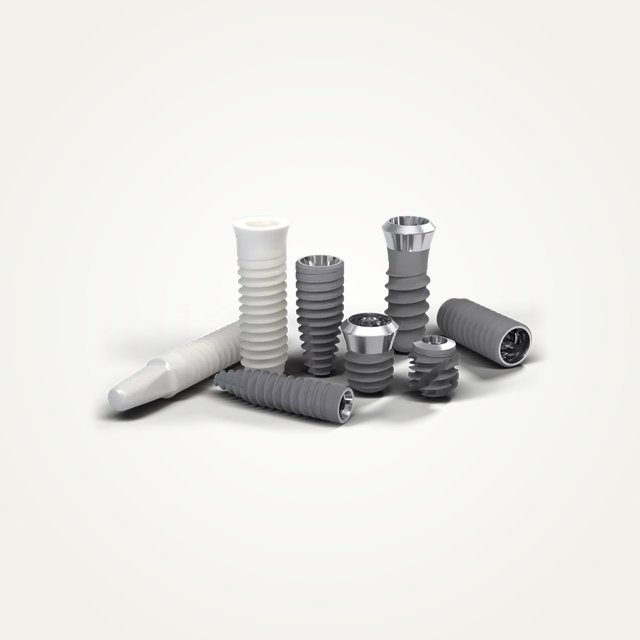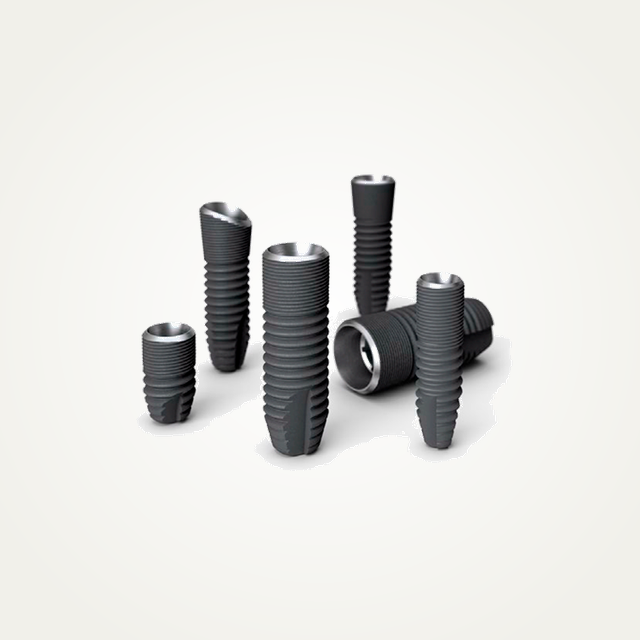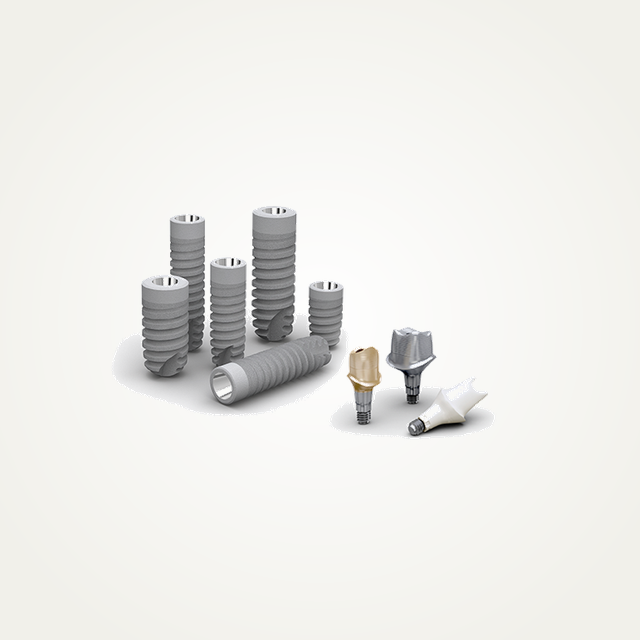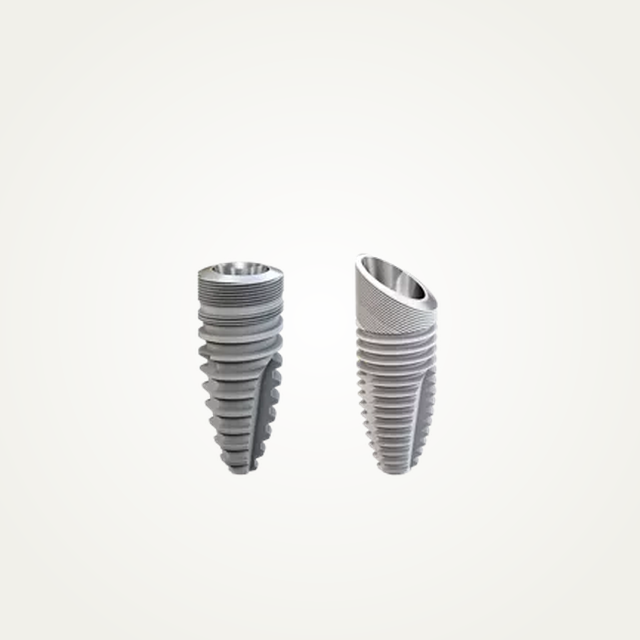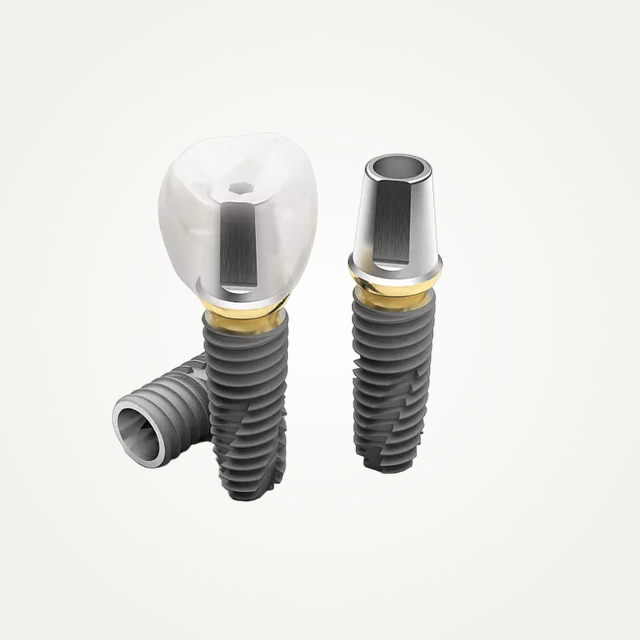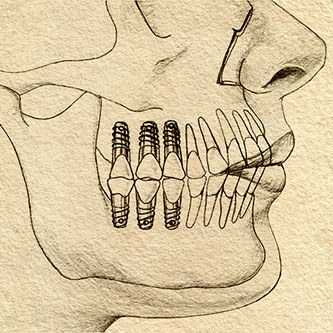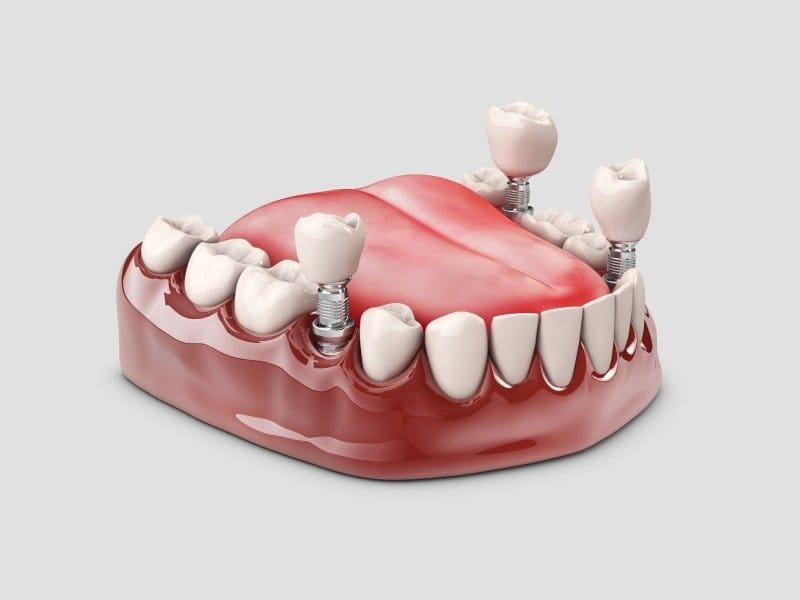
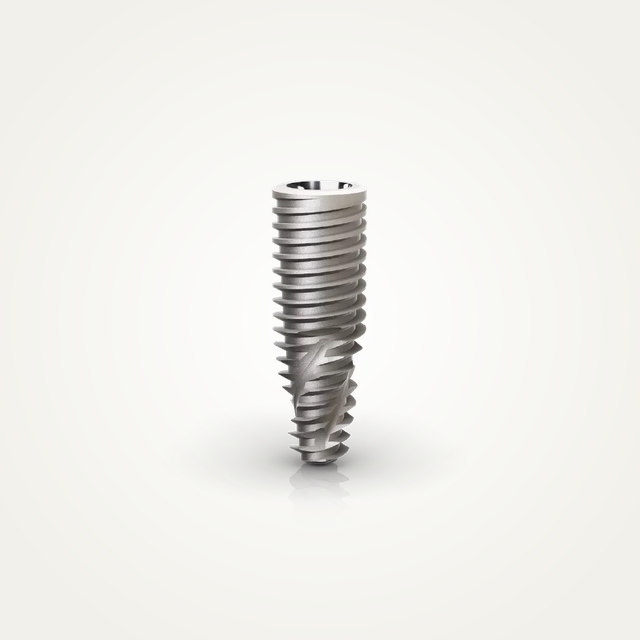
Neodent implants are made in Brazil by JJGC Indústria e Comércio de Materiais Dentários S.A. in Curitiba, a company the Straumann Group has owned outright since April 2015. The fixture is commercially pure grade 4 titanium to ASTM F67, the abutments are Ti-6Al-4V ELI alloy to ASTM F136, and the connection is Grand Morse, specified by the manufacturer as a 3.0 mm internal diameter with a 16-degree taper, 2.0 mm of conical engagement and internal indexation, shared by every fixture diameter in the line. Surfaces are NeoPoros and the hydrophilic Acqua. The largest brand-specific dataset followed 4,783 Grand Morse Helix implants in 1,215 patients for a mean of 29.5 months and reported 95.4% survival (PubMed 41463602); no ten-year Neodent survival data has been published. Cost in Turkey is driven by the fixture line and surface, the prosthetic components, the restoration material and whether grafting is needed, so a figure quoted before a CBCT scan describes a product rather than your treatment.
- 01Neodent is Brazilian, manufactured in Curitiba, Paraná by JJGC, founded in 1993 and wholly owned by the Straumann Group since 24 April 2015. The US device database lists 53 cleared 510(k) notifications under the manufacturer, the earliest from 2010.
- 02Grand Morse is a connection platform rather than an implant model: 3.0 mm internal diameter, 16-degree taper, 2.0 mm conical engagement, 4.6 mm total depth including the index. Every fixture diameter in the line shares it, so one abutment family serves the narrow incisor site and the wide molar site alike.
- 03Largest brand-specific dataset: 4,783 implants, 1,215 patients, mean follow-up 29.5 months, 95.4% survival (PubMed 41463602). The authors include the manufacturer's scientific president and a board member, which the paper discloses.
- 04There is no published ten-year Neodent survival figure and no brand-specific systematic review. The longest verified follow-up, a mean of 7.1 years, comes from 86 extra-narrow implants on a line no longer in the current catalogue (PubMed 35920448).
- 05The manufacturer guarantee is exclusive to the treating dentist and expressly excludes patients and third parties. It covers replacement with an identical or equivalent product only, not the cost of treatment, and outside Brazil claims are routed through the distributor that sold the product.
- 06Two US recalls on Grand Morse Helix Acqua fixtures were still open at the time of writing, both concerning packaging that may contain a different length than the label states.
Most people meet the name Neodent on a quote rather than in a brochure, often alongside a second name they recognise, and the question that follows is whether the cheaper line on the page is a compromise. That question cannot be answered with adjectives. It can be answered with a specification sheet, a set of public regulatory records and the published cohorts. The same specifications sit side by side for every system we place in our implant system comparison.
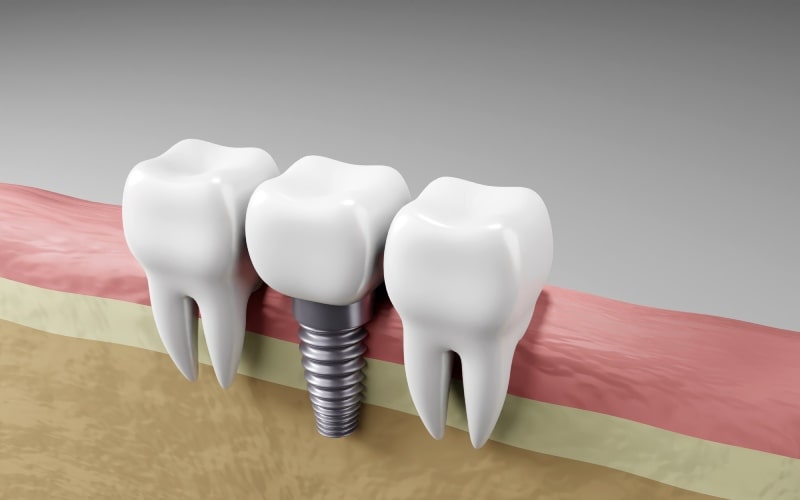
/ Where Neodent implants are made and who owns the manufacturer
Neodent implants are manufactured in Brazil. The legal manufacturer is JJGC Indústria e Comércio de Materiais Dentários S.A., founded in 1993 in Curitiba by Geninho Thomé and Clemilda de Paula Thomé, who are named as the founding shareholders in the Straumann Group's audited 2015 financial report. The address printed on both the European conformity certificate and the US device registration is Avenida Juscelino Kubitschek de Oliveira 3291, Curitiba, Paraná, 81270-200, under European single registration number BR-MF-000014512 and US establishment registration 3008261720.
Ownership passed to the Straumann Group in three steps rather than one. The Group acquired 49% in 2012 with options to increase. On 1 March 2015 the first of those options became exercisable and the Group concluded it had obtained control while still holding only 49%, and began consolidating Neodent from that date. The remaining 51% was purchased on 24 April 2015 for BRL 680 million, paid in cash to the founding shareholders. The Group's 2025 annual report lists the company at 100.00% in its scope of consolidation, and the FDA records the Curitiba plant's owner-operator as Institut Straumann AG.
What shared ownership does not establish is equivalence, and the owner does not claim it either. The Group's 2025 annual report describes Neodent as "the Group's largest global challenger brand" and places the two names in different segments. That is corporate segmentation language rather than a clinical finding, but it contradicts the claim that a shared parent makes two systems interchangeable. The group structure itself is set out on our Straumann specification page.
/ What Grand Morse is and why it matters to a patient
Grand Morse is the name Neodent gives to its implant-to-abutment connection platform, and on a quote it often appears only as the abbreviation GM.
A Morse taper is a friction fit between two conical surfaces, borrowed from nineteenth-century machine tooling. In an implant it describes how the abutment seats into the fixture. Neodent's technical specification booklet dimensions the connection precisely: 3.0 mm internal diameter, a 16-degree taper angle, 2.0 mm of conical engagement, and 4.6 mm of total depth once the index is included. The US regulatory summary describes the same interface in words as a Morse taper implant-to-abutment connection with an internal hexagonal index exclusive to the GM line. The cone creates the friction lock, the index stops the abutment rotating, and platform switching means the abutment is narrower than the fixture platform.
Grand Morse is a platform, not a model. Helix, Drive and Titamax are fixture geometries that all carry it, which is why "a Grand Morse implant" is imprecise and "a Helix GM implant" is not. The consequence that matters to a patient is stated in the manufacturer's own catalogue: all Neodent Grand Morse implants feature the Grand Morse connection regardless of implant diameter, across a range that runs from a 2.9 mm narrow-ridge fixture to 7.0 mm. If you have a narrow implant at an incisor and a wide one at a molar, your dentist orders from one component set rather than two. For someone treated abroad this is the practical point: fewer distinct part numbers to identify years later, and one connection to name when a component has to be replaced in another country. It is a serviceability property, not a performance claim.
/ What conical connections are shown to do, and what they are not shown to do
Connection geometry has a measured effect on crestal bone and no shown effect on implant survival.
A network meta-analysis of randomised clinical trials found conical interfaces produced less marginal bone loss and fewer prosthetic complications than external hexagonal connections. The same analysis found no significant difference between connection types in implant survival or biological complications (PubMed 34776267). Conical geometry changes how the bone behaves at the crest. It does not change whether the implant stays in.
A second systematic review quantifies the same direction. Comparing external hexagon with Morse taper connections across 6 studies, 185 patients and 541 implants, marginal bone loss was significantly greater with external hexagon, with pooled twelve-month bone loss of 0.60 mm, while survival across the included studies ranged from 96% to 100% with a mean of 97.82% (PubMed 37174979). Heterogeneity between studies was high, which limits how tightly the figure applies to any one system.
The comparison to hold onto is one of scale. A 0.60 mm difference in crestal bone over a year is clinically meaningful, and it is also smaller than the effect maintenance behaviour has on the same tissue over the same period. Connection design belongs on the specification sheet. It does not belong at the top of a decision.
/ The specification sheet: grade 4 fixture, alloy abutment, two surfaces
Neodent Grand Morse fixtures are made of unalloyed titanium, grade 4 to ASTM F67, with tensile strength in the region of 550 MPa. Grade 4 is the strongest of the commercially pure grades and it is the most widely used fixture material across the field, which makes it a shared baseline rather than a differentiator.
A second material sits one component higher. Grand Morse abutments are not grade 4; they are Ti-6Al-4V ELI alloy to ASTM F136, roughly 6% aluminium and 4% vanadium, with tensile strength between 895 and 1200 MPa. That is a deliberate split: biocompatibility where the metal meets bone, mechanical strength where a thin component carries occlusal load. Describing grade 4 and grade 5 together as "medical grade titanium" collapses a distinction the manufacturer's own filing keeps: one is a pure metal, the other an alloy.
Two surfaces are cleared. NeoPoros is a rough surface produced by blasting with controlled-grain oxide particles followed by acid etching. Acqua is not a separate topography; the filing describes it as the NeoPoros rough surface put through additional processing to render it hydrophilic. Hydrophilic surfaces depend on storage conditions and therefore carry shelf-life constraints, which is why a change to the shelf life of Acqua implants required its own regulatory notification in 2020, and on some lines the choice is already made for you, since the 2.9 mm narrow-ridge fixture is offered in Acqua only. The material question on the restoration above all of this is separate again and is covered in our crown material comparison.
/ Is Acqua faster: what the evidence supports and what it does not
The current evidence does not support the assumption that a hydrophilic surface such as Acqua promotes faster healing of the surrounding tissues.
Hydrophilicity is a measurable surface property. It increases wettability, so blood and tissue fluid spread across the surface more readily, and the early biological response including protein adsorption and clot formation is measurably affected. What has not been demonstrated is that this translates into faster clinical osseointegration. A systematic assessment of 6 randomised controlled trials covering 326 implants found no significant difference in implant stability quotient at 12 weeks between hydrophilic and conventional blasted and acid-etched surfaces in maxillary or mandibular sites (PMC11953047). That review examined another manufacturer's surface pair rather than Acqua, so it bounds the general claim rather than testing this product.
Acqua itself has been tested directly, in a small trial that cuts both ways. In a split-mouth randomised study of 16 edentulous participants, each given two narrow-diameter implants in the anterior mandible under an overdenture, the hydrophilic arm showed a shallower stability dip during early healing and 50.6% smaller crestal bone loss at 12 months, a difference that was not statistically significant, while its one-year survival was lower, 62.5% against 87.5% (PubMed 34551146). With 16 participants, narrow fixtures and one year of follow-up, that study cannot carry a conclusion in either direction.
/ The published survival data, with its limits stated
The largest Neodent-specific dataset is a 2025 retrospective cohort from ILAPEO College in Curitiba. Between 2018 and 2024, 4,783 Grand Morse Helix implants were placed in 1,215 patients with a mean age of 57.2 years; patients were followed for a mean of 29.5 months, 151 implants were lost to failed osseointegration, and implant survival estimated by Kaplan-Meier was 95.4% with a confidence interval of 94.4% to 96.6%. Immediate loading was used in 48.13% of implants and adverse events were recorded in 8.13% (PubMed 41463602).
Three limits belong with that number, and all three are stated in the paper itself. It is single-centre. The mean follow-up is under two and a half years, so it is not long-term evidence. And the author list includes the manufacturer's scientific president and a member of its board, disclosed in the conflict-of-interest statement along with a note that the company did not participate in data collection, analysis or writing.
Longer follow-up exists only in a much smaller cohort, and with a caveat: 86 extra-narrow 2.9 mm implants in 58 patients, mean survival time 7.1 years, implant survival 95.3% and prosthesis survival 98.2%, with smoking raising the risk of loss around eightfold (PubMed 35920448). Those were Facility fixtures, a line that no longer appears in the current catalogue, so the longest-followed Neodent data is not data on the product being sold today. An older external-hex line produced 88.9% survival at five years in single-implant overdentures with 1.46 mm mean bone loss (PubMed 33640091). Two gaps remain: there is no published ten-year Neodent survival figure, and there is no brand-specific systematic review. The Grand Morse line reached the US market in 2017, so the absence is a matter of calendar, but it is still an absence and no number on this page has been extrapolated to cover it.
/ The regulatory record, including two open recalls
Whether Neodent implants are safe can be checked in public regulatory records, and those records include unfavourable entries as well as clearances.
On the clearance side, the manufacturer holds 53 cleared 510(k) notifications in the United States, all determined substantially equivalent, spanning 2010 to 2026, as class II devices under 21 CFR 872.3640. The Grand Morse line was cleared as K163194 on 14 July 2017. In Europe the notified body is DEKRA Certification B.V., identification number 0344; the medical device regulation quality management system certificate 2224396CE01 was first issued on 3 December 2021, its current version is dated 25 June 2024 and it expires on 1 December 2026, alongside an EN ISO 13485:2016 certificate from the same body. In Brazil the manufacturer holds more than thirty separate implant registrations with ANVISA. Product-level detail is verifiable too: fixtures are sterilised by cobalt-60 gamma irradiation at 25 kGy and abutments by ethylene oxide, both validated to a sterility assurance level of 10⁻⁶, with mechanical strength demonstrated by ISO 14801 dynamic fatigue testing.
/ What the recall record shows, including two entries open at the time of writing
Regulatory clearance describes a product before it ships. Recall records describe what happened after it shipped, and for Neodent there are four that matter, two of them still recorded as ongoing. Under the manufacturer's own name, two recalls are terminated: on 11 October 2021, 3.5 x 11.5 mm GM Helix Acqua implants were found mislabelled as 3.5 x 10 mm, affecting 567 units in the United States and terminated on 16 January 2024, with the stated hazard being nerve or adjacent structure damage where ridge height sets a 10 mm maximum; and on 23 December 2019, laser engraving misidentified the diameter of a guided surgery drill, affecting two units and terminated on 1 June 2021. Two further class II recalls initiated by the Group's US arm on 1 May 2025 remained ongoing, both on GM Helix Acqua implants, with the reason recorded as a package labelled 11.5 mm possibly containing a 13 mm implant. Separately, several recalls listed against Neodent-compatible components are the responsibility of third-party manufacturers rather than Neodent and should not be attributed to it.
A recall record is not by itself a sign of a poor brand. A manufacturer with no recall history is usually one selling into a market that does not publish recalls. What is worth reading is the nature of the fault, the number of units, and whether the case is closed. If you are being treated with this line, the labelling issue is a reasonable thing to raise with your surgeon directly.
/ What determines the cost of Neodent treatment in Turkey
The cost of Neodent treatment in Turkey is a structure rather than a single figure, because a price quoted before imaging describes a component, not your case.
The fixture itself is three choices, not one: which body geometry (Helix, Drive or Titamax), which diameter and length, and which surface (NeoPoros or the hydrophilic Acqua). Each combination is a separate product code, and a quote that says only "Neodent" has not told you which one you are getting. Above the fixture sit the prosthetic components, and this is where the single Grand Morse platform has a real commercial consequence: the healing abutment, the intermediate abutment and the final abutment are separate line items, but they come from one component family whatever the fixture diameter, which simplifies both the quote and the reorder years later. The restoration material is a further separate item and moves the total independently of the implant brand; a zirconia crown and a metal-ceramic crown are not interchangeable line entries.
Then come the case-specific costs. Insufficient bone volume means grafting, a low sinus floor in the posterior maxilla means sinus augmentation, and neither is predictable without a CBCT scan. Scale changes everything again between a single fixture, a four-implant full arch, a six-implant arch and a full-mouth restoration. Two costs sit outside the quote entirely and deserve to be asked about anyway: long-term component availability, and the annual review schedule. A written, itemised quote issued after examination is the only version worth comparing between clinics, and the general pricing structure for implant treatment here is set out on our implant pricing page.
/ What the Neodent warranty covers, tier by tier
Neodent publishes a warranty policy, and its terms are narrower than the shorter summaries repeated on country pages and in marketing material; the document that governs it is the policy PDF, and it sets a separate duration for each component type.
The governing policy sets four tiers: lifetime replacement for implants, ten years for non-customisable and non-temporary metal and ceramic prosthetic components, six months for temporary or transitional components measured from installation, and no warranty on instruments beyond the service life stated in the instructions for use. The frequently repeated "five-year guarantee for ceramic restorations" appears on Neodent's own country pages but not in the governing policy, which places ceramic components in the ten-year band alongside metal; the five-year figure traces to a superseded 2015 Brazil-only document tied to one digital restoration workflow. The country pages and the policy PDF they link therefore disagree with each other, which is worth knowing before you quote either.
/ Who the Neodent warranty belongs to, and whether it travels
Three structural limits in the Neodent warranty matter more than the durations. First, the warranty is exclusive to the dental professional and the policy expressly excludes any rights for third parties, patients or intermediary suppliers, so a patient derives no direct claim from it. Second, the remedy is replacement of the product with an identical or equivalent part, and the policy states that other treatment-associated costs including materials and the treatment itself are not covered. Third, coverage is conditional: original product acquired legitimately and not combined with other brands, use strictly per the instructions, documented follow-up appointments, and notification within 90 days of the event that triggered the claim. The process has its own clock too, with the product required to reach the manufacturer within 60 days and the technical report taking up to 45 working days.
For a patient flying home the operative question is not the length of the guarantee but who executes it. The policy routes complaints about product distributed outside Brazil to the corresponding local distributor or subsidiary, and leaves replacement timing to them. In other words the guarantee follows the purchasing dentist and the product's sales channel, not the patient across a border. Note also what a lifetime warranty is not: a promise that a given component stays on the price list. No end-of-life or last-time-buy notice has been published for the older lines, and the absence of a notice is not evidence of continued supply. Ask three things before you leave: the exact product code of every component placed, the name of the legal manufacturer, and whether your clinic will support a claim made from abroad. Our patient journey page lists the documents issued at discharge and our clinical team will put the answers in writing.
/ The implant card, the patient passport, and verifying what you received
European medical device law requires the manufacturer of an implantable device to supply an implant card, and specifies its contents: the device name, serial number, lot number, the Unique Device Identification, the model, and the manufacturer's name and address, together with information on expected device lifetime and necessary follow-up care (Regulation (EU) 2017/745, Article 18). That card is what makes any later claim checkable, and it is the single most useful piece of paper to leave a clinic with.
Neodent also publishes a patient passport for its home market, and its structure is worth borrowing wherever you are treated. It records, for each implant, the model, the interface, the surface, the installation date, the tooth position on both ADA and FDI charts, and the traceability label peeled from the sterile pack, followed by the same fields for the prosthetic components. Its printed option lists double as a verification key: models Helix, Drive, Alvim, Titamax, Titamax EX, Narrow, Short, Zi and zygomatic; interfaces GM, CM, HE and ZiLock; surfaces Acqua, NeoPoros and WS. The document also states that combining Neodent products with third-party compatible parts is not advised, and that completing the passport is the dentist's responsibility.
Three checks follow, and any patient can run them. Confirm the serial or lot number on your card matches the sticker taken from the sterile packaging at surgery. Confirm the family, interface and surface written down form a real combination from those lists. And confirm the manufacturer is named as JJGC Indústria e Comércio de Materiais Dentários S.A. rather than a distributor trade name. One check is specific to this brand: a quote may name Neodent series called "Legacy" or "Smart", and neither is a Neodent line. Drive is genuine and appears in the manufacturer's registered trademark list. Legacy belongs to a different manufacturer's portfolio and Smart appears nowhere in Neodent's catalogue, filings or passport, so a quote using those names is describing something that cannot be verified.
/ Which Neodent lines exist and when each is used
The families are clinical categories tied to bone quality rather than price tiers, and the manufacturer's own indications say so.
On the Grand Morse platform, Helix GM is fully tapered with a hybrid contour, cylindrical coronally and conical apically, offered at 3.5, 3.75, 4.0, 4.3 and 5.0 mm in lengths from 8 to 18 mm and at 6.0 and 7.0 mm in lengths from 8 to 13 mm. Helix is indicated across all bone densities including immediate post-extraction placement, with one documented exception: the 6.0 and 7.0 mm diameters are indicated for bone types III or IV and contraindicated in healed type I or II bone. Drive GM is tapered with square-shaped double threads and reverse cutting chambers, offered at 3.5, 4.3 and 5.0 mm in lengths from 8 to 18 mm, indicated for bone types III and IV. Titamax GM is cylindrical with V-shaped double threads and a self-tapping apex, offered at 3.5, 3.75 and 4.0 mm in lengths from 7 to 17 mm and at 5.0 mm from 7 to 13 mm, indicated for bone types I and II or grafted areas. A 2.9 mm narrow-ridge line, a short-implant line, extra-long fixtures up to 25 mm and a Grand Morse zygomatic system complete the platform.
Two connection families sit outside Grand Morse and are still actively sold in Brazil though absent from the US and European catalogues: Cone Morse, abbreviated CM, and external hexagon, abbreviated HE. Not offered in your market is a different statement from discontinued, and this is a case of the former. One naming trap trips up component ordering: "Titamax EX" is a Cone Morse implant, not an external-hex one, since EX refers to the body design. The Zi ceramic implant is a separate two-piece zirconia system with its own ZiLock connection, a straight internal interface with six lobes, so it shares no Grand Morse components. Facility and Alvim II are legacy names absent from the current catalogue, which matters when reading older published studies on this brand.
/ If you already have a Neodent implant, the interface decides which parts fit
Patients with an older Neodent implant face a narrower and more urgent question than which line to choose: whether a component ordered today will seat on what is already in the jaw. That is settled by the interface rather than the brand, and the numbers are not close: Grand Morse is 3.0 mm internal diameter at 16 degrees, Cone Morse is 2.5 mm at 11.5 degrees. Both are conical and neither takes the other's abutments. There is a further split inside Cone Morse itself. The manufacturer states that it moved CM implants to internal indexation in July 2010 and that implants without the index cannot be restored with indexed components. So for an older implant the part you need is not "a Neodent CM abutment" but a specific generation of one, and the product code is the only reliable way to name it. Where anatomy leaves no room for a standard diameter, the alternative route is bone grafting rather than a narrower fixture, since the published numbers for extra-narrow implants sit lower than for standard ones.
/ How long Neodent implants last depends more on maintenance than on the brand
How long Neodent implants last cannot be given as a single number. The largest cohort reports 95.4% survival at a mean of 29.5 months (PubMed 41463602) and the longest-followed cohort a mean survival time of 7.1 years on a narrow line that no longer appears in the current catalogue (PubMed 35920448). Neither is a ten-year figure, because no ten-year Neodent figure has been published.
What ends an implant's service life is usually inflammation in the surrounding tissue rather than fatigue in the titanium. The current epidemiology review calculates weighted mean prevalences of 43% for peri-implant mucositis and 22% for peri-implantitis, with prevalence rising as function time increases (PubMed 25495683). Peri-implantitis and its treatment is therefore the variable that decides the tenth year.
Maintenance is the part with measured benefit. A systematic review and meta-analysis found lower incidence of peri-implant disease among implants enrolled in supportive programmes and concluded that a recall interval of at least five to six months is warranted (PubMed 26701350). Smoking runs the other way and did so inside the Neodent cohort itself, raising the risk of loss around eightfold (PubMed 35920448). Brand choice shapes the first day; how you clean around the implant and how often you are seen shape the tenth year, and that is true of every system in our comparison table, including Osstem, Ankylos and Astra Tech.
/ How to read a Neodent versus Straumann comparison
A Neodent versus Straumann comparison is best read as a comparison of two specification sheets rather than two price tiers.
Compare five things and nothing else. Fixture material and the material of the abutment that sits on it, since those can differ within one system. Surface treatment and whether wettability is claimed, together with what the evidence for that claim actually shows. Connection geometry, including whether the range shares one prosthetic platform or several. The size and length of the published cohorts behind each survival figure, and who authored them. And the warranty text, specifically who holds the right and what is excluded.
Run those five comparisons and the usual conclusion is that the systems differ in evidence volume and component logistics rather than in whether they work. A shared corporate parent does not make two products equivalent, and the parent itself puts them in different segments. A longer publication record does not make one product correct for your jaw either. The right system for a case is determined by bone volume, site and prosthetic plan, which is why our comparison table reports specifications rather than a ranking, and why our overview of implant brands sets out categories instead of a winner. If you are weighing treatment here, our guide to dental implants in Istanbul covers the logistics and who is a suitable candidate covers the clinical screen.
Let’s plan the right treatment together.
Free Assessment→- 1.Câmara K, Negretto A, Pegorini LH, Thomé G, Bernardes SR, Deliberador TM. Retrospective Cohort Study of 4783 Morse Taper Hybrid Dental Implants: Survival Rate Analysis. Bioengineering (Basel). 2025;12(12):1305
- 2.Marcantonio Junior E, Sartori IAM, Vianna CP, Rocha RS, Caldas W, Trojan LC. Influence of risk factors on the long-term survival of oral rehabilitation with extra-narrow implants. J Appl Oral Sci. 2022;30:e20220089
- 3.Bielemann AM, Schuster AJ, Possebon APDR, Schinestsck AR, Chagas-Junior OL, Faot F. Clinical performance of narrow-diameter implants with hydrophobic and hydrophilic surfaces with mandibular implant overdentures. Clin Oral Implants Res. 2022;33(1):21-32
- 4.Coutinho PC, Nogueira TE, Leles CR. Single-implant mandibular overdentures: Clinical, radiographic, and patient-reported outcomes after a 5-year follow-up. J Prosthet Dent. 2022;128(5):949-955
- 5.Patel R, Patel S, Girgis W, Ahmed W, Barrak F. A systematic assessment of the stability of SLA vs. SLActive implant surfaces over 12 weeks. Evid Based Dent. 2025;26(1):67-68
- 6.Camps-Font O, Rubianes-Porta L, Valmaseda-Castellón E, Jung RE, Gay-Escoda C, Figueiredo R. Comparison of external, internal flat-to-flat, and conical implant abutment connections for implant-supported prostheses: A systematic review and network meta-analysis of randomized clinical trials. J Prosthet Dent. 2023;130(3):327-340
- 7.Fuda S, et al. Marginal Bone Level and Clinical Parameter Analysis Comparing External Hexagon and Morse Taper Implants: A Systematic Review and Meta-Analysis. Diagnostics (Basel). 2023;13(9):1587
- 8.Derks J, Tomasi C. Peri-implant health and disease. A systematic review of current epidemiology. J Clin Periodontol. 2015;42(Suppl 16):S158-S171
- 9.Monje A, Aranda L, Diaz KT, et al. Impact of Maintenance Therapy for the Prevention of Peri-implant Diseases. J Dent Res. 2016;95(4):372-379
- 10.FDA 510(k) summary K163194, Neodent Implant System - GM Line, decision 14 July 2017
- 11.FDA 510(k) database, 53 cleared notifications under JJGC including K101207 (2010), K150182 (CM Drive), K193592 (Acqua shelf life), K201225 (GM Helix 7.0), K210336 and K250271 (zirconia system), K220251 (GM Narrow), K223638 (Helix Short), K232099 (GM zygomatic), K252090 (pterygoid indication)
- 12.FDA device recall records Z-0203-2022 and Z-0924-2020 (terminated), Z-1862-2025 and Z-1863-2025 (ongoing at time of writing)
- 13.DEKRA Certification B.V. (notified body 0344), EU MDR quality management system certificate 2224396CE01, first issued 3 December 2021, current version 25 June 2024, expiry 1 December 2026, and EN ISO 13485:2016 certificate 2224396
- 14.Neodent Grand Morse technical specifications booklet (document code A01_of_280725, 28 July 2025): internal diameter 3.0 mm, taper angle 16 degrees, conical portion depth 2.0 mm, total index depth 4.6 mm.
- 15.Neodent 2026 Product Catalog: Grand Morse connection definition, single prosthetic platform statement, Helix GM, Drive GM and Titamax GM specifications and size tables, registered trademark list
- 16.Neodent Brazil Cone Morse product information: internal diameter 2.5 mm, internal angle 11.5 degrees, change to internal indexation in July 2010, non-indexed and indexed components not interchangeable.
- 17.Neodent Products Warranty Policy POL-000107 (current revision): warranty tiers, exclusivity to the dental professional, exclusion of patients and third parties, replacement with an identical or equivalent product, 90-day notification, routing of claims outside Brazil
- 18.Neodent patient passport (Brazil, 2024): recorded fields and model, interface and surface option lists.
- 19.Straumann Group 2015 Financial Report note 3 (49% acquisition in 2012, control obtained 1 March 2015, remaining 51% purchased 24 April 2015 for BRL 680 million) and Straumann Group Annual Report 2025 (100.00% consolidation, brand segmentation)
- 20.Regulation (EU) 2017/745, Article 18: implant card and information to be supplied to the patient