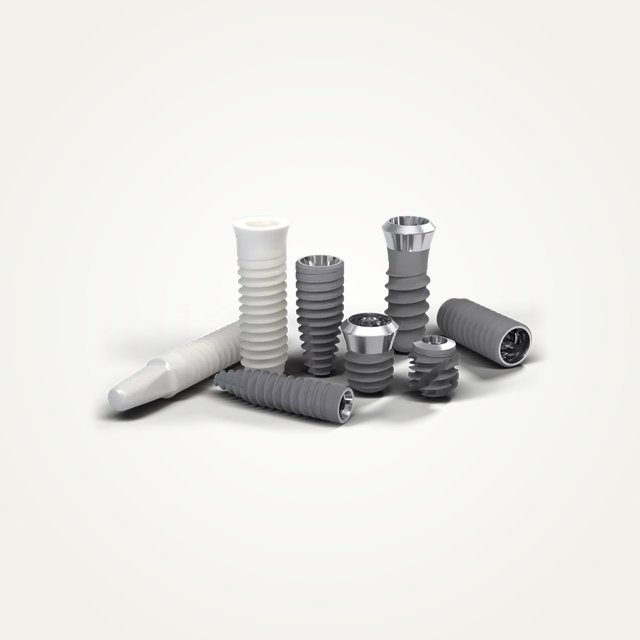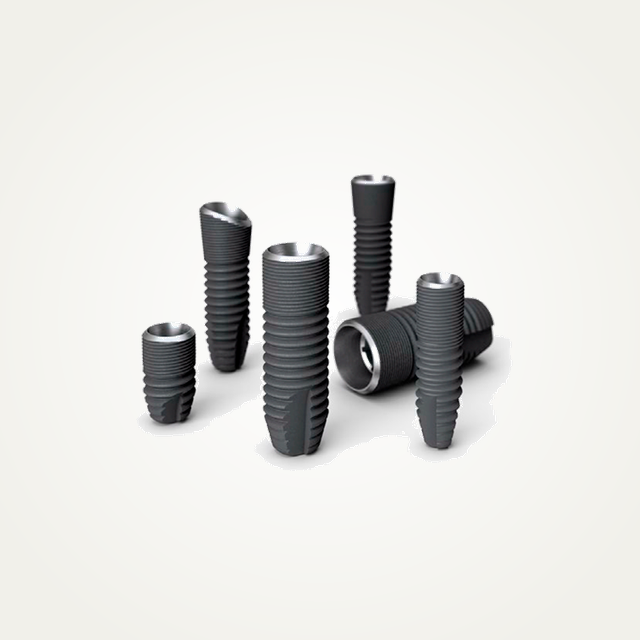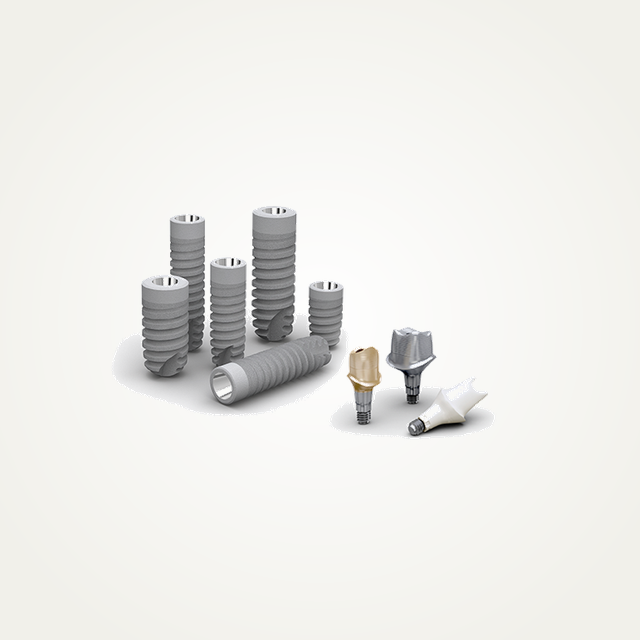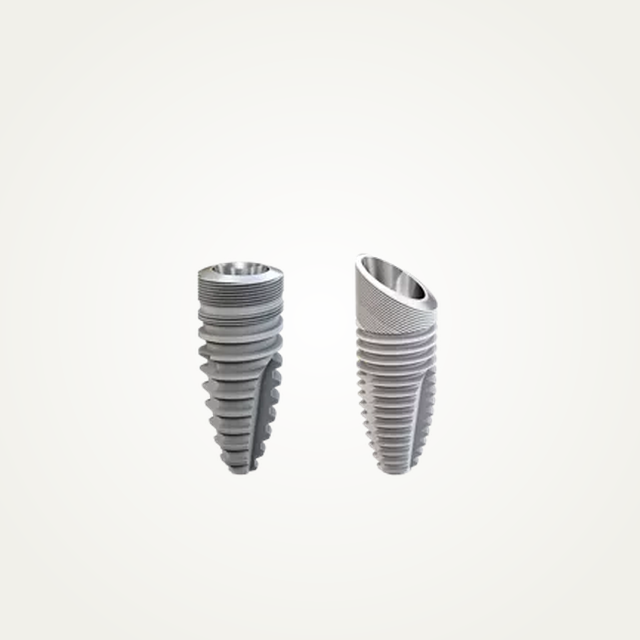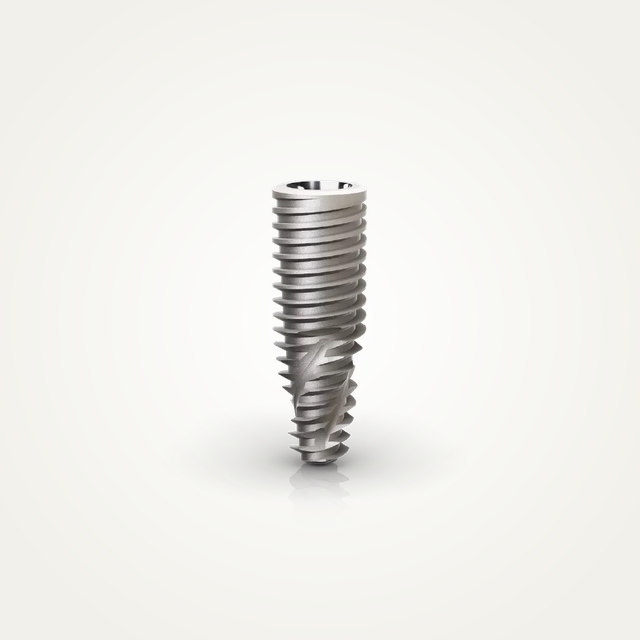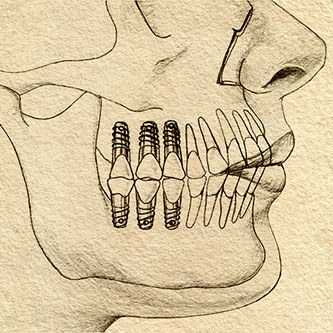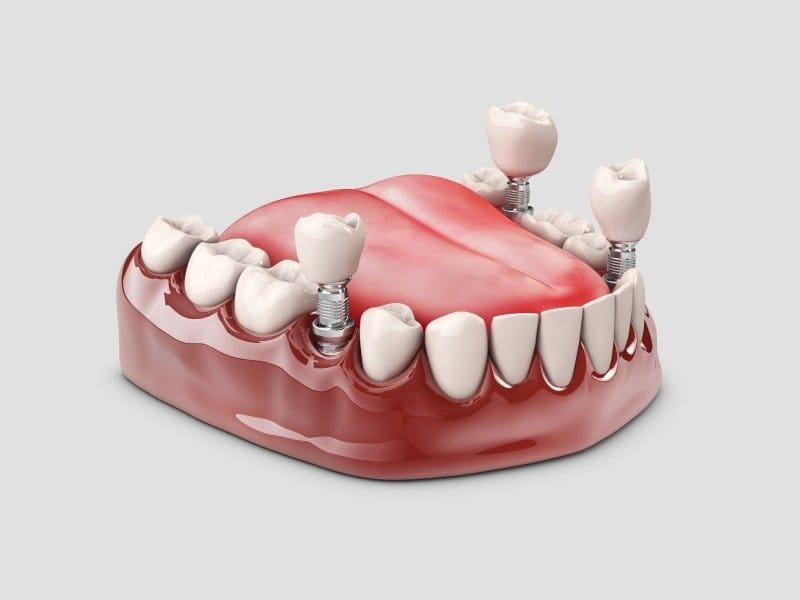
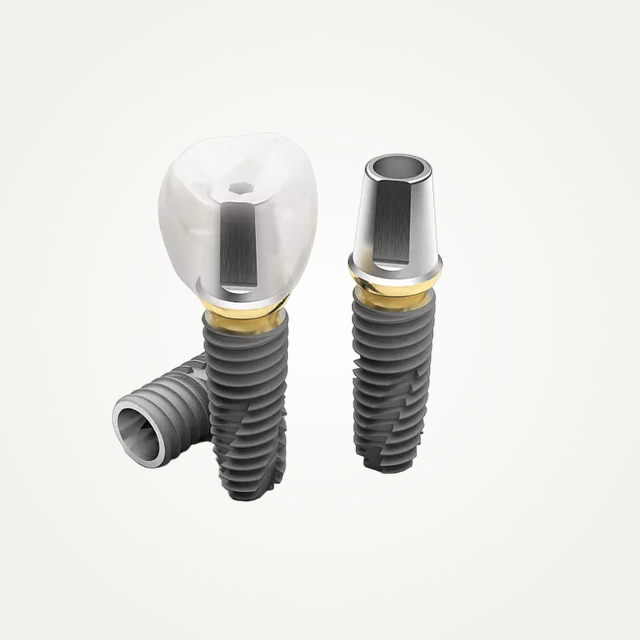
Osstem implants are made by Osstem Implant Co., Ltd., a South Korean manufacturer founded in 1997, headquartered in Seoul with its main plant in Busan. The fixture body is commercially pure grade 4 titanium, the standard surface is SA (sandblasted with alumina and acid-etched) and the connection is an 11-degree Morse taper combined with an internal hex. The largest Osstem-specific published dataset followed 2,474 implants in 1,298 patients for up to 10 years and reported 98.3% survival (PubMed 41241387). Cost in Turkey is driven by the fixture line and surface, the number of treatment stages, the abutment and crown material, and whether grafting is needed, so a figure quoted before a CBCT scan is not a real quote.
- 01Osstem is South Korean, founded 1997, headquartered in Seoul, main plant in Busan with a second manufacturing site in Pennsylvania.
- 02Hiossen is not a rival brand. Hiossen Inc. was founded by Osstem in 2006 and names Osstem as its parent company in its own corporate brochure.
- 03Largest Osstem-specific dataset: 2,474 implants, 1,298 patients, up to 10 years, 98.3% survival (PubMed 41241387).
- 04Survival and success are different measurements. In one Osstem cohort survival was 97.3% while success by Albrektsson criteria was 94.2% (PubMed 35351072).
- 05The only official Osstem warranty document that can be verified is the UK lifetime fixture-replacement statement. No global policy and no US or Turkish warranty document is published.
Most patients meet the name Osstem for the first time on a treatment quote, not in a brochure. That order matters: the question is rarely which brand to want, it is whether the brand already on the quote is acceptable. The answer rests on verifiable records rather than on country of origin.
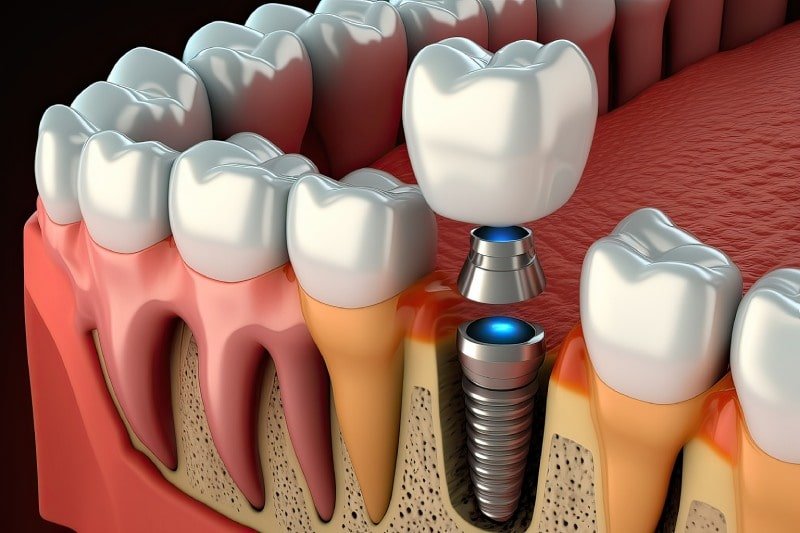
/ Who owns Osstem and where Osstem implants are made
Osstem Implant Co., Ltd. was founded on 7 January 1997 in South Korea and is headquartered in the Magok district of Seoul. Its principal manufacturing site is the K1 plant in Busan, with 19,108 square metres of floor area and a manufacturer-stated annual capacity of 18 million implant sets. The company also manufactures in the United States, China and Brazil, and states total annual production above 22 million sets across those sites.
Osstem's ownership changed in 2023. Osstem listed on KOSDAQ in 2007 and was delisted on 14 August 2023 following a buyout. The controlling shareholder today is an investment vehicle formed by MBK Partners and Unison Capital Korea, and Abu Dhabi's Mubadala joined the transaction as an investor in October 2023. Mubadala has not disclosed the size of its stake, and neither has any other primary source, so no percentage is quoted here.
For a patient the practical consequence is narrow but real. A manufacturer with its own legal entities across several markets is easier to reach for components years later than a brand distributed through a single importer. Osstem maintains its own Turkish entity, Osstem İmplant Dış Tic. A.Ş., operating from Istanbul since 2013. That matters for the dental implant treatment you are quoted today only in the long term, when an abutment or a screw has to be replaced.
/ Hiossen is Osstem's own North American arm, not a rival brand
Hiossen is not a separate American brand competing with Osstem but Osstem's own North American company. Hiossen Inc. was established in 2006 by Osstem, in Pennsylvania, and its own 2025 corporate brochure states plainly that Osstem is its parent company.
The confusion comes from regional naming. In Korea and Europe the fixture families are TS, SS, MS and KS. In North America the same architecture is sold as ET, EM and EK. Surface names diverge too: Europe currently lists SA and SOI, while the hydrophilic surface sold in the United States is branded NH, short for nano-hydrophilic. One manufacturer uses two naming systems, which makes them easy to read as two brands.
There is one concrete consequence, and it is worth knowing before you fly home. If your follow-up care will happen in the United States, the family written on your implant card as TS will correspond to the ET line locally, and your dentist there will order Hiossen components rather than Osstem-branded ones. Ask for the product code, not only the family name, before you leave the clinic. Our patient journey page explains which documents are handed over at discharge.
/ Is Osstem a good implant: what the published survival data actually shows
Whether Osstem is a good implant is a question the published survival data can answer with numbers.
The largest Osstem-specific study is a 2025 retrospective analysis of Osstem TS III SA implants: 2,474 implants in 1,298 patients, all loaded and followed for a minimum of five years and up to ten. Overall survival was 98.3%, peri-implantitis was the leading cause of failure, and in Cox regression the only variable significantly affecting survival was sex (PubMed 41241387). An earlier and much smaller cohort of 467 implants in 105 patients reported a seven-year cumulative survival of 95.37% (PubMed 24868503).
Surface-specific data exists as well. A cohort of 258 calcium-treated CA implants in 120 patients, mean follow-up 62 months, reported 97.3% survival with mean final marginal bone loss of 0.074 mm (PubMed 35351072). A smaller SA-surface cohort of 96 implants in 45 patients reported 94.8% survival (PubMed 32296662).
That range does not support the reading "98.3%, therefore excellent." Study populations, implant diameters, sites and follow-up lengths differ, and narrow-diameter subsets sit lower: 3.0 mm TS III implants reported 90.6% survival up to five years (PubMed 37336522). One unfavourable finding also exists. A single-centre study following 1,162 implants placed between 2001 and 2005 for 12 to 15 years found the highest incidence of peri-implantitis and peri-implant mucositis in the Osstem group among the systems compared (PubMed 34476448). It is published in Chinese, it is single-centre, and the implants studied are two surface generations old, so it does not generalise to the current line.
/ Survival and success are not the same measurement
Survival and success measure different things, and a percentage means little until you know which of the two it reports. Survival asks whether the implant is still in the mouth. Success asks a stricter set of questions at once: mobility, pain, radiolucency, bone loss threshold, peri-implant soft tissue condition, prosthetic outcome and patient satisfaction. The systematic review of success criteria in implant dentistry sets these out across four separate levels and shows that most papers report only the first (PubMed 22157097).
The gap is measurable inside a single study. In the Osstem CA cohort, survival was 97.3% while success calculated against Albrektsson criteria was 94.2% (PubMed 35351072). Three percentage points is not a rounding difference; it is the price of asking a harder question.
Every figure on this page is a survival figure, and each one carries the study it came from. If a page quotes you a success rate without naming the criteria used, the number cannot be compared with anything.
/ What Osstem's ranking claim means and what independent trackers say
Osstem's market position depends on which of two measurements is used, and the two are often mixed: the manufacturer's unit-volume claim and independent market rankings.
Osstem's own corporate communication claims the number one position worldwide by unit sales volume and states it held that position for five consecutive years from 2017 to 2021. That is a unit-volume claim from the manufacturer, not a revenue claim, and no methodology is published alongside it.
Independent sources describe a different position. Mubadala's October 2023 investment announcement calls Osstem "the world's fourth largest dental implant material manufacturer." Market research firm iData Research placed Straumann Group, Envista and Dentsply Sirona in the top three in its 2025 assessment, with Osstem grouped among fast-growing global players rather than in that top three. Osstem's own Australian site describes the company as the world's fourth largest.
In summary: Osstem is a top-five global manufacturer; the number one claim applies to unit volume and comes from the manufacturer; independent trackers place it around fourth by revenue and share. An unqualified "world's largest" is not independently verifiable.
/ The specification sheet: grade 4 titanium, SA surface, 11-degree Morse taper
The Osstem fixture body is commercially pure titanium, grade 4 under ASTM F67, with tensile strength around 550 MPa. Grade 4 is unalloyed. It is frequently confused with grade 5, which is not pure titanium at all but the Ti-6Al-4V alloy containing roughly 6% aluminium and 4% vanadium, with tensile strength between 895 and 1200 MPa. Grouping both under "medical grade titanium" is a common error.
The comparison worth drawing is that grade 4 commercially pure titanium is the most widely used fixture material across the field, so it is the shared baseline rather than a differentiator. Where systems genuinely differ is surface treatment and connection geometry, and both are covered below. The material question on the restoration above the implant is separate again, and is set out in our crown material comparison.
The connection in the TS III family is an 11-degree Morse taper combined with an internal hex, a geometry confirmed in the methods section of the 2,474-implant cohort (PubMed 41241387). The taper provides a friction fit; the hex indexes the abutment against rotation. Network meta-analysis of randomised clinical trials found conical interfaces produced less marginal bone loss and fewer prosthetic complications than external hexagonal connections, while showing no significant marginal bone loss difference against internal flat-to-flat connections (PubMed 34776267). Conical is therefore a measured design property with a bounded effect, not a badge.
/ SA, CA, SOI and NH: Osstem's surface families are not interchangeable
SA stands for sandblasted with alumina and acid-etched, exactly as the manufacturer's own TS III SA product document spells it out. Osstem reports the resulting roughness as Ra 2.5 to 3.0 micrometres and states the treatment increases effective surface area by roughly 45%.
A measurement caution belongs with that figure. The "moderately rough" band in the literature is defined as Sa 1.0 to 2.0 micrometres, the range reported to produce the strongest bone response (PubMed 15543910). Ra is a profile measure and Sa is an areal measure; they are not interchangeable and cannot be read directly against each other. The same review adds a caveat: the clinical advantages of moderately rough surfaces over smoother or rougher ones are small and often not statistically significant.
On wettability, the standard SA surface is conventional, not hydrophilic. Osstem's hydrophilic options carry different names. CA is an SA-topography implant stored in calcium chloride solution, which the manufacturer describes as improving hydrophilicity and blood affinity; it is the surface behind the 97.3% survival cohort cited above. The current European catalogue leads with SA and SOI, while NH is the hydrophilic surface sold in the United States through Hiossen. A quote that says only "Osstem" does not tell you which surface you are getting, and the surface is the part with separate published data.
/ What determines the cost of Osstem implant treatment in Turkey
The cost of Osstem implant treatment in Turkey is the sum of several layers rather than the price of the implant alone. No figure is published here, because a price quoted before a CBCT scan describes a product, not your treatment.
Five layers set the total. First, the fixture itself: which family (TS, SS, MS), which diameter and length, which surface (SA, CA, SOI, NH). Second, the number of stages and what is included: a fixture price alone is not a treatment price, because a healing abutment, a final abutment and a restoration follow it. Third, the restoration material, which is a separate line item; the choice between a zirconia crown and other materials moves the total independently of the implant brand. Fourth, additional surgery: insufficient bone volume means grafting, and a low sinus floor in the posterior maxilla means sinus augmentation, neither of which can be predicted without imaging. Fifth, the scale of the case: a single implant, a six-implant arch and a full-arch fixed bridge differ by an order of magnitude in surgical time and laboratory work, and a full-mouth restoration is a different plan again.
Two further points affect the real cost. Long-term cost sits outside the quote entirely: component availability, warranty scope and the annual review schedule. Treatment abroad also adds travel and scheduling, which our dental treatment in Turkey guide sets out in detail. A written, itemised quote after examination is the only version worth comparing between clinics; book a consultation and ask for it line by line.
/ Warranty, spare parts and who services your implant when you fly home
The warranty decides your experience five years from now, and for Osstem only part of it can be verified.
The only official Osstem warranty document that can be located is published by the UK arm. Its scope is explicit: if an implant fails for any reason it is replaced free of charge, along with any associated abutments, with healing abutments excluded. That is a product replacement guarantee. It does not cover surgical fees or laboratory costs. No global Osstem warranty policy is published, no warranty document exists on the US Hiossen site, and no Turkish-language warranty statement is published either. The frequently repeated "10-year warranty" figure has no manufacturer source at all.
That leaves two distinct warranties that patients routinely merge into one. The manufacturer warranty covers the product. The clinic warranty covers workmanship, reviews and remake if needed. Ask for both in writing, with duration and exclusions stated separately, before treatment starts rather than after; we issue ours at the treatment planning stage.
Component sourcing is the harder problem for a value-tier brand, and it is worth planning for. A general dental practice in the United Kingdom or Germany is less likely to hold Osstem components in stock than the market-leading systems. This is solvable, but only if you leave with the right paperwork. Take the product code, not just the brand name, and confirm which regional line it maps to, since a TS fixture is serviced as an ET component in North America. If you want to compare how other systems handle the same question, the Straumann spec page covers the equivalent ground for that system.
/ Counterfeit risk and how to verify the implant you actually received
Counterfeit and grey-market implants are a real risk category, and claims about them often name Osstem and Turkey together. Any patient can test such a claim with a verification procedure.
European medical device law requires the manufacturer of an implantable device to supply an implant card, and specifies what it must carry: the device name, serial number, lot number, the Unique Device Identification (UDI), the model, and the manufacturer's name and address, together with information on the expected lifetime of the device and any necessary follow-up care (Regulation (EU) 2017/745, Article 18). That card is the artefact that makes a claim checkable.
Three checks follow from it. Confirm that the serial or lot number on your card matches the sticker peeled from the sterile packaging, which is normally affixed to your record at the time of surgery. Confirm that the family and surface written down are a real combination, since SA, CA, SOI and NH belong to specific lines. And confirm the manufacturer name is the legal entity Osstem Implant Co., Ltd. or Hiossen Inc., not a distributor trade name. Any clinic that cannot produce this is a problem regardless of which brand is on the quote; our clinical team issues these documents as standard.
/ Which Osstem lines exist and when each is used
The families are clinical categories rather than price tiers, and the difference determines where each one belongs.
TS is the bone-level tapered main line and carries the bulk of the published evidence, including the 2,474-implant cohort. SS is tissue level, meaning the fixture collar finishes above the bone and the prosthetic connection sits higher. MS is one-piece and designed for narrow ridges, used where bone width is limited and grafting is not the chosen route. KS is a newer bone-level line in the European catalogue. ET, EM and EK are the same architecture under North American branding.
Narrow-diameter implants deserve their own note, because their published numbers sit lower than the standard-diameter figures. MS SA narrow-ridge implants at 2.5 and 3.0 mm reported 95.1% survival at implant level and 96.0% at patient level (PubMed 39743331), while 3.0 mm TS III implants reported 90.6% up to five years (PubMed 37336522). Those figures are not a mark against the line; they reflect that narrow diameters are chosen when anatomy leaves little alternative, and they should be selected with that trade-off stated. Where the ridge can be widened instead, bone grafting keeps a standard diameter on the table.
/ How long Osstem implants last depends more on maintenance than on the brand
How long Osstem implants last is answered by a set of conditions rather than a single number. The largest Osstem cohort reports 98.3% survival at up to ten years, and identifies peri-implantitis as the leading cause of the failures that did occur (PubMed 41241387). The mechanism that ends an implant's life is inflammation in the surrounding tissue, not fatigue in the titanium.
Peri-implant disease is common. The current epidemiology review calculates weighted mean prevalences of 43% for peri-implant mucositis and 22% for peri-implantitis, and its meta-regression shows prevalence rising with function time (PubMed 25495683). The longer an implant is in service, the more the risk accumulates.
Maintenance is the part with measured benefit. A systematic review and meta-analysis of maintenance therapy found lower incidence of peri-implant disease among implants enrolled in supportive programmes and concluded that a recall interval of at least five to six months is warranted (PubMed 26701350). The same analysis identified a history of periodontal disease as a significant influence, which is why gum health is settled before implant planning rather than after.
Brand choice shapes the first day. Maintenance shapes the tenth year. That holds for Osstem and for every other system in our system comparison table, including Neodent, Ankylos, Astra Tech and Medentika.
/ Is Osstem implant safe: the regulatory record
Whether Osstem implants are safe is answered by public regulatory records rather than by country of origin.
In the United States, Osstem products reach the market through the FDA 510(k) pathway. Verified examples include K161604 for the Osstem Implant System, cleared substantially equivalent on 17 October 2016, and K080594 for the MS System on 3 September 2008. The North American arm files under its own name, for example K183242 covering ET IV SA implants, cleared 21 May 2019. One correction worth carrying: there is no 510(k) titled TS III SA, so a claim of FDA clearance under that exact name is inaccurate; the US equivalents are the Hiossen ET clearances.
In Europe, Osstem received MDR certification covering 4,695 products on 8 January 2026, including class IIb implantable devices, issued by notified body TÜV Rheinland LGA Products, NB 0197, under certificate HZ 2292034-1. The quality management system is registered with TÜV Rheinland under EN ISO 13485 with MDSAP scope. In Korea, the Busan K1 plant received KGMP recertification from the Ministry of Food and Drug Safety in March 2026.
None of this says a Korean system outperforms a Swiss or Swedish one. It says that origin is not the measurable variable. The measurable variables are manufacturing audit status, regulatory clearance and published clinical outcome, and on all three Osstem has a documented record you can check yourself. The same three questions are worth asking of every system on the implant treatment page, and our clinicians will walk through them with you.
Let’s plan the right treatment together.
Free Assessment→- 1.Lim J, Han HS, Kim S, Kim H, Cho YD. Retrospective Analysis of Survival Rate and Risk Factor of Osstem TS III SA Dental Implants. J Oral Implantol 2025;51:454-462. PubMed 41241387
- 2.Kim YK, Kim BS, Yun PY, Mun SU, Yi YJ, Kim SG, et al. The seven-year cumulative survival rate of Osstem implants. J Korean Assoc Oral Maxillofac Surg 2014;40:68-75. PubMed 24868503
- 3.Kim MJ, Kim IH, Chang NH, Kim YK. Long-term evaluation of the prognosis of super hydrophilic surface treated CA implants: a retrospective clinical study. BMC Oral Health 2022;22:97. PubMed 35351072
- 4.Kim MJ, Yun PY, Chang NH, Kim YK. The long-term evaluation of the prognosis of implants with acid-etched surfaces sandblasted with alumina: a retrospective clinical study. Maxillofac Plast Reconstr Surg 2020;42:10. PubMed 32296662
- 5.Kim JH, Nam JH, Chang NH, Yi YJ. Long-term clinical study of fixed prosthetic rehabilitation using one-piece narrow-diameter implants: a retrospective study. J Korean Assoc Oral Maxillofac Surg 2024;50:343-349. PubMed 39743331
- 6.Hwang I, Kim TI, Cho YD. Clinical evaluation of 3.0-mm narrow-diameter implants: a retrospective study with up to 5 years of observation. J Periodontal Implant Sci 2024;54:44-52. PubMed 37336522
- 7.Zahng TT, Hu XJ, Lin L. [Prevalence of peri-implantitis and peri-implant mucositis within 15 years of implant placement]. Shanghai Kou Qiang Yi Xue 2021;30:292-296. PubMed 34476448
- 8.Papaspyridakos P, Chen CJ, Singh M, Weber HP, Gallucci GO. Success criteria in implant dentistry: a systematic review. J Dent Res 2012;91:242-8. PubMed 22157097
- 9.Camps-Font O, Rubianes-Porta L, Valmaseda-Castellón E, Jung RE, Gay-Escoda C, Figueiredo R. Comparison of external, internal flat-to-flat, and conical implant abutment connections for implant-supported prostheses: A systematic review and network meta-analysis of randomized clinical trials. J Prosthet Dent 2023;130:327-340. PubMed 34776267
- 10.Albrektsson T, Wennerberg A. Oral implant surfaces: Part 1--review focusing on topographic and chemical properties of different surfaces and in vivo responses to them. Int J Prosthodont 2004;17:536-43. PubMed 15543910
- 11.Derks J, Tomasi C. Peri-implant health and disease. A systematic review of current epidemiology. J Clin Periodontol 2015;42 Suppl 16:S158-71. PubMed 25495683
- 12.Monje A, Aranda L, Diaz KT, Alarcón MA, Bagramian RA, Wang HL, et al. Impact of Maintenance Therapy for the Prevention of Peri-implant Diseases: A Systematic Review and Meta-analysis. J Dent Res 2016;95:372-9. PubMed 26701350
- 13.Hiossen Corporate Brochure 2025 and hiossen.com corporate pages: Hiossen founded by Osstem in 2006; Osstem named as parent company.
- 14.Osstem corporate sites (osstem.eu, osstemuk.com) and the TS III SA product document: founding year, headquarters, SA surface definition, Ra 2.5-3.0 micrometres.
- 15.FDA 510(k) records: K161604 (17 Oct 2016), K080594 (3 Sep 2008), K183242 (21 May 2019, Hiossen ET IV SA).
- 16.TÜV Rheinland Certipedia record 9000013827 (Osstem Implant Co. Ltd.): MDR certificate number HZ 2292034-1, EN ISO 13485 and MDSAP scope. Certipedia publishes no certificate date or notified body number, so none is stated here.
- 17.Mubadala corporate announcement (4 Oct 2023) describing Osstem as the world's fourth largest dental implant material manufacturer.
- 18.Regulation (EU) 2017/745, Article 18: implant card and information to be supplied to the patient.