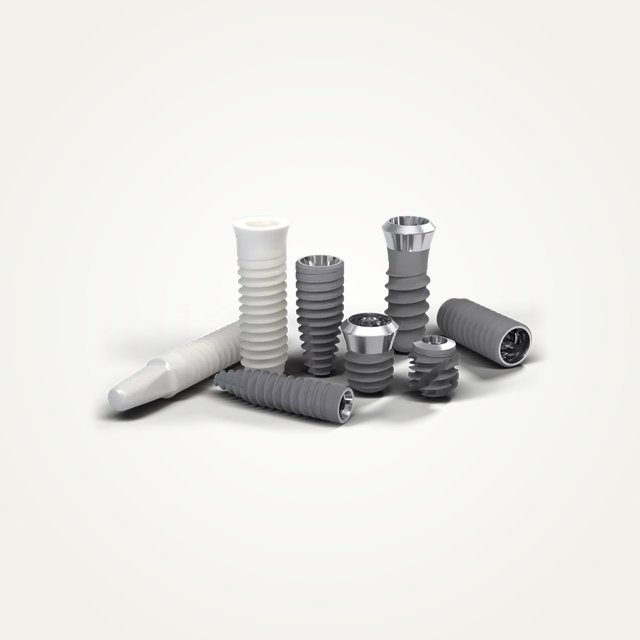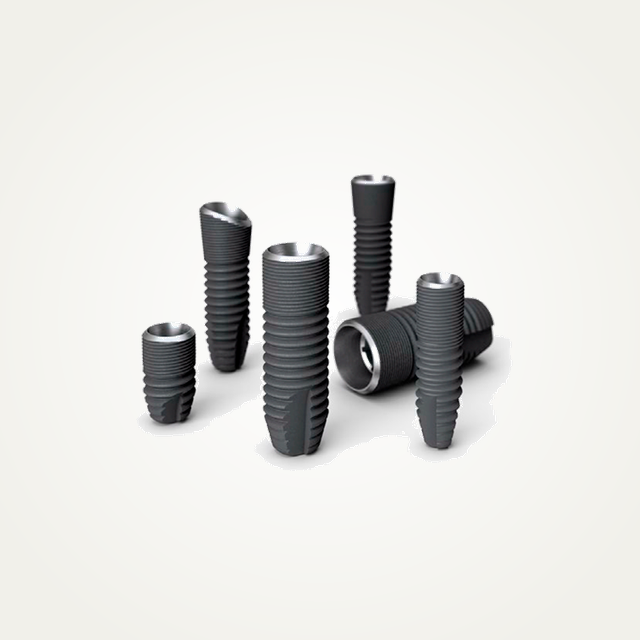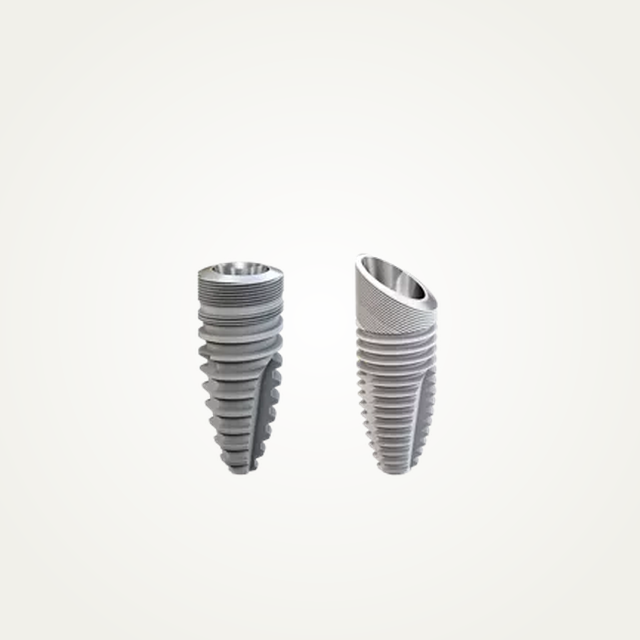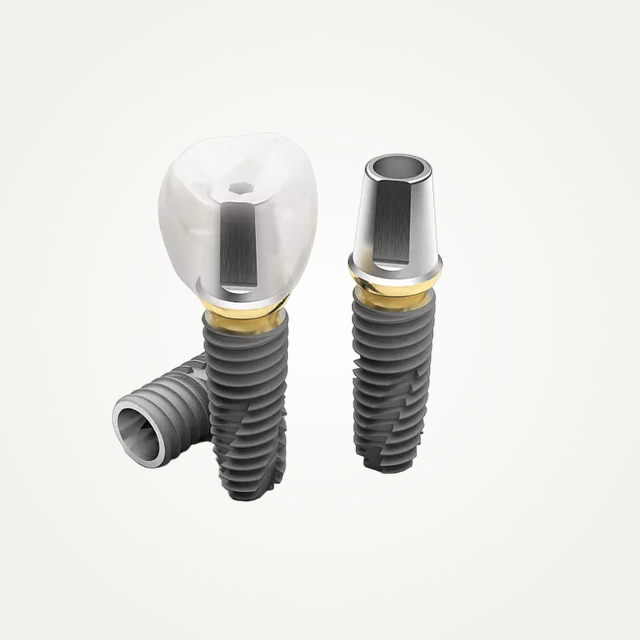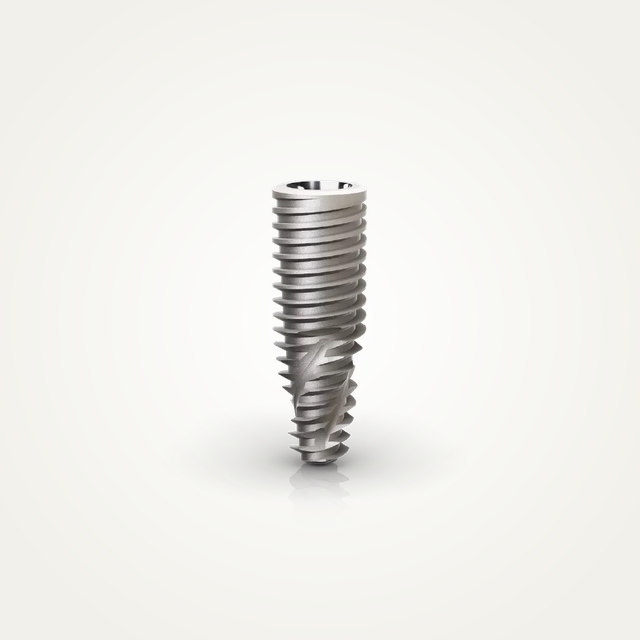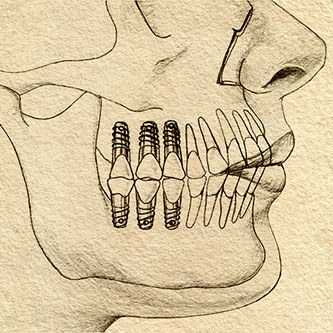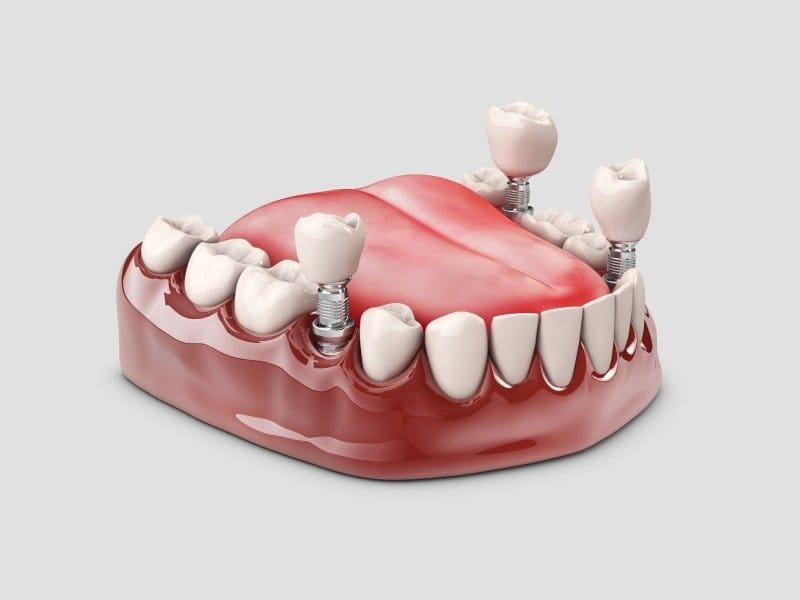
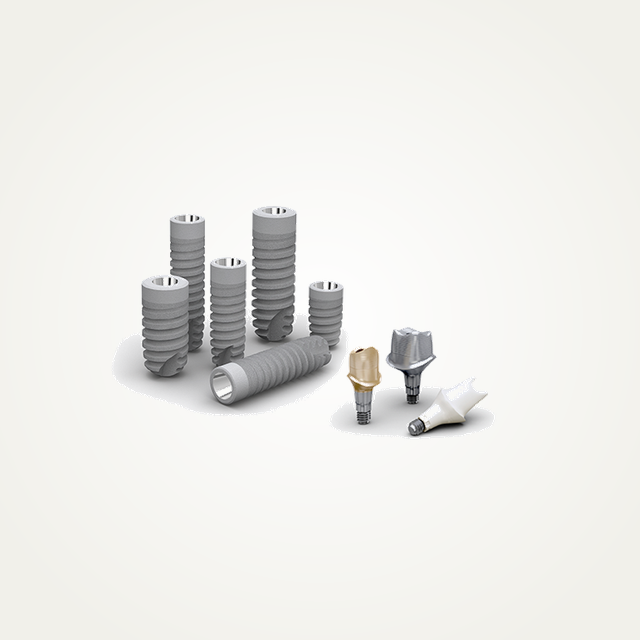
Ankylos is a German implant system, developed in 1985 at the Department of Oral Surgery and Implantology in Frankfurt and in clinical use since 1987 (PubMed 15255394). It is a Dentsply Sirona brand today, sitting in the same portfolio as Astra Tech, and its instructions for use name the legal manufacturer as Dentsply Implants Manufacturing GmbH, Rodenbacher Chaussee 4, 63457 Hanau, Germany. The fixture body is commercially pure titanium, grade 2 under ASTM F67 and ISO 5832-2 according to the manufacturer's own documents; the surface treatment is called Friadent plus and is described as grit-blasted and high temperature-etched; the connection is the conical Morse-type TissueCare interface with platform switching. Published survival is best read at three scales: 96.9% at eight years for single-tooth restorations (450 implants, PubMed 26813443), 93.0% at ten years in a cohort of 18,945 implants (PubMed 29446204) and 93.3% at 204 months in a cohort of 12,737 implants (PubMed 24103113). The cost of treatment in Turkey is set by the line and dimensions of the fixture, the number of stages, the restoration material and whether grafting is needed, so a figure quoted before a CBCT scan is not a quote for your treatment.
- 01Ankylos is German and a Dentsply Sirona brand, in the same implant portfolio as Astra Tech. The manufacturer's instructions for use place production at Hanau, Germany. It is not a Nobel Biocare brand.
- 02The manufacturer publishes a warranty document that names Ankylos: three years on instruments, five on zirconia, lifetime on implants and components. It runs in favour of the treating clinician rather than the patient, excludes laboratory and clinical fees, and is void if a component from another manufacturer is used.
- 03The system was developed in 1985 and has been in clinical use since 1987 (PubMed 15255394), so its published clinical record runs close to four decades.
- 04Long-term survival sits around 93%: 93.0% at ten years across 18,945 implants (PubMed 29446204) and 93.3% at 204 months across 12,737 implants (PubMed 24103113). The 96.9% rate is an eight-year figure for single-tooth restorations only (PubMed 26813443).
- 05Abutment neck fracture is a studied, quantified risk in this system rather than a rumour. A ten-year clinical audit reports a literature rate of 2.2%, an Ankylos-specific published rate of 1.8% and its own practice rate of 0.6% (PubMed 40514499).
- 06No brand-specific systematic review of Ankylos exists in the indexed literature; the evidence base is cohort-level, and its two largest cohorts are among the largest published for any implant brand.
Ankylos is a German dental implant system and a Dentsply Sirona brand. What Ankylos treatment costs in Turkey depends on the implant line, the abutment, the restoration material and any additional surgery, so a figure quoted before a CBCT scan describes a product rather than your treatment.
/ Where Ankylos implants are made
Ankylos is a German implant system, and both halves of that statement can be sourced separately. The origin is in the peer-reviewed record: the system's clinical concept paper comes from the Department of Oral Surgery and Implant Dentistry at the University of Frankfurt and states that the system was developed in 1985 and has been in clinical use since 1987 (PubMed 15255394). The same department later produced the largest long-term dataset for the system.
The production site is in the manufacturer's own document. The instructions for use supplied with Ankylos C/X implants carry the legal manufacturer line "Dentsply Implants Manufacturing GmbH, Rodenbacher Chaussee 4, 63457 Hanau, Germany." The same legal entity appears at the same Hanau address in the FDA establishment registration for endosseous root-form implants, and the group's fiscal 2025 annual report lists Hanau, Germany among its properties as a site manufacturing and distributing dental implant products.
A dating note matters here, because older sources give a different city. Ankylos belonged to Friadent, the German manufacturer Dentsply acquired in January 2001, and Friadent's address was Mannheim. That is why the 12,737-implant Frankfurt cohort names the manufacturer as DENTSPLY Implants Manufacturing GmbH, Mannheim, Germany (PubMed 24103113), and why the 2004 US market clearance file gives a Mannheim address. Regulatory records show the manufacturing address as Hanau from 2019 onward. Mannheim is not wrong; it is historical. The line that matters for your own implant is the manufacturer name and address printed on the implant card you receive, which our patient journey page covers.
/ Ankylos and Astra Tech sit under the same company
Ankylos is a Dentsply Sirona implant brand, and the other implant brand in that portfolio is Astra Tech. Ankylos is not a Nobel Biocare brand; Nobel Biocare belongs to a different group entirely.
Three transactions built the present structure. Dentsply acquired Friadent GmbH, the maker of Ankylos, in January 2001; Astra Tech was acquired from AstraZeneca in 2011; the Dentsply and Sirona merger completed in February 2016. A second circulating claim can be corrected here as well: Ankylos is often said to have reached Dentsply through Degussa. The company's own annual report records the Degussa Dental acquisition as a separate transaction in October 2001, covering alloys and ceramics. Two deals in one year, routinely merged into one story.
Two practical consequences follow. First, a quote that says only "Dentsply" does not tell you which system will be placed, because the two systems in that portfolio use different connection geometries and different surface treatments. Ankylos uses the conical Morse-type TissueCare interface; the system covered on our Astra Tech page uses a different conical internal connection and a different surface. Second, component compatibility is determined at connection level rather than brand level, so sharing a parent company does not make parts interchangeable.
The same pattern exists elsewhere in the field. Three of the systems in our implant comparison table belong to a single group, covered on the Straumann, Neodent and Medentika pages, while Osstem is the brand of its own group. Knowing the group tells you nothing about quality. It tells you who you will be dealing with in ten years, which is a different and more useful question.
/ The specification sheet: grade 2 titanium and the dimensional range
The Ankylos fixture body is commercially pure titanium, grade 2. The manufacturer states the grade in more than one document: the instructions for use give titanium grade 2 to ASTM F67, the product catalogue gives grade 2 to DIN EN ISO 5832-2, and the US clearance files describe the implants as machined from commercially pure grade 2 titanium. Commercially pure titanium is unalloyed, unlike the Ti-6Al-4V alloy known as grade 5, which contains roughly 6% aluminium and 4% vanadium. Within the pure family, strength rises with oxygen and iron content: grade 2 sits around 345 MPa and grade 4 around 550 MPa, against 895 to 1200 MPa for the grade 5 alloy. Grouping all three as medical grade titanium is a common shortcut and a technically wrong one.
The dimensional envelope is documented as well. Diameters are 3.5, 4.5, 5.5 and 7.0 mm, colour-coded red, yellow, blue and green in the instructions for use, and lengths run from 6.6 to 17 mm. The shortest length carries two manufacturer restrictions that reach the patient directly: 6.6 mm implants are for two-stage protocols only, and immediate loading is not permitted at that length.
/ Product lines and the Friadent plus surface
The names that appear beside the brand on a quote are lines and components rather than separate brands. C/X denotes the current implant line and its conical connection. Balance and TitaniumBase are abutment bases used in digital workflows. SynCone is the telescopic coping system used to retain full-arch removable prostheses and is still an active line. A quote that says only Ankylos does not tell you the line, the diameter or the length, and those three are what determine both the surgical plan and the components your dentist at home will need to order.
The surface treatment is Friadent plus, described by the manufacturer as grit-blasted and high temperature-etched, with micropores reported at 0.5 to 1 micrometre. A peer-reviewed review describes the same process as large grit-blasting, etching and a proprietary neutralising step, and adds candidly that clinical data on this specific surface is limited to a few studies (PubMed 27478833). Optical interferometry classifies the surface as moderately rough with homogeneous microporosity and nanostructures of roughly 10 nm (PubMed 23823733). No roughness parameter is published by the manufacturer and no verifiable Sa value exists in the literature, so none is quoted here; the moderately rough band is defined as Sa 1.0 to 2.0 micrometres, with the caveat that differences across that band are small and often not statistically significant (PubMed 15543910). On wettability the position is unambiguous: this is a conventional surface, not a hydrophilic one.
/ What the TissueCare connection and platform switching actually do
TissueCare is the name of the interface between fixture and abutment in this system. The geometry is a conical Morse taper: the abutment seats into the fixture on a narrow-angle cone and locks by friction. The manufacturer calls it a keyed and friction-locked tapered connection with an optional index, and the instructions for use are explicit that the index is a locating aid while the conical connection provides the rotation lock and stability. All abutments share the same tapered connection regardless of size, which simplifies the restorative inventory. No cone angle in degrees appears in any manufacturer document; a figure of 5.7 is not a cone angle but an abutment head diameter in millimetres.
Platform switching is the second principle layered on top, and its definition is simple. The abutment diameter is smaller than the implant platform diameter, so the junction between fixture and abutment is drawn inward, away from the bone margin. The effect of that geometry on marginal bone has been measured independently of any brand. A current systematic review and meta-analysis reports 0.22 mm less crestal bone loss with platform switching (PubMed 40251108). A meta-analysis restricted to randomised trials with at least three years of follow-up reports mean marginal bone loss of 0.33 mm with platform switching against 0.66 mm with platform matching, while survival is effectively identical at 98.12% and 98.05% (PubMed 34698714).
The comparison worth drawing is between bone and survival. Platform switching produces a measurable bone effect and no survival effect. Network meta-analysis of randomised trials on connection geometry points the same way: conical interfaces showed less marginal bone loss and fewer prosthetic complications than external hexagonal connections, while connection design had no influence on implant survival or biological complication rates (PubMed 34776267).
/ A conical connection is not a sealed connection
Conical systems are frequently described as gap-free. That description needs a boundary drawn around it, and the manufacturer draws part of it itself: the surgical manual attributes the absence of micromovement to a chewing simulator study and states plainly that no clinical data is available on the point. The studies that measure the interface do not confirm a seal either.
An in vitro study comparing two Morse taper systems found bacterial leakage along the implant-abutment interface in 20% of assemblies in each system, with no statistically significant difference between them (PubMed 20074246). A more recent in vitro study examined three commercial systems at four tightening torques using scanning electron microscopy, and reported that the Ankylos system showed the widest microgap at every torque while also showing the lowest bacterial adherence (PubMed 38536147). Both are laboratory studies, neither reproduces intraoral conditions, and neither translates directly into a clinical outcome.
Taken together, the two findings mean that the conical Morse interface is a measurable design property that reduces micromovement and locks by friction, not a guarantee of a sealed junction. The clinical consequence is that the biological load at that junction is governed mainly by maintenance, which is why implant cleaning is a separate subject from implant selection.
/ Subcrestal placement: the evidence runs both ways
Subcrestal placement means positioning the implant shoulder below the level of the bone crest. It has been studied specifically in this system, and the published evidence points in two directions.
The general evidence first. A systematic review and meta-analysis comparing subcrestal with equicrestal placement found less marginal bone level change with subcrestal placement, but the human studies produced a difference of 0.18 mm that did not reach statistical significance, while the animal studies produced 0.45 mm that did (PubMed 29313133). Two brand-specific studies then point in different directions. A long-term retrospective study of 228 Ankylos implants found no significant difference between the two placement depths and numerically slightly more bone loss in the subcrestal group (PubMed 23675969). A retrospective study including 174 Ankylos implants found significantly more marginal bone loss below the bone level, 0.50 mm against 0.10 mm (PubMed 35235638).
In summary, the geometry of this system permits subcrestal placement and the published data on it runs in both directions, but the claim that subcrestal placement preserves bone is not supported in human data. Depth is a planning decision made against bone type and soft tissue thickness, not a fixed rule, and it is settled from the CBCT scan during guided implant planning.
/ How long Ankylos implants last: three cohorts, three numbers
Ankylos implant survival is best read as three numbers rather than one, because the published record for this brand is large and the figures separate by indication and cohort size.
The longest-running cohort comes from the University of Frankfurt. Between April 1991 and May 2011, 12,737 implants were placed in 4,206 patients, and the Kaplan-Meier cumulative survival rate was 93.3% at 204 months. Most failures, 198 implants or 1.6%, occurred in the first year and before the prosthesis was delivered. Peri-implant bone loss stayed at or below 1 mm horizontally in 85.7% of implants and vertically in 85.2% at 204 months (PubMed 24103113). The largest cohort by implant count comes from the Wienerberg Dental Clinic in Vienna: 18,945 implants in 7,783 patients, with cumulative survival of 98.5% at one year, 97.7% at three, 96.7% at five and 93.0% at ten (PubMed 29446204).
The third number covers a narrower indication. A Korean cohort of 450 single-tooth implants in 275 patients reported 96.9% cumulative survival at eight years, with 13 implants, or 2.9%, lost (PubMed 26813443). The difference between 96.9% and 93% is not a quality gap, it is a scope gap: single-tooth restorations are a narrower indication, while the large cohorts contain every case type from full-arch work to narrow ridges. A ten-year expectation belongs in the 93% band; a single-tooth eight-year expectation belongs in the 97% band.
/ Is Ankylos a good implant: how to read that question
Whether Ankylos is a good implant is answered by its published record rather than by a ranking, and a sourced answer has three parts.
First, the size and length of the published record. Two cohorts of 12,737 and 18,945 implants place this system among the larger published datasets in implant dentistry, and both run beyond ten years. A surface characterisation study that also reviewed 56 clinical articles on this and one other system reported implant survival rates with a minimum five-year follow-up ranging between 87.7% and 100% (PubMed 23823733), which is a useful reminder of how wide the spread across individual studies is for any brand.
Second, what is missing. A PubMed search filtered to systematic reviews and meta-analyses returns no brand-specific review of Ankylos; the single record that carries the name pools five different systems (PubMed 29049323). The evidence is cohort-level, not review-level.
Third, who produced the evidence. The longest-running cohort comes from the university department where the system was developed, and the author of the system's clinical concept paper is among its authors (PubMed 24103113 and PubMed 15255394 share a name). That does not invalidate the data, but it is context that changes how a single-centre result should be weighted. The largest series from a different centre is the 18,945-implant Vienna cohort, but its authors include the first author of the Frankfurt cohort, so it is not fully independent either (PubMed 29446204, PubMed 24103113). Whether this system suits your case is decided by bone volume, site and prosthetic plan, and those three variables are compared system by system on our implant treatment page.
/ Abutment neck fracture: the quantified risk in this system
Abutment fracture is the mechanical failure of the component that sits on the implant, and it can end in the loss of the implant itself. This risk has been studied more thoroughly in Ankylos than in most systems, which means it can be discussed with numbers rather than avoided.
In the single-tooth cohort, ten abutment fractures occurred across 450 implants, all located at the abutment neck, and four of them resulted in implant loss. The cumulative fracture rate was significantly higher in middle-aged patients, at molar sites and with larger-diameter implants: 0.5% at 3.5 mm diameter against 4.5% at 4.5 mm and 6.7% at 5.5 mm (PubMed 26813443). A ten-year clinical audit compared practice against the published record and reported a literature abutment fracture rate of 2.2%, an Ankylos-specific published rate of 1.8%, and its own ten-year rate of 0.6%. The same audit lists the contributing factors: male patients, first molar sites, restorations opposing a natural tooth, implants bounded by another tooth or implant, roughly six years in function before fracture, and a gonial angle below 120 degrees (PubMed 40514499).
An independent study confirms the same risk profile. Across 1,126 Ankylos implants in 430 patients followed for approximately ten years, three variables significantly predicted fracture: sex, a gonial angle below 120 degrees, and a non-splinted superstructure (PubMed 33311012). The practical response is planning rather than brand switching. If a wide-diameter single implant is planned at a molar site, splinting and a night guard belong in the conversation before surgery, alongside the standard eligibility assessment.
/ Which cases this system is used for
Ankylos is used from single-tooth replacement to full-arch fixed work, and each of these indications has been studied separately in the published record.
Single-tooth replacement is the most published indication for this system, covering the 450-implant cohort and an earlier series of 275 single crowns. Full-arch fixed work has been studied as well: across 33 patients and 218 implants restored as All-on-4 and All-on-6 cases, cumulative survival beyond three years was 95.32%, with marginal bone loss of 0.27 mm mesially and 0.49 mm distally (PubMed 37248812). The general protocols are covered on our All-on-4 and All-on-6 pages, while a full-mouth restoration plan covers both arches. Loading protocol has its own dataset: 634 implants in 247 patients followed for a mean of three years under early moderate loading reported 98.74% survival (PubMed 25708235).
The decision variables are the same for every system: bone volume and density, the position of the gap, the opposing arch, occlusal load and the planned restoration. Where bone volume is insufficient the route runs through bone grafting or sinus augmentation. Where a single posterior tooth is missing, the trade-off against a bridge is set out on our implant versus bridge page and our molar implant guide. The right system is decided by the case, which is why our clinicians make that call from imaging rather than from a brand preference.
/ What determines the cost of Ankylos treatment in Turkey
The cost of Ankylos treatment in Turkey is a structure rather than a single number. No figure is published here, because a price quoted before a CBCT scan describes a product rather than your treatment, and because the itemisation is what actually differs between clinics.
Five layers set the total. The fixture itself comes first: which line, which diameter and length, which abutment type. The number of stages comes second, and this is where quotes diverge most; a fixture price is not a treatment price, because a healing abutment, a definitive abutment and a restoration follow it. The restoration material is a third and separate line item, chosen independently of the implant system, and the choice between a zirconia crown and other materials moves the total on its own. Additional surgery is fourth: insufficient bone volume means grafting, and a low sinus floor in the posterior maxilla means augmentation, neither predictable without imaging. The scale of the case is fifth, and it dominates everything else once more than a few implants are involved.
Two items sit outside the quote and belong in the comparison anyway. Long-term cost covers component availability, warranty scope and the annual review schedule. Travel structure covers the number of trips and the interval between them, which for implant work is driven by healing time rather than by the clinic's schedule; our pages on how long healing takes and on dental treatment in Istanbul set out what that means in practice, and our 2026 implant pricing page explains how the itemisation is built. An itemised written quote after examination is the only version worth comparing between clinics.
/ What the Ankylos warranty actually covers
Ankylos has a published manufacturer warranty, but it runs in favour of the treating clinician rather than the patient and excludes treatment fees. Two distinct warranties apply, and they should not be merged into one. The manufacturer warranty covers the product. The clinic warranty covers workmanship, reviews and remake if required. Ask for both in writing, with duration and exclusions stated separately.
The manufacturer warranty exists as a published document and it names Ankylos. Valid as of 1 May 2023, it sets three years on instruments, five years on zirconia and lifetime cover on implants and components, with two headings of benefit: replacement at no additional charge where the product has defects in materials or workmanship, and replacement of the implant at no additional charge where osseointegration has not occurred or has failed. Four boundaries matter more than the word lifetime. The document runs in favour of eligible treating clinicians and states that patients derive no rights from it. Cover is limited to replacement of the product and explicitly excludes laboratory and clinical treatment fees. Using the product in combination with a component or instrument from another manufacturer removes the benefits. And the manufacturer reserves the right to modify or withdraw the terms without notice. The Turkish brand page repeats the lifetime claim in Turkish while linking only English documents, so a Turkish-speaking patient cannot reach the terms from the Turkish site.
/ Components and who services the implant when you fly home
Component sourcing is the question that matters most for a patient treated abroad, and this system has a specific answer with a tension inside it. The TissueCare interface is proprietary rather than a generic platform, which sounds like lock-in. In practice, compatible abutments and components for the C/X connection are catalogued by several independent manufacturers, including the Straumann Group's Medentika Y-Series, Glidewell's FDA-cleared titanium abutments, DESS, Elos Medtech and Preat, so a dentist in Germany, the Netherlands or the United Kingdom can source parts without going through a single channel. The tension is that the manufacturer's own catalogue requires C/X implants to be used only with components marked C/X, and the warranty is void once a third-party part is fitted. Third-party components carry their own warranties instead. That trade-off is a technical decision for the dentist who takes over your care, made with your documentation in front of them, not a decision to make at the point of booking.
That documentation is the part you control. European medical device law requires the manufacturer of an implantable device to supply an implant card carrying the device name, serial number, lot number, Unique Device Identification, model, and the manufacturer's name and address (Regulation (EU) 2017/745, Article 18). Leave with that card, and with the product code rather than only the brand name. Loose Ankylos fixtures are also offered on online marketplaces, which is why traceability matters: the card plus the packaging label peeled into your record is what distinguishes a documented implant from an undocumented one. Guidance for international patients is collected on our dental treatment in Turkey page.
/ Is Ankylos implant safe: the regulatory record
Whether Ankylos is safe is answered by public records rather than by the brand's reputation: the system entered the US market through the 510(k) pathway, and no FDA recall is filed under the Ankylos name.
In the United States, fifteen 510(k) records carry the Ankylos name, all class II under 21 CFR 872.3640 with product code DZE. Three matter for the system itself: K041509 for the Ankylos Dental Implant System, cleared 26 August 2004; K083805 for the Ankylos C/X Dental Implant System, cleared 22 May 2009; and K140347, which added the 6.6 mm length to the C/X system, cleared 20 August 2014. In Europe, the product catalogue's symbol page carries the CE mark and notified body 0123, TÜV SÜD Product Service, though that statement is written under the older medical device directive and a certificate number under the current regulation could not be located in this round.
On recalls the record is clean: no FDA recall or enforcement record is filed under the Ankylos name. A 2006 recall exists for a different implant line from the same manufacturer, which is sometimes cited as if it applied here; it does not. Adverse event reports for the brand do exist in the FDA's passive surveillance database, and they are deliberately not quoted as a rate on this page: that database has no denominator, and part of the apparent rise in report volume comes from the manufacturer unbundling summary reports into individual ones rather than from a change in device behaviour. The measurable answers to a safety question are the regulatory record and the published clinical data, and the same two are what our implant treatment page uses to compare systems.
/ Peri-implantitis and what determines the ten-year outcome
Long-term survival for this system sits in the 93% band, and the mechanism that produces the missing 7% is inflammation in the surrounding tissue rather than fatigue in the titanium. That is worth stating precisely, because it changes what a patient should optimise for.
Peri-implant disease is common. The current epidemiology review calculates weighted mean prevalences of 43% for peri-implant mucositis and 22% for peri-implantitis (PubMed 25495683). Smoking is a separate and measured variable, and this brand's own data quantifies it: in the 18,945-implant Vienna cohort, smoking was a significant factor in implant survival with a hazard ratio of 2.2 (PubMed 29446204).
Maintenance is where the measured benefit sits. A systematic review and meta-analysis of maintenance therapy found lower incidence of peri-implant disease among implants enrolled in supportive programmes and concluded that a recall interval of at least five to six months is warranted, tailored to the patient's risk profile (PubMed 26701350). The same analysis identifies a history of periodontal disease as a significant influence, which is why gum health is settled before implant planning. Our page on peri-implantitis and its modern treatment covers what happens when it does develop, and our implant-supported prosthesis page covers the restorations that sit above. Brand choice shapes the first day; maintenance shapes the tenth year, and a consultation is where the recall schedule is set.
Let’s plan the right treatment together.
Free Assessment→- 1.Nentwig GH. Ankylos implant system: concept and clinical application. J Oral Implantol 2004;30:171-7. PubMed 15255394
- 2.Krebs M, Schmenger K, Neumann K, Weigl P, Moser W, Nentwig GH. Long-term evaluation of ANKYLOS® dental implants, part i: 20-year life table analysis of a longitudinal study of more than 12,500 implants. Clin Implant Dent Relat Res 2015;17 Suppl 1:e275-86. PubMed 24103113
- 3.Jesch P, Jesch W, Bruckmoser E, Krebs M, Kladek T, Seemann R. An up to 17-year follow-up retrospective analysis of a minimally invasive, flapless approach: 18 945 implants in 7783 patients. Clin Implant Dent Relat Res 2018;20:393-402. PubMed 29446204
- 4.Shim HW, Yang BE. Long-term cumulative survival and mechanical complications of single-tooth Ankylos Implants: focus on the abutment neck fractures. J Adv Prosthodont 2015;7:423-30. PubMed 26813443
- 5.Rayment S, Packer M, Millar BJ. Clinical audit of Ankylos implant abutment fractures for a ten-year period in practice. Br Dent J 2025;238:869-878. PubMed 40514499
- 6.Murakami H, Igarashi K, Fuse M, Kitagawa T, Igarashi M, Uchibori S, et al. Risk factors for abutment and implant fracture after loading. J Oral Sci 2020;63:92-97. PubMed 33311012
- 7.Ding Y, Zhou H, Zhang W, Chen J, Zheng Y, Wang L, et al. Evaluation of a platform-switched Morse taper connection for all-on-four or six treatment in edentulous or terminal dentition treatment: A retrospective study with 1-8 years of follow-up. Clin Implant Dent Relat Res 2023;25:815-828. PubMed 37248812
- 8.Romanos G, Grizas E, Laukart E, Nentwig GH. Effects of Early Moderate Loading on Implant Stability: A Retrospective Investigation of 634 Implants with Platform Switching and Morse-Tapered Connections. Clin Implant Dent Relat Res 2016;18:301-9. PubMed 25708235
- 9.Romanos GE, Aydin E, Gaertner K, Nentwig GH. Long-term results after subcrestal or crestal placement of delayed loaded implants. Clin Implant Dent Relat Res 2015;17:133-41. PubMed 23675969
- 10.Sun P, Yu D, Luo X, Xu A, Feng Y, He FM. The Effect of Initial Biologic Width on Marginal Bone Loss: A Retrospective Study. Int J Oral Maxillofac Implants 2022;37:190-198. PubMed 35235638
- 11.Valles C, Rodríguez-Ciurana X, Clementini M, Baglivo M, Paniagua B, Nart J. Influence of subcrestal implant placement compared with equicrestal position on the peri-implant hard and soft tissues around platform-switched implants: a systematic review and meta-analysis. Clin Oral Investig 2018;22:555-570. PubMed 29313133
- 12.Nami M, Maslahaty H, Abbasi B, Sharifi M, Farahi A, Kookhi NA. Impact of platform switching implants on crestal bone level: A systematic review and meta-analysis. J Prosthet Dent 2026;135:287-296. PubMed 40251108
- 13.Mishra SK, Gaddale R, Sonnahalli NK, Chowdhary R. Platform-Switching Concept in Dental Implants: A Systematic Review and Meta-analysis of Randomized Controlled Trials with a Minimum Follow-up of 3 Years. Int J Oral Maxillofac Implants 2021;36:e97-e109. PubMed 34698714
- 14.Camps-Font O, Rubianes-Porta L, Valmaseda-Castellón E, Jung RE, Gay-Escoda C, Figueiredo R. Comparison of external, internal flat-to-flat, and conical implant abutment connections for implant-supported prostheses: A systematic review and network meta-analysis of randomized clinical trials. J Prosthet Dent 2023;130:327-340. PubMed 34776267
- 15.Aloise JP, Curcio R, Laporta MZ, Rossi L, da Silva AM, Rapoport A. Microbial leakage through the implant-abutment interface of Morse taper implants in vitro. Clin Oral Implants Res 2010;21:328-35. PubMed 20074246
- 16.Alshubrmi H, Mousa MA, Taher IA, Sghaireen MG, Ganji KK, Issrani R, et al. Influence of Different Torques on the Size of the Microgap and Bacterial Leakage in Three Commercial Implant Systems: An In Vitro Study. Int J Prosthodont 2025;25:196-205. PubMed 38536147
- 17.Galli S, Jimbo R, Andersson M, Bryington M, Albrektsson T. Surface characterization and clinical review of two commercially available implants. Implant Dent 2013;22:507-18. PubMed 23823733
- 18.Smeets R, Stadlinger B, Schwarz F, Beck-Broichsitter B, Jung O, Precht C, et al. Impact of Dental Implant Surface Modifications on Osseointegration. Biomed Res Int 2016;2016:6285620. PubMed 27478833
- 19.Albrektsson T, Wennerberg A. Oral implant surfaces: Part 1--review focusing on topographic and chemical properties of different surfaces and in vivo responses to them. Int J Prosthodont 2004;17:536-43. PubMed 15543910
- 20.Derks J, Tomasi C. Peri-implant health and disease. A systematic review of current epidemiology. J Clin Periodontol 2015;42 Suppl 16:S158-71. PubMed 25495683
- 21.Monje A, Aranda L, Diaz KT, Alarcón MA, Bagramian RA, Wang HL, et al. Impact of Maintenance Therapy for the Prevention of Peri-implant Diseases: A Systematic Review and Meta-analysis. J Dent Res 2016;95:372-9. PubMed 26701350
- 22.Wang QQ, Dai R, Cao CY, Fang H, Han M, Li QL. One-time versus repeated abutment connection for platform-switched implant: A systematic review and meta-analysis. PLoS One 2017;12:e0186385. PubMed 29049323
- 23.Dentsply Sirona, Ankylos C/X implants instructions for use (IFU 2031-EN Rev. 011 C, 2019-09; IFU 2033-EN, 2018-07, for 6.6 mm). Legal manufacturer line, grade 2 titanium, colour codes, diameter and length range, 6.6 mm restrictions, index and conical connection wording.
- 24.Dentsply Sirona, Ankylos product catalogue (32671089-USX-2407, July 2024): material table (Ti grade 2, DIN EN ISO 5832-2), C/X component requirement, CE mark and notified body 0123. The Friadent plus micropore size is not in the catalogue but in the system brochure (32670023-USX-2206).
- 25.Dentsply Sirona, Implant systems warranty (32671148-USX-2305, valid as of 1 May 2023). Ankylos included; three years instruments, five years zirconia, lifetime implants and components; clinician-only scope, exclusion of laboratory and clinical fees, third-party component condition.
- 26.Dentsply Sirona, Ankylos brand pages (dentsplysirona.com, EN and tr-tr) and surgical manual: TissueCare connection, Friadent plus surface, and the manual's own note that no clinical data is available for the micromovement finding. Opened 9 August 2026.
- 27.FDA 510(k) records: K041509 (26 Aug 2004), K083805 (Ankylos C/X, 22 May 2009), K140347 (6.6 mm addition, 20 Aug 2014) and twelve further records carrying the brand name. Class II, 21 CFR 872.3640, product code DZE.
- 28.FDA establishment registration: Dentsply Implants Manufacturing GmbH, Rodenbacher Chaussee 4, Hanau, Germany. FDA recall and enforcement databases: no record under the Ankylos name.
- 29.Dentsply Sirona annual reports: acquisition of Friadent GmbH in January 2001 and of Degussa Dental in October 2001 as separate transactions; fiscal 2025 property list naming Hanau, Germany as a dental implant manufacturing and distribution site.
- 30.Medentika Y-Series product information (Straumann Group), "compatible with DENTSPLY Implants ANKYLOS C/X"; FDA 510(k) K141923 (Prismatik Dentalcraft/Glidewell, 6 Jan 2015) for abutments compatible with Ankylos C/X.
- 31.Regulation (EU) 2017/745, Article 18: implant card and information to be supplied to the patient.