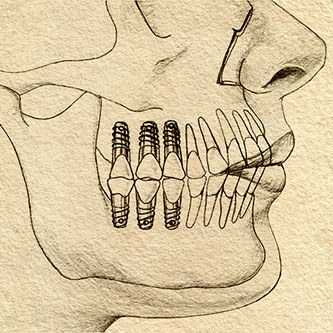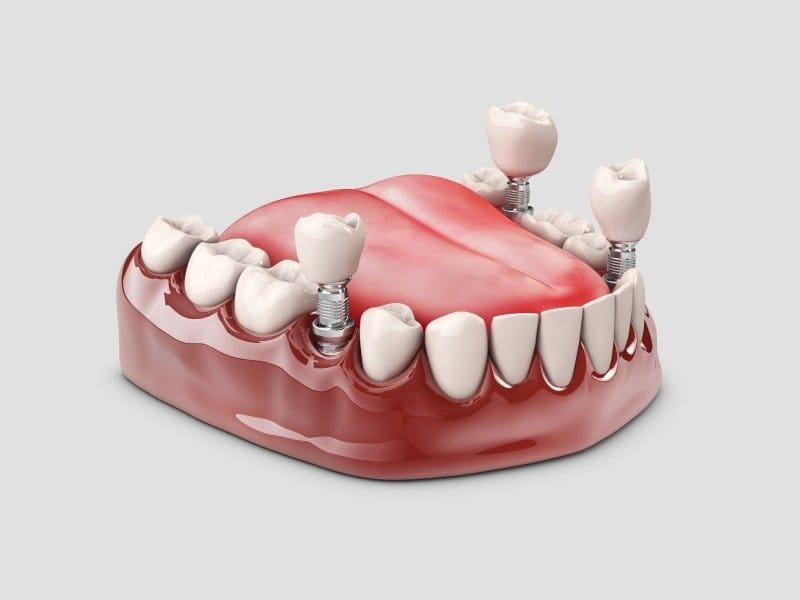
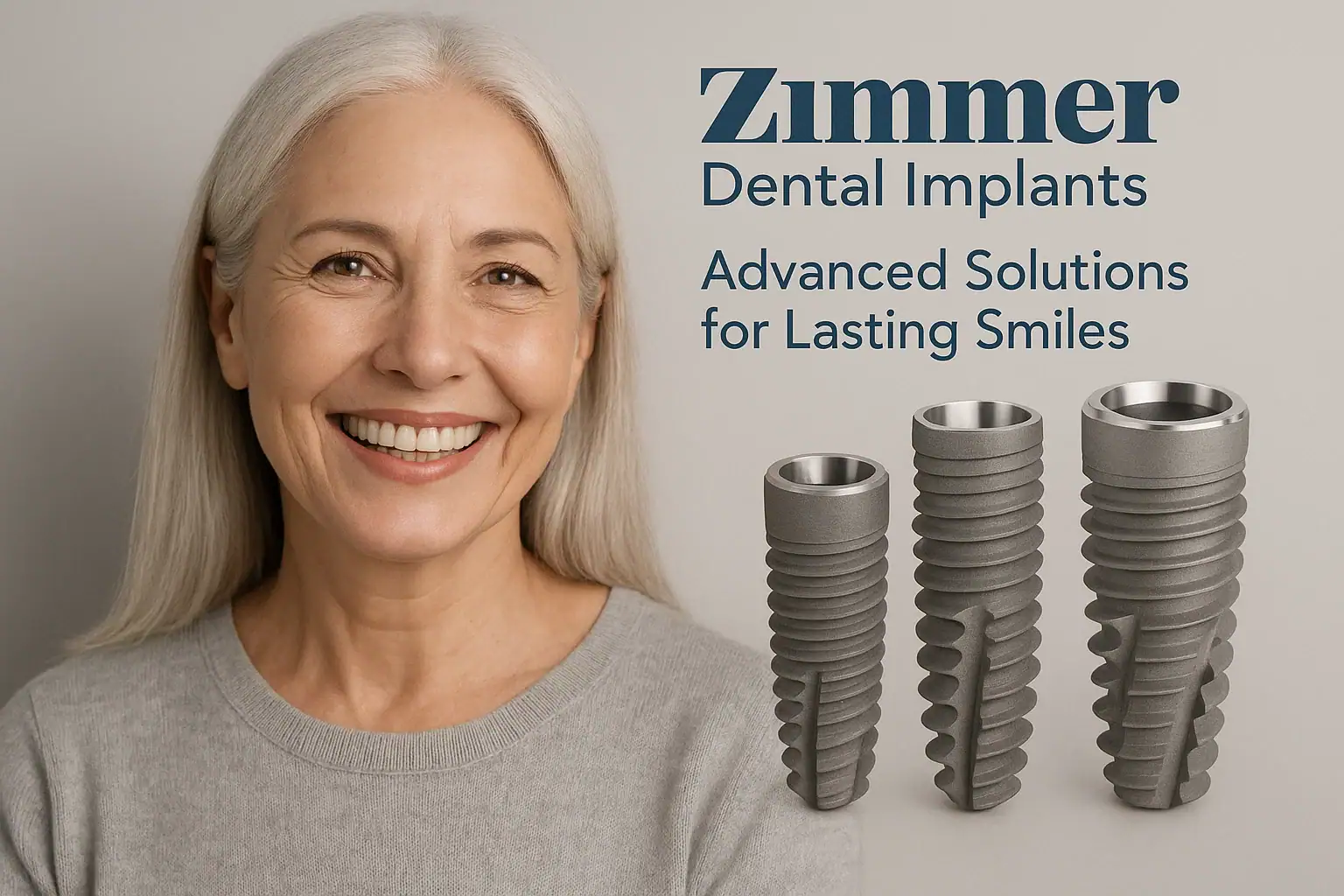
Zimmer dental implants are the dental line of Zimmer Biomet, made from titanium alloy according to their FDA 510(k) summaries and sold as tapered screw bodies (Tapered Screw-Vent), Trabecular Metal bodies with a porous tantalum section and one-piece implants for narrow ridges. A seven-year prospective study of 50 hydroxyapatite-coated Tapered Screw-Vent implants in 42 patients reported a cumulative survival rate of 98.0% (PubMed 33751297). Which system suits a case depends on bone volume, the site and the prosthetic plan rather than the brand name, and healing before the final crown normally takes three to six months.
- 01FDA 510(k) summaries describe the Tapered Screw-Vent body as titanium alloy, specified as Ti-6Al-4V (K133339); the Trabecular Metal line adds a tantalum section on a Ti-6Al-4V core, intended to let bone grow into the implant rather than only onto it (K132258).
- 02Seven-year cumulative survival of 50 hydroxyapatite-coated Tapered Screw-Vent implants was 98.0%, split as 100% in the immediately loaded group and 95.5% in the early loaded group across 42 patients (PubMed 33751297). That study was funded by Zimmer Biomet.
- 03In a 205-implant retrospective comparison, peri-implant bone levels around Trabecular Metal implants increased by 0.28 mm on average in the first year of loading while levels around conventional titanium implants decreased by 0.20 mm; survival was 100% versus 98.1% (PubMed 30396711).
- 04The same analysis found the odds of first-year bone loss were 64% lower with Trabecular Metal than with titanium (odds ratio 0.36; 95% CI 0.14-0.94) after adjusting for grafting, site and immediate placement (PubMed 30396711).
- 05The clinical timetable is set by biology, not by the system: 3 to 6 months of healing sit between implant placement and abutment plus crown.
Dental implants have revolutionized restorative dentistry, offering patients a long-lasting solution for missing teeth. Among the most respected brands in the dental world, Zimmer Dental Implants stand out for their innovation, precision engineering, and biocompatibility. Whether you have heard of Zimmer Biomet Dental Implants or are simply comparing implant systems, this guide sets out the specification in detail.
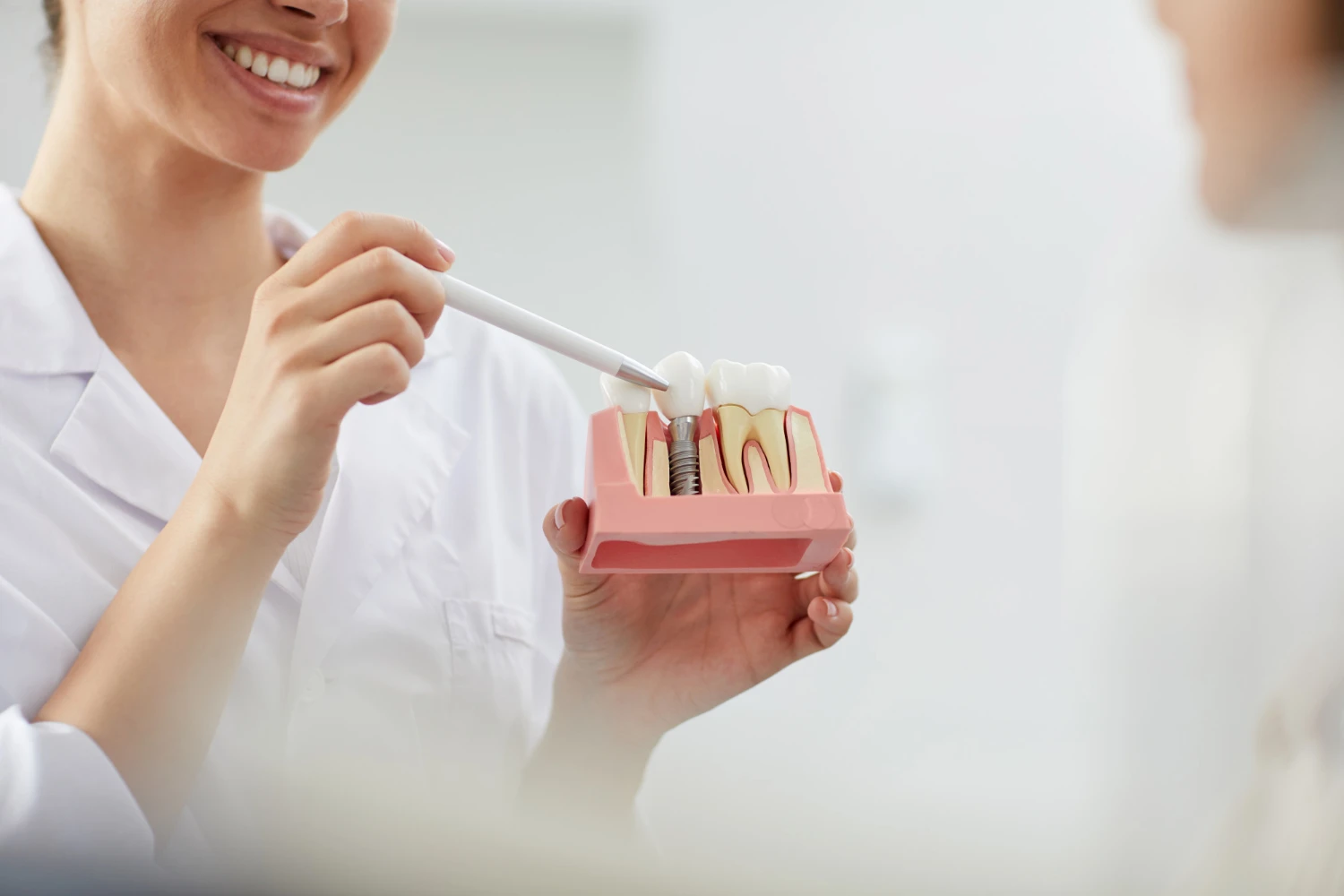
/ Zimmer Dental Implant Systems, Materials, and Placement
1. What Are Zimmer Dental Implants?
Zimmer Dental Implants are screw-type implants used to replace missing teeth; for the Tapered Screw-Vent and Trabecular Metal lines, the FDA 510(k) summaries give the body material as titanium alloy. Zimmer, now part of Zimmer Biomet, manufactures dental implant systems trusted by thousands of dental professionals worldwide.
Zimmer implants offer a wide range of prosthetic solutions, from single-tooth implants to full-arch reconstructions.
2. Zimmer Biomet: The Company Behind the System
Zimmer Biomet is a medical technology company working in musculoskeletal healthcare, and its dental division applies the documentation and manufacturing standards used in orthopedic joint replacement to oral implants.
What can be checked about the dental line sits in the regulatory record rather than in company scale: the FDA 510(k) summaries name the body material, the surface treatment and the design of each system, and the sections below quote those records.
3. What Are Zimmer Dental Implants Made Of?
Materials named in the FDA 510(k) summaries:
- Titanium alloy (Ti-6Al-4V): the Tapered Screw-Vent body is titanium alloy (K013227, K061410), specified as Ti-6Al-4V in a later summary (K133339)
- Porous tantalum (Trabecular Metal): a tantalum section on a Ti-6Al-4V core, described as similar to cancellous bone and designed to allow bone ingrowth (K132258)
- Surfaces: MTX, or MP-1 hydroxyapatite (HA) coating (K061410, K132258)
These summaries describe materials, not clinical results; published follow-up for these lines is in section 10.
4. Types of Zimmer Dental Implants
Zimmer offers a wide range of implant systems tailored to different clinical needs:
- TSV Implant System: Tapered Screw-Vent implants for high primary stability
- Trabecular Metal Implants: Porous tantalum section intended to allow bone ingrowth
- T3 Implants: Combines roughened and smooth collar surface for better soft tissue response
- Zimmer One-Piece Implants: Ideal for small spaces and narrow ridges
5. Zimmer Implant Placement Procedure
At advanced clinics like Mosdent, Zimmer implants are placed using a digitally guided process:
- 3D scanning and CBCT imaging
- Digital treatment planning
- Surgical guide fabrication (if necessary)
- Implant placement under local anesthesia or sedation
- Healing period (3–6 months)
- Abutment and crown placement
This precision reduces surgical trauma and enhances long-term success.
/ Zimmer Implant Benefits, Registry Data, Candidacy, and Cost
Zimmer Dental Implants are described here through benefits, public registry data, candidacy, and cost factors.
6. Benefits of Zimmer Dental Implants
- Biocompatibility: Excellent tolerance by human tissue
- High success rate: 95%+ success over 10 years
- Flexibility: Systems for every bone type and jaw condition
- Innovative Design: Engineered to promote soft tissue stability
- Minimally Invasive Options: Thanks to advanced digital planning
7. Tapered Screw-Vent in Public Registries
The table lists what can be checked in public records for Zimmer's Tapered Screw-Vent line. It does not rank the system against other brands, and no head-to-head comparison is cited here.
| Item | Tapered Screw-Vent | Where it is recorded |
|---|---|---|
| US market route | 510(k) clearance, decision "substantially equivalent" | FDA 510(k) database |
| Device class | Class II, product code DZE (root-form endosseous implant) | 510(k) summary K061410 |
| Example clearances | K013227 (2001), K061410 (2006), K133339 (2014, HA-coated T and M) | FDA 510(k) database |
| Surface | MTX or MP-1 surface; HA-coated versions | 510(k) summaries K061410, K133339 |
| Implant-abutment connection | Internal hex, friction fit | 510(k) summary K133339 |
8. Who Is a Candidate for Zimmer Implants?
- Adults with one or more missing teeth
- Patients with adequate jawbone or candidates for grafting
- Non-smokers or willing to quit during healing
- Individuals with healthy gums
- Patients seeking long-term, fixed restorations
9. Zimmer Dental Implant Cost Breakdown
The cost of Zimmer implants depends on several factors:
- Number of implants needed
- Type of prosthesis (crown, bridge, full arch)
- Grafting requirements
- Clinic location
- Anesthesia type used
Estimated Cost:
- USA/Canada: $3,000–$6,000 per implant
- Turkey (Mosdent): $850–$1,500 per implant (all-inclusive packages available)
Mosdent offers transparent pricing and includes consultation, imaging, sedation, and post-op care.
/ Zimmer Implant Results, Published Data, and Mosdent Use
10. Zimmer Dental Implants: Before and After
With the right indication, Zimmer implants can bring a clear functional and aesthetic change:
- Stable and natural-looking teeth
- Support for chewing and speaking function
- Contribution to maintaining facial support
Mosdent provides patients with digital previews and real-life before-after galleries to guide expectations.
Published follow-up data exist for Zimmer's Tapered Screw-Vent line. In a randomized study of 50 partially hydroxyapatite-coated Tapered Screw-Vent single implants, restored in occlusion immediately or 3 weeks after placement, the overall cumulative 7-year survival rate was 98.0%. In total, 34 patients with 42 implants completed the 7-year visit, and the study was funded by Zimmer Biomet (PubMed 33751297). A retrospective review of 205 Tapered Screw-Vent implants in 82 patients reported no failures among 44 Trabecular Metal implants and a 98.1% survival rate among 161 conventional titanium-alloy implants. After the first year of loading, the Trabecular Metal group showed an average bone gain of 0.28 mm, against 0.20 mm of marginal bone loss in the control group (PubMed 30396711).
11. How Zimmer Implants Are Used at Mosdent
- Digital planning with intraoral scanners and 3D imaging
- In-house surgical suites and recovery rooms
- Translator support for patients travelling from abroad
Zimmer systems are selected case by case at Mosdent, mainly where the prosthetic plan and the available bone volume point to a tapered screw body or to the Trabecular Metal design.
/ 12. Frequently Asked Questions (FAQs)
What are Zimmer dental implants made of?
Titanium alloy (Ti-6Al-4V), according to the FDA 510(k) summaries; the Trabecular Metal implant adds a tantalum section, and the surfaces are MTX or a hydroxyapatite coating (K133339, K132258).
Are Zimmer implants safe?
Zimmer's Tapered Screw-Vent implants are devices the US Food and Drug Administration has cleared through the 510(k) route, which is a different process from FDA approval. Under this route the agency found them substantially equivalent to implants already legally on the market, for example in K013227 (2001) and K061410 (2006), and such an order clears a device for sale in the US (fda.gov). US regulation states that this clearance does not denote official approval (21 CFR 807.97). Whether an implant suits a particular patient is still decided at the examination, where general health, gum condition, bone volume, medication and home care are assessed.
How long do Zimmer implants last?
With proper care and suitable clinical conditions, 15 to 25 years or longer is the range usually quoted. That is not a guarantee. Gum health, regular checkups, oral hygiene, smoking, bite forces and the balance of the prosthesis are the main factors in the long-term result.
Can Zimmer implants be used for full-mouth restorations?
They can. In All-on-4, All-on-6 and full-arch solutions the number of implants is planned together with jawbone volume, bone quality and the design of the prosthesis. Not every patient fits the same protocol; digital imaging, bite analysis and, where needed, a grafting assessment decide the plan.
Is getting Zimmer implants painful?
Placement is carried out under anesthesia, so pain during the procedure is not expected. Afterwards sensitivity, swelling or mild discomfort can occur and are managed with the medication the dentist prescribes. How much there is depends on the extent of the surgery, whether grafting was needed and how the individual heals.
13. Final Thoughts
Zimmer Dental Implants are one of the systems available where durability, safety and aesthetics are being weighed. Which system suits a case depends on bone volume, the site and the prosthetic plan.
Clinics such as Mosdent support the patient experience with digital planning, multilingual communication and coordination of the treatment schedule. That is part of why Turkey is among the places patients consider for dental treatment.
If you are considering dental implants, a personal consultation at Mosdent can establish whether the Zimmer system fits your case.
Let’s plan the right treatment together.
Free Assessment→- 1.Arghami A, Simmons D, St Germain J, Maney P. Immediate and early loading of hydrothermally treated, hydroxyapatite-coated dental implants: a 7-year prospective randomized clinical study. Int J Implant Dent 2021;7:21. PubMed 33751297
- 2.Edelmann AR, Patel D, Allen RK, Gibson CJ, Best AM, Bencharit S. Retrospective analysis of porous tantalum trabecular metal-enhanced titanium dental implants. J Prosthet Dent 2019;121:404-410. PubMed 30396711
- 3.U.S. Food and Drug Administration. Premarket Notification 510(k) database, K013227: Screw Vent Implant; Tapered Screw Vent Implant (Sulzer Dental, Inc.), decision date 19.11.2001 (accessed 11 September 2026)
- 4.U.S. Food and Drug Administration. Premarket Notification 510(k) database, K061410: Screw-Vent Implant System, SV; Tapered Screw-Vent Implant System, TSV; AdVent Implant System, AV; Zimmer One-Piece Implant (Zimmer Dental, Inc.), decision date 08.09.2006 (accessed 11 September 2026)
- 5.U.S. Food and Drug Administration. Premarket Notification 510(k) database, K133339: Zimmer Dental Tapered Screw-Vent T Implant, HA Coated; Zimmer Dental Tapered Screw-Vent M Implant, HA Coated (Zimmer Dental, Inc.), decision date 04.03.2014 (accessed 11 September 2026)
- 6.U.S. Food and Drug Administration. Premarket Notification 510(k) (accessed 11 September 2026)
- 7.21 CFR 807.97, Misbranding by reference to premarket notification. Electronic Code of Federal Regulations (accessed 11 September 2026)