A dental abutment is the connector that fixes onto an implant and carries the crown, bridge or denture above it; the same word also names a natural tooth crowned to support a bridge. It arrives first as a healing cap that shapes the gum, then as a stock or custom final component in titanium, zirconia or gold alloy. Material choice is not a biological trade-off: a systematic review of 12 randomised trials found no difference in peri-implant marginal bone level or probing depth between titanium and zirconia or alumina abutments at one year or at five years (PubMed 37750527).
- 01The word covers two different structures: an implant abutment is a manufactured connector, while an abutment tooth is a natural tooth crowned to carry a bridge.
- 02Titanium and zirconia behave the same biologically: across 12 randomised trials, marginal bone level showed no difference at one year (zirconia MD -0.24 mm, 95% CI -0.65 to 0.16) and none at five years (PubMed 37750527).
- 03The difference shows up mechanically: in a review of 15 randomised trials covering 362 abutments in 364 subjects, internally connected zirconia abutments survived at 95.4% against 100% for titanium (PubMed 37417063).
- 04Healing sets the staging: the implant integrates with the bone first, a healing abutment shapes the gum during that period, and the final abutment goes on afterwards.
- 05Retention is a separate decision from material: screw-retained crowns come off for repair, cement-retained crowns hide the access hole but risk excess cement driving peri-implant inflammation.
Dental Abutment Meaning and Function
Introduction: What is an Abutment in Dentistry
In modern restorative dentistry and implantology, the term abutment plays a crucial role. Whether you're getting a dental implant or researching prosthetic support options, understanding what an abutment is and how it functions is vital.
An abutment acts as a connector: it abuts the implant on one end and supports a dental crown, bridge, or denture on the other. In simpler terms, it is the intermediate structure that abuts two dental elements, helping secure artificial teeth.
What Does "Abut" Mean: A Linguistic and Dental Definition
Before we jump into dental specifics, let's clarify the term "abut."
- Abut (verb): To lie adjacent to something; to border upon or against.
- Abutting (adj./verb): Referring to two surfaces or objects in direct contact or connection.
- Abuts (verb form): A present tense form of "abut," used to describe an object that touches or connects with another.
In general use, a sentence such as "The property abuts the river." describes two things that border each other. In dental use, a sentence such as "The crown abuts the abutment for stability." describes two parts of a restoration in direct contact.
These terms are foundational to understanding how dental restorations function structurally.
What Is a Dental Abutment
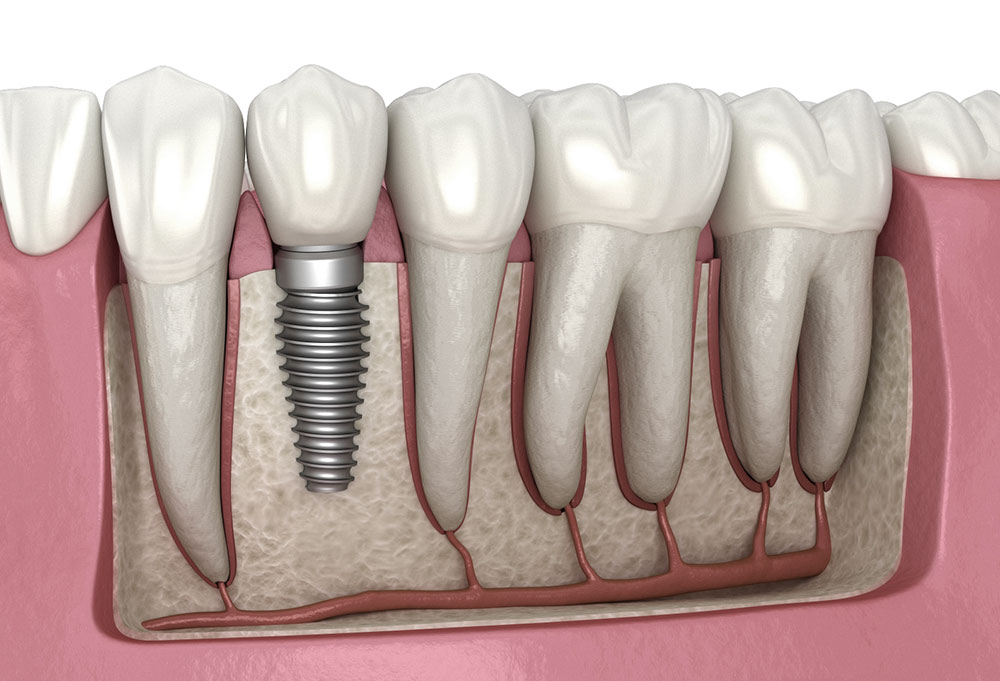
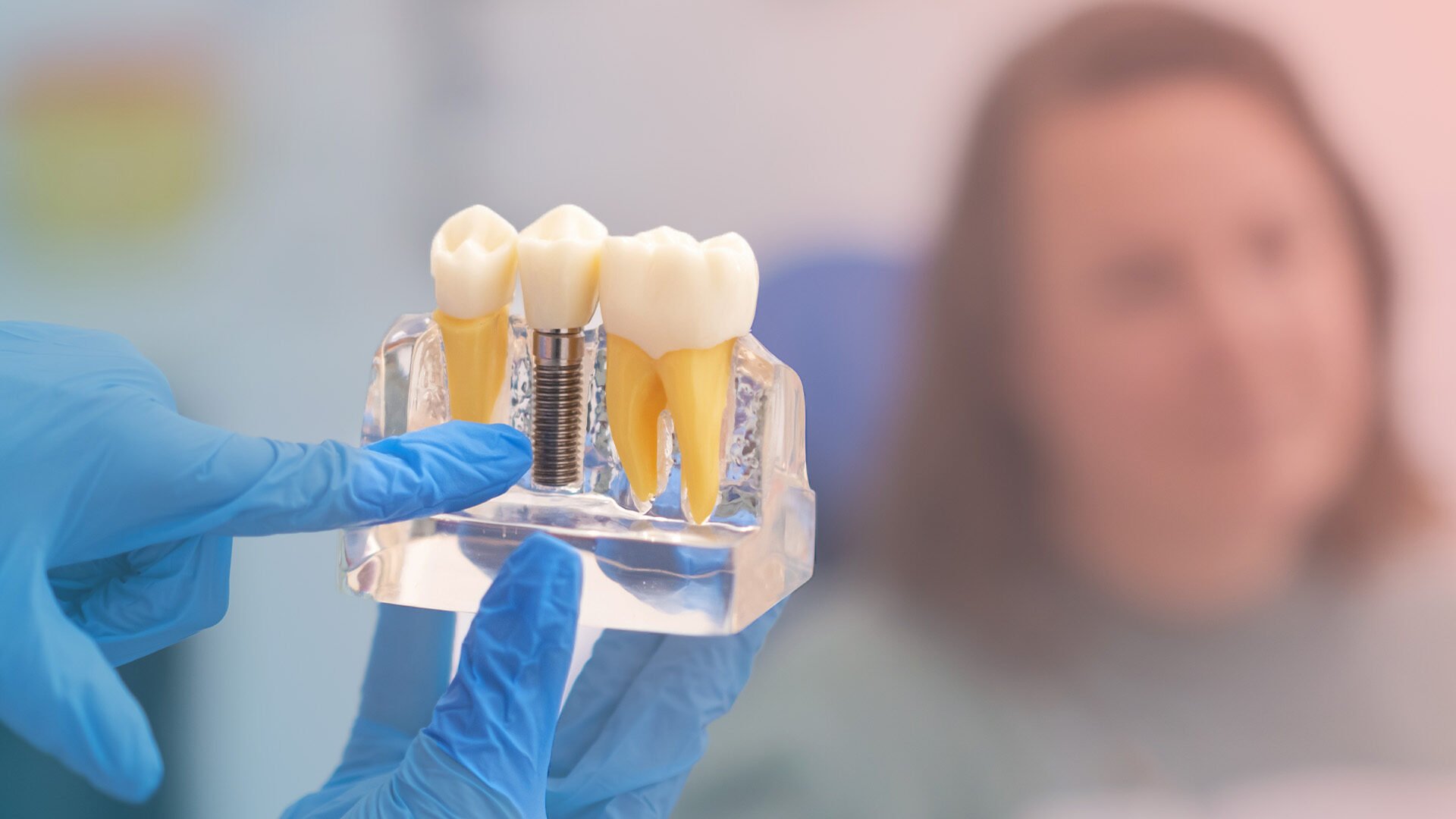
A dental abutment is a small connector piece used in dental implant procedures. It is placed on top of a dental implant (a titanium screw placed in the jawbone), and serves as the anchor for a crown, bridge, or denture.
Key Functions of a Dental Abutment
A dental abutment has four key functions in the restoration.
- Connects the implant to the visible tooth restoration
- Provides mechanical support and stability
- Ensures a secure fit for long-term functionality
- Maintains the correct alignment of dental prosthetics
Types and Materials of Dental Abutments
Types of Dental Abutments
Understanding the different types of abutments can help both patients and clinicians make informed choices.
Healing Abutment (Temporary Abutment)
Also known as a healing cap, this abutment is placed immediately after implant surgery to promote soft tissue healing.
Permanent Abutment
Once healing is complete, a permanent abutment is placed to support the final crown or prosthesis.
Custom Abutment
Fabricated specifically for the patient's mouth using digital impressions or traditional molds, custom abutments provide enhanced esthetics and fit.
Stock Abutment
Pre-manufactured by implant companies, stock abutments are standardized in shape and size and are often used in straightforward cases.
Abutment Materials: Which One Is Right for You
The material of an abutment plays a vital role in both the functionality and aesthetic outcome of the dental restoration.
Titanium Abutments
Titanium abutments are widely used. They are biocompatible, strong and durable.
Zirconia Abutments
Zirconia abutments are tooth-colored for a natural appearance and resistant to corrosion, which makes them suited to anterior (front) teeth.
Gold Alloy Abutments
Gold alloy abutments are less common but durable, and they are used in specific prosthodontic cases.
Choosing the Right Material
Biologically, the common abutment materials behave alike. A systematic review of 12 randomised trials found no difference in peri-implant marginal bone level or probing depth between titanium and zirconia or alumina abutments at 1 year or at 5 years (PubMed 37750527). The difference appears mechanically: across 15 randomised trials covering 362 abutments in 364 subjects, internally connected zirconia abutments survived at 95.4% against 100% for titanium, while zirconia gave a better esthetic result in thin gingival phenotypes (PubMed 37417063).
Your dentist will choose the abutment material based on these factors.
- Location in the mouth
- Aesthetic needs
- Bite force and functional requirements
- Gum tissue type and thickness
Dental Abutment Placement Methods
The Abutment Placement Procedure: Step-by-Step
Understanding the abutment procedure can ease anxiety and increase patient cooperation.
Step 1: Implant Placement
- Titanium post inserted into the jawbone
- Healing time: 3 to 6 months (osseointegration)
Step 2: Healing Abutment Placement
- Helps gum tissue heal around the implant
Step 3: Permanent Abutment Placement
- After healing, a custom or stock abutment is attached
Step 4: Crown or Prosthesis Attachment
- The final restoration is placed and adjusted for fit and function
What Is an Abutment Tooth
An abutment tooth refers to a natural tooth used to support a dental prosthesis like a bridge or partial denture.
Bridge Example
In a dental bridge, the two natural teeth adjacent to a missing tooth are called abutment teeth. They are crowned and support the bridge between them.
Implant-Supported vs. Tooth-Supported Abutments
| Feature | Implant-Supported Abutments | Tooth-Supported Abutments |
|---|---|---|
| Support Base | Dental Implant (artificial root) | Natural Tooth |
| Procedure Type | Surgical | Conservative (if bridge) |
| Durability | High (with good bone integration) | Depends on tooth health |
| Common Usage | Crowns, bridges, overdentures | Bridges, removable partial dentures |
CAD/CAM Technology in Abutment Design: Precision and Customization
Modern dental technology has changed how abutments are made. With CAD/CAM systems, dentists can create custom abutments that match the patient's unique oral anatomy.
Benefits of CAD/CAM Abutments
CAD/CAM abutments are tailored for a precise fit and shaped to support the soft tissue around them. They give a closer esthetic match, especially in the front teeth, and allow faster turnaround and digital storage for future reference.
This approach is especially useful for patients with complex implant positions or those requiring high esthetic results.
Screw-Retained vs. Cement-Retained Abutments: Which One Is Better
When placing crowns on abutments, there are two primary attachment methods: screw-retained and cement-retained.
Screw-Retained Crowns
Screw-retained crowns are easy to remove and repair and carry a lower risk of cement-related irritation, but the visible screw access may affect esthetics in front teeth.
Cement-Retained Crowns
Cement-retained crowns offer better esthetics as there is no visible access hole. They are slightly more challenging to remove if needed, and they carry a risk of excess cement causing peri-implant inflammation.
The choice depends on the implant's location, esthetic requirements, and the dentist's clinical judgment.
Dental Abutment Placement Timing
Immediate vs. Delayed Abutment Placement: Timing Matters
Abutments can be placed either immediately after implant surgery or after a healing period.
Immediate Placement
Immediate placement reduces overall treatment time, and it requires good bone quality and primary implant stability.
Delayed Placement
Delayed placement allows better soft tissue shaping and reduces risk in complex or grafted sites.
Your oral surgeon will decide the suitable approach based on your healing potential and surgical conditions.
Visual Guide: What Does an Abutment Look Like
Many patients ask what a dental abutment actually looks like. A simplified visual description follows.
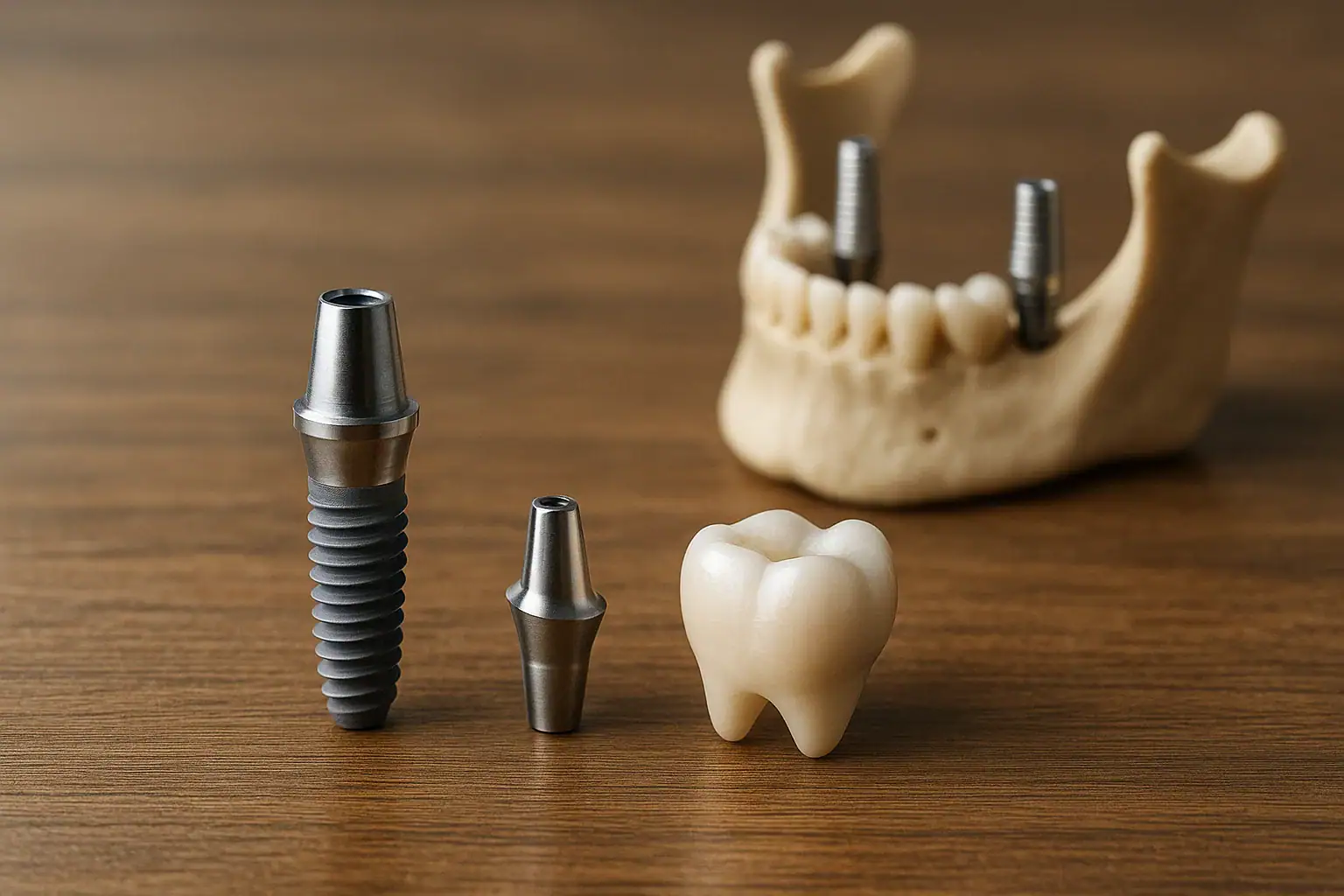
- Healing Abutment: Short, round-topped cap helps gums form a collar
- Final Abutment: Tapered metal or ceramic post fits under the crown
- On X-rays: Appears as a connector between the implant and the visible restoration
Understanding these visuals can help reduce anxiety and increase treatment acceptance.
Caring for the Abutment Area: Hygiene Tips
Proper care of the abutment and surrounding tissue is essential for long-term success.
Daily Care
Daily care includes the following steps.
- Brushing around the abutment with a soft toothbrush
- Using interdental brushes to clean the junction area
- Water flossers to reach under bridges or fixed dentures
- Antibacterial mouth rinses if recommended by your dentist
Regular dental cleanings will also help detect early signs of irritation or peri-implant mucositis.
If proper care isn't taken or there is bone loss, abutments can loosen and the tissues around them can become infected. Regular dental checkups help catch both early.
What Happens if the Abutment Tooth Fails
In cases involving tooth-supported bridges, if the abutment tooth (natural tooth) decays, fractures, or develops gum disease, the entire bridge may fail. That's why abutment teeth must be structurally sound, dentists often recommend crowns before bridge attachment, and preventive care and monitoring matter.
Abutting Structures in Dental Care
The Role of Abutting Structures in Dental Success
Proper alignment of abutting teeth and prosthetics helps prevent food impaction, reduce gum inflammation and achieve a natural look and feel.
When a dental crown abuts adjacent teeth with the right contact and contour, it supports both function and esthetics.
The term abutment may sound highly technical, but its role in modern restorative dentistry is foundational. Whether it's connecting a crown to an implant or anchoring a dental bridge, abutments abut, that is, they connect, support, and stabilize. Choosing the right type of abutment and caring for it properly supports the longevity of your dental work. If you're considering a dental implant or bridge, talk to your dentist about the abutment options that suit your specific needs.
Let's plan the right treatment together.
Free Assessment→- 1.Laleman I, Lambert F, Gahlert M, Bacevic M, Woelfler H, Roehling S. The effect of different abutment materials on peri-implant tissues-A systematic review and meta-analysis. Clin Oral Implants Res 2023;34 Suppl 26:125-142. PubMed 37750527
- 2.Thakare V, Chaware S, Kakatkar V, Darekar A. An insight performance of zirconia implant abutment: A systematic review and meta-analysis of randomized controlled clinical trial. Indian J Dent Res 2023;34:80-86. PubMed 37417063