
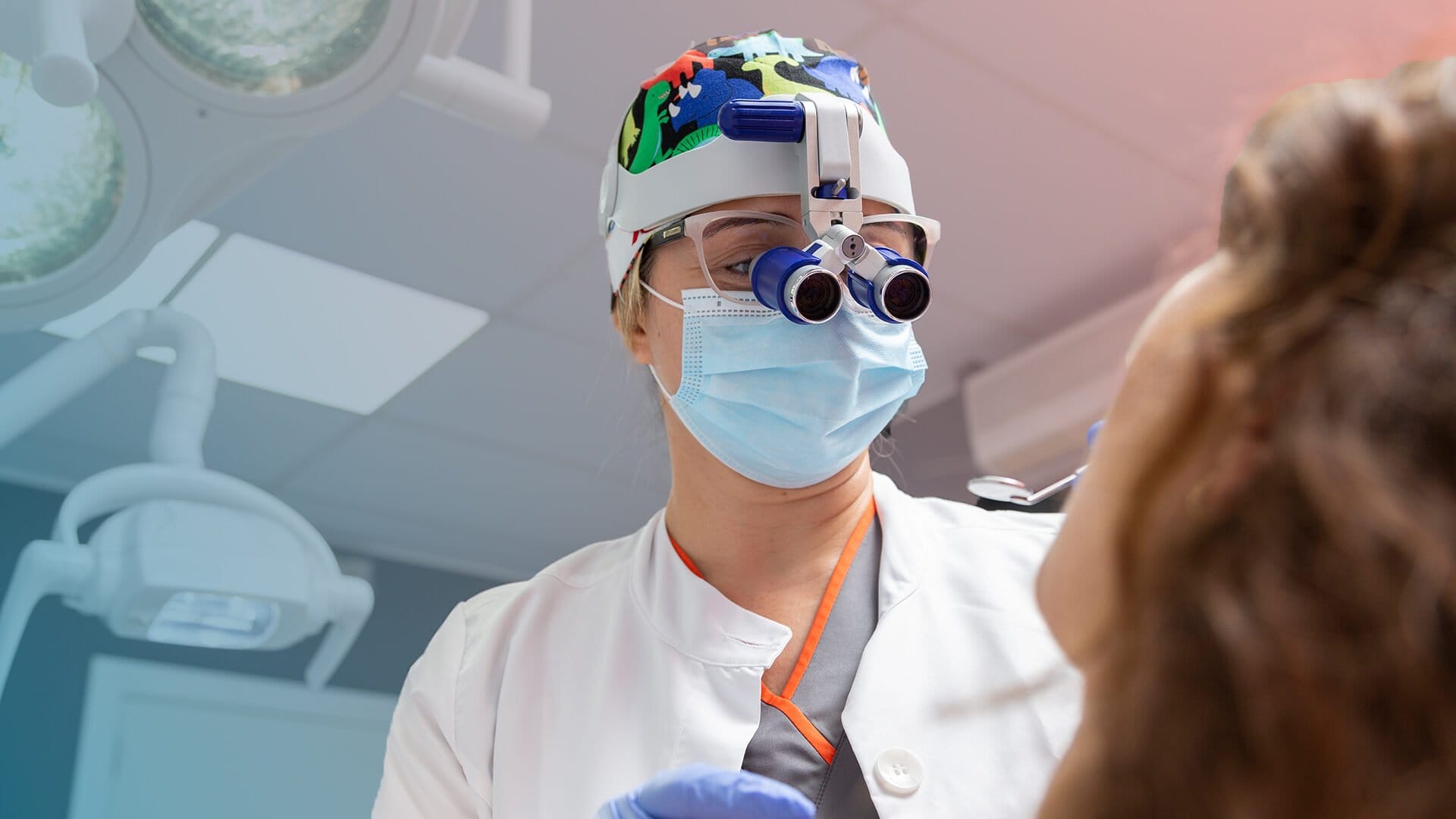
A dental check-up is a short examination that looks for early decay, assesses gum health, screens the soft tissues for abnormal changes and, where needed, takes radiographs, so that problems are found while they are still simple to treat. Six months is the conventional interval and the dentist adjusts it to individual risk. That interval has been tested directly: the INTERVAL randomised trial followed 2,372 adults across 51 UK dental practices for four years and found no evidence of a difference in gum bleeding between six-month, risk-based and 24-month recalls (PubMed 33215986). Children are seen first when the first tooth appears, or by age one at the latest.
- 01A check-up is not only a clean: early caries detection, gum assessment, soft-tissue screening for oral cancer and radiographs happen in the same visit.
- 02The INTERVAL randomised trial, 2,372 adults across 51 UK dental practices over 4 years, found no evidence of a difference in gingival bleeding between six-month, risk-based and 24-month recall intervals (PubMed 33215986).
- 03Recall interval is therefore a risk decision rather than a fixed rule. Six months remains the common default and higher-risk patients are seen more often.
- 04Caught early, decay is handled with a simple filling; left to reach the nerve it becomes pain, more invasive treatment and eventually tooth loss.
- 05In children the first visit is at the first tooth or by age one, both to monitor jaw and tooth development and to prevent dental fear from taking hold in adulthood.
Dental health is an important part of our overall health, and regular dental checkups play a critical role in maintaining this health. However, many people only go to the dentist when they are in pain or have a serious problem. However, regular checkups are necessary for preventing tooth and gum disease , early diagnosis, and maintaining a healthy mouth. In this article, we will discuss in detail why regular dental checkups are important, how often they should be done, and the advantages these checkups offer.
/ The Importance of Dentist Checkups
Regular dentist checkups are not only about cleaning your teeth; they also help in the early diagnosis of many serious diseases. Here are some factors that emphasize the importance of regular checkups:
- Prevention and Early Diagnosis of Tooth Decay
If not detected at an early stage, tooth decay can progress and cause serious pain and tooth loss. During regular checkups, the dentist can detect cavities at an early stage and treat them with simple procedures such as fillings. Noticing cavities at an early stage helps protect dental health without the need for more serious treatments in the future.
- Prevention of Gum Disease
Gum disease is one of the biggest causes of tooth loss. Diseases such as gingivitis and periodontitis in advanced stages can cause tooth loss. Gum disease can be prevented with tartar cleaning and regular checkups. In addition, healthy gums play an important role in maintaining general oral health.
- Early Detection of Oral Cancer
Oral cancer is a treatable disease when diagnosed early. Early intervention can be provided by noticing abnormal formations or changes in the mouth during dental check-ups. Oral cancers can often be fatal when detected late, so regular dental check-ups are vital. A simple rule from the NHS helps between visits: any mouth ulcer that lasts longer than 3 weeks should be checked by a dentist or GP, because although most ulcers, including recurring canker sores, are harmless, a long-lasting one is sometimes a sign of mouth cancer. A simple rule from the NHS helps between visits: any mouth ulcer that lasts longer than 3 weeks should be checked by a dentist or GP, because although most ulcers, including recurring canker sores, are harmless, a long-lasting one is sometimes a sign of mouth cancer.
- Effects on General Health
Oral health is directly linked to general health. Periodontal disease can be associated with serious health problems such as heart disease and diabetes. Gum disease can increase the risk of heart disease by increasing inflammation in the body. Regular check-ups help reduce the risk of these diseases.
/ The Importance of Dentist Checkups in Children
Children's dental health is of great importance for their general health and future dental structure. Dental health habits acquired at an early age ensure that they have a healthy smile throughout their lives. Here are some reasons that emphasize the importance of regular dentist checkups in children:
- Protecting the Health of Baby Teeth
Baby teeth support the development of the child's jaw and ensure that permanent teeth emerge properly. Decay in baby teeth can also damage permanent teeth in later ages. Therefore, regular checkups of baby teeth and early diagnosis of decay are of great importance.
- Monitoring Dental Development
Children's teeth change and develop over time. If orthodontic problems or tooth alignment disorders are detected early, they can be corrected more easily in later ages. Dentists can monitor children's dental development and identify situations that require early intervention.
- Developing a Tooth Brushing Habit
Children’s awareness of dental health can be supported by dentist visits. Dentists can help parents and children gain healthy dental habits by teaching them proper tooth brushing techniques.
- Preventing the Fear of the Dentist
Dentist fear usually begins in childhood and can continue into adulthood. Children having positive experiences with the dentist at an early age can prevent this fear. Regular visits help children get used to the dentist and feel comfortable.
/ Frequently Asked Questions
- How often should dental check-ups be done?
Generally, dental check-ups should be done at least twice a year. However, depending on the individual's dental health status, the doctor may recommend more frequent check-ups.
- At what age should regular dental check-ups begin?
In children, the first dental visit is usually done after the first tooth appears or by the age of 1 at the latest. In adults, it is recommended that regular check-ups begin at an early age.
- What procedures are performed during dental check-ups?
Dental check-ups usually include teeth cleaning, caries control, gum health assessment and X-rays.
- How often should tartar cleaning be done?
Depending on tartar formation, it is usually recommended to do it once or twice a year.
- Can going to the dentist completely prevent tooth decay?
Regular check-ups ensure early diagnosis of cavities and prevent cavities to a large extent with proper oral care, but personal hygiene habits are also important.
- Are dental check-ups a painful procedure?
No. A routine check-up rarely causes any discomfort. However, some procedures may cause mild discomfort.
Regular dental check-ups are of great importance for a healthy mouth and teeth structure. Don't forget to see your dentist regularly to protect your oral health!
Let’s plan the right treatment together.
Free Assessment→