
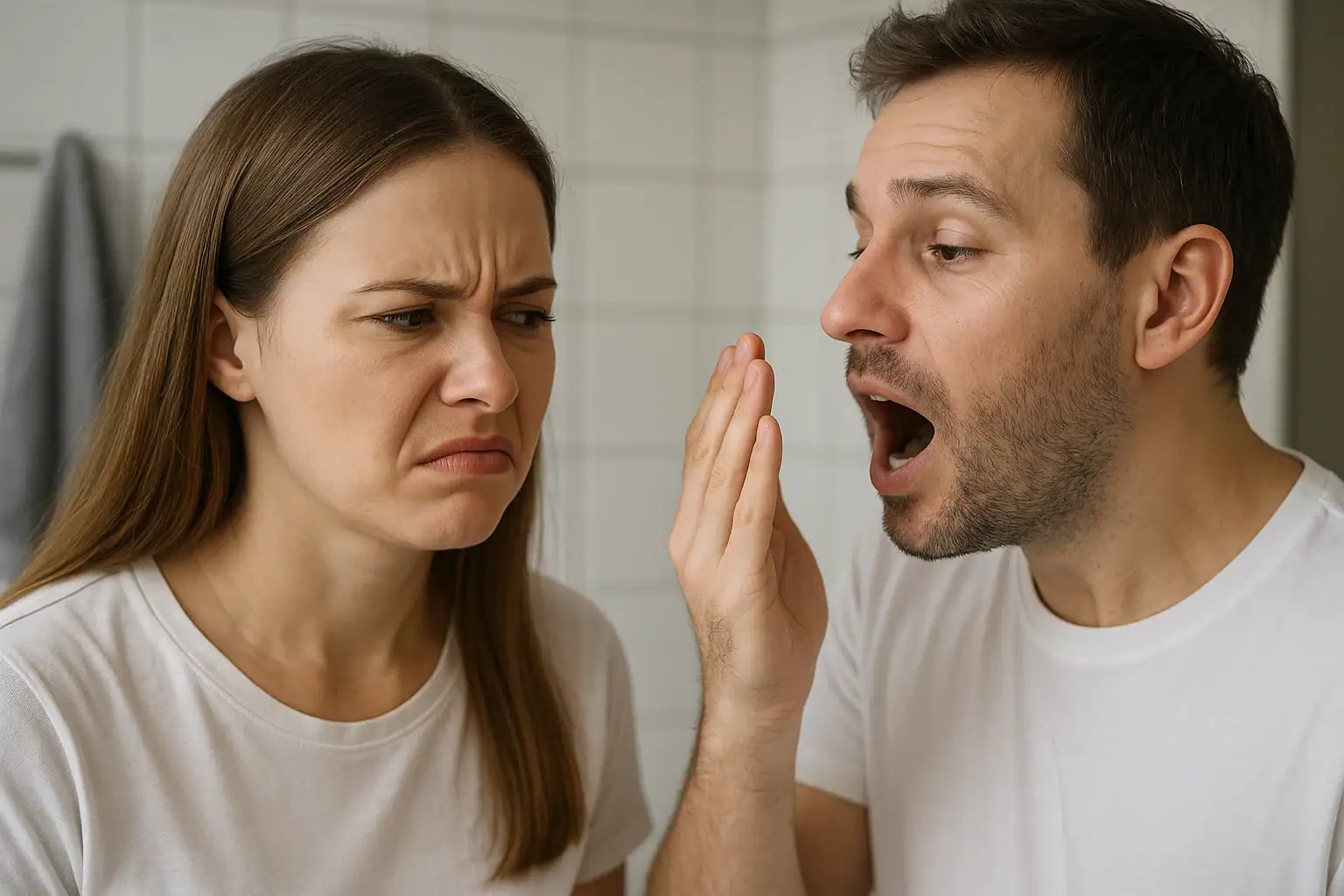
Halitosis is the clinical term for persistent breath odour, and in most cases it is produced inside the mouth: bacteria on the back of the tongue and inside periodontal pockets break proteins down into volatile sulfur compounds. The Cochrane review of interventions for halitosis notes that 50% to 60% of the world population has experienced the problem, and pooled 44 trials with 1809 participants while rating the evidence for any single mouthrinse, toothpaste or chewing gum as low to very low certainty (PubMed 31825092). In practice tongue cleaning and gum treatment come first, rinses second.
- 01Three clinical categories are distinguished: genuine halitosis with objectively measurable odour, pseudo-halitosis where others detect nothing, and halitophobia that persists after successful treatment.
- 02The odour molecules are volatile sulfur compounds, chiefly hydrogen sulfide, methyl mercaptan and dimethyl sulfide, produced from food debris, saliva proteins and shed cells.
- 03Cochrane pooled 44 randomised trials with 1809 participants and graded the evidence low to very low certainty for every intervention compared, so no rinse can be presented as the answer (PubMed 31825092).
- 04A meta-analysis of 8 trials covering 345 patients found photodynamic therapy reduced hydrogen sulfide more than tongue scraping immediately after treatment, but with no significant difference at 7, 14, 30 or 90 day follow-up (PubMed 36585474).
- 05Odour persisting beyond two weeks despite tongue cleaning, interdental cleaning and brushing is the point at which gum disease, tonsil stones, reflux or a metabolic cause is investigated.
What Halitosis Means and Where the Odour Comes From
Halitosis is the clinical term for persistent unpleasant breath odour, and in most people it starts inside the mouth. The word combines the Latin halitus, meaning breath, with the Greek suffix for a condition. Everyone has stronger breath on waking, after a garlic-heavy meal or after a long stretch without drinking water; halitosis describes odour that persists through the day or keeps returning despite normal brushing.
The problem is common. The Cochrane review of interventions for halitosis notes that 50% to 60% of the world population has experienced it, and that it can lead to social stigma and loss of self-confidence (PubMed 31825092).
Clinicians separate three situations. Genuine halitosis means the odour can be objectively detected by another person or a measuring device. Pseudo-halitosis means the person is convinced they have bad breath but no one else can detect it. Halitophobia describes a persistent fear of bad breath that continues after successful treatment. Knowing which of these applies changes the next step, because a mouthrinse cannot help someone whose breath is already normal.
The odour itself comes from chemistry. Bacteria in the mouth break down proteins from food debris, saliva, plaque and shed cells, and release volatile sulfur compounds. The main ones are hydrogen sulfide, which smells of rotten eggs, methyl mercaptan, with a cabbage-like smell, and dimethyl sulfide. Most treatments work in one of three ways: they reduce the number of bacteria, change the environment those bacteria live in, or neutralise the gases they produce.
Oral Causes Behind Most Cases
When a cause is found, it usually lies in the mouth, and most often in the coating on the tongue. In a series of 2000 consecutive patients seen at a multidisciplinary bad breath clinic in Belgium, an oral cause was found in 76% of patients (PubMed 19811581). Tongue coating alone accounted for 43%, gingivitis or periodontitis for 11%, and a combination of the two for 18% (PubMed 19811581). The same patients had carried their complaint for a mean of 7 years before attending (PubMed 19811581).
Tongue coating is a film of bacteria, food particles and shed cells on the upper surface of the tongue, thickest on the back third where the surface is rough and hard to reach. A toothbrush passes over the front of the tongue but rarely cleans the back, which is why people who brush carefully can still have odour.
The second reservoir is the gums. Inflamed gums and the pockets that form in gum disease shelter oxygen-avoiding bacteria that produce sulfur compounds in quantity.
Dry mouth is the third factor. Saliva rinses bacteria away and dilutes the gases they release, so anything that reduces it raises odour. Common causes are dehydration, mouth breathing, stress, caffeine, alcohol, smoking and medications such as antihistamines, antidepressants and diuretics. Morning breath is the everyday version of this effect, because saliva flow drops during sleep.
Smaller local sources add up: open cavities, leaking fillings, gaps where food gets trapped, and dentures, aligners or retainers that are not cleaned thoroughly. Tonsil stones and post-nasal drip can coat the back of the tongue from above and keep the problem going even when the teeth are clean.
Extraoral Causes and Their Warning Signs
A minority of cases start outside the mouth, and these matter because the odour can be the first clue to another condition. In the 2000-patient clinic series, ear, nose and throat or other extraoral causes were found in 4% of patients (PubMed 19811581). A review of blood-borne halitosis estimates that about 10% of all genuine halitosis cases are attributed to extraoral processes (PubMed 23579164).
Ear, nose and throat problems are the familiar group: chronic sinusitis, recurrent tonsillitis, tonsil stones and a deviated septum that forces mouth breathing. Gastroesophageal reflux can produce a sour or bitter smell together with heartburn, although the stomach is a much less common source than many people assume.
Some systemic conditions have a recognisable odour. Uncontrolled diabetes can give a fruity or acetone smell, liver failure a sweet and musty one known as fetor hepaticus, and kidney failure an ammonia-like smell. In blood-borne halitosis, odour molecules travel in the blood and are released through the lungs; the review above describes dimethyl sulfide as the main compound involved and notes recent evidence that blood-borne odour may outnumber nasal and throat sources among extraoral cases (PubMed 23579164).
Diet plays a part as well. Very low-carbohydrate diets and fasting produce ketones with an acetone note. Garlic, onion, strong spices and alcohol release compounds that are exhaled for hours after a meal. Smoking and vaping dry the tissues and add their own smell. When odour persists after a thorough oral routine and a dental examination has found nothing to explain it, these causes are investigated next.
Fast Relief Before a Meeting or Appointment
For quick improvement the steps are simple and take a few minutes: clean the tongue, clean between the teeth, brush, rinse and restart saliva flow.
Start with the tongue. Scrape from back to front five to ten times with a metal or plastic scraper, rinsing the scraper between strokes. Then clean between the teeth with floss or interdental brushes, because plaque trapped between teeth produces odour that brushing alone does not reach. Brush for two minutes with a fluoride toothpaste, then rinse with an alcohol-free mouthrinse. Common active ingredients in rinses aimed at breath odour are cetylpyridinium chloride, zinc salts, chlorine dioxide and, for short courses on a dentist's advice, chlorhexidine.
Next, restore moisture. Drink water and chew sugar-free xylitol gum or use sugar-free lozenges to stimulate saliva. For the rest of the day it helps to avoid the usual amplifiers: garlic, onion, strong coffee, alcohol and tobacco.
If you wear a retainer, aligner or denture, clean it at the same time. Appliances collect their own biofilm and hold odour independently of the teeth. Brush them gently or soak them in a cleaner recommended for that appliance, and avoid hot water, which can warp plastic.
This sequence handles most everyday situations. Its effect is temporary, because the bacterial film re-forms within hours.
What the Evidence Says About Rinses, Toothpastes and Gum
Many products are sold for bad breath, and the research behind them is thinner than their marketing suggests. The Cochrane review pooled 44 trials with 1809 participants and compared mechanical tongue cleaning, chewing gums, toothpastes, mouthrinses, topical agents, tablets and combinations (PubMed 31825092). It found low- to very low-certainty evidence for the interventions tested and could draw no conclusion about the superiority of any single product or concentration (PubMed 31825092). Most trials followed patients for only one to four weeks, and a single trial reported three months of follow-up (PubMed 31825092).
Within that uncertainty some signals point the same way. For brushing plus a cetylpyridinium chloride mouthwash compared with brushing alone, Cochrane rated the evidence as low certainty and recorded a reduction in dentist-scored odour (PubMed 31825092). A separate systematic review of mechanical tongue cleaning found that all seven experiments in its five included publications showed a positive effect of tongue brushing or scraping added to toothbrushing on breath odour measures (PubMed 20961381). The same review noted that data on chronic halitosis were insufficient (PubMed 20961381).
Newer approaches are being tested. A meta-analysis of photodynamic therapy included 8 studies with 345 patients and found that it lowered hydrogen sulfide more than tongue scraping immediately after treatment (PubMed 36585474). At follow-up the difference between the groups was no longer significant (PubMed 36585474).
The practical reading is that no rinse, toothpaste or gum can be presented as a cure. Mechanical cleaning of the tongue and between the teeth addresses the source, and rinses add a shorter-lived chemical effect on top of it. Alcohol-based rinses can dry the mouth, which works against the goal, so alcohol-free formulations are the usual choice.
Daily Routine and Long-Term Prevention
Lasting control comes from a daily routine that keeps the bacterial load low and the mouth moist, combined with treatment of any dental problem that feeds the odour.
In the morning, clean the tongue, brush with fluoride toothpaste, clean between the teeth and rinse with an alcohol-free product. Take medications with water. During the day, drink water regularly and chew xylitol gum after meals, especially if you speak a lot or breathe through your mouth. At night, brush, clean between the teeth, clean the tongue again and clean any appliance before storing it dry or in the solution your dentist recommended.
Dry mouth needs its own plan. Limit caffeine and alcohol, and stop smoking or vaping; if you are quitting, nicotine replacement and professional support increase the chance of success. Saliva substitutes and sugar-free lozenges help when flow stays low. If a medication is the cause, ask the prescribing doctor whether an alternative or a dose change is possible.
Some situations call for small adjustments. Children and teenagers with bad breath most often have tongue coating, mouth breathing or nasal and tonsil problems, so tongue cleaning and a check for allergies or enlarged tonsils are the first steps. Aligner and retainer wearers should rinse the appliance every time it comes out and brush it with mild soap, since toothpaste scratches the surface. People on low-carbohydrate diets can reduce acetone odour by drinking more water and using xylitol gum.
Regular professional cleaning removes hardened deposits that home care cannot, and treating active gum disease with deep cleaning of the root surfaces removes one of the main bacterial reservoirs.
How Dentists Assess Bad Breath
A dental assessment starts with a conversation and an examination, and aims to answer two questions: is there measurable odour, and if so, where does it come from.
The history covers diet, medications, dry-mouth symptoms, nasal problems, reflux and how long the complaint has lasted. The examination looks at the tongue coating, gum pockets and bleeding, cavities, the edges of existing fillings and crowns, and any appliances.
Odour can then be measured in several ways. In organoleptic assessment a trained clinician smells exhaled air from the mouth and the nose and scores its intensity; the 2000-patient clinic series relied on scores from a trained and calibrated judge together with a portable sulfide monitor (PubMed 19811581). Portable sulfide monitors measure volatile sulfur compounds directly but can miss odours that do not contain sulfur. Gas chromatography separates individual odour molecules and is used mainly in research and specialised clinics.
Assessment also identifies people whose breath is normal. In the same clinic series, pseudo-halitosis or halitophobia was diagnosed in 16% of patients (PubMed 19811581). For these patients reassurance, an explanation of the measurement and, where needed, psychological support help more than another product.
When the mouth does not explain the odour, referral follows the likely source: an ear, nose and throat specialist for tonsils and sinuses, a gastroenterologist for reflux, and a medical work-up when diabetes, liver or kidney disease is suspected.
When to See a Dentist or Doctor
Book a dental appointment if odour lasts more than two weeks despite a complete daily routine of tongue cleaning, interdental cleaning and brushing. That is the point at which gum disease, tonsil stones, reflux or a metabolic cause should be looked for.
Certain signs shorten that wait. Bleeding gums, teeth that feel loose, or pain when swallowing point to an active problem in the mouth or throat and deserve an earlier visit. One-sided nasal blockage, frequent tonsil stones and long-standing sinus symptoms suggest an ear, nose and throat assessment. Dentures, aligners or retainers that keep smelling despite proper cleaning should also be checked, since a worn or damaged surface can hold bacteria that cleaning does not remove.
Some signs point beyond dentistry. Unexplained weight loss, excessive thirst and frequent urination can indicate diabetes. Yellowing of the eyes or skin can indicate liver disease. Swelling and persistent fatigue can indicate kidney problems. In these situations the odour is a clue to a medical condition, and a doctor's assessment comes before dental treatment.
For most people the path is straightforward: a thorough daily routine, treatment of any gum disease or dental problem found at the examination, and regular professional cleaning. Halitosis has a biological cause, and once that cause is identified it can usually be managed.
Let’s plan the right treatment together.
Free Assessment→- 1.Kumbargere Nagraj S, Eachempati P, Uma E, Singh VP, Ismail NM, Varghese E. Interventions for managing halitosis. Cochrane Database Syst Rev 2019;12:CD012213. PubMed 31825092
- 2.Wang N, Hao S, Zhang J, Yang J. Clinical efficacy of photodynamic therapy on halitosis: a systematic review and meta-analysis. Lasers Med Sci 2022;38:29. PubMed 36585474
- 3.Quirynen M, Dadamio J, Van den Velde S, De Smit M, Dekeyser C, Van Tornout M, et al. Characteristics of 2000 patients who visited a halitosis clinic. J Clin Periodontol 2009;36:970-5. PubMed 19811581
- 4.Harvey-Woodworth CN. Dimethylsulphidemia: the significance of dimethyl sulphide in extra-oral, blood borne halitosis. Br Dent J 2013;214:E20. PubMed 23579164
- 5.Van der Sleen MI, Slot DE, Van Trijffel E, Winkel EG, Van der Weijden GA. Effectiveness of mechanical tongue cleaning on breath odour and tongue coating: a systematic review. Int J Dent Hyg 2010;8:258-68. PubMed 20961381