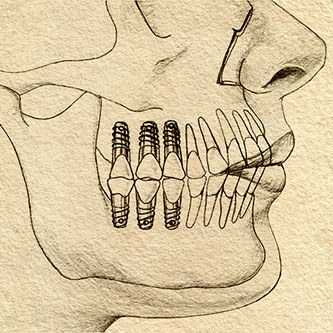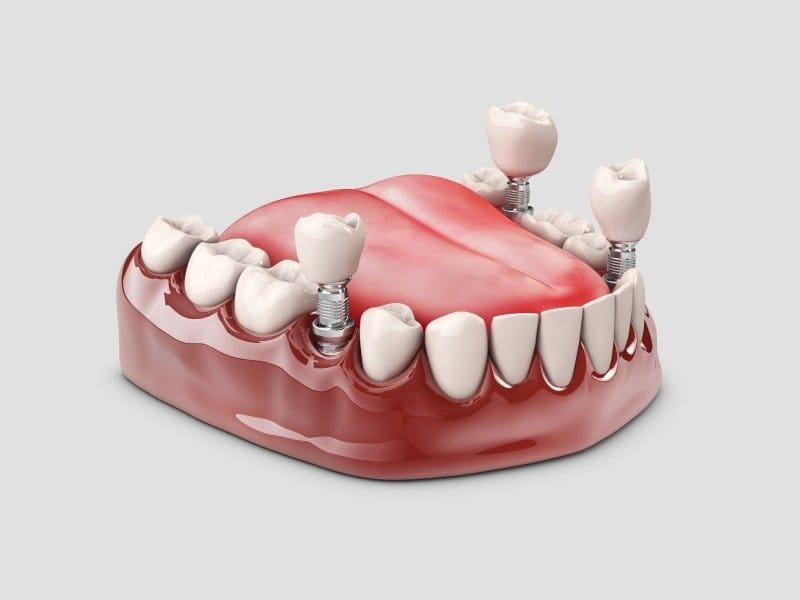
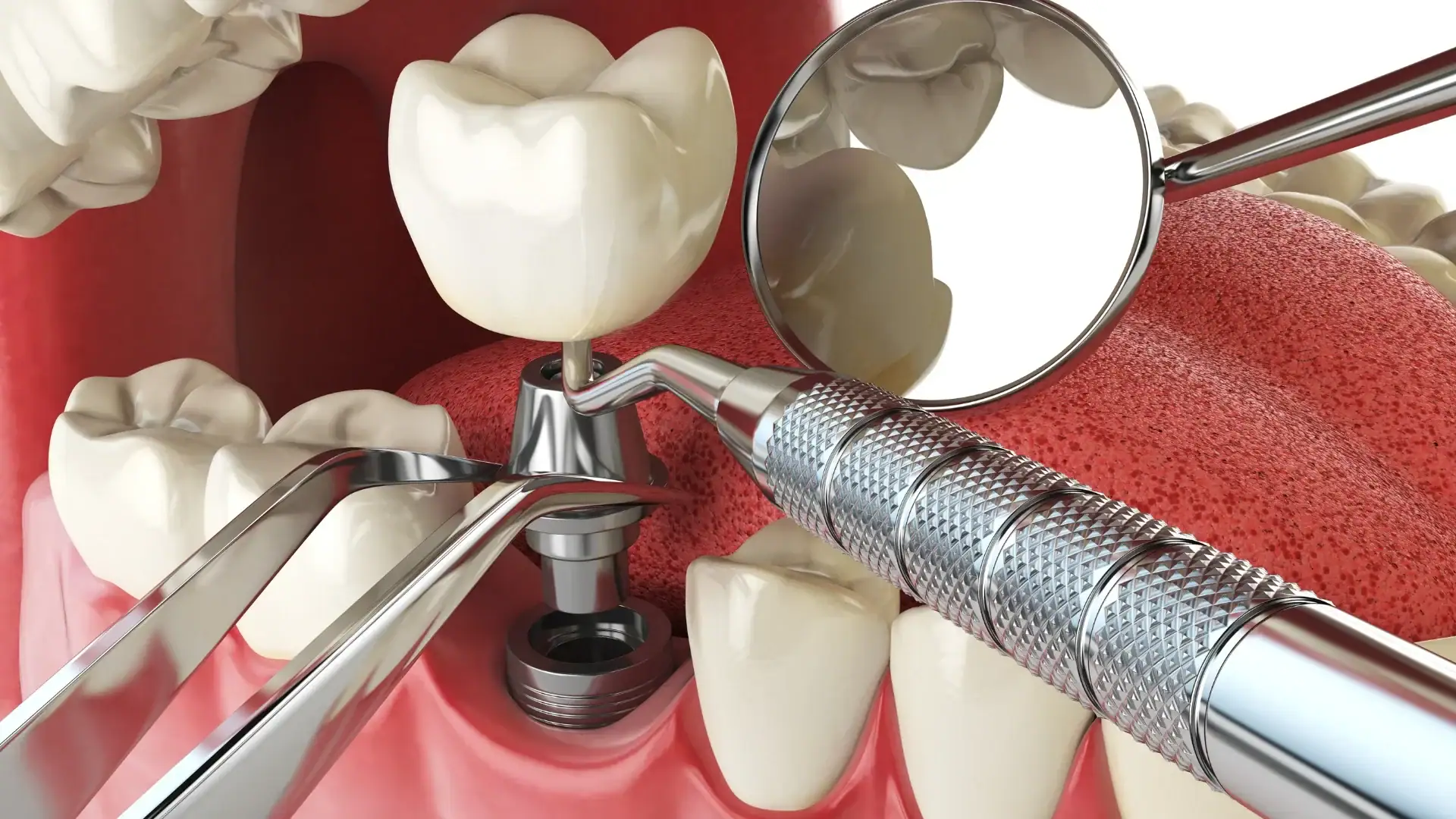
Dental implant treatment is a surgical procedure in which a titanium post is placed into the jawbone to replace a missing tooth root, and then restored with a crown, bridge or denture. It suits adults who have lost a tooth to trauma, decay or periodontal disease and who have enough jawbone to hold the post, or can be given it through grafting. A systematic review of 18 prospective studies put 10-year implant survival at 96.4 percent (95 percent CI 95.2 to 97.5), with survival of 91.5 percent in people aged 65 and over (PubMed 30904559). Treatment runs in stages: consultation, any grafting, placement, then the final restoration.
- 01An implant replaces the root, not the visible tooth: a titanium post placed in the jawbone that later carries a crown, bridge or denture.
- 02Pooled 10-year survival across 18 prospective studies was 96.4 percent, with a prediction interval of 91.5 to 99.4 percent (PubMed 30904559).
- 03Age changes the odds. In the sensitivity analysis of the same review, survival in patients aged 65 and over was 91.5 percent (p = 0.038).
- 04Implants are indicated when a tooth cannot be saved after trauma, decay or periodontal disease, and where gaps are letting neighbouring teeth drift.
- 05Bridges, partial dentures and full dentures remain the non-surgical alternatives; a bridge depends on the continued health of the neighbouring teeth that anchor it.
Are you considering ways to restore your smile? Dental implant treatment might be the perfect solution for you. Losing a tooth can feel daunting, but it doesn’t have to define your dental health or self-esteem. With advancements in dental technology, implants offer a reliable and effective way to replace missing teeth. This article will guide you through what implant treatment involves, who it's suitable for, and when it becomes essential. Dental implants can improve daily life as well as the appearance of a smile.
/ Dental Implant Treatment and Choosing Dental Implants
Dental implant treatment is a surgical procedure in which a titanium post is surgically placed into the jawbone to replace a missing tooth root. This post supports a dental crown, bridge, or denture, providing a stable, long-lasting solution for replacing missing teeth.
The process of dental implants typically involves multiple steps, including initial consultation, preparation of the jawbone through bone grafting if necessary, placement of the implant post, and attachment of the final restoration. Dental implants can provide patients with improved chewing function, restored appearance and speech, and prevent bone loss in the jaw. People taking medicines for osteoporosis can usually be considered as well: an international task force concluded in 2025 that current evidence does not link these treatments with implant failure and suggested, as a weak recommendation, that they need not be stopped before implant surgery. People taking medicines for osteoporosis can usually be considered as well: an international task force concluded in 2025 that current evidence does not link these treatments with implant failure and suggested, as a weak recommendation, that they need not be stopped before implant surgery.
- Improved appearance: Dental implants are designed to look and feel like natural teeth, giving you a more natural and attractive smile.
- Better speech: Missing teeth or ill-fitting dentures can cause slurred or mumbled speech. With dental implants, you can speak confidently without worrying about your teeth slipping or clicking.
- Enhanced comfort: Dental implants are permanently anchored in your jawbone, eliminating the discomfort and irritation that come with traditional dentures.
- Improved eating: With dental implants, you can eat your favourite foods without pain or discomfort. The strong titanium posts provide a stable base for chewing, allowing you to enjoy all types of food.
- Long-lasting solution: Dental implants are a long-term solution for missing teeth, designed to fuse with your jawbone and become a permanent part of your mouth.
- Preserve jawbone health: The underlying jawbone can deteriorate when a tooth is missing over time. Dental implants stimulate the jawbone, preventing bone loss and preserving strength and structure.
- Easy maintenance: Caring for dental implants is no different from caring for your natural teeth: regular brushing, flossing, and dental check-ups are all that is needed to maintain their health
/ Dental Implant Treatment Necessity and Benefits
Dental implant treatment becomes necessary in various situations. One common scenario is tooth loss due to trauma, decay, or periodontal disease. When a tooth can’t be saved, an implant offers a reliable replacement.
Additionally, implants can help restore your smile and functionality if you have multiple missing teeth. They prevent surrounding teeth from shifting and maintain jawbone health.
Another reason for considering implants is the discomfort associated with dentures. Many people find it challenging to manage daily. Implants provide a permanent solution that feels more natural.
Dental implants are an excellent option when you want to improve your oral health and confidence. They integrate into the jawbone like natural roots, ensuring long-term stability and longevity.
Implant treatment offers a range of benefits that can transform your dental health and overall well-being. One significant advantage is improved functionality. Implants allow you to bite and chew confidently, like natural teeth.
Another key benefit is their durability. Dental implants can last for many years with proper care, often outlasting other tooth replacement options. This longevity makes them a cost-effective solution in the long run.
Aesthetic appeal is also noteworthy. Implants are designed to look and feel like your own teeth, enhancing the beauty of your smile . They help maintain facial structure by preventing bone loss in the jaw.
Moreover, caring for implants is straightforward. Unlike dentures requiring unique cleaning solutions or adhesives, implant maintenance involves regular brushing and flossing.
Choosing implant treatment means investing in comfort and quality of life while restoring confidence in everyday interactions.
/ Alternative Options for Implant Treatment
Alternative options for implant treatment include other dental solutions.
When considering dental solutions, it's essential to explore all available options. While implant treatment offers numerous advantages, there are alternatives worth discussing.
One popular alternative is dentures. These removable appliances can replace multiple missing teeth and restore function and aesthetics quickly. They might not offer the same stability as implants but can be suitable for those on a budget or who prefer non-surgical options.
Another option is dental bridges, which require adjacent teeth for support. Bridges fill gaps created by missing teeth but rely on the health of neighbouring teeth to remain functional and secure.
Partial dentures also provide a solution for patients with some remaining natural teeth. They are designed to blend in naturally with existing dental structures while restoring chewing ability.
Each alternative has pros and cons, depending on individual circumstances like oral health, lifestyle preferences, and financial considerations. Exploring different routes helps ensure you make an informed decision tailored to your needs.
Consulting with a qualified dentist can guide you toward the best choice based on your specific situation and goals for oral health.
Let’s plan the right treatment together.
Free Assessment→- 1.Howe MS, Keys W, Richards D. Long-term (10-year) dental implant survival: A systematic review and sensitivity meta-analysis. J Dent 2019;84:9-21. PubMed 30904559
- 2.Ali DS, Khan AA, Morrison A, Tetradis S, Mirza RD, El Rabbany M, et al. Antiresorptive Therapy to Reduce Fracture Risk and Effects on Dental Implant Outcomes in Patients With Osteoporosis: A Systematic Review and Osteonecrosis of the Jaw Taskforce Consensus Statement. Endocr Pract. 2025;31(5):686-698.