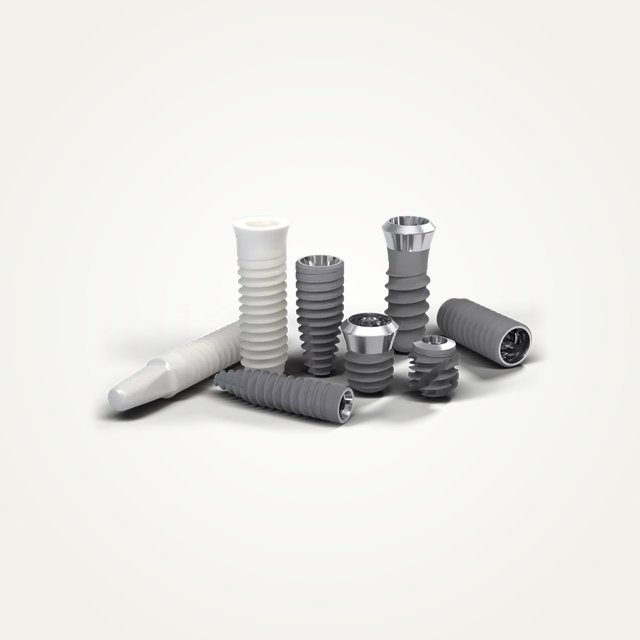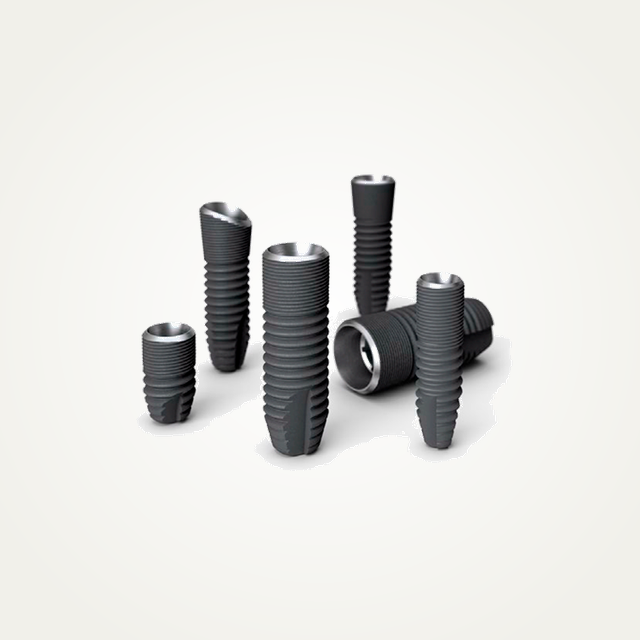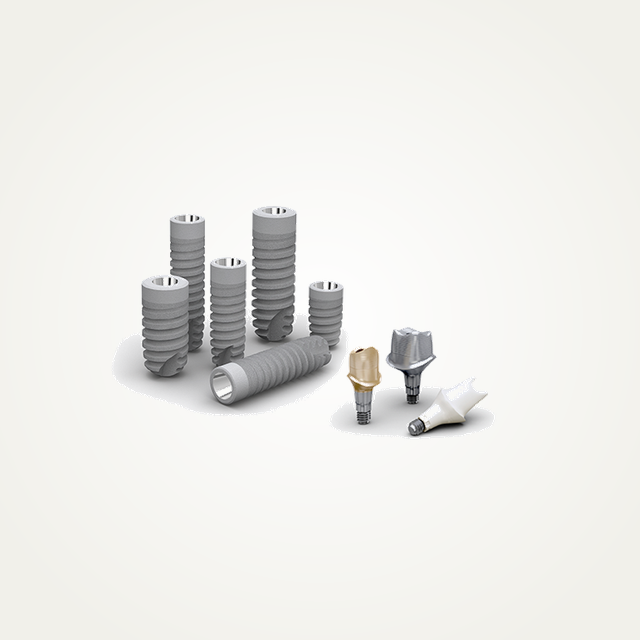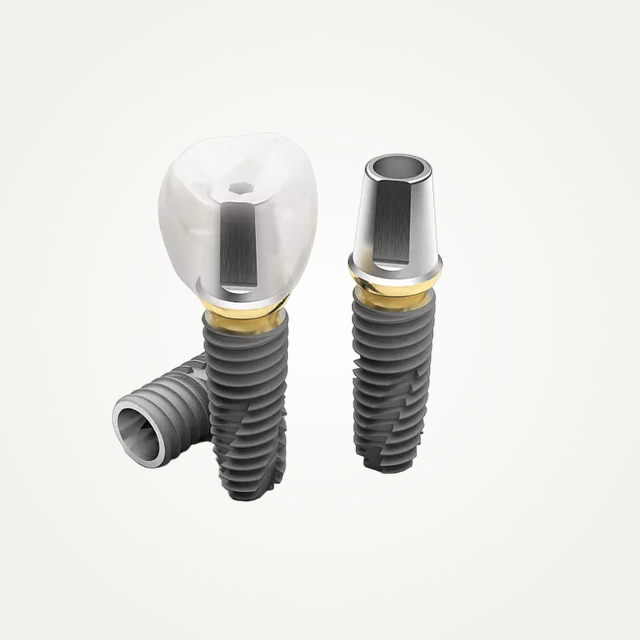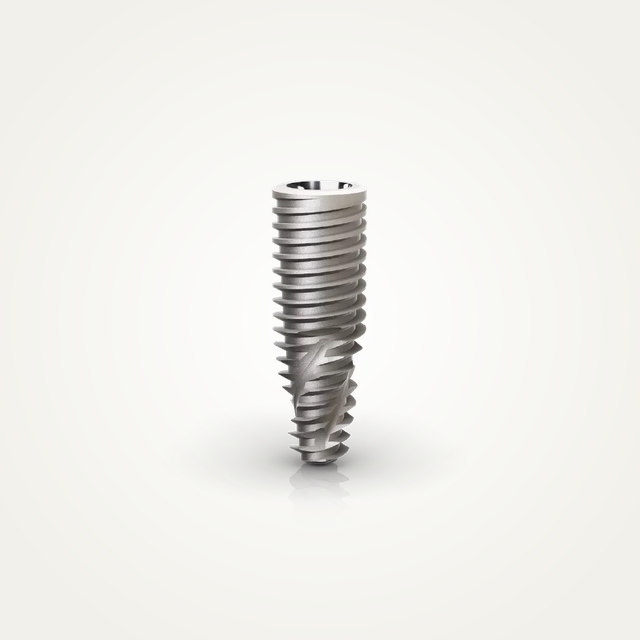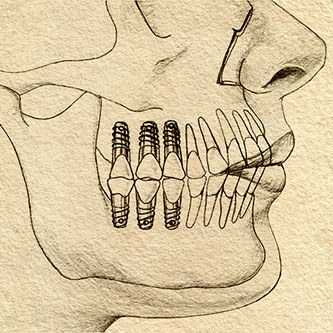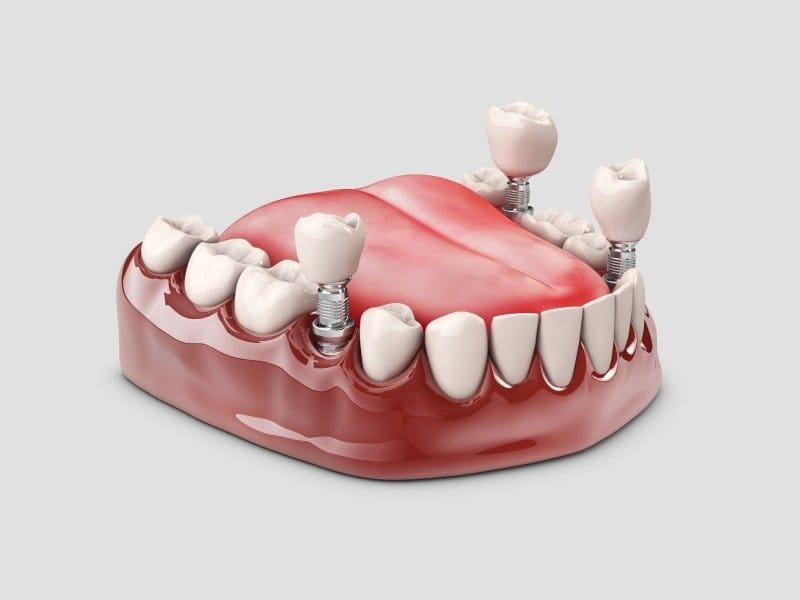
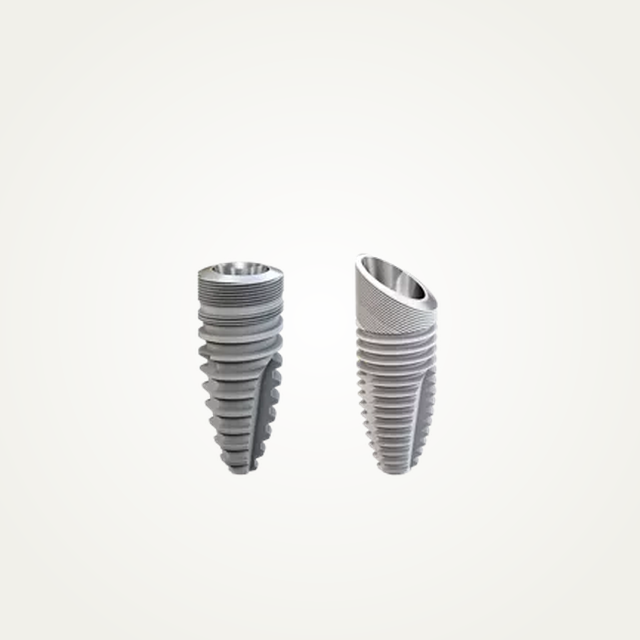
A Medentika implant is a dental implant made by Medentika GmbH, a German manufacturer founded in 2005 in Hügelsheim and now wholly owned by the Straumann Group. The company began as an abutment maker and released its first implant in 2009. It now sells four implant lines, MICROCONE, QUATTROCONE, PROCONE and MINICONE, with a corundum-blasted and acid-etched surface and a conical, platform-switched connection. The name on a quote can also mean only an abutment on another brand's implant, since its compatible series cover more than 100 connections. No independent long-term survival data exists for the brand: the longest published follow-up is 12 months, with 100% survival across 40 implants in 10 patients (PubMed 33283487).
- 01Medentika GmbH was founded in Hügelsheim, Germany in 2005 with the stated aim of supplying high-quality abutments at fair prices. Implants followed four years later, in 2009.
- 02Ownership is a three-step story, not a single date: 51% in 2013 held as an associate without control, control obtained 1 January 2017 with the stake unchanged, and 100% after the 2022 minority buy-out. All three dates come from Straumann Group's audited financial reports.
- 03The core business is compatible components. The manufacturer now claims compatibility with more than 100 implant connections and publishes the mapping by series letter, including Y for Ankylos C/X, GM for Neodent Grand Morse, L and N for Straumann, and EV, S and T for Dentsply Sirona platforms.
- 04Of ten FDA 510(k) clearances held under Medentika GmbH, nine are prosthetic components and only one is an implant: MINICONE, K200906, cleared 16 October 2020. MICROCONE, QUATTROCONE and PROCONE have no US implant clearance under this name.
- 05The longest published follow-up on Medentika implants is 12 months (40 implants, 10 patients, 100% survival, PubMed 33283487). A 16-week immediate-placement, immediate-loading study of 35 implants reported 88.6% survival (PubMed 35996220). The field-wide ten-year anchor is 96.4%, falling to 93.2% once missing follow-up is accounted for (PubMed 30904559).
You may have met the name Medentika on a treatment plan rather than in an advertisement, and want to know what you are getting. The brand's own website is published in a section written for dental professionals, and the ownership history becomes clear only from the group's financial reports. The same specifications for every system we place sit side by side on our implant comparison table.
/ Who owns Medentika, and since exactly when
Medentika GmbH was founded in 2005 in Hügelsheim, in the German state of Baden-Württemberg, at Hammweg 8-10. The manufacturer's own corporate history states the founding aim in one line: to supply high-quality abutments at fair prices.
The answer to who owns medentika is more layered than a single acquisition date. Straumann took a 51% stake in 2013, but that stake did not confer control: the group's 2016 financial report states that management assessed the position and determined it had only significant influence and not control, because of the board representation and the contractual terms, and accounted for Medentika as an associate. Control came on 1 January 2017 through a new shareholder agreement, with the participation unchanged at 51%, at which point the company was fully consolidated. The remaining minority shares were bought out in 2022, taking the group to 100%.
The group's brand portfolio lists five global brands: Straumann, Neodent, Medentika, Anthogyr and ClearCorrect, and the full structure is set out on our Straumann specification page.
The German label is accurate for manufacturing as well. Production stayed in Germany but is no longer concentrated in the founding town: the first own production site opened in Renningen near Stuttgart in 2015, a second plant followed in Calw in 2020 with a training centre, and the notified body's ISO 13485 certificate names Hügelsheim and Calw as the sites in scope. Country of manufacture, though, is not a clinical outcome, and the sections below keep the two apart.
/ Medentika began as an abutment company and added implants four years later
The sequence is the key to reading this brand. In 2005 Medentika was a prosthetic component company. In 2007 it released its first generation titanium base. Its first implant arrived in 2009, described by the manufacturer as a response to customer demand rather than a founding ambition. The first catalogue ran to 16 pages and 131 products; the current one runs to 435 pages and 5,000 products. The company reports more than three million abutments sold and distribution in over 50 countries, alongside a separate milestone of one million implants sold. Those figures are manufacturer statements with no independent verification.
The regulatory record shows the same split, and there the evidence is documentary rather than declarative. Ten 510(k) clearances are held under Medentika GmbH, all cleared as substantially equivalent. Nine of them are prosthetic components under product code NHA. Exactly one is an implant: MINICONE, K200906, cleared 16 October 2020 under product code DZE. MICROCONE, QUATTROCONE and PROCONE carry no US implant clearance under this applicant name.
The consequence for a patient is visible in the address bar. medentika.com issues a permanent redirect into a dental-professionals path on straumann.com, and the Turkish-language address, medentika.com.tr, lands in the Turkish version of the same professional section. The brand was never built to speak to patients. Clinics attached it to the patient layer, which is exactly why you met the name on a quote.
/ Group ownership is a fact about the owner, not a transfer of clinical evidence
A quote that lists Straumann, Neodent and Medentika side by side, or says only "Straumann Group implants", can leave the impression that the three are interchangeable or that the group name identifies a product. It does not, and the distinction matters more than the shared parent.
A published survival cohort on Straumann implants is evidence about Straumann implants. It is not evidence about Medentika implants, even though one company owns both. The sentence "Straumann quality on a smaller budget" is not a specification statement; it is an unverified transfer claim. Worth noting: the group's own brand page does not describe Medentika as a value or entry tier at all. Its one-line descriptor is about prosthetics perfected and implants engineered and made in Germany. The affordability framing comes from Medentika's own corporate brochure, which highlights components at affordable prices and an excellent price-performance ratio, not from the group. Read the Neodent specification alongside this one and the differences between group members are immediate.
/ What "compatible components" means, and why the series letters matter to you
Medentika's main business is making prosthetic components that fit other manufacturers' implants. The company does not hide this; it groups the range under the heading Beyond the Original and describes the method openly. It analyses the construction and material quality of individual manufacturers, takes account of practitioner feedback, adapts the design, and where necessary alters the mechanical properties in its own plants. The business line has a formal name, MPS for Multi Platform Systems, with its own implants grouped separately as IPS.
The compatibility mapping is published by series letter and is the clearest description of what this company does. L covers Straumann Bone Level and Bone Level Tapered, N covers Straumann Tissue Level, LX covers BLX, EV covers Dentsply Sirona Astra Tech OsseoSpeed EV, S covers OsseoSpeed TX, T covers XiVE S, Y covers Ankylos C/X, GM covers Neodent Grand Morse, E, F and K cover different Nobel Biocare lines, C covers Camlog, and R covers Zimmer, MIS and BioHorizons platforms, among others. The manufacturer's current site claims compatibility with more than 100 implant connections.
One consequence deserves action before treatment starts. The word Medentika on your quote can mean two different products. Either the fixture placed in your jaw is a Medentika implant, or the fixture is another brand and only the abutment on top of it is Medentika. Those are different items, different warranty chains and different spare-part routes. Asking which one applies is the single most valuable question a patient can ask about this brand. The crown material above all of this is a separate decision, covered in our crown material comparison.
/ What the literature measures about original versus non-original components
Using compatible components is common practice and it has been studied. A systematic review of original and non-original abutments across several connection geometries in single-unit restorations reports the direction plainly: original abutments showed better precision of fit, better resistance to microleakage, better prevention of rotational misfit and micromotion, and better fatigue strength, while some non-original abutments on external connections were comparable to originals for precision of fit and resistance to screw loosening (PubMed 34866275).
Two studies attach numbers. On an Astra Tech platform, the original abutment showed a gap of 0.543 micrometres against 0.708 to 0.818 micrometres for compatible non-original abutments (PubMed 35993986). A 2026 in vitro study of nine abutments on Straumann Bone Level implants found significantly greater microleakage with non-original abutments at both 5 N·cm and 35 N·cm (PubMed 42124290). Neither of those studies names Medentika, and neither is presented here as though it did.
The scale of the differences is worth keeping in proportion. A gap difference of roughly 0.3 micrometres is smaller than a red blood cell, and none of these studies establishes the threshold at which a laboratory measurement becomes a clinical outcome. What they establish is narrower and still useful: the identity of the component is a variable that can be measured, so it is a variable that should be recorded. That is the practical reason a patient quoted a compatible component should have the brand and series written down, rather than a reason to refuse one.
/ The Zurich cohort: the non-original titanium base studied was a Medentika component
Part of the non-original component literature concerns Medentika directly, and it is not skipped here. A prospective cohort of 24 patients in Zurich, each with a single missing tooth, received zirconia restorations cemented onto a non-original titanium base; the five-year report names it in the methods as Zirkon, Medentika GmbH (PubMed 35570366). The cohort has been reported four times over 7.5 years, and it produced different conclusions at different time points. All of them belong on the page.
At three years, probing depth rose from 3.0 mm to 3.8 mm and bleeding on probing from 27.1% to 51.5%, and the authors concluded that the tested non-original titanium bases should not be recommended for daily clinical use (PubMed 33616565). At five years, mean marginal bone level had moved from 0.54 mm at baseline to 0.24 mm, bone gain rather than loss, with long-term clinical performance described as favourable (PubMed 35570366). At 7.5 years, 18 patients were re-examined: bleeding on probing had returned to 25.0%, marginal bone level was stable, no implant showed peri-implantitis, and two crowns with ceramic chipping gave a prosthetic survival rate of 94.4% (PubMed 39154834).
Read together, those reports say something specific and useful. The unfavourable three-year picture in that cohort did not persist at five and 7.5 years, but component identity is a measurable variable, which is why the component used on you belongs in your written record. Note also what those percentages are not: the 91.7% figure is implant survival for the Straumann fixtures in that cohort and 94.4% is crown survival. Neither is Medentika implant survival.
/ The specification sheet: four implant lines, and one of them uses a different alloy
The current portfolio has four implant lines: MICROCONE, QUATTROCONE, PROCONE and MINICONE. QUATTROCONE also exists in a 30-degree angulated interface version, QUATTROCONE30, which underpins the QuattroFix full-arch concept. Dimensions are published in the catalogues: PROCONE from 3.3 to 5.0 mm diameter, QUATTROCONE from 3.5 to 5.0 mm in lengths of 7 to 15 mm, and MINICONE as a one-piece implant at 2.6 mm diameter in 10 and 12 mm lengths.
The surface is described in the catalogues as corundum-blasted and acid-etched, and it carries no registered surface brand name. That is a meaningful contrast rather than a criticism: some systems in our table have a trademarked surface with its own published dataset, while Medentika's surface is described generically. No Sa or Ra roughness value appears in the manufacturer's published documents, so no micrometre figure is quoted here.
Body material cannot be reduced to a single grade, and the statement "Medentika uses grade 4 titanium" is only partly right. The PROCONE catalogue gives grade 4 commercially pure titanium. MINICONE is different: its FDA 510(k) summary specifies Ti-6Al-4V, grade 5 ELI per ASTM F136, with a titanium nitride coating on the retention feature. Grade 4 is unalloyed; grade 5 contains roughly 6% aluminium and 4% vanadium. Using the higher-strength alloy in a narrow one-piece implant is an expected engineering choice, but it means the material line on any specification table has to be read per product line, not per brand.
On the connection, the manufacturer states a single conical interface maintained across the 3.5 to 5.0 mm diameter range, with platform switching integrated into the system. The cone angle is not published in the manufacturer's own documents; an independent synchrotron study measured it at 10.5 degrees on a MICROCONE 3.5 x 11 mm sample, estimated from radiographs (PubMed 38549137).
/ Connection geometry and microgaps: what was measured, and its limits
The effect of conical geometry has been measured and the result is bounded rather than dramatic. In a network meta-analysis of randomised clinical trials, conical connections showed lower marginal bone loss (P = .011) and fewer prosthetic complications (P = .038) than external hexagonal connections after one year of loading, while no significant differences appeared for survival or biologic complications (P > .05) (PubMed 34776267). Conical is a design property with a measured, limited advantage over one comparator, and the same geometry appears on several systems in our table.
The one mechanical study that measures Medentika directly does not flatter it, and it is reported here for that reason. Four implant systems were imaged at the implant-abutment interface before and under three loading conditions. Microgaps were present in every system before loading; among the three conical systems, the widest pre-load gap was measured on the Medentika samples, from 0.7 to 9 micrometres, and under a 30 N horizontal load the widest opening was again on those samples, from 0.6 to 15 micrometres (PubMed 38549137). The limits are substantial and belong with the finding: this is an in vitro study, only two implants per system were tested, and the paper itself states a 50% measurement uncertainty for small gaps. The 40.5 micrometre maximum quoted in the abstract belongs to the butt-joint system included for comparison, not to a conical one.
None of this shows that a brand is bad, and the threshold at which a microgap translates into a clinical outcome was not measured in that study.
/ Is Medentika a good implant: what the evidence does and does not allow
An honest answer to is medentika a good implant starts with what is missing. No independent long-term cohort or systematic review of Medentika implant survival exists in the literature. That is why the Medentika row of our comparison table reads "limited data" instead of a percentage.
Two human studies do exist and both are short. In a prospective comparative trial in the edentulous mandible with flapless placement and immediate temporisation, 40 platform-switched Medentika implants were placed in 10 patients; survival at one year was 100%, with mean crestal bone loss of 0.29 mm around the 30-degree sloped implants and 0.22 mm around the conventional ones (PubMed 33283487). That is the longest published follow-up on this brand's implants, and it is 12 months. The second study measures a much more demanding protocol: 35 implants placed immediately into extraction sockets in 29 patients with immediate loading, followed for 16 weeks, with four implants lost in three patients and a survival rate of 88.6% (PubMed 35996220). The authors' own conclusion calls for longer follow-up and larger samples.
Be precise about what these numbers are. 88.6% is not the brand's survival rate; it is a 16-week figure under the protocol with the highest early-failure risk in implant dentistry. And "no independent long-term data" does not mean the system fails. It means one narrow thing: no ten-year survival figure can honestly be attached to this brand name.
The field-wide picture can be quoted, clearly labelled as such. A systematic review and sensitivity meta-analysis pooling 18 prospective studies of contemporary implant systems reported ten-year survival of 96.4% (95% CI 95.2 to 97.5) by conventional calculation, 93.2% (95% CI 90.1 to 95.8) after accounting for missing follow-up, and 91.5% in patients aged 65 and over (PubMed 30904559). Those are estimates for the field, not for this brand.
/ Is Medentika implant safe: the regulatory and adverse-event record
Questions such as is medentika implant safe and medentika implant problems sound like questions about reputation. They are answerable as questions about public records.
In the United States, the ten 510(k) clearances described above were all granted as substantially equivalent, with MINICONE the only implant among them. In Europe, the notified body is mdc medical device certification GmbH, number 0483. The EC certificate published on the manufacturer's site is issued under Directive 93/42/EEC and expired on 23 March 2024; the published EN ISO 13485 certificate ran to 11 June 2026. The manufacturer states in its corporate history that it obtained MDR and MDSAP certification in 2023, but no MDR certificate is published on the site. Renewed documents presumably exist; they are simply not public.
On adverse events the record is quiet and specific. The FDA recall and enforcement databases hold no entries for Medentika. The manufacturer has 23 reports in the adverse-event database, all classified as injury, all in the endosseous dental implant category, and twenty-two concern MINICONE and one QUATTROCONE, with the same mechanism: failure to osseointegrate during healing. Early failure is the known background risk of implant surgery rather than a device-defect cluster, but its concentration in one line is worth knowing, particularly since the same line is treated separately in the warranty.
/ How long Medentika implants last depends more on maintenance than on the fixture
how long do medentika implants last invites a year count, and the defensible answer is a set of conditions. What ends an implant's service life is usually inflammation in the surrounding tissue rather than fatigue in the titanium. The systematic review of peri-implant epidemiology calculates weighted mean prevalences of 43% (CI 32 to 54%) for peri-implant mucositis and 22% (CI 14 to 30%) for peri-implantitis (PubMed 25495683).
Maintenance is the lever with measured effect. A systematic review and meta-analysis found lower incidence of peri-implant disease among implants enrolled in supportive programmes and concluded that a recall interval of at least five to six months is warranted (PubMed 26701350). That finding is brand-independent and applies to every system in our table.
For an international patient this shifts where the risk sits. The surgery happens once, in one country; the maintenance happens every year, wherever you live. Arrange the recall before you fly home, and read our pages on cleaning implants and peri-implantitis before deciding who will carry out those reviews.
/ What drives the cost of Medentika implant treatment
What a Medentika implant costs is a fair question, and it has no single answer. A figure given before an examination describes a product rather than a treatment, so the useful comparison is between itemised quotes, not headline prices.
The structure behind the number matters more than the number. First, tier position: the manufacturer's own brochure leads on affordable pricing and price-performance, and its compatibility page states that it often produces components more cost-effectively than other manufacturers and passes the saving to customers. That is a positioning statement from the manufacturer, not a quality claim. Second, the components: a fixture price is not a treatment price, because a healing abutment, a definitive abutment and a restoration follow it. Third, restoration material, which moves the total independently of the implant brand; a zirconia crown and a porcelain-fused-to-metal crown are separate line items.
Fourth, additional surgery: insufficient bone volume means grafting, and a low sinus floor in the posterior maxilla means sinus augmentation, neither predictable without imaging. Fifth, the scale of the case, which is why a single fixture and a full-mouth restoration are not comparable quotes. Sixth, the part that never appears in an online price list: warranty scope, component availability and the annual review schedule. Our implant pricing page sets out how those layers are itemised, and a written, line-by-line quote after examination is the only version worth comparing between clinics.
/ The warranty in full, including the compatibility clause
The phrase lifetime guarantee, on its own, does not say what is covered, for whom, or on what conditions. The manufacturer publishes conditions, and the detail changes the meaning.
The document states that the guarantee applies worldwide to Medentika products sold by an affiliated company or an official distributor. Its scope is replacement only: it covers replacement of the product and explicitly not the associated costs, particularly those of required treatments. Titanium abutments including the screw carry a lifetime prosthetic guarantee, and a failed Medentika implant is replaced with an equivalent implant. The periods are tiered rather than uniform: MedentiLOC abutments carry three years, Novaloc and Optiloc abutments ten years, matrices and inserts are excluded as subject to natural wear, and MINICONE claims are reviewed case by case because of its integrated prosthetic retention system.
The compatibility clause is the one most open to misreading. Medentika does not honour or assume another manufacturer's warranty. It offers its own substitute cover, named in the document as an external implant guarantee, which triggers only if the implant manufacturer refuses to acknowledge its own guarantee because the implant was combined with a Medentika abutment. The duration is derivative and capped: the period stated on the other manufacturer's guarantee, at most for life from delivery. Claims must be notified within three months, and conditions include use only in Medentika-specified compatible combinations and adherence to the instructions for use current at the time of treatment.
One limit is written into the document itself: third parties, particularly patients, may not derive any rights from this guarantee. It is a commitment from the manufacturer to the dental professional or laboratory. Two warranties therefore exist and patients routinely merge them: the manufacturer warranty covers the product, the clinic warranty covers workmanship, reviews and remake. Ask for both in writing, with duration and exclusions stated separately, before treatment starts. We issue ours at the treatment planning stage.
/ Spare parts, the implant card, and what to ask before you fly home
For a patient treated abroad, the question that matters five years later is not which brand was used but whether the parts can be sourced where you live. It is a practical risk rather than a theoretical one: an upper part that cannot be sourced, a change of local distributor or a broken screw waiting for a matching replacement can stall treatment long after the surgery.
Medentika sits in an unusual position here, and it reads in both directions. In your favour, compatible components are the company's original business, the range is distributed in more than 50 countries, and series covering more than 100 connections sit in one catalogue, so the component side of your case is not locked to a single distributor. Against that, compatibility is series-specific and platform-specific: if the series is not written down, nobody can reconstruct it years later from the crown alone.
The document that solves this already exists as a legal requirement. European medical device law obliges the manufacturer of an implantable device to supply an implant card carrying the device name, serial number, lot number, Unique Device Identification, model, and the manufacturer's name and address (Regulation (EU) 2017/745, Article 18). Three questions turn that card into a plan. Is the fixture itself Medentika, or is only the abutment Medentika on another brand's implant? If it is a Medentika implant, which of the four lines, at what diameter and length? If it is a Medentika component on another manufacturer's implant, which series, and whose guarantee applies if something fails? Our patient journey page lists the documents handed over at discharge, and our dental treatment in Turkey guide covers what to arrange before you travel.
/ When a Medentika system is chosen
Bone-level systems with conical, platform-switched connections are used across a wide range, from a single missing tooth to multi-unit fixed work. The two published clinical contexts for this brand are exactly that kind of case: flapless placement with immediate temporisation in the edentulous mandible, and immediate placement into extraction sockets. Full-arch fixed work uses the 30-degree angulated version, while the narrow MINICONE comes into consideration where ridge width is limited, and is selected with the material and warranty differences described above understood in advance.
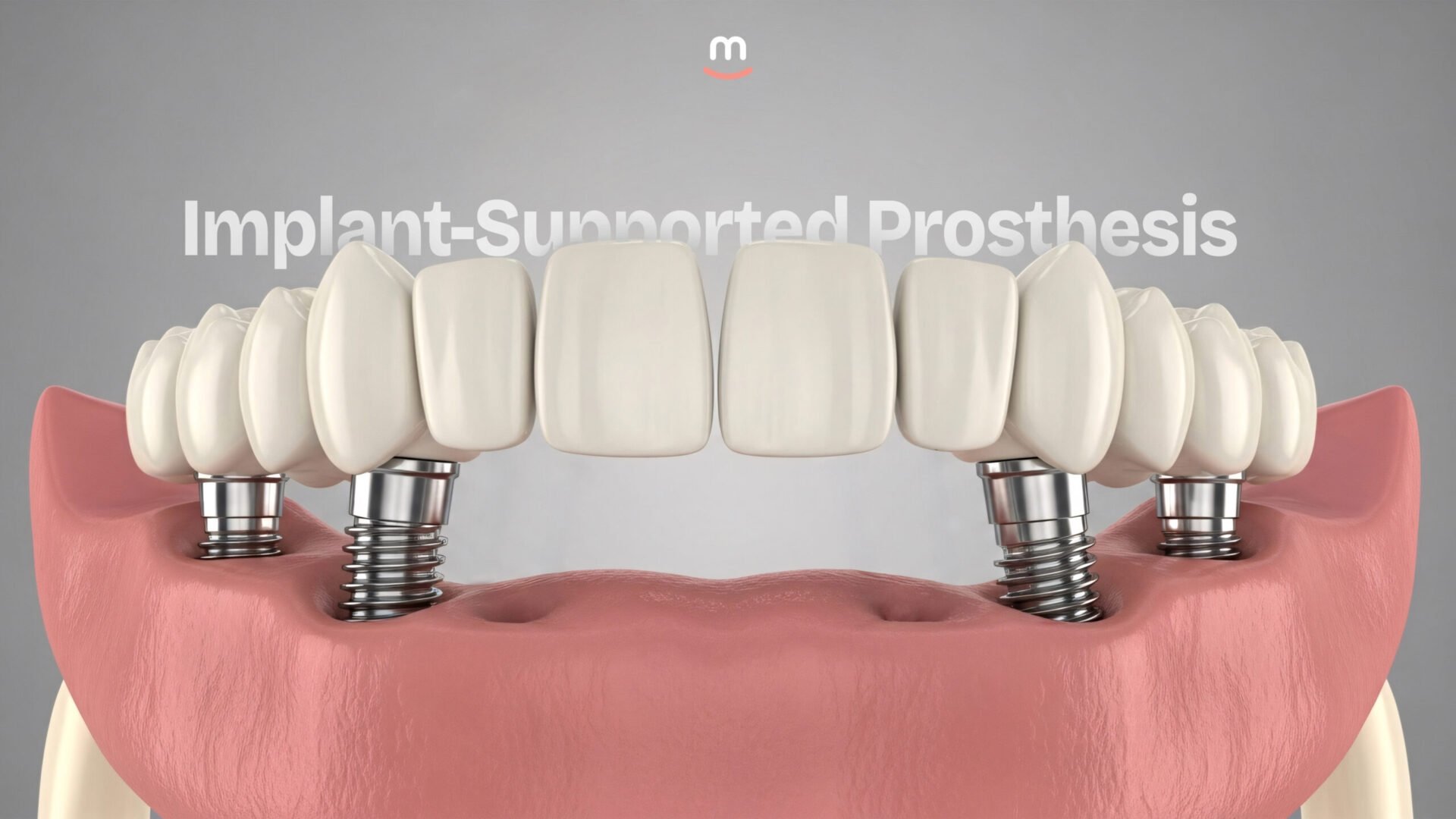
The decision variables are the same for every system: bone volume and density, the site of the gap, the opposing dentition, bite load and the planned restoration. They are measured with a CBCT scan and a clinical examination, not chosen from a brand list. How many fixtures the case needs is set out in our pages on implant-supported prostheses, four-implant arches and six-implant arrangements. Where the ridge is too narrow, bone grafting keeps a standard diameter available, and the prior question of implant versus bridge comes before brand selection at all.
The statement that one brand is better than another is clinically wrong, because the right system varies by case. You can read the specifications side by side, open the Straumann, Osstem, Neodent, Ankylos and Astra Tech pages individually, and settle the choice with our clinical team.
Let’s plan the right treatment together.
Free Assessment→- 1.Puisys A, Auzbikaviciute V, Vindasiute-Narbute E, Zukauskas S, Vaicekauskas K, Razukevicus D. Crestal bone stability after flapless placement of sloped implants with immediate temporization in edentulous mandible. A prospective comparative clinical trial. Clin Exp Dent Res 2021;7:131-136. PubMed 33283487
- 2.Naeem DM, Al-Jumaily HA. Can the Immediate Implantation With Immediate Loading Achieve an Acceptable Esthetic Outcome? A Prospective Observational Clinical Study. J Craniofac Surg 2023;34:e79-e84. PubMed 35996220
- 3.Strauss FJ, Siegenthaler M, Hämmerle CHF, Sailer I, Jung RE, Thoma DS. Restorative angle of zirconia restorations cemented on non-original titanium bases influences the initial marginal bone loss: 5-year results of a prospective cohort study. Clin Oral Implants Res 2022;33:745-756. PubMed 35570366
- 4.Stucki L, Asgeirsson AG, Jung RE, Sailer I, Hämmerle CH, Thoma DS. Zirconia reconstructions cemented on non-original titanium bases may result in increased bleeding on probing, probing depth values and varying mean marginal bone levels. Int J Prosthodont 2021;34:560–566. PubMed 33616565
- 5.Smirani R, Chantler JG, Endres J, Jung RE, Naenni N, Strauss FJ, et al. Clinical outcomes of single implant supported crowns utilising the titanium base abutment: A 7.5-year prospective cohort study. J Dent 2024;149:105306. PubMed 39154834
- 6.Angermair J, Iglhaut G, Meyenberg K, Wiest W, Rack A, Zabler S, et al. In vitro assessment of internal implant-abutment connections with different cone angles under static loading using synchrotron-based radiation. BMC Oral Health 2024;24:396. PubMed 38549137
- 7.Rizvi N, Alyahya Y, Rizvi A, Narvekar U, Petridis H. Accuracy of Original vs. Non-Original Abutments Using Various Connection Geometries for Single Unit Restorations: A Systematic Review. J Prosthodont 2022;31:e21-e52. PubMed 34866275
- 8.Berberi A, Tehini G, Hjeij B, Aoun G. Evaluation of Marginal and Internal Fit at Implant-Abutment Interface of Original and Compatible Nonoriginal Abutments. J Long Term Eff Med Implants 2022;32:21-28. PubMed 35993986
- 9.Sánchez-Benito F, Castells-Mira E, Cosin-Villanueva M, Gil-Loscos F, López-Roldán A. Microleakage and Torque Loss at the Implant-Abutment Interface in Original Versus Non-Original Abutments: An In Vitro Study. Materials (Basel) 2026;19. PubMed 42124290
- 10.Camps-Font O, Rubianes-Porta L, Valmaseda-Castellón E, Jung RE, Gay-Escoda C, Figueiredo R. Comparison of external, internal flat-to-flat, and conical implant abutment connections for implant-supported prostheses: A systematic review and network meta-analysis of randomized clinical trials. J Prosthet Dent 2023;130:327-340. PubMed 34776267
- 11.Howe MS, Keys W, Richards D. Long-term (10-year) dental implant survival: A systematic review and sensitivity meta-analysis. J Dent 2019;84:9-21. PubMed 30904559
- 12.Derks J, Tomasi C. Peri-implant health and disease. A systematic review of current epidemiology. J Clin Periodontol 2015;42 Suppl 16:S158-71. PubMed 25495683
- 13.Monje A, Aranda L, Diaz KT, Alarcón MA, Bagramian RA, Wang HL, et al. Impact of Maintenance Therapy for the Prevention of Peri-implant Diseases: A Systematic Review and Meta-analysis. J Dent Res 2016;95:372-9. PubMed 26701350
- 14.Straumann Group, 2017 Financial Report, Note 3 Business Combination: control over Medentika GmbH obtained as of 1 January 2017 with an unchanged 51% participation
- 15.Straumann Group, 2016 Financial Report: 51% assessed as significant influence and not control
- 16.Straumann Group, 2022 Annual Report: purchase of non-controlling interest from Medentika GmbH minority shareholders in 2022
- 17.Straumann Group, brands and partners page: global brand list and the Medentika descriptor
- 18.Medentika corporate history page (2005 founding, 2007 first titanium base, 2009 first implant, 2015 Renningen, 2020 Calw and MedentiTEC, 2023 MDR and MDSAP statement, catalogue and sales figures)
- 19.MEDENTiKA Guarantee conditions document (worldwide scope, replacement only, tiered periods, external implant guarantee and its trigger, exclusion of third-party and patient rights, three-month notification)
- 20.Medentika "Beyond the Original" page (compatibility method, series mapping, more than three million abutments, distribution in over 50 countries, cost-effectiveness passed to customers)
- 21.MEDENTiKA MPS product catalogue (PM01_01_0027/EN, October 2023): full series-letter mapping including Y for Ankylos C/X, GM for Neodent Grand Morse, L and N for Straumann, LX for Straumann BLX and BLC, EV and S for Astra Tech, T for XiVE.
- 22.Medentika product catalogues (Procone, Quattrocone, Minicone): diameter and length ranges, corundum-blasted and acid-etched surface description, grade 4 titanium for the Procone body.
- 23.FDA 510(k) database, applicant "Medentika GmbH": ten clearances, nine prosthetic components (product code NHA), one implant (MINICONE, K200906, 16 October 2020, product code DZE; the record declares the material verbatim as "Titanium Grade 5 ELI according to ASTM F136", although ASTM F136 is the Ti-6Al-4V ELI standard, i.e. grade 23, while grade 5 falls under ASTM F1472, so the mismatch sits in the manufacturer's own declaration)
- 24.mdc medical device certification GmbH, notified body 0483: EC certificate D1278600014 (Directive 93/42/EEC, valid 5 April 2019 to 23 March 2024) and EN ISO 13485 certificate D1278600023 (valid 12 June 2023 to 11 June 2026, sites Hügelsheim and Calw), succeeded by D1278600025 (12 June 2026 to 11 June 2029).
- 25.FDA recall, enforcement and MAUDE databases: no recall or enforcement records under Medentika; 23 adverse event reports under the manufacturer name, all injury type, broken down as 22 MINICONE and 1 QUATTROCONE.
- 26.Regulation (EU) 2017/745, Article 18: implant card and information to be supplied to the patient
- 27.HTTP redirect record for the Medentika domains: www.medentika.com and www.medentika.com.tr issue a 301 (permanent) redirect into the dental-professionals section under straumann.com/medentika (accessed 11 September 2026).