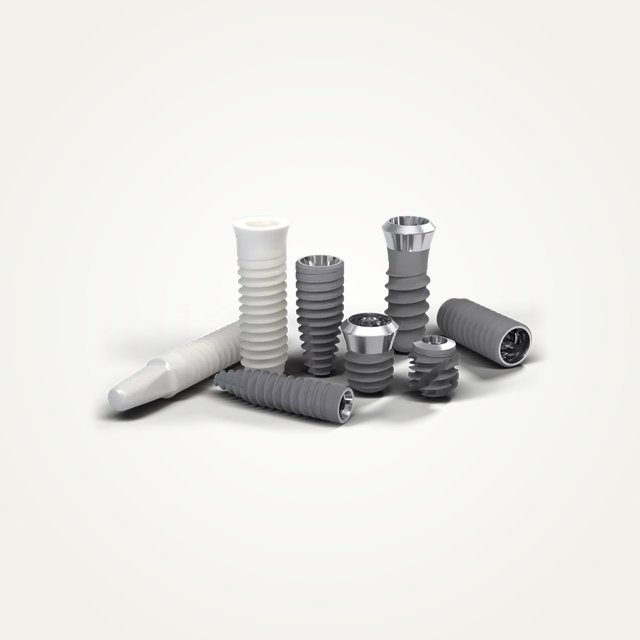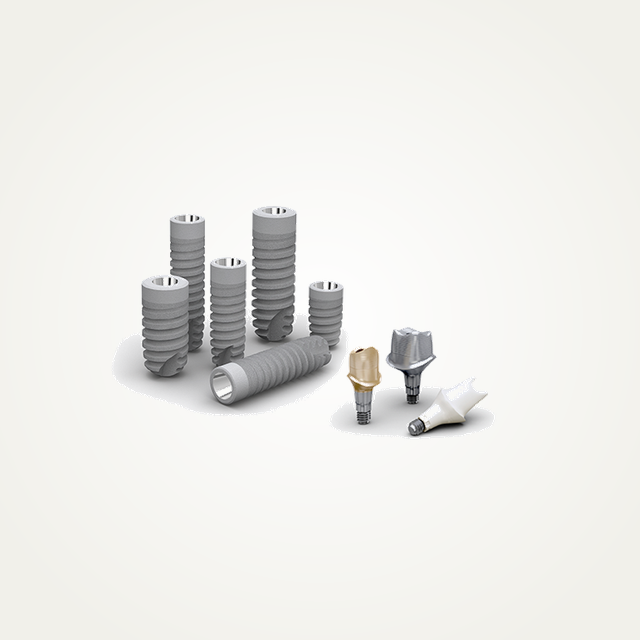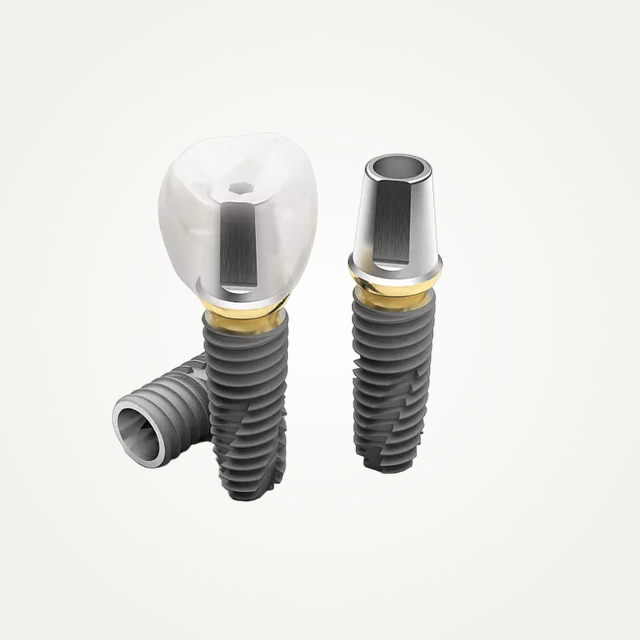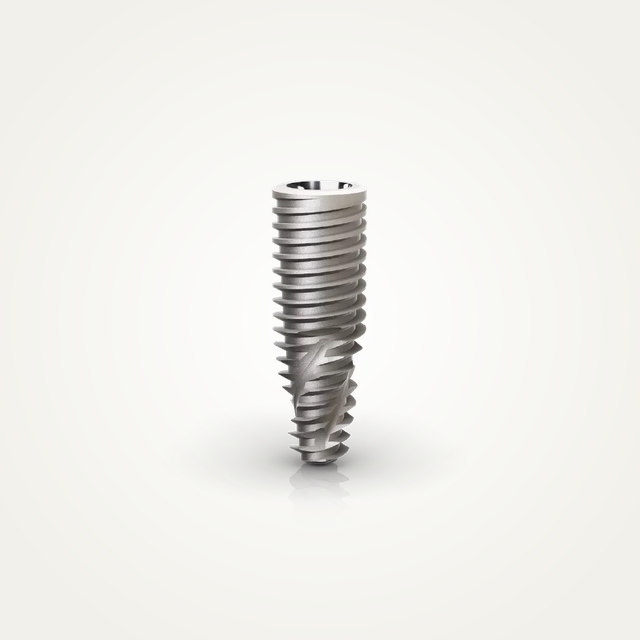
Astra Tech dental implants are Swedish in origin and are now owned by Dentsply Sirona; DENTSPLY International bought the brand from AstraZeneca in a deal completed on 31 August 2011. The fixture body is commercially pure grade 4 titanium, the surface is OsseoSpeed (titanium dioxide blasted and fluoride-modified), wettability is conventional rather than hydrophilic, and the connection is an internal conical interface the manufacturer calls Conical Seal Design. In a ten-year randomised trial against Straumann, survival was 100% in both groups, while technical complications occurred in 27.0% of Astra Tech implants against 15.6% of the comparator (PubMed 37906305). Which system suits a case is decided by bone volume, site and prosthetic plan.
- 01Swedish origin (Mölndal), American ownership: DENTSPLY International acquired the brand from AstraZeneca for 1.8 billion dollars, completed 31 August 2011, and became Dentsply Sirona after the February 2016 merger with Sirona.
- 02Spec sheet: commercially pure grade 4 titanium body, OsseoSpeed surface (TiO₂ blasted plus fluoride modification), conventional wettability, Conical Seal Design internal conical connection.
- 03In a meta-analysis of three premium surfaces, five-year marginal bone level change was 0.35 mm for OsseoSpeed against 0.74 mm and 1.19 mm for the two comparators (PubMed 33270049). In the head-to-head 10-year randomised trial against Straumann, the bone difference ran the other way and the authors called it clinically negligible (PubMed 37906305).
- 04Published survival ranges from 90.9% in sinus-lift cases to 100% at ten years in the randomised trial, with 92.6% across 597 implants followed up to eight years (PubMed 24627838; 37906305; 37847838).
- 05The manufacturer's warranty states in writing that its terms are for the benefit of eligible treating clinicians and not for patients, which changes what you should ask your clinic for.
Astra Tech is a Swedish-origin dental implant system owned today by Dentsply Sirona, with a commercially pure grade 4 titanium body, the OsseoSpeed surface and an internal conical connection the manufacturer calls Conical Seal Design. Ankylos is the other implant system in the same group. Most people meet the name on a quote rather than in a brochure, and the name itself is ambiguous, because several unrelated companies share it. The same specifications for every system we place sit side by side on our dental implant treatment page.
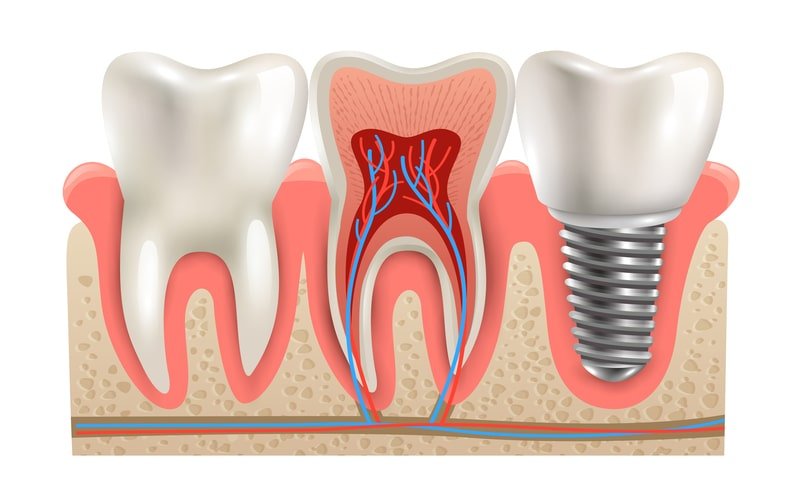
/ Which Astra Tech this page is about
The bare name Astra Tech is shared by companies outside dentistry. There is an Abu Dhabi technology investment group called Astra Tech that owns messaging and fintech platforms, and the name is easily confused with Astra Tech Energy, Astra Technologies and Astra Tech Services LLC, one of which is attached to scam warnings. None of these have any connection to dental implants.
The confusion is not only across industries; it exists inside the brand's own history. The Astra Tech name once covered a urology device line as well as the dental one, and the LoFric catheter range was still being cleared under Astra Tech, Inc. as recently as 31 October 2012 under K122078. So a clearance record or a company page carrying the words Astra Tech does not automatically describe a dental product.
The practical rule follows from that: never evaluate this brand on the bare name. Qualify it as the Astra Tech dental implant system or the Astra Tech Implant System EV, and check that any document you are shown names an implant, a fixture diameter or an abutment. The spelling varies too: the two words are often run together as astratech, which is the same product, not a separate line or a copy. Confirming which product you are looking at is the same first step set out on our what a dental implant is page.
/ Who owns Astra Tech and where Astra Tech implants are made
The system was developed by Astra Tech AB in Mölndal, just south of Gothenburg in Sweden, and spent years as the medical device arm of the Swedish pharmaceutical group that became AstraZeneca. Ownership changed in 2011, when DENTSPLY International acquired Astra Tech from AstraZeneca for 1.8 billion dollars, a transaction completed on 31 August 2011. DENTSPLY then merged with Sirona Dental Systems on 29 February 2016 in a deal valued at 14.5 billion dollars, and the combined group, Dentsply Sirona, is headquartered in Charlotte, North Carolina.
So where Astra Tech implants are made and who owns Astra Tech are two different answers. Origin and design lineage are Swedish; ownership is a US-headquartered group. The Mölndal site still appears on the manufacturing side: in the FDA establishment registration database, Dentsply IH AB at Heliumgatan 1, Mölndal is registered as an establishment manufacturing endosseous root-form dental implants and dental abutments. Production is not confined to one country, however. The 510(k) for OsseoSpeed Profile EV, K130999, cleared on 25 October 2013, was filed by Dentsply Implants Manufacturing GmbH in Germany.
The regulatory trail also fixes the age of the line. The earliest Astra Tech dental implant clearance in the United States is K931767, decided substantially equivalent on 8 February 1994, followed by K974737 on 24 March 1998 and K120414 for OsseoSpeed Plus on 31 July 2012. The manufacturer states the system has been in clinical use for 30 years, and the clearance dates are consistent with that. For patients travelling in, none of this changes the surgery, but it changes who you are dealing with a decade later when a component has to be reordered; the practical side of that is on our dental treatment in Turkey page.
/ What the words on your treatment plan actually mean
The terminology on an Astra Tech treatment plan is written for dentists. Four of its names come from the manufacturer's own product literature, grouped under the label BioManagement Complex, and each describes a different part of the implant.
OsseoSpeed is the surface, not a product family. The manufacturer describes it as a chemically modified titanium surface with a nanoscale topography, produced by blasting with titanium dioxide and then modifying the surface chemistry with fluoride. MicroThread refers to the minute threads cut into the implant neck, which the manufacturer presents as a load distribution feature. Conical Seal Design is the internal conical interface between implant and abutment, which the manufacturer describes as sealing the interior of the implant from surrounding tissue and reducing micromovement and microleakage. Connective Contour is the transition contour created when the abutment is seated.
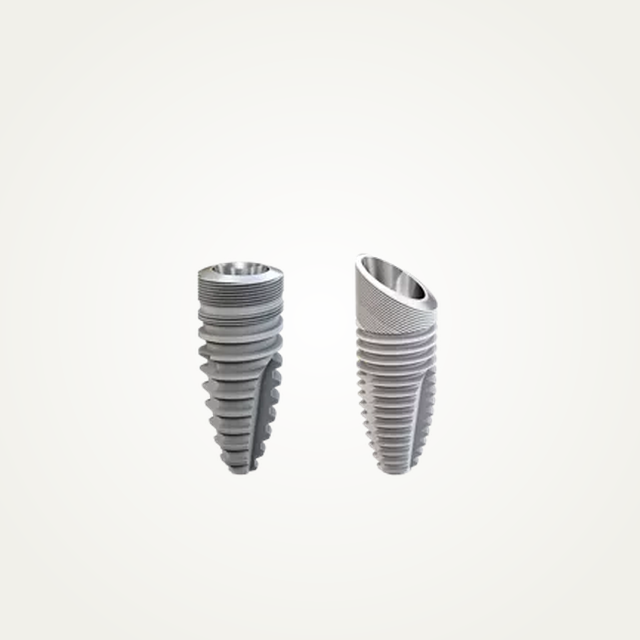
Then come the generation and shape names, which are the ones patients most often mistake for different brands. TX and EV denote system generations, EV being the newer connection and prosthetic platform. Profile is the sloped-shoulder fixture designed for sloped ridges. Atlantis is the patient-specific CAD/CAM abutment brand under the same group, so an Atlantis abutment on an Astra Tech implant is not a mixed-brand construction. The distinction that matters clinically is between the surface, the generation and the abutment route, because those three are priced and documented separately, as our implant-supported prosthesis page sets out.
/ The fluoride-modified surface and what has actually been measured
The variable worth isolating on this system is surface chemistry, because blasting and fluoride modification are two separate interventions and their effects have been measured separately.
The cleanest evidence compares implants that differ only in surface. In a study of the edentulous mandible under an immediate loading protocol, 125 fluoride-modified OsseoSpeed implants were compared with a control group carrying the non-modified blasted surface, 25 patients per group, followed for two years. Survival was 100% in both groups. Peri-implant bone loss at the implant level in the control group measured 0.60, 0.80 and 0.86 mm at 3, 12 and 24 months, against 0.14, 0.11 and 0.11 mm in the fluoride-modified group, and the difference was statistically significant at P < .001 (PubMed 24066328).
Two boundaries belong with that result. First, the endpoint is marginal bone level, not survival; survival was identical. Second, this surface is conventional in wettability, not hydrophilic. Hydrophilic surfaces are a separate category with their own literature, and faster clinical integration has not been demonstrated for them either. Reading a surface name as a promise about healing time is the most common error in this category; what governs how long a dental implant takes to heal is bone quality, site and loading protocol.
/ Astra Tech and Straumann: where the two spec sheets actually differ
Astra Tech and Straumann differ in titanium grade, surface and connection geometry, and one ten-year randomised trial has compared the two systems directly. The right system for a case is determined by bone volume, site and prosthetic plan, so a ranking would be clinically wrong; what can be reported is where the two specifications differ and what the trial found.
On specification, the differences are concrete. Astra Tech uses commercially pure grade 4 titanium; Straumann offers grade 4 titanium and Roxolid, a titanium-zirconium alloy. Astra Tech uses the fluoride-modified OsseoSpeed surface, which is conventional in wettability; Straumann's SLActive is a hydrophilic surface. Both use internal conical connections, under different names and different taper geometries. Both are top-tier cost segment. Full specifications for each are on our Straumann spec page and in the comparison table.
On direct evidence, one randomised controlled trial has compared them over ten years. At the University of Zurich, 98 implants were placed in 64 patients randomly allocated to Astra Tech OsseoSpeed TX or Straumann Bone Level, all loaded with fixed restorations and re-examined at 1, 3, 5, 8 and 10 years. At ten years, 43 patients returned and 37 Astra Tech and 32 Straumann implants were analysed. Survival was 100% in both groups. The median marginal bone level change from baseline was a loss of 0.07 mm for Astra Tech and a gain of 0.37 mm for Straumann, statistically significant at p = 0.008, which the authors themselves described as clinically negligible. Technical complications occurred in 27.0% of Astra Tech implants and 15.6% of Straumann implants. Peri-implant mucositis prevalence was 29.7% and 50.1%, and peri-implantitis 0% and 6.3% respectively (PubMed 37906305).
Neither system won that trial. Different endpoints pointed in different directions in the same patients, which is what usually happens when two well-documented systems are compared properly.
/ The marginal bone claim, and the limit that belongs with it
Marginal bone preservation is the endpoint this system is best known for, and the headline figure behind it comes with a methodological limit. The manufacturer's own PrimeTaper page cites a systematic review for the claim, so the underlying source is worth reading directly.
That review pooled 37 OsseoSpeed publications, 23 Straumann SLA/SLActive publications and 53 Nobel Biocare TiUnite publications. At one year, mean marginal bone level change was 0.29 mm for OsseoSpeed across 2,586 implants, 0.83 mm for SLA/SLActive across 1,490 implants and 0.87 mm for TiUnite across 3,948 implants, with all pairwise comparisons reaching statistical significance. At five years the figures were 0.35 mm across 1,168 implants, 0.74 mm across 202 implants and 1.19 mm across 1,683 implants; OsseoSpeed differed significantly from both comparators, while the difference between the other two did not reach significance at P = .0769 (PubMed 33270049).
The limit is structural, not a quibble. This is an indirect comparison: each brand's own published literature was pooled and the pooled means were compared, rather than the systems being randomised against each other in the same patients. Study populations, radiographic methods and recall schedules differ between those publication sets. When the same two systems were randomised head to head over ten years, the bone difference did not reproduce in the same direction. Both findings are real, and neither one alone is the whole picture.
/ How long Astra Tech implants last: the published cohorts
Astra Tech implant survival is best given as a range with the study behind each number, because the figures move with case difficulty rather than with the brand: from 90.9% in sinus-lift cases to 100% at ten years in a randomised trial.
The largest single-centre series covers OsseoSpeed EV implants: 597 implants in 235 patients, mean follow-up 42.1 months and maximum eight years, with overall survival of 92.6% and a confidence interval of 90.5% to 94.7%. In that cohort, 78% of surviving implants showed marginal bone level change at or better than zero, and 91.86% stayed under 2 mm (PubMed 37847838). A retrospective series of cement-retained posterior restorations on custom Atlantis titanium abutments followed 196 OsseoSpeed TX implants in 85 patients for a mean of 106 months, reporting 98.5% implant survival, 100% abutment survival and four mechanical complications in total (PubMed 37994819). In full-arch fixed rehabilitations, 160 implants in 19 patients reached five years with no failures and only 8.75% of implants showing more than 2 mm of marginal bone loss (PubMed 36184955), which is the evidence base behind all-on-4 and all-on-6 planning on this system.
Difficult anatomy lowers the numbers, as it does for every system. Ninety-nine Astra Tech OsseoSpeed implants placed in the posterior maxilla with sinus lift returned 90.9% survival, and failed implants had a mean pre-surgical bone height of 2.1 mm against 6.9 mm for the cohort as a whole (PubMed 24627838). Short implants held up well: 95 fixtures of 6 mm length in 45 subjects reported 95.8% survival at one year with mean marginal bone change of 0.13 mm (PubMed 25855871). What separates 90.9% from 100% is residual bone height, site and loading, not the label, which is why bone grafting and sinus augmentation are planned before the system is chosen.
/ Astra Tech implant problems: what the published record reports
The published record on Astra Tech implant problems contains unfavourable findings alongside the favourable ones, and most of them are technical complications at the prosthetic level.
The clearest one comes from the ten-year randomised trial already cited. Technical complications occurred in 27.0% of the Astra Tech implants against 15.6% of the comparator, and the commentary summarising that trial lists the specific events as chipping, screw loosening and fracture, abutment fracture and implant crown loss (PubMed 37906305; PubMed 38263242). Technical complications are not implant failures; they are events at the prosthetic level that require repair or replacement of a component, and they are the reason a warranty conversation matters more than a survival percentage.
Other cohorts are calmer on this point. The 196-implant Atlantis abutment series recorded four mechanical complications in total across a mean of 106 months: two screw loosenings, one veneer chipping and one decementation, with no screw or abutment fractures (PubMed 37994819). The difference between these datasets is not a contradiction; restoration type, retention method, abutment route and occlusal load differ, and mechanical complication rates track those variables closely.
The reading that follows is a practical one. Ask which abutment route is planned, whether the restoration is screw-retained or cement-retained, and what happens if a screw loosens in year six. Those answers predict your experience more reliably than any survival percentage, and they are the same questions our peri-implantitis page asks on the biological side.
/ PrimeTaper and the newer lines: what has and has not been documented
Dentsply Sirona's implant portfolio includes more than Astra Tech, and the company's own warranty page lists Ankylos, Astra Tech, DS OmniTaper, DS PrimeTaper, Xive and Atlantis together. That single list also shows that Sirona is not a brand separate from Astra Tech: they sit under the same corporate roof, and Ankylos is the sibling implant system, not a competitor.
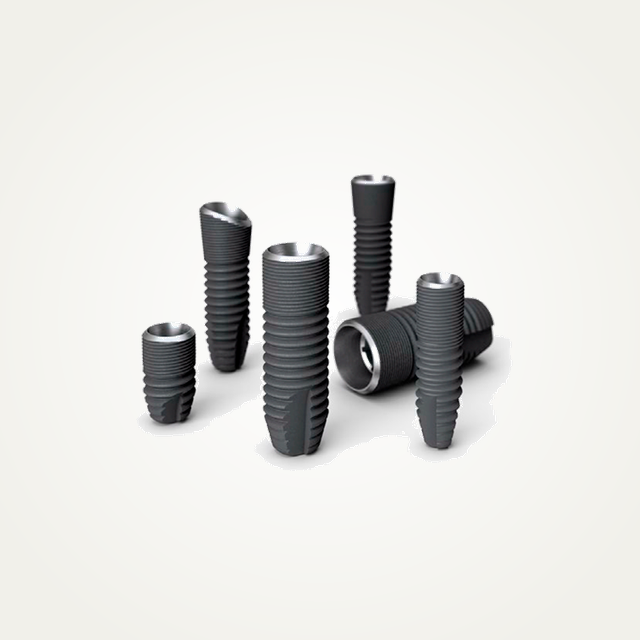
DS PrimeTaper is the newer tapered line. The manufacturer specifies diameters from 3.0 to 5.4 mm and lengths from 6.5 to 17 mm, a progressive thread design with linear torque build-up, MicroThread on the neck, the same OsseoSpeed surface and the EV connection, which allows one-position-only placement of Atlantis patient-specific abutments and six-position indexing for prefabricated abutments.
There is no long-term published clinical dataset specific to PrimeTaper. Every survival figure in the section above belongs to OsseoSpeed TX or OsseoSpeed EV implants, not to PrimeTaper, and it would be misleading to transfer them. New implant designs necessarily start without ten-year data, and the same was true of every system on the market at some point. It does mean that if a quote names PrimeTaper, the long-term evidence you are relying on is evidence for the surface and the connection family, not for that specific fixture geometry. Ask which line is being placed, and ask for the product code rather than the brand name alone.
/ What the Astra Tech warranty actually says
The Astra Tech manufacturer warranty is written for the treating clinician rather than the patient, and the manufacturer's own warranty page says so in writing.
Dentsply Sirona publishes a lifetime warranty covering genuine implant products across Ankylos, Astra Tech, DS OmniTaper, DS PrimeTaper, Xive and patient-specific Atlantis solutions. The page also carries a clause that changes how the whole thing should be read: the warranty terms are exclusively for the benefit of eligible treating clinicians and are not for the benefit of any other person or entity, including any patients and dental laboratories. In other words, the manufacturer's promise runs to the dentist, not to you. There is a further undertaking specific to Atlantis: if an implant supplier declines to honour its warranty because an Atlantis solution was used, Dentsply Sirona will replace the implant, abutment and crown.
The full terms, including duration and exclusions, sit in downloadable documents rather than on the public page, and no Turkish-language official warranty text is published. Component replacement warranties across this industry typically cover the part and not the surgical or laboratory work, which is the single largest cost in a redo.
The consequence is the same one we give for every system: ask your clinic, in writing, and separate the two documents. The manufacturer warranty covers the product, with the clinician-only limitation described above. The clinic warranty covers workmanship, reviews and remake, and its duration, scope and exclusions should be stated as their own lines. We issue ours at the treatment planning stage; book a consultation and ask for it before treatment starts, not after.
/ Compatibility, spare parts and who services the implant after you fly home
The Astra Tech connection is one of the widely supported interfaces in the third-party component market. FDA records show independent manufacturers cleared to sell titanium abutments compatible with Astra Tech OsseoSpeed implants: K100993 was cleared on 28 December 2010, and the same manufacturer expanded its range through subsequent clearances including K121688, K160979 and K191222. That matters because it means your dentist at home is not restricted to a single supply chain if a component has to be replaced years later.
The limiting factor is documentation, not availability. A generic dentist cannot order the right part from the brand name alone, because connection diameter and fixture diameter are different measurements and the TX and EV generations use different prosthetic platforms. Leave the clinic with the product code, the fixture diameter and length, the generation, the surface and the lot or serial number, and confirm whether the abutment fitted is a stock component or a patient-specific Atlantis one, because those are reordered through different routes.
Where a case is restored on custom abutments, keep the abutment documentation as well as the implant record. Our patient journey page lists what is handed over at discharge, and our clinical team issues these records as standard rather than on request.
/ Verifying that the implant you received is genuine
Whether an Astra Tech implant is genuine can be checked from documents. The verification procedure is not brand-specific, and it applies to this system in the same way as to any other.
European medical device law requires the manufacturer of an implantable device to supply an implant card carrying the device name, serial number, lot number, the Unique Device Identification, the model, and the manufacturer's name and address, together with information on expected lifetime and necessary follow-up care (Regulation (EU) 2017/745, Article 18). That card is what makes any claim checkable, and the same chain is set out step by step on our Straumann page.
Three checks apply specifically here. Confirm that the manufacturer named on the card is a Dentsply Sirona legal entity, not a distributor or reseller trade name; an unaffiliated online reseller currently styles itself the official Astra Tech website, so a website is not a source of provenance. Confirm that the family, generation and surface written down form a real combination, since OsseoSpeed is a surface while TX, EV, Profile and PrimeTaper are lines. And confirm that the serial or lot number on your record matches the sticker peeled from the sterile packaging at surgery. A clinic that cannot produce these is a problem whatever brand is on the quote.
/ Titanium allergy and MRI, answered from the material rather than the brand
Titanium allergy and MRI questions about Astra Tech are answered by the material rather than the brand label. The Astra Tech fixture is commercially pure grade 4 titanium, the same material class used by most systems in our comparison table.
On allergy, there is a measured figure. A clinical study of 1,500 consecutive dental implant patients found titanium allergy test positivity in 9 patients, which is 0.6% of the series. Within the subgroup showing allergy-compatible symptoms after implant placement the positivity rate was substantially higher, and several unexplained implant failures fell into that group (PubMed 18705814). Titanium hypersensitivity is therefore rare but not zero, and it belongs on the list when a patient shows an unexplained response after placement.
On MRI, the position is more reassuring. Titanium is paramagnetic, and a current review reports that titanium is regarded as appropriate in patients undergoing magnetic resonance imaging, with MRI not declared contraindicated; the unresolved questions concern cobalt-chromium and nickel-chromium alloys used in some metal-ceramic restorations rather than titanium fixtures (PubMed 37102548). The practical rule is to declare everything in your mouth, including implants, crowns and any removable appliance, to the radiology team before the scan.
/ What determines the cost of Astra Tech implant treatment in Turkey
The cost of Astra Tech implant treatment in Turkey depends on several separate line items rather than on the brand name. No figure is published here, for a specific reason: a price quoted before a CBCT scan describes a product rather than your treatment. What can be described is the structure that moves it.
Six layers set the total. First, the fixture: which line, which diameter, which length. Second, the abutment route, and on this system that is a real fork, because a stock abutment and a patient-specific Atlantis abutment are separate items with separate pricing. Third, the restoration material, which sits outside the implant decision entirely; a zirconia crown and its alternatives move the total independently of the fixture brand. Fourth, additional surgery: grafting where bone volume is short, sinus augmentation where the sinus floor is low, neither predictable without imaging. Fifth, the scale of the case, which is the largest single multiplier; a single implant, a full-arch fixed bridge and a full-mouth restoration differ by an order of magnitude in surgical time and laboratory work, and choosing between an implant and a bridge changes the plan before the brand does. Sixth, and invisible on any quote: component availability, warranty scope and the annual review schedule.
Two structural points belong in any comparison between clinics. A written, itemised quote issued after examination is the only version that can be compared line by line, and travel structure is part of the real cost for patients coming in, which is covered on our dental implants in Istanbul and implant pricing pages.
/ Who Astra Tech implants are chosen for, and what decides the tenth year
The Astra Tech line is a bone-level system with an internal conical connection, documented across single-tooth restoration in the aesthetic zone, posterior sites including short fixtures, sloped ridges through the Profile geometry, and full-arch fixed rehabilitation. The published cohorts cited above map onto exactly those situations, which is a more useful guide than any tier label. Where placement accuracy matters, guided implant surgery applies to this system as it does to the others.
The decision variables are bone volume and density, the position of the edentulous site, the opposing arch, occlusal load and the planned restoration. They are measured with a CBCT scan and a clinical examination, and they are the reason a brand ranking is the wrong tool. Our clinicians work through them with you before a system is named on the plan.
What determines the tenth year is separate from all of it. A systematic review and meta-analysis of peri-implant maintenance therapy found lower incidence of peri-implant disease among implants enrolled in supportive programmes, recommended a recall interval of at least five to six months, and identified a history of periodontal disease as a significant influence on both mucositis and peri-implantitis (PubMed 26701350). Brand choice shapes the first day; maintenance shapes the tenth year, and that holds for Astra Tech and for Osstem, Neodent, Ankylos and Medentika alike. Our guide on how to clean dental implants covers the daily half of that.
Let’s plan the right treatment together.
Free Assessment→- 1.Gadzo N, Ioannidis A, Naenni N, Hüsler J, Jung RE, Thoma DS. Survival and complication rates of two dental implant systems supporting fixed restorations: 10-year data of a randomized controlled clinical study. Clin Oral Investig 2023;27:7327-7336. PubMed 37906305
- 2.Mehrabanian M, Dorri M. Long-term survival of Astra Tech vs Straumann dental implants and restorations. Evid Based Dent 2024;25:33-34. PubMed 38263242
- 3.Esteve-Pardo G, Esteve-Colomina L. Clinical and Radiographic Evaluation of OsseoSpeed EV Implants. Int J Oral Maxillofac Implants 2023;38:963-975. PubMed 37847838
- 4.Norton MR, Åström M. The Influence of Implant Surface on Maintenance of Marginal Bone Levels for Three Premium Implant Brands: A Systematic Review and Meta-analysis. Int J Oral Maxillofac Implants 2020;35:1099-1111. PubMed 33270049
- 5.Vervaeke S, Collaert B, De Bruyn H. The effect of implant surface modifications on survival and bone loss of immediately loaded implants in the edentulous mandible. Int J Oral Maxillofac Implants 2013;28:1352-7. PubMed 24066328
- 6.Di Francesco F, Cristache CM, Minervini G, Cafferata EA, Lanza A. Survival and mechanical complications of single- and multiple-unit cement-retained posterior implant-supported restorations with custom CAD/CAM Atlantis titanium abutments: An up to 10-year retrospective analysis. Int J Oral Implantol (Berl) 2023;16:315-324. PubMed 37994819
- 7.Galindo-Moreno P, Ravidà A, Catena A, O'Valle F, Padial-Molina M, Wang HL. Limited marginal bone loss in implant-supported fixed full-arch rehabilitations after 5 years of follow-up. Clin Oral Implants Res 2022;33:1224-1232. PubMed 36184955
- 8.Yoon WJ, Jeong KI, You JS, Oh JS, Kim SG. Survival rate of Astra Tech implants with maxillary sinus lift. J Korean Assoc Oral Maxillofac Surg 2014;40:17-20. PubMed 24627838
- 9.Han J, Zhang X, Tang Z, Zhang L, Shi D, Meng H. A prospective, multicenter study assessing the DENTSPLY Implants, OsseoSpeed(™) TX, length 6 mm in the posterior maxilla and mandible: a 1-year follow-up study. Clin Oral Implants Res 2016;27:452-7. PubMed 25855871
- 10.Camps-Font O, Rubianes-Porta L, Valmaseda-Castellón E, Jung RE, Gay-Escoda C, Figueiredo R. Comparison of external, internal flat-to-flat, and conical implant abutment connections for implant-supported prostheses: A systematic review and network meta-analysis of randomized clinical trials. J Prosthet Dent 2023;130:327-340. PubMed 34776267
- 11.Monje A, Aranda L, Diaz KT, Alarcón MA, Bagramian RA, Wang HL, et al. Impact of Maintenance Therapy for the Prevention of Peri-implant Diseases: A Systematic Review and Meta-analysis. J Dent Res 2016;95:372-9. PubMed 26701350
- 12.Sicilia A, Cuesta S, Coma G, Arregui I, Guisasola C, Ruiz E, et al. Titanium allergy in dental implant patients: a clinical study on 1500 consecutive patients. Clin Oral Implants Res 2008;19:823-35. PubMed 18705814
- 13.Bhambhani R, Roy SS, Joshi S. Magnetic resonance imaging investigations in patients with metallic dental prosthesis: "The associated dilemma for medical fraternity and the dentist's role". J Indian Prosthodont Soc 2023;23:203-206. PubMed 37102548
- 14.Dentsply Sirona, Astra Tech Implant System brand page (English edition): OsseoSpeed, MicroThread, Conical Seal Design and Connective Contour definitions, 30 years of clinical use, lifetime warranty link. The Turkish edition names the same features differently and says 40 years; the English edition is the one relied on here.
- 15.Dentsply Sirona, Implants Warranty page: covered brands and the clause limiting the benefit to eligible treating clinicians.
- 16.Dentsply Sirona, DS PrimeTaper Implant System page: 3.0-5.4 mm diameters, 6.5-17 mm lengths, progressive thread design, OsseoSpeed surface, EV connection, Atlantis one-position-only placement.
- 17.FDA 510(k) records (openFDA): K931767 (8 Feb 1994), K974737 (24 Mar 1998), K120414 (31 Jul 2012, OsseoSpeed Plus), K130999 (25 Oct 2013, OsseoSpeed Profile EV, Dentsply Implants Manufacturing GmbH), K122078 (31 Oct 2012, LoFric, Astra Tech Inc.), K100993 (28 Dec 2010, titanium abutments compatible with Astra Tech OsseoSpeed, Prismatik Dentalcraft Inc.) plus K121688, K160979, K191222.
- 18.FDA establishment registration and listing database (openFDA): Dentsply IH AB, Heliumgatan 1, Mölndal, Sweden; endosseous root-form dental implants and abutments.
- 19.DENTSPLY International acquisition of Astra Tech from AstraZeneca for 1.8 billion dollars (announced June 2011, completed 31 August 2011); DENTSPLY and Sirona Dental Systems merger, 29 February 2016; group headquarters Charlotte, North Carolina.
- 20.Regulation (EU) 2017/745, Article 18: implant card and information to be supplied to the patient.