A dental implant brand refers to a manufacturer's implant system and its specifications: surface treatment, alloy, thread geometry and implant-abutment connection, each with its own body of clinical data. Between systems that meet those standards the differences are incremental, so bone volume, soft tissue health, surgical planning and the restorative design carry more weight than the label on the box. A systematic review of 18 prospective studies of contemporary roughened-surface implants put 10-year survival at the implant level at 96.4% (95% CI 95.2-97.5), and a sensitivity analysis correcting for loss to follow-up gave 93.2% (PubMed 30904559).
- 01Brand identity in implantology is a technical dossier, not a ranking: surface chemistry, alloy specification, connection tolerance measured in microns and the depth of independent long-term data.
- 02Pooled 10-year implant-level survival across 18 prospective studies of roughened-surface systems is 96.4% (95% CI 95.2-97.5); the sensitivity analysis accounting for participants lost to follow-up drops it to 93.2% (PubMed 30904559).
- 03At 20 years the evidence base thins: five retrospective studies covering 1,440 implants report 88% survival (95% CI 78-94), which is why follow-up care does not end at year ten (PubMed 39305362).
- 04Surface hydrophilicity is measurable but not decisive on its own: in a split-mouth trial of 80 titanium-zirconium implants placed in 20 anticoagulated patients, hydrophilic and hydrophobic surfaces showed no significant stability difference at any time point and both reached 100% survival at one year (PubMed 27539149).
- 05Component supply is a clinical variable in disguise: an abutment or screw that cannot be sourced years later turns a routine repair into a remake, independently of how the implant itself performed.
When patients start researching dental implants, one question comes up almost immediately: does the brand of implant matter?
The answer is nuanced and honest dental professionals will tell you it is simultaneously yes and no. The brand matters, but it is rarely the most important variable. Understanding why requires knowing what actually separates a high-quality implant from a lower-quality one, and where brand reputation fits into that picture.
At Mosdent Dental Hospital in Istanbul, the implant system chosen for a case is named in the written treatment plan, so its documentation can be checked.
/ Why Implant Brand Matters (and Where It Stops Mattering)
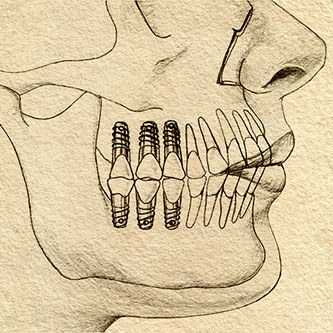
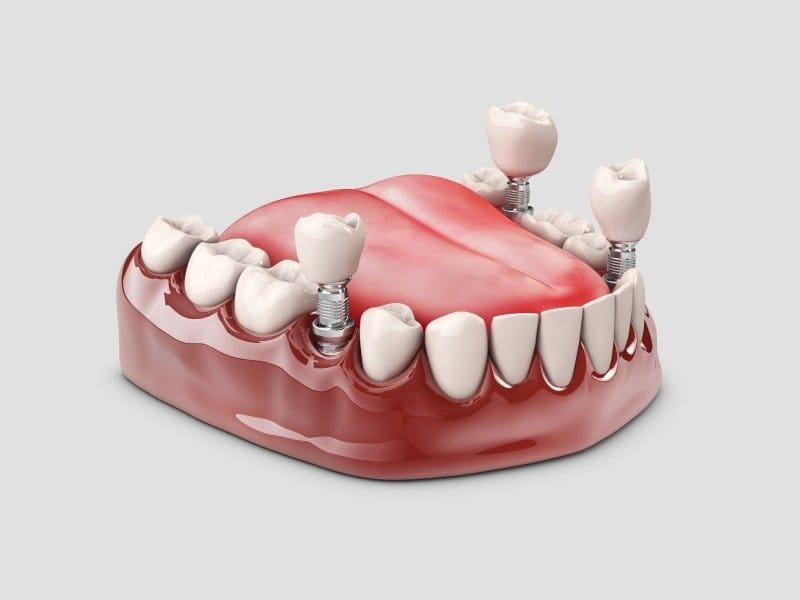
Dental implants are not commodity products. A titanium implant fixture is a precision-engineered medical device with a surface treatment, thread geometry, connection type, and material specification that directly influence how well it integrates with your bone a process called osseointegration and how it performs over the long term.
Implant manufacturers differ in how much they invest in:
- Surface technology: The texture and chemical treatment of the implant surface affects how quickly and reliably bone cells attach and grow around it. Some systems have proprietary surface technologies with 20–30 years of clinical trial data behind them.
- Material quality: Implant bodies are made from medical-grade titanium alloys or zirconia with controlled metallurgical specifications.
- Component precision: The connection between the implant body and the abutment (the component that connects implant to crown) must be engineered to tolerances of microns. Poor-fit connections lead to bacterial infiltration, micro-movement, and long-term complications.
- Long-term clinical evidence: The most credible implant systems have survival data from independent clinical studies spanning 10, 15, and 20+ years.
Where brand matters less: once you are comparing two systems that each meet these standards, the differences are incremental. What then becomes decisive is the skill of the implant surgeon, the quality of the pre-treatment planning, and the health of the surrounding tissue.
/ Straumann and Nobel Biocare Implant Systems
Straumann (Switzerland)
Straumann was founded in 1954 and is headquartered in Basel, Switzerland. Peer-reviewed studies on the system go back to the mid-1970s.
Key technologies:
- SLActive surface: Straumann's flagship surface treatment creates a chemically active titanium oxide layer that accelerates osseointegration. Clinical data shows faster bone attachment compared to standard SLA surfaces, with comparable long-term survival rates.
- Roxolid material: An alloy of titanium and zirconium offering greater strength in smaller diameters particularly beneficial for narrow ridges where standard implant diameters may not fit.
- BLT (Bone Level Tapered) implant: The current flagship fixture, combining tapered design for better primary stability with a bone-level connection that supports excellent soft tissue aesthetics.
Clinical performance: Studies report Straumann implant survival rates of 96–99% at 5 years and 94–97% at 10 years across diverse patient populations.
Straumann is the implant system most frequently used at Mosdent for primary implant cases, chosen for its combination of surface science, clinical evidence depth, and component ecosystem.
Nobel Biocare (Sweden/Switzerland)
Nobel Biocare holds a unique place in implant history: the company's scientific founders, led by Per-Ingvar Brånemark, pioneered the concept of osseointegration in the 1950s and 1960s. The first dental implant placed in a human patient used what would become Nobel Biocare technology.
Key technologies:
- NobelActive: A tapered implant with an aggressive thread design providing exceptional primary stability, particularly in soft bone. Frequently used in immediate loading protocols, placing a temporary crown on the day of implant surgery.
- All-on-4 protocol: Nobel Biocare developed and holds the clinical data foundation for the All-on-4 full-arch restoration concept, one of the most impactful innovations in modern implantology.
- Zygoma implants: Nobel Biocare is also the originator of the zygomatic implant system, used in cases of severe upper jaw bone loss.
Clinical performance: Nobel Biocare implants report 5-year survival rates of 95–98% in published studies, with particularly strong data in full-arch and immediate-loading protocols.
Nobel Biocare systems are a preferred choice at Mosdent for All-on-4 and All-on-6 full-arch restorations, because the All-on-4 protocol was developed on this system.
/ Zimmer Biomet and Dentsply Sirona Implant Systems
Zimmer Biomet (USA)
Zimmer Biomet is one of the world's largest medical device companies, with a dental implant division that combines decades of orthopaedic implant engineering experience with dedicated dental implantology research.
Key technologies:
- Tapered Screw-Vent (TSV): A widely used implant with a self-tapping design that provides reliable primary stability across varying bone densities.
- T3 implant system: Features a proprietary MTX (Micro-Textured Surface) surface treatment with comparable osseointegration performance to leading European systems.
- PEEK and ceramic abutment options: Zimmer Biomet offers a comprehensive prosthetic component ecosystem particularly suited to complex restorative cases.
Clinical performance: Long-term survival rates of 94–97% at 5+ years across published independent studies.
Dentsply Sirona (USA/Germany)
Dentsply Sirona combines two heritage dental companies, Dentsply International and Sirona Dental, into one of the world's largest dental equipment and material manufacturers. Their implant division (formerly Ankylos and Friadent) is particularly well regarded for the Ankylos connection system.
Key technologies:
- Ankylos C/X: Known for its conical internal connection, which produces exceptionally tight implant-abutment sealing. This reduces bacterial infiltration at the connection point, a significant long-term advantage for peri-implant tissue health.
- Astra Tech (acquired): The Astra Tech OsseoSpeed surface has an extensive body of independent long-term data.
Clinical performance: Astra Tech OsseoSpeed implants report 5-year survival rates of 97–99% in independent trials.
/ BioHorizons, Osstem and Specifications at a Glance
BioHorizons (USA)
BioHorizons is a US-based manufacturer known for innovation in implant surface technology and has become increasingly prominent in European and international markets.
Key technologies:
- Laser-Lok surface: A proprietary laser-microtextured collar zone that promotes direct connective tissue attachment to the implant, which may contribute to long-term soft tissue stability and reduced marginal bone loss.
- Tapered Internal (TL) system: A versatile implant line suitable for immediate placement and loading in appropriate cases.
Clinical performance: The Laser-Lok technology has independent clinical data showing reduced crestal bone loss compared to machined-surface controls, a relevant advantage for long-term aesthetic outcomes.
Osstem (South Korea)
Osstem is the largest dental implant manufacturer in Asia by unit volume. It has expanded significantly into European and Middle Eastern markets over the past decade and holds ISO and CE certifications.
Key technologies:
- TS III SA system: Surface-treated with SA (Sand-blasted, Acid-etched) technology comparable to established European systems.
- Broad prosthetic component availability: Osstem's wide distribution network means component availability is reliable globally.
Clinical performance: Independent studies report 5-year survival rates of 93–96%.
Specifications at a Glance
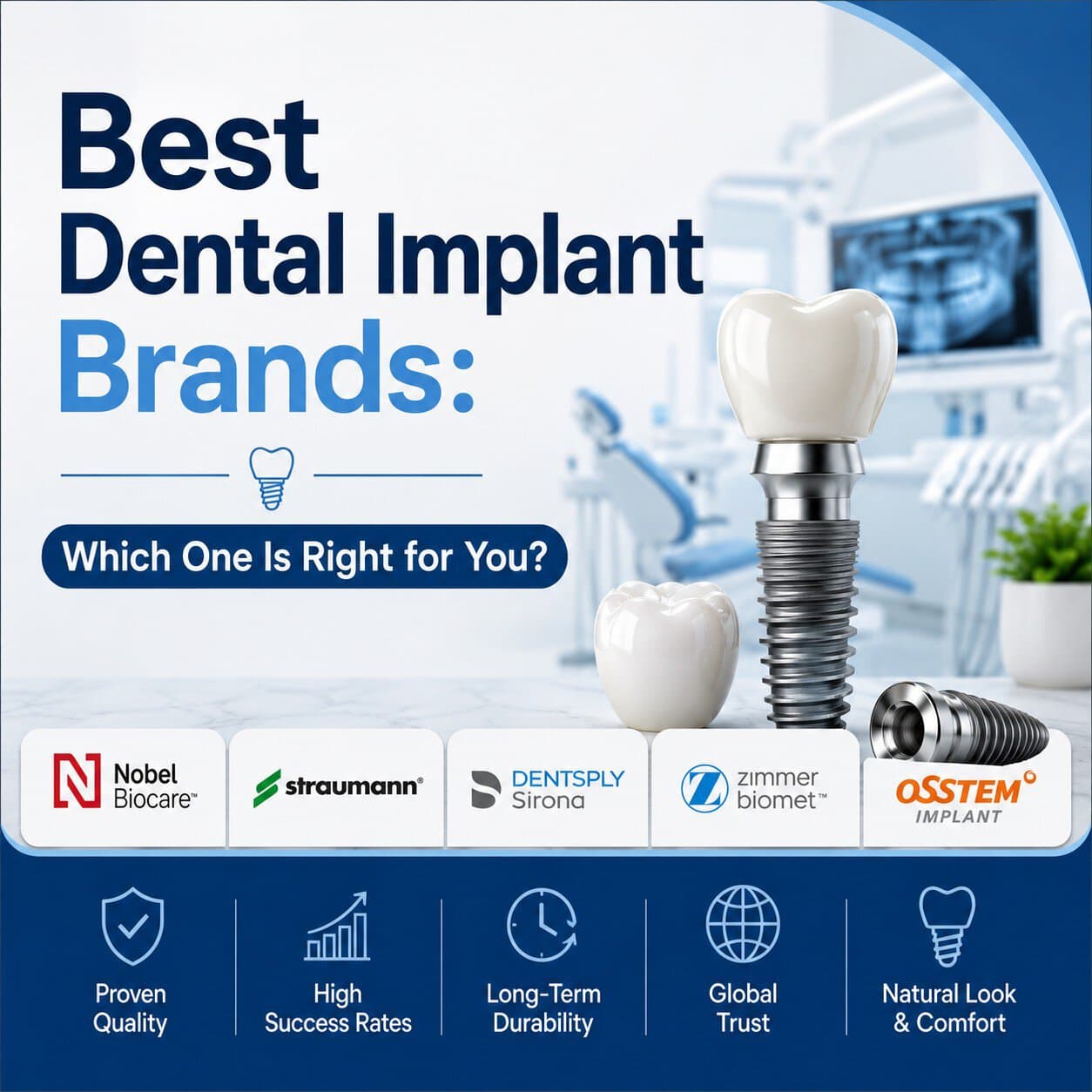
| System | Origin | Surface technology | Connection / documented indication |
|---|---|---|---|
| Straumann | Switzerland | SLActive | Bone level and tissue level lines |
| Nobel Biocare | Sweden/Switzerland | TiUnite | All-on-4, zygomatic, immediate loading |
| Zimmer Biomet | USA | MTX | Tapered Screw-Vent, T3 |
| Dentsply Sirona (Astra) | USA/Germany | OsseoSpeed | Conical connection |
| BioHorizons | USA | Laser-Lok | Laser-microtextured collar |
| Osstem | South Korea | SA | TS III SA |
/ What Actually Determines Implant Success?
Brand selection is one variable in a multi-factor equation. Clinical research consistently identifies the following as equal or greater determinants of long-term implant success:
Surgeon Experience and Training
Implant placement is a surgical skill. The same implant placed by a surgeon with 50 cases of experience versus one with 2,000 cases will produce meaningfully different outcomes, in primary stability, preservation of surrounding bone, management of anatomical structures, and response to complications.
Mosdent's oral and maxillofacial surgery team brings extensive implant placement experience across standard, immediate-loading, full-arch, and advanced cases including zygomatic implants .
Pre-Treatment Planning Quality
Precise 3D planning using CBCT imaging to map bone volume, identify anatomical structures, and determine optimal implant position directly influences surgical outcomes. Implants placed without 3D planning have higher rates of anatomical complications and suboptimal positioning.
Every implant case at Mosdent begins with CBCT assessment and digital treatment planning before any surgical decision is made.
Gum and Bone Health Before Surgery
Active gum disease at the time of implant placement significantly increases the risk of peri-implantitis, the leading cause of late implant failure. Periodontal treatment must precede implant surgery in any patient with active disease.
Similarly, adequate bone volume and quality are prerequisites. Where bone is deficient, bone grafting or advanced implant protocols may be required before standard placement is possible.
Post-Treatment Maintenance
Implants do not decay, but they are susceptible to peri-implant disease if oral hygiene is inadequate. Regular professional maintenance typically every six months and a thorough home hygiene routine are the most modifiable factors in long-term implant survival.
Patient Systemic Health
Smoking, uncontrolled diabetes, and medications affecting bone metabolism (such as bisphosphonates) all influence osseointegration and long-term implant stability. These factors are assessed during pre-treatment evaluation and managed as part of the overall treatment plan.
/ Which Implant Systems Mosdent Places and What Goes on Top
Which Implant Systems Mosdent Places
At Mosdent Dental Hospital, Straumann and Nobel Biocare are our primary systems, with other CE-marked systems selected for specific clinical indications.
The reasoning is straightforward: an implant treatment is a long-term investment in a patient's quality of life. The implant fixture placed today may still be in function in 20 or 25 years.
For patients considering All-on-4, All-on-6, or full-arch implant restoration, the stakes are higher still: these restorations depend on a small number of implant fixtures to support an entire arch. The reliability of each individual fixture matters disproportionately.
Our comprehensive dental implant guide covers every aspect of the implant journey, from candidacy assessment through to long-term maintenance, for patients who want to understand the full picture before making a decision.
Completing the Picture: What Goes on Top of the Implant
The implant fixture is only one component of the final restoration. What the patient sees and feels the crown or prosthetic arch is equally important to the overall outcome.
At Mosdent, implant crowns and full-arch prosthetics are routinely fabricated from zirconium a material that combines the aesthetic quality required for natural-looking results with the structural strength that implant-supported restorations demand. For specific anterior aesthetic cases, Emax ceramic options may be considered.
For patients whose treatment involves cosmetic elements beyond the implant itself such as a smile makeover, Hollywood smile design, or teeth whitening of remaining natural teeth these are planned as a coordinated aesthetic whole from the outset, not as afterthoughts.
/ Frequently Asked Questions
Does the brand of dental implant really make a difference?
The larger difference is between systems that have published long-term data and systems that do not. Among systems that all carry published data (Straumann, Nobel Biocare, Astra, Zimmer Biomet), the differences are incremental. What matters more is surgeon experience, pre-treatment planning, and post-treatment care.
Which implant systems have the longest published follow-up?
Straumann and Nobel Biocare have published survival data extending 15–20+ years. Both brands report 5-year survival rates consistently above 95% in independent studies.
What does the price difference between implant systems reflect? It reflects the depth of published clinical data, manufacturing tolerances and how long prosthetic components stay available. Which of these matters most depends on the case.
Can I choose which implant brand is used at Mosdent?
Yes. We discuss implant system selection with every patient as part of the treatment planning process. Our team will explain their recommendation and the clinical reasoning behind it, and discuss any preferences you have.
What happens if I need a replacement part for my implant years later?
Component availability varies by manufacturer. Some keep components available for decades after placement, others discontinue them, which can make future prosthetic work difficult. It is worth asking about before placement.
The Bottom Line: Brand Is a Starting Point, Not the Whole Story
The best dental implant brand is the one placed by an experienced surgeon, preceded by thorough 3D planning, in a healthy tissue environment, with a precision-fitted prosthetic restoration on top, and followed by consistent long-term maintenance.
Straumann and Nobel Biocare have the longest published follow-up. Dentsply Sirona, BioHorizons and Zimmer Biomet each have their own documented indications. A system without published long-term data carries more uncertainty over a 20-year horizon.
If you are considering dental implant treatment in Istanbul, we invite you to contact Mosdent for a free consultation. We will explain which implant system we recommend for your specific case and why, so you can make an informed decision, not just a brand preference.
Let’s plan the right treatment together.
Free Assessment→- 1.Howe MS, Keys W, Richards D. Long-term (10-year) dental implant survival: A systematic review and sensitivity meta-analysis. J Dent 2019;84:9-21. PubMed 30904559
- 2.Kupka JR, König J, Al-Nawas B, Sagheb K, Schiegnitz E. How far can we go? A 20-year meta-analysis of dental implant survival rates. Clin Oral Investig 2024;28:541. PubMed 39305362
- 3.Marković A, Đinić A, Calvo Guirado JL, Tahmaseb A, Šćepanović M, Janjić B. Randomized clinical study of the peri-implant healing to hydrophilic and hydrophobic implant surfaces in patients receiving anticoagulants. Clin Oral Implants Res 2017;28:1241-1247. PubMed 27539149