
Full-mouth dental implants replace an entire arch on four to eight titanium fixtures that carry one fixed bridge or a removable overdenture, rather than one implant per missing tooth. In a meta-analysis of 11 clinical studies of full-arch implant rehabilitation, estimated cumulative implant loss was 0.64% at one year and 1.85% at five years for fixed designs, against 0.71% and 4.45% for removable designs, while peri-implantitis affected 10% to 50% of patients restored with fixed prostheses (PubMed 34761399). Treatment typically runs 3 to 12 months depending on grafting, and maintenance does not end when the bridge is fitted.
- 01Full-arch means 4 to 8 implants per jaw carrying a single prosthesis, not one implant per missing tooth; All-on-4 and All-on-6 simply name the number of fixtures used to support it.
- 02Fixed and removable designs separate over time rather than at delivery: estimated cumulative implant loss was 0.64% versus 0.71% at one year, but 1.85% versus 4.45% at five years across 11 studies (PubMed 34761399).
- 03Peri-implantitis affected 10% to 50% of patients restored with fixed full-arch prostheses in the same review, which makes a maintenance schedule part of the treatment rather than an optional extra.
- 04Tooth loss on this scale is widespread: pooled global prevalence of edentulism among community-dwelling adults aged 45 and over is 22%, drawn from 86 papers and 17 national oral health surveys (PubMed 36265526).
- 05The timeline is set by biology: osseointegration runs roughly 3 to 6 months, and bone grafting or a sinus lift adds months before the definitive prosthesis can be delivered.
Losing a whole arch is common enough to shape treatment planning: pooled global prevalence of edentulism among community-dwelling adults aged 45 and over is 22%, drawn from 86 papers and 17 national oral health surveys (PubMed 36265526). Advanced decay and gum disease both lead there. The consequences are not only cosmetic: the jawbone resorbs once the roots are gone, chewing becomes restricted, and the prosthetic options narrow as bone volume falls. Full-mouth dental implants are one way of restoring that arch, alongside conventional dentures and bridges.
At Mosdent in Istanbul, a single implant with its placement starts from €300. That is a starting price, not a quote: the figure that applies to you is written down after a free examination.
But what exactly are full mouth dental implants? In simple terms, they involve the surgical placement of titanium posts into the jawbone to serve as artificial roots, supporting a full arch of prosthetic teeth, typically using systems like All-on-4 or All-on-6 for efficiency and stability. This procedure replaces all missing or failing teeth in one or both jaws, creating a secure, natural-feeling set of teeth that mimics the look and function of your originals. Unlike removable dentures, these implants integrate with your bone through a process called osseointegration, preventing bone loss and preserving your facial structure for a youthful appearance.
Full mouth dental implants replace all the teeth in one or both arches with a fixed bridge supported by 4 to 8 titanium implants per arch; packages and costs in Turkey are covered in our full dental implants in Turkey guide. The benefits are profound: enhanced chewing and speaking abilities, boosted self-confidence, and improved overall oral health without the hassle of adhesives or slippage. Plus, a meta-analysis of 18 prospective studies put 10-year implant survival at 96.4% (PubMed 30904559), which makes them a worthwhile investment despite the upfront expense.
/ Full-Mouth Dental Implants and Main Types
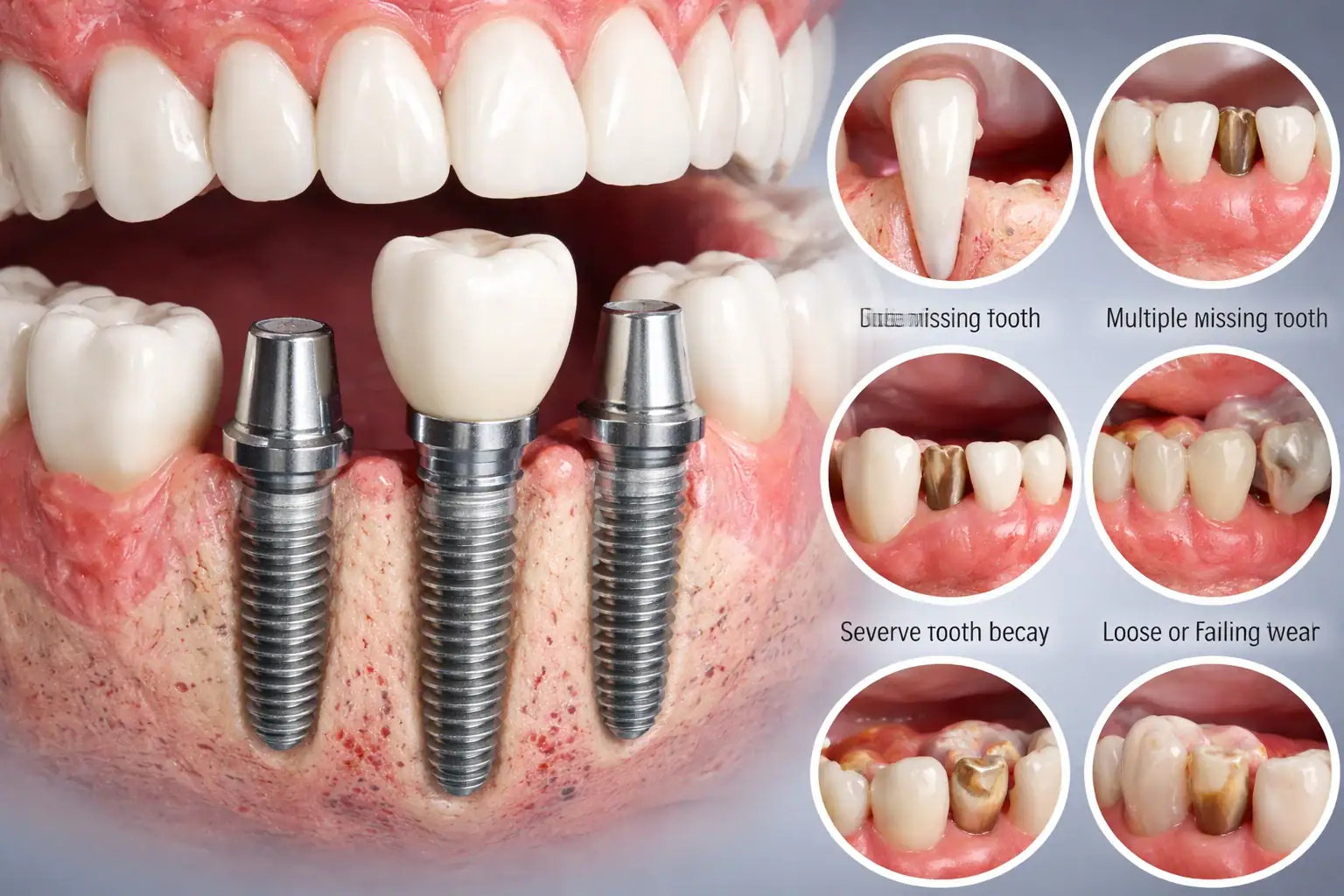
Full mouth dental implants, also known as full arch dental implants or full mouth reconstruction with implants, represent a modern solution for individuals who have lost most or all of their teeth in one or both jaws. This procedure involves surgically placing titanium posts into the jawbone to act as artificial tooth roots, which then support a complete set of prosthetic teeth, essentially replacing an entire upper or lower arch (or both) with a stable, permanent alternative to natural teeth. Unlike single dental implants that replace individual teeth, full mouth implants are designed for comprehensive restoration, often using innovative systems like All-on-4 or All-on-6, where just 4 to 6 implants per arch provide the foundation for a full bridge or denture. These titanium implants fuse with the bone through a process called osseointegration, creating a durable anchor that mimics the strength and function of real tooth roots.
Types of Full-Mouth Dental Implants
Full mouth dental implants come in various types, each tailored to different needs, jawbone conditions, and patient preferences:
- All-on-4 Implants : Use four strategically angled titanium posts to support a fixed prosthetic arch; ideal for patients with some bone loss.
- All-on-6 or All-on-8 : Add more implants (6 or 8) for enhanced stability in cases requiring extra support.
- Implant-Supported Dentures : Can be removable (snap-on) or fixed; provide a secure fit over fewer implants.
- Endosteal Implants : Screwed directly into the jawbone; the most common type for those with sufficient bone density.
- Subperiosteal Implants : Placed under the gum but on top of the bone; suitable for insufficient bone density without grafting.
- Zygomatic Implants : Anchored in the cheekbone; used for severe upper jaw bone loss.
- Mini Implants : Smaller versions (1.8-3mm diameter) for less invasive procedures and denture stabilization.
/ Prosthetic Materials, Denture Comparison, and Candidate Profile
The prosthetic teeth attached to the implants are crafted from high-quality materials to ensure durability, aesthetics, and comfort:
- Zirconia : Offers superior strength, natural translucency, and resistance to wear; ideal for long-term aesthetics and function.
- Acrylic : More affordable option; lightweight and customizable, but may require more maintenance over time.
- Porcelain or Composite : Sometimes used for overlays to enhance appearance, blending naturally with natural teeth.
Comparison to Traditional Dentures
When comparing full mouth dental implants to traditional dentures, the differences are stark. Traditional dentures are removable appliances that rest on the gums, often leading to slippage, discomfort while eating or speaking, and gradual jawbone resorption due to lack of root stimulation. In contrast, full mouth implants are securely anchored, providing superior stability without the need for adhesives, allowing for natural chewing forces, and actively preserving jawbone health by mimicking tooth roots to prevent bone loss. This results in a more comfortable, functional, and long-lasting solution that feels and looks like your own teeth, avoiding the facial sagging often associated with conventional dentures.
Ideal Candidates For Full-Mouth Dental Implants
Ideal candidates for full mouth dental implants are typically those experiencing significant tooth loss, such as from severe decay, periodontal disease, trauma, or congenital conditions, resulting in a full arch of missing or failing teeth. Key qualifications include adequate jawbone density to support the implants (though bone grafting can address deficiencies), good overall health without uncontrolled conditions like diabetes or heart disease that could impair healing, healthy gums free from active infection, and a commitment to oral hygiene. Non-smokers or those willing to quit are preferred, as smoking can hinder osseointegration, and candidates should have realistic expectations about the procedure's timeline and maintenance. Even individuals with some remaining teeth can qualify if those teeth are extracted as part of the process.
/ Benefits and Improved Functionality of Full-Mouth Dental Implants
Full mouth dental implants replace missing teeth with a fixed restoration rather than a removable one, and that is the practical difference from a conventional denture. These implants, often using systems like All-on-4 or All-on-6, are anchored in bone and do not rest on the gum, which changes how the restoration behaves during chewing and speech. Whether the tooth loss came from decay, gum disease or injury, the sections below set out what that difference does and does not cover.
Improved Functionality: Eat, Speak, and Live Without Limitations
One of the standout benefits of full mouth dental implants is their superior functionality compared to removable dentures. Traditional dentures often slip or shift, making it challenging to chew tough foods like steak or apples, or even speak clearly without mumbling. In contrast, full mouth implants are securely anchored into the jawbone through osseointegration, where the titanium posts fuse with the bone to create a rock-solid base. This allows you to bite and chew with the same force as natural teeth, enjoying a varied diet without discomfort or restrictions. Patients report easier eating and speaking abilities, as the implants eliminate the noise, slippage, or adhesive needs associated with dentures. For those who've struggled with partial solutions, this means rediscovering the joy of meals and conversations, significantly enhancing daily comfort and quality of life.
/ Aesthetic and Health Benefits of Full-Mouth Dental Implants
Full mouth dental implants excel in delivering aesthetic results that look and feel incredibly natural. The prosthetic teeth, often crafted from durable materials like zirconia or porcelain, are custom-designed to match your facial features, gum line, and bite alignment, creating a natural smile that blends with any remaining natural teeth. Unlike dentures that can appear bulky or artificial, implants prevent the "sunken" look caused by jawbone loss, as they stimulate bone growth and maintain facial structure. This preservation of bone density helps avoid sagging cheeks or a collapsed mouth, restoring a youthful appearance that boosts self-confidence. Many patients note that their new smile looks real and feels like their own teeth, allowing them to laugh, smile, and interact socially without self-consciousness.
Health Benefits: Protecting Your Oral and Overall Well-Being
Beyond looks and function, full mouth dental implants offer substantial health advantages that promote long-term oral health. By acting as artificial roots, they prevent jawbone deterioration, a common issue after tooth loss that can lead to further dental problems or changes in facial shape. The osseointegration process ensures the bone remains stimulated and dense, reducing the risk of additional tooth loss or complications like infections. Unlike dentures, which can harbor bacteria in crevices and cause gum irritation or sores, implants are easier to clean with standard brushing and flossing, improving overall hygiene and lowering the chance of gum disease. They don't require altering adjacent healthy teeth, as bridges might, preserving your natural dental structure. Additionally, better chewing efficiency supports proper nutrition, which can positively impact systemic health, such as digestion and energy levels.
/ Durability of Full-Mouth Dental Implants
Durability is a key reason full mouth dental implants are often called the "closest thing to natural teeth." With proper care, including regular dental checkups and avoiding habits like tobacco use, the implants can stay in function for many years, while complete dentures in a 20-year study of 187,227 adults were commonly replaced after about 6 years of service (PubMed 34645719). The titanium material is biocompatible and resistant to decay, ensuring stability without the need for adhesives or frequent adjustments. This fixed nature means no more worrying about dentures falling out during meals or activities, providing peace of mind and reliability. Patients frequently report experiencing less pain than anticipated. Published long-term data report implant survival of around 96.4% at 10 years and 94.0% at 15 years (J Dent 2019; PMC8359846). Survival and success are different measures: success rates are lower, because they also account for marginal bone level and soft-tissue health.
Confidence Boost: Enhancing Self-Esteem and Social Life
The psychological benefits of full mouth dental implants cannot be overstated. They restore not just your smile, but your self-esteem. Tooth loss can lead to embarrassment in social situations, but implants provide a confident, natural-looking restoration that lets you smile freely. This boost in self-image often translates to improved personal and professional interactions, as patients feel more at ease without the insecurities of missing or unstable teeth.
/ Full Mouth Dental Implants Procedure and Initial Consultation
Understanding the full mouth dental implants procedure can help demystify what might seem like a complex process. This step-by-step approach typically involves replacing all teeth in one or both arches using 4-8 titanium implants per arch, often via techniques like All-on-4 or All-on-6, to support a fixed prosthetic bridge. The entire timeline can span 3-12 months, depending on factors like bone health, preparatory needs, and healing time, but same-day options allow for immediate temporary teeth in many cases. While success rates exceed 95%, potential risks include infection, nerve damage, sinus issues, or implant failure (less than 5%), which can often be minimized with proper planning and care.
Step 1: Initial Consultation and Evaluation
The journey begins with a thorough initial consultation, where your dentist or oral surgeon assesses your oral health to determine if you're a suitable candidate for full mouth dental implants. This visit typically includes a detailed medical history review to identify any conditions like diabetes or smoking that could affect healing, as well as a comprehensive oral exam. Advanced imaging, such as X-rays, 3D CT scans, or cone-beam computed tomography (CBCT), is used to evaluate jawbone density, gum health, and the positioning of nerves and sinuses. If bone loss is detected, which is common in long-term tooth loss cases, your provider may discuss preparatory procedures like bone grafting. This step also covers your goals, the timeline and the cost of the plan being proposed. The consultation usually lasts 1-2 hours and sets the foundation for success.
/ Treatment Planning and Surgery Day for Full Mouth Dental Implants
Once evaluated, a customized treatment plan is developed using digital tools like computer-guided surgery software for precise implant placement. This phase addresses any preparatory needs, such as extracting remaining damaged or decayed teeth, which can often be done on the same day as implant placement in All-on-4 procedures. If jawbone volume is insufficient, bone grafting may be required, involving harvesting bone from another site or using synthetic materials to build up the area. This can add 3-6 months to the timeline as the graft integrates. For upper jaw cases, a sinus lift might be necessary to create space by lifting the sinus membrane. Gum disease must also be treated beforehand to prevent complications. During planning, options like sedation (nitrous oxide, oral, or IV) are discussed to ensure comfort, and a surgical guide may be fabricated for accuracy. This step emphasizes minimizing risks, such as infection, by optimizing your oral environment.
Step 3: Surgery Day · Implant Placement
The core of the procedure is the implant surgery, typically performed under local anesthesia with sedation for a pain-free experience. For full mouth implants, the surgeon makes small incisions in the gums to expose the jawbone, then drills precise holes to insert 4-8 titanium posts per arch, angled strategically in All-on-4 to maximize bone contact and avoid grafting when possible. Advanced technologies like X-Guide navigation or robotic assistance (e.g., Yomi) enhance precision, reducing risks and recovery time. The surgery for one arch usually takes 2-4 hours, and both arches can often be done in one session. Post-insertion, the gums are sutured, and in many cases, immediate loading occurs where temporary prosthetics are attached right away for aesthetics and function during healing.
Risks during this phase, like nerve damage or sinus perforation, are rare (under 5%) with experienced providers.
/ Healing and Restoration for Full-Mouth Dental Implants
After surgery, the healing phase begins, focusing on osseointegration, the process where the titanium implants fuse with the jawbone for stability, typically taking 3-6 months. During this time, you'll wear temporary teeth or a soft diet to avoid stressing the implants. Follow-up visits monitor progress with X-rays to ensure integration and check for issues like swelling or infection, which can be managed with antibiotics or pain relievers. Factors like smoking or poor health can extend this period, but most patients experience minimal discomfort after the first week. This phase is crucial for long-term success, as proper fusion prevents future complications.
Step 5: Final Restoration and Adjustments
Once osseointegration is complete, abutment connectors between implants and prosthetics are attached in a minor procedure, often under local anesthesia. Impressions or digital scans are taken to fabricate the permanent prosthetic arch, made from durable materials like zirconia for a natural look and feel. This final fitting, which takes 1-2 appointments, secures the bridge to the abutments, with adjustments for bite and comfort. The entire process from start to finish can be as short as 6 months for straightforward cases or up to 12 months if grafting is involved. Post-procedure, regular check-ups help keep everything functioning well, and with care, implants can stay in function for many years.
While the full mouth dental implants procedure involves multiple steps, advancements like same-day loading and guided surgery make it more efficient and less invasive.
/ Cost Overview and Average Costs in 2026
The cost of full mouth dental implants can seem daunting at first, but understanding the breakdown and factors involved helps put it into perspective, especially when weighing the long-term benefits against alternatives like dentures. In 2026, prices have stabilized post-pandemic, with advancements in technology making procedures more efficient, though inflation and material costs continue to influence pricing.
Average Costs in 2026: The Published Ranges
The cost of full mouth dental implants varies widely by country, by clinic and by the specifics of the case, so a published range is a starting point rather than a quote. For a single arch (upper or lower jaw), expect to pay between $15,000 and $36,000, while a complete full mouth restoration (both arches) typically ranges from $25,000 to $70,000. For instance, popular systems like All-on-4 implants average $20,000 to $35,000 per arch, offering a cost-effective option for those with sufficient bone density.
Totals climb to $40,000-$96,000 for high-end cases involving 10-12 implants across both arches, but many providers offer packages starting at $25,000 for basic restorations. These figures emphasize value over initial expense: a 20-year meta-analysis reported implant survival between 78% and 92% depending on the analysis (PubMed 39305362). Dentures may cost $1,000-$5,000 but need periodic replacement, so repair and remake costs add up over time.
/ Cost Breakdown by Component
A detailed breakdown reveals why costs add up, answering "how much does a full mouth of dental implants cost" by component. For a typical All-on-4 or All-on-6 procedure:
- Implants Themselves : $3,000-$6,000 per implant. With 4-8 per arch, this totals $12,000-$48,000 for a full mouth.
- Abutments and Connectors : $500-$1,000 each, linking implants to prosthetics, adding $2,000-$8,000.
- Prosthetic Teeth (Bridge or Denture) : $5,000-$15,000 per arch, depending on materials like acrylic (cheaper) or zirconia (premium for durability and aesthetics).
- Surgery and Anesthesia Fees : $2,000-$5,000, covering the procedure, local anesthesia, or sedation (oral, nitrous oxide, or IV, adding $300-$1,500).
- Diagnostic Imaging and Planning : $500-$1,500 for X-rays, CT scans, and 3D modeling.
- Additional Procedures : Bone grafting ($1,000-$3,000 per site), sinus lifts ($1,500-$5,000), or extractions ($150-$300 per tooth), which can increase totals by 20-30% if needed.
For a basic full mouth case, these components might sum to $40,000, while complex ones with extras hit $80,000. Beware of low-ball ads like "$399 implants," which often cover only the post, not the full procedure.
/ Cost Factors and Payment Terms
Several variables affect the final price, which is why a personalized quote is essential.
- Where treatment is carried out : Country, city and clinic overheads all move the total, which is why a written quote matters more than a published average.
- Number of Implants and Type : Fewer implants (e.g., All-on-4) reduce costs vs. traditional 8-10 per arch; mini or zygomatic implants for bone issues add $1,000-$5,000.
- Materials : Titanium is standard (lower cost), but zirconia prosthetics for allergy-free or aesthetic reasons increase by $2,000-$10,000.
- Additional Treatments : Bone density issues requiring grafts or sinus lifts can add $5,000-$15,000; preliminary extractions or gum treatments also factor in.
- Provider Expertise : Specialist-trained clinicians and clinics with high full-arch volume charge more, and what the premium buys is planning time and predictability rather than a different implant.
- Anesthesia and Technology : Sedation options or guided surgery tools add $500-$2,000 but improve comfort and accuracy.
- Case Complexity : Severe decay or health conditions like diabetes may require extra planning, boosting costs by 10-20%.
These factors explain why quotes vary. Always consult multiple providers for accurate estimates.
Paying for Treatment
Payment terms belong in the quote rather than in a separate conversation afterwards. Full-arch treatment is staged over months because healing takes that long, so payment is often staged with it: a share at the surgical stage, the rest when the definitive prosthesis is fitted. Many clinics also offer monthly payment plans, and the terms differ enough to be worth asking about in writing.
Three questions make two quotes comparable. First, what the figure covers: imaging, extractions, the temporary prosthesis, follow-up visits and the definitive bridge may be inside it or outside it. Second, what happens to the price if the CBCT scan shows that grafting or a sinus lift is needed, since that is the most common reason a quote changes after the first appointment. Third, what is included after delivery, because a full-arch prosthesis needs scheduled maintenance and, in time, renewal.
An itemised written quote answers all three at once. A single headline figure answers none of them.
/ Finding a Provider for Full-Mouth Dental Implants
Finding the right provider for full mouth dental implants is crucial, as this procedure involves significant investment in both time and money, and the results can last for many years when the treatment is planned and maintained correctly. The aim is a specialist who can deliver high-quality All-on-4 or All-on-6 restorations with minimal risks. The relevant qualification is specialist training in oral surgery, periodontology or prosthodontics, because implant position is decided at the surgical stage and a misplaced fixture is difficult to correct afterwards.
/ Choosing a Full-Mouth Dental Implant Provider
Credentials and case volume are the first two things to check. Full-arch work sits where surgery and prosthetics meet, so ask who places the implants and who designs the prosthesis, and what each of them trained in; in many clinics these are two different people. Specialist training in maxillofacial surgery, periodontology or prosthodontics is the relevant qualification, and national registers record who holds it. Ask how many full-arch cases the clinic completes in a year, and ask to see cases photographed at delivery and again at a later review, because the second set shows how the soft tissue settled. Ask what happens if a fixture fails: who repairs it, at whose cost and within what period. Imaging and planning matter too, so ask whether CBCT and guided surgery are used and how the plan is shared with you.
Consultation Tips: Key Questions to Ask
Schedule free consultations with 2-3 providers to compare. Ask: "Am I a good candidate based on my jawbone density and health?" to assess needs like bone grafting. Inquire about the full process: "What type of implants and materials (e.g., titanium vs. zirconia) will you use, and why?" Discuss risks: "What are potential complications, and your success rate?" Cover costs: "How much for full mouth implants, including extras like sedation?" and "Do you handle the entire procedure in-house?" Ask about alternatives if implants aren't ideal, and request references or case studies. During the visit, note cleanliness, staff communication, and if they perform a thorough exam with imaging.
Red Flags: Warning Signs to Steer Clear
Avoid providers with these issues to prevent regrets. Unrealistically low prices (e.g., under $20,000 for a full mouth) may indicate subpar materials or inexperience, risking failure or infections. Lack of credentials or negative reviews (e.g., complaints about pain or poor communication) are major warnings. Rushed consultations without detailed imaging or ignoring your medical history signal unqualified care. Be wary if they push unnecessary add-ons or don't discuss risks like gum recession or loose implants.
By following these steps, you'll find a trusted provider for your full mouth dental implants, ensuring a smooth journey from consultation to recovery.
/ Alternatives to Full-Mouth Dental Implants
While full mouth dental implants offer unparalleled stability and longevity for those with extensive tooth loss, they aren't always the ideal choice for everyone due to factors like high costs, surgical requirements, or health constraints. Alternatives can provide effective tooth replacement at a lower price point or with less invasiveness, though they may compromise on durability or comfort.
Traditional Dentures: The Classic Removable Option
Traditional dentures are removable appliances that replace a full arch of missing teeth, custom-made from acrylic or porcelain to fit over the gums. They're a non-surgical solution often used for complete tooth loss due to decay, gum disease, or age.
- Pros : Affordable, with costs ranging from $1,000 to $5,000 per arch; quick to fabricate (2-4 weeks); no surgery required, making them suitable for those with health issues; easy to adjust or reline as gums change.
- Cons : Can slip or cause discomfort while eating/speaking; doesn't prevent jawbone loss, leading to facial sagging over time; requires adhesives and nightly removal for cleaning; may affect taste or cause sore spots.
Compared to full mouth implants ($25,000-$70,000), dentures are a budget-friendly entry point but may need replacement every 5-8 years.
Implant-Supported Dentures: A Hybrid Approach
Also known as snap-on or overdentures, these are removable dentures anchored to 2-4 implants for added stability, blending the benefits of dentures and implants.
- Pros : More secure than traditional dentures, reducing slippage; preserves some jawbone health via implant stimulation; removable for easy cleaning; costs $8,000-$20,000 per arch, less than full implants; suitable for those with moderate bone loss.
- Cons : Still requires surgery for implants; dentures may wear out faster than fixed options; potential for gum irritation or need for relining; not as stable as full fixed implants for heavy chewing.
This is a middle-ground option for anyone who wants better function than a conventional denture without the cost of a fixed full-arch bridge.
/ Bridge and Denture Alternatives to Implants
Dental bridges are fixed prosthetics that span gaps by anchoring to adjacent healthy teeth or implants, ideal for replacing several teeth but not always a full arch.
- Pros : Non-removable for a natural feel; quicker procedure (2-3 visits); costs $2,000-$15,000 depending on span and material (porcelain or zirconia); no bone grafting needed if anchored to teeth; good aesthetics and function for smaller gaps.
- Cons : Requires altering healthy adjacent teeth for support, risking future damage; doesn't prevent bone loss in the gap area; may not suit full mouth replacement without multiple bridges; about one in ten conventional bridges is lost within 10 years (89.2% 10-year survival, PubMed 17594374).
Bridges work well for partial tooth loss, but they do not scale to a full arch.
Partial Dentures or Flippers: For Fewer Missing Teeth
Partial dentures are removable devices for replacing a few teeth, using a metal or acrylic framework clipped to remaining teeth; flippers are lightweight, temporary acrylic versions.
- Pros : Inexpensive ($300-$2,500); non-invasive and reversible; quick to make; maintains space to prevent shifting teeth; good temporary solution while considering implants.
- Cons : Visible clasps may affect aesthetics; can be uncomfortable or cause speech issues; doesn't stimulate bone, leading to resorption; requires removal for cleaning and may loosen over time.
These are best for interim use, or when a full arch of implants is not feasible for cost or medical reasons.
/ Mini Implants and Pros/Cons Comparison
Mini dental implants are smaller (1.8-3mm diameter) titanium posts used to stabilize dentures or replace small teeth, often in a single visit.
- Pros : Minimally invasive with no flaps or stitches; quicker healing (immediate loading possible); lower cost ($500-$1,500 per implant, $5,000-$15,000 for full arch stabilization); suitable for low bone density without grafting.
- Cons : Less stable for heavy loads; higher failure risk in some cases; long-term data are limited, with a mean follow-up of 2.48 years across 24 studies (PubMed 27888049); not ideal for full fixed bridges.
Survival figures for mini implants depend heavily on the jaw. A systematic review of 24 studies, covering 2,494 mini implants that retained complete overdentures, reported a survival rate of 92.32%, with failures more frequent in the upper jaw than in the lower jaw, at 31.71% against 4.89% (PubMed 27888049). A second review limited to lower-jaw overdentures counted 1,715 mini implants in 475 patients and found an overall survival rate of 95.63% over follow-up periods of 6 to 84 months (PubMed 30883617).
Mini implants sit between a conventional denture and a fixed full-arch bridge in both cost and capability.
Pros/Cons Comparison: At a Glance
To summarize, here's a quick comparison table:
| Alternative | Cost Range (Per Arch) | Pros | Cons |
|---|---|---|---|
| Traditional Dentures | $1,000-$5,000 | Affordable, non-surgical | Slippage, bone loss |
| Implant-Supported Dentures | $8,000-$20,000 | Stable, preserves bone | Surgery needed, removable |
| Dental Bridges | $2,000-$15,000 | Fixed, quick | Alters healthy teeth, no bone preservation |
| Partial Dentures/Flippers | $300-$2,500 | Cheap, temporary | Uncomfortable, visible clasps |
| Mini Implants | $5,000-$15,000 | Minimally invasive, immediate | Less durable, limited applications |
/ Recovery Overview and Immediate Post-Surgery Care
Recovering from full mouth dental implants, such as All-on-4 or All-on-6 procedures, is a gradual process that prioritizes healing to ensure the implants integrate successfully with your jawbone. While the full recovery timeline can span 3-6 months for osseointegration, the fusion of titanium posts with bone, the initial days and weeks are critical for minimizing discomfort and preventing complications like infection or implant failure. Most patients feel back to normal within 3-7 days, with many returning to work the next day, but following your dentist's instructions is key to a smooth outcome.
Immediate Post-Surgery Care: The First 24-48 Hours
Right after surgery, focus on rest and controlling initial symptoms like swelling, minor bleeding, and discomfort, which are normal but typically peak within 48 hours. Bite gently on gauze packs placed by your surgeon for 30-60 minutes to stop bleeding, replacing them as needed. Apply ice packs externally to your face in 20-minute intervals (20 on, 20 off) for the first 24 hours to reduce swelling. Switch to warm compresses after 48 hours if recommended. Keep your head elevated, even while sleeping, using extra pillows to minimize swelling and promote drainage. Avoid touching the surgical sites with your tongue or fingers, and do not rinse, spit, or use a straw for the first 24 hours to prevent dislodging blood clots. If bleeding persists beyond minor oozing, contact your dentist immediately.
/ Pain Management and First-Week Care
Pain management starts with prescribed medications, take them as directed, often combining ibuprofen (600-800mg every 6-8 hours) for inflammation with stronger options like acetaminophen with codeine if needed. Over-the-counter alternatives like Advil or Tylenol can suffice for milder pain, but avoid aspirin as it thins blood. Rest is essential: Limit physical activity, avoid bending over or heavy lifting, and steer clear of smoking, alcohol, or caffeine, which can impair healing and increase infection risk. For those with temporary prosthetics, keep them in unless instructed otherwise to maintain aesthetics and protect the sites.
The First Week: Managing Swelling and Starting Gentle Care
By days 2-3, swelling often reaches its maximum, but it should subside by day 4-5 with proper care. Continue ice or warm compresses as needed, and maintain head elevation. Pain should decrease, but if it worsens, it could signal an issue; monitor closely. Starting 24 hours post-surgery, gently rinse with warm saltwater (1/2 teaspoon salt in 8oz water) 4-5 times daily, especially after meals, to keep the area clean without vigorous swishing. If prescribed an antimicrobial mouthwash like chlorhexidine (Peridex), use it twice daily after brushing, but avoid hydrogen peroxide or alcohol-based rinses.
Oral hygiene ramps up gently: From day 3, brush remaining natural teeth with a soft-bristled toothbrush, avoiding implant sites initially. By day 5-7, lightly clean around the implants with a Q-tip or soft brush, focusing on plaque removal without pressure. Avoid electric toothbrushes, WaterPiks, or flossing near sites for 1-2 weeks. Bruising may appear on the face or neck but fades within a week. Resume light activities, but skip exercise or strenuous work until cleared, usually after 3-5 days.
/ Healing Timeline and Diet Progression
From week 2 onward, pain and swelling significantly reduce, and you can introduce firmer foods if comfortable. Sutures may be removed at a follow-up visit (1-2 weeks post-op), where your dentist checks healing. Osseointegration intensifies over weeks 3-12, with bone integrating around implants, avoiding stress on them during this time. By months 3-6, most patients achieve full integration, ready for permanent prosthetics. Attend all check-ups (every 1-3 months initially) to monitor progress and adjust temporaries. Factors like smoking, diabetes, or poor hygiene can extend timelines or risk failure; if you smoke, stopping for at least 2 weeks before and after surgery is advised.
Diet Progression: What to Eat and Avoid
Diet plays a pivotal role in recovery, starting with liquids and advancing slowly to prevent irritating sites. For the first 24-48 hours, stick to cool, soft foods like yogurt, smoothies (no seeds/straws), applesauce, or broth. Avoid hot, spicy, or acidic items. Days 3-7: Introduce mashed potatoes, scrambled eggs, oatmeal, or cream-based soups; chew on the opposite side. Weeks 2-4: Add steamed vegetables, soft pasta, fish, or ground meat if no pain. By months 1-3: Gradually return to normal, but avoid hard/crunchy foods like nuts or raw veggies until fully healed. Stay hydrated with water (no straws), and incorporate nutrient-rich foods for healing: protein from eggs/fish, calcium from dairy, vitamins from fruits/veggies. Prohibited long-term: Tobacco, excessive alcohol, sticky candies, or carbonated drinks.
/ Long-Term Aftercare for Full-Mouth Dental Implants
Once healed, treat implants like natural teeth: Brush twice daily with a soft brush, floss (use water flossers or interdental brushes for bridges), and rinse with antimicrobial mouthwash. Schedule professional cleanings every 3-6 months, as plaque can lead to peri-implantitis. Avoid habits like teeth grinding (use a nightguard if needed) or chewing ice. With proper care, implants can stay in function for many years.
Common Issues and When to Call Your Doctor
Watch for excessive bleeding, severe pain not relieved by meds, fever over 101°F, pus, or loosening. Contact your provider immediately. Minor issues like numbness (resolves in days) or bruising are common.
Conclusion
Full mouth dental implants offer a transformative solution for those experiencing extensive tooth loss. With benefits like improved functionality, natural aesthetics, and long-term health advantages, they provide a permanent alternative to traditional dentures. Costs vary widely between countries and between clinics, and the figure that applies to a given case is the one written down after an examination. Studies show that patients report significant improvements in comfort, function, and self-esteem post-treatment. If you're considering full mouth implants, schedule a consultation to learn more about the procedure and costs, and take the first step toward restoring your smile and confidence.
Let’s plan the right treatment together.
Free Assessment→- 1.Ramanauskaite A, Becker K, Wolfart S, Lukman F, Schwarz F. Efficacy of rehabilitation with different approaches of implant-supported full-arch prosthetic designs: A systematic review. J Clin Periodontol 2022;49 Suppl 24:272-290. PubMed 34761399
- 2.Borg-Bartolo R, Roccuzzo A, Molinero-Mourelle P, Schimmel M, Gambetta-Tessini K, Chaurasia A, et al. Global prevalence of edentulism and dental caries in middle-aged and elderly persons: A systematic review and meta-analysis. J Dent 2022;127:104335. PubMed 36265526
- 3.Lemos CA, Verri FR, Batista VE, Júnior JF, Mello CC, Pellizzer EP. Complete overdentures retained by mini implants: A systematic review. J Dent 2017;57:4-13. PubMed 27888049
- 4.Jawad S, Clarke PT. Survival of Mini Dental Implants Used to Retain Mandibular Complete Overdentures: Systematic Review. Int J Oral Maxillofac Implants 2019;34:343-356. PubMed 30883617
- 5.Howe MS, Keys W, Richards D. Long-term (10-year) dental implant survival: A systematic review and sensitivity meta-analysis. J Dent 2019;84:9-21. PubMed 30904559
- 6.Taylor M, Masood M, Mnatzaganian G. Complete denture replacement: a 20-year retrospective study of adults receiving publicly funded dental care. J Prosthodont Res 2022;66:452-458. PubMed 34645719
- 7.Kupka JR, König J, Al-Nawas B, Sagheb K, Schiegnitz E. How far can we go? A 20-year meta-analysis of dental implant survival rates. Clin Oral Investig 2024;28:541. PubMed 39305362
- 8.Pjetursson BE, Brägger U, Lang NP, Zwahlen M. Comparison of survival and complication rates of tooth-supported fixed dental prostheses (FDPs) and implant-supported FDPs and single crowns (SCs). Clin Oral Implants Res 2007;18 Suppl 3:97-113. PubMed 17594374