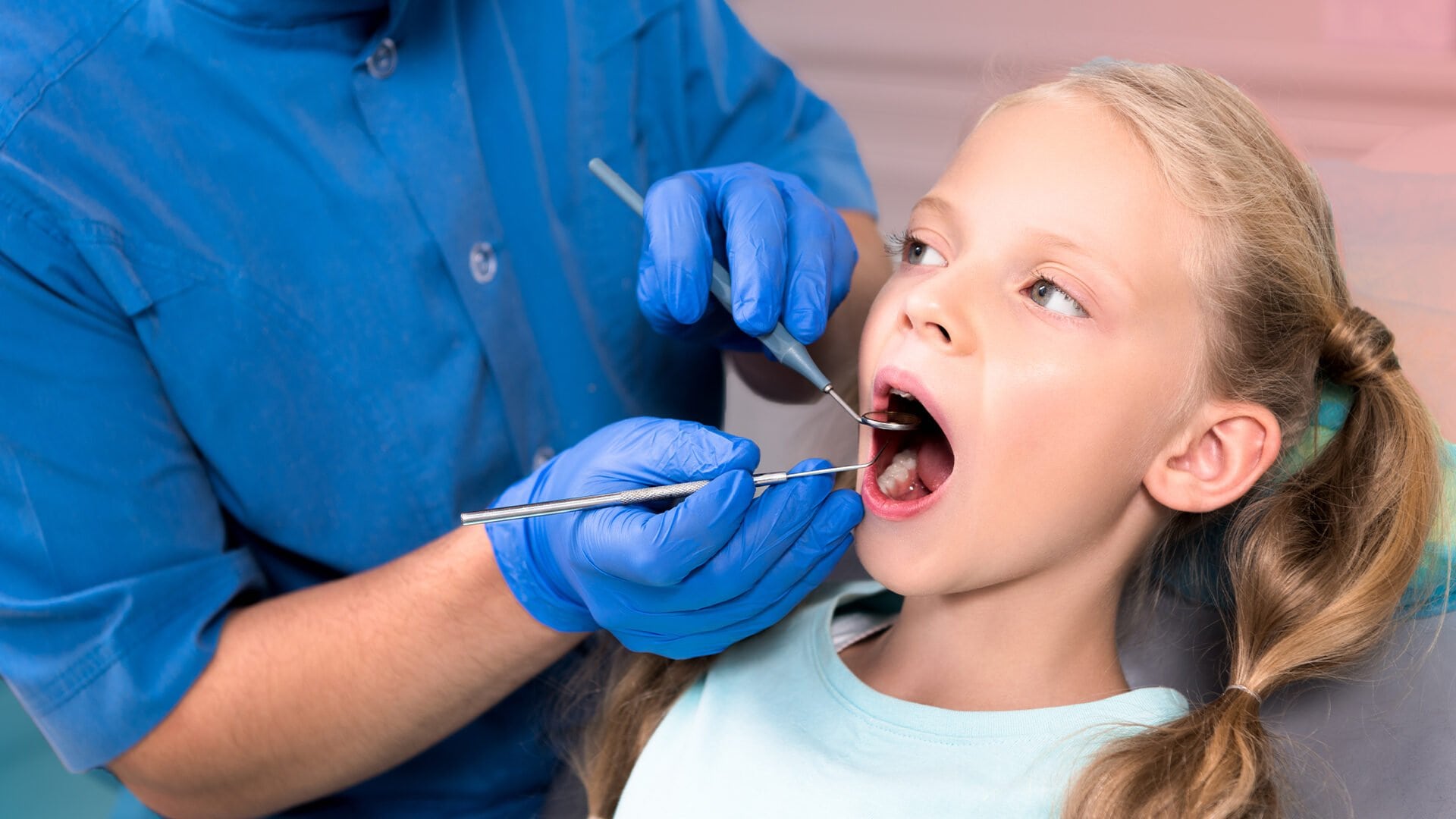
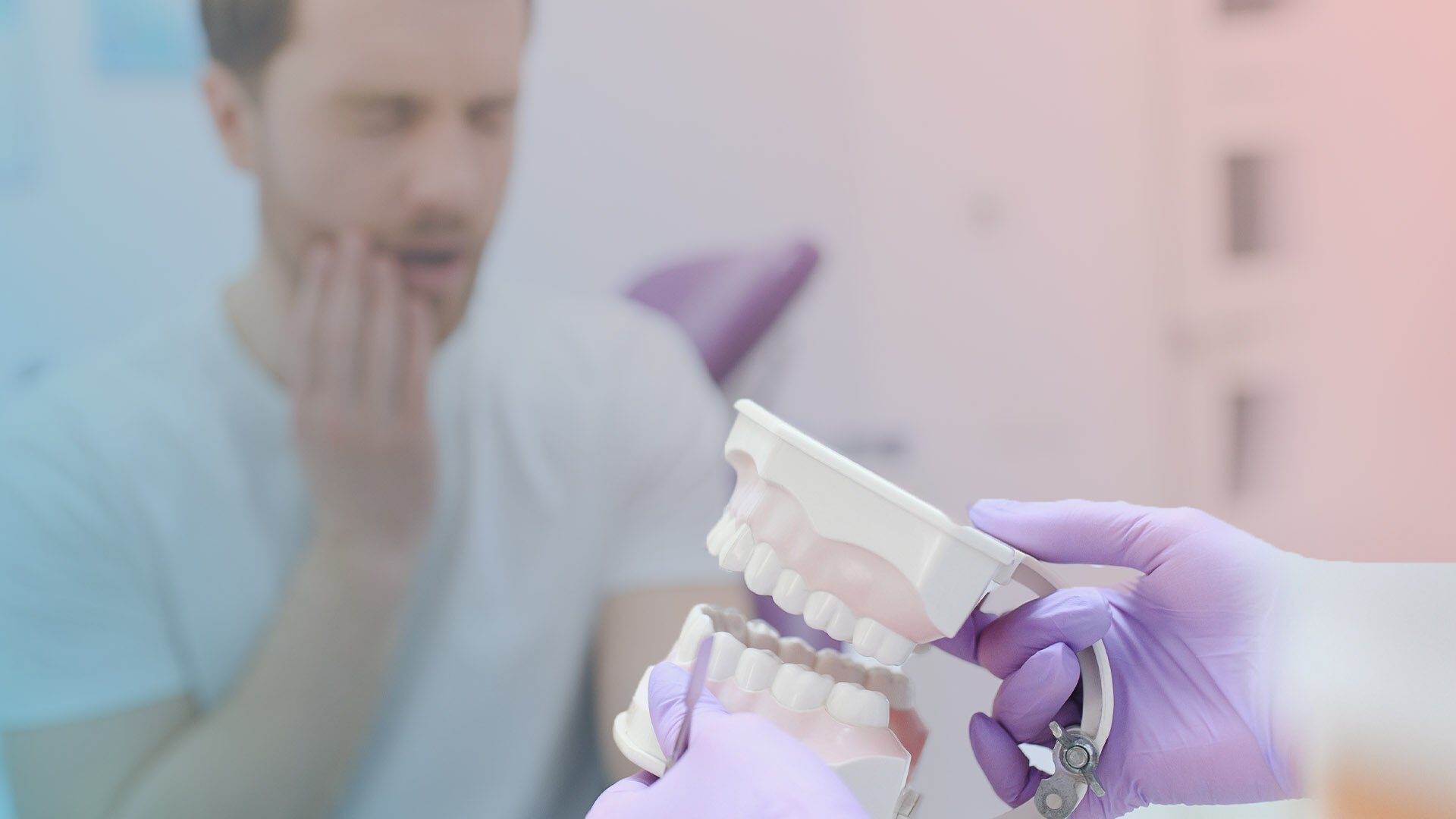
Dental trauma is any injury caused by an external force that damages a tooth, its supporting bone or the surrounding soft tissue, running from a hairline enamel crack through a displaced tooth to one knocked completely out of its socket, which is called avulsion. It is common rather than rare: a meta-analysis estimated prevalence at 15.2% in the permanent dentition (102 studies, 268,755 people) and 22.7% in the primary dentition (46 studies, 59,436 people), with an incidence rate of 2.82 per 100 person-years (PubMed 29455471). For an avulsed tooth, time and storage medium decide the outcome.
- 01Dental injuries are graded by what was damaged: crack or fracture of the crown, luxation where the tooth is displaced but still in the socket, and avulsion where the tooth has left the socket entirely.
- 02World prevalence was estimated at 15.2% in the permanent dentition (102 studies, 268,755 individuals) and 22.7% in the primary dentition (46 studies, 59,436 individuals), with incidence of 2.82 per 100 person-years (PubMed 29455471).
- 03A separate meta-analysis of 30 studies covering 151,205 patients across healthcare settings produced a pooled prevalence of 19.48% (95% CI 11.21 to 27.74), with very high heterogeneity between studies (PubMed 39465059).
- 04An avulsed tooth is held by the crown, never by the root, because the periodontal ligament cells on the root surface are exactly what allow the tooth to reattach after replantation.
- 05For storage up to 2 hours, milk kept more than 80% of periodontal ligament cells viable in a review of 15 cell-culture studies; at 24 hours milk fell to 57.2%, which is why the transport time matters as much as the medium (PubMed 30193009).
Dental trauma is a common health problem that can occur for various reasons in daily life. As a result of sports accidents, falls, collisions or a blow from a hard object, teeth may be broken, cracked or completely dislocated. Early intervention is of great importance for the protection of dental health. In this article, we will provide detailed information about the causes, types and treatment methods of dental trauma.
/ Dental Traumas and Common Causes
Dental traumas are injuries that occur due to any external factor that can disrupt the structural integrity of the teeth. Although such traumas are usually seen in children and individuals who do sports, they can affect all age groups. Dental traumas can occur in different ways and the treatment process for each is different.
Teeth exposed to trauma can lead to both aesthetic and functional problems. Cracked or broken teeth can negatively affect chewing function and can also cause aesthetic concerns. Tooth loss can lead to speech disorders and deformations in the jaw structure.
Dental trauma can occur for a variety of reasons. The most common causes are:
- Accidents that occur while playing sports
- Blows to the teeth as a result of falling
- Traffic accidents
- Blows and impacts to the facial area
- Hard foods damaging the teeth
- Habits such as clenching and grinding teeth
Dental trauma is not limited to teeth breaking or falling out. It can also affect the jawbone and gums, so it should be evaluated by a professional dentist. The reverse also holds: in an 11-year review of 2,110 patients treated for facial fractures, 13.1% also had dental injuries, and patients with lower jaw fractures were significantly more likely to have them. The reverse also holds: in an 11-year review of 2,110 patients treated for facial fractures, 13.1% also had dental injuries, and patients with lower jaw fractures were significantly more likely to have them.
/ Types of Tooth Trauma
Tooth traumas are divided into different categories according to the type of damage that occurs. Common types of tooth trauma are:
- Cracked or Broken Tooth
While small cracks may occur on the surface of the tooth, larger fractures may also occur. If the nerves of the tooth are not affected, it can be treated with a simple filling or crown. However, if the fracture has reached the root level, root canal treatment or extraction may be required. When the jaw may be broken as well, the panoramic film was long the standard first image; a comparison study found helical CT just as sensitive for mandible fractures, with better agreement between readers (96% versus 91% of fractures). When the jaw may be broken as well, the panoramic film was long the standard first image; a comparison study found helical CT just as sensitive for mandible fractures, with better agreement between readers (96% versus 91% of fractures).
- Displaced (Luxated) Tooth
The tooth may not be completely displaced as a result of the impact, but its position may change. In such a case, the tooth is pushed back to its original place and protected with fixing devices.
- Knocked-Out Tooth (Avulsion)
If the tooth has come completely out of its socket, a dentist should be consulted as soon as possible, keeping the tooth in milk or in saliva. The tooth can successfully reattach itself when it is placed in its place within a certain period of time.
In some cases, the tooth root and surrounding tissues may be damaged. In such a case, root canal treatment may be necessary. If it is not possible to save the tooth, treatment options such as implants or bridges are considered.
/ First Aid, Treatment Methods and Prevention for Dental Trauma
In case of tooth trauma, fast and correct intervention increases the chance of saving the tooth. Here is what to do when tooth trauma occurs:
- If there is bleeding, apply pressure with a clean cloth.
- Find the fallen or broken tooth and rinse it gently with clean water. Be careful not to hold the tooth by the root.
- Keep the knocked-out tooth in milk or saline.
- See a dentist as soon as possible.
Pain and sensitivity may occur after the trauma. Applying a cold compress can reduce swelling and relieve pain. However, the damage to the tooth can only be assessed by a dentist. Therefore, professional help should be sought as soon as possible.
Depending on the type and severity of dental trauma, different treatment methods can be applied:
- For broken or cracked teeth, filling, coating or root canal treatment can be applied.
- For displaced teeth, the tooth can be brought to the correct position and fixed.
- For fallen teeth, the tooth can be replaced or alternative solutions such as implants can be applied.
In addition, regular check-ups should be performed and dental hygiene should not be neglected to ensure that the tooth remains healthy in the long term.
Here are some precautions that can be taken to prevent dental trauma:
- Using mouth guards while doing sports
- Being careful in dangerous activities
- Going to regular dental check-ups to protect teeth
- Consuming hard foods carefully
- Preventing teeth grinding habits by using a night guard
Taking preventive measures can keep teeth healthy in the long term and minimize the risk of trauma.
/ Frequently Asked Questions
- What should be done when a tooth breaks?
When a tooth breaks, a dentist should be consulted as soon as possible. If the broken piece can be found, it should be kept in milk and taken to the dentist.
- Can the dislodged tooth be placed back in its place?
Yes, if it is delivered to the dentist quickly, it is possible to place the tooth back in its place. It is important to store the tooth in milk or saliva.
- What happens if a cracked tooth is not treated?
A cracked tooth can cause a larger fracture over time and pose a risk of infection. Therefore, it should be treated as soon as possible.
- How can dental traumas be prevented in children?
In order to prevent dental traumas in children, it is recommended to use protective equipment while playing or doing sports. In addition, safety precautions should be taken at home to prevent falls.
Dental traumas can be successfully managed with early intervention and correct treatment methods. Do not neglect regular dental check-ups to protect your dental health.
Let’s plan the right treatment together.
Free Assessment→- 1.Petti S, Glendor U, Andersson L. World traumatic dental injury prevalence and incidence, a meta-analysis-One billion living people have had traumatic dental injuries. Dent Traumatol 2018;34:71-86. PubMed 29455471
- 2.Tysiąc-Miśta M, Tanasiewicz M, Amini S, Najary S, Baghani MT, Eftekhar Ashtiani R, et al. Traumatic Dental Injuries' Prevalence across Diverse Healthcare Settings: A Systematic Review and Meta-Analysis. Arch Acad Emerg Med 2025;13:e11. PubMed 39465059
- 3.Osmanovic A, Halilovic S, Kurtovic-Kozaric A, Hadziabdic N. Evaluation of periodontal ligament cell viability in different storage media based on human PDL cell culture experiments-A systematic review. Dent Traumatol 2018;34:384-393. PubMed 30193009
- 4.Roth FS, Kokoska MS, Awwad EE, Martin DS, Olson GT, Hollier LH, et al. The identification of mandible fractures by helical computed tomography and panorex tomography. J Craniofac Surg. 2005;16(3):394-9.
- 5.Roccia F, Boffano P, Bianchi FA, Ramieri G. An 11-year review of dental injuries associated with maxillofacial fractures in Turin, Italy. Oral Maxillofac Surg. 2013;17(4):269-74.