
Menu

Free Consultation
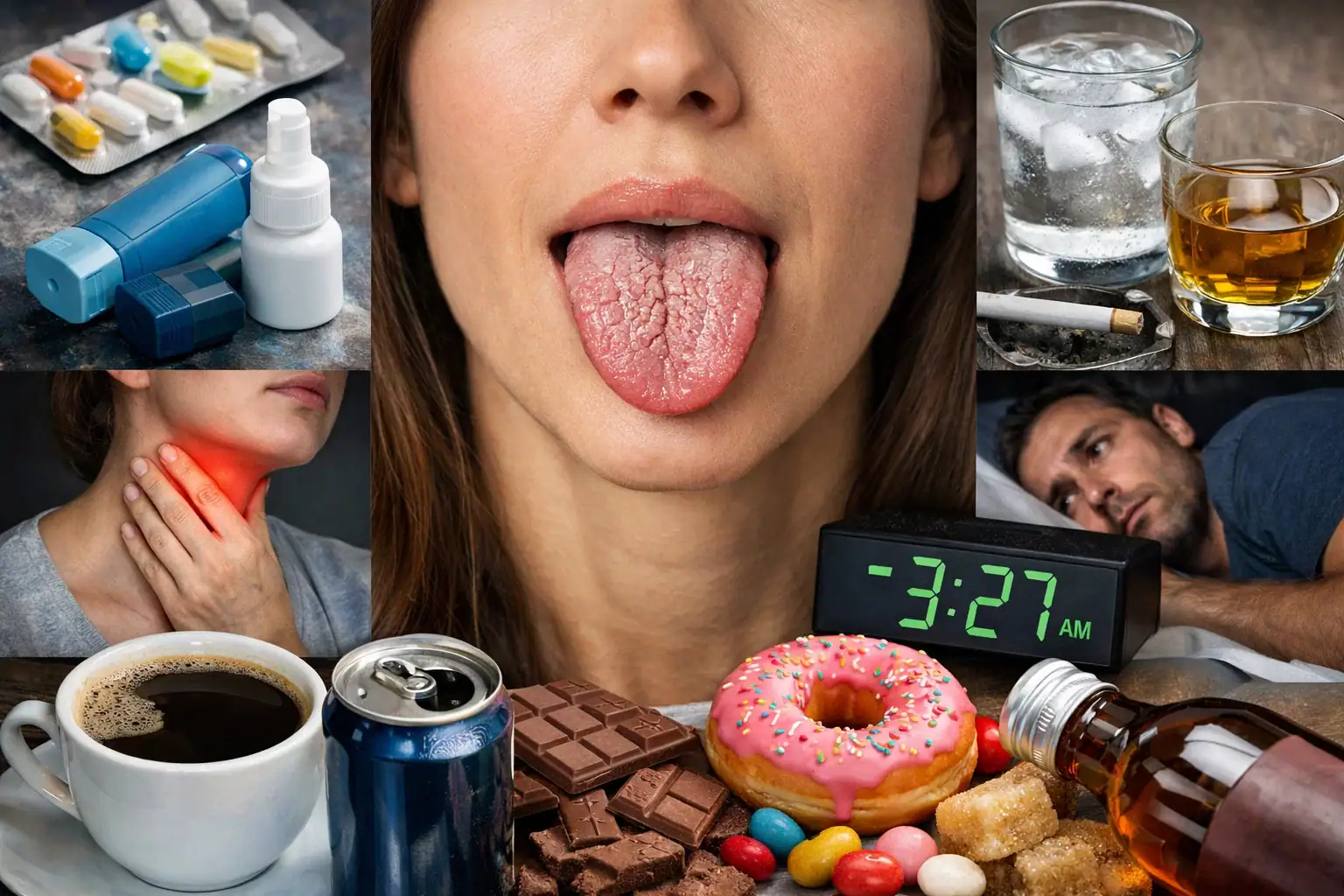
Dry mouth also called xerostomia happens when your salivary glands don’t produce enough saliva to keep your mouth comfortably moist. Saliva is not “just water.” It lubricates tissues, helps you chew and swallow, protects teeth from decay, buffers acids, supports taste, and helps control the growth of harmful microbes. When saliva drops, your mouth can feel sticky or burning, food can taste different, speaking can be uncomfortable, and cavities can progress faster than usual.
If you’re searching “what causes dry mouth”, you’re not alone and you’re also asking the right question. The best treatment depends on the cause: dehydration, mouth breathing, medications, systemic conditions (like diabetes), autoimmune disease (like Sjögren’s syndrome), nerve damage, or cancer therapy can all be behind the problem.
This guide breaks down the most common causes of dry mouth, how to recognize patterns (like dry mouth at night), and when to see a dentist or physician.
People use “dry mouth” for different experiences. Clinically, there are two related concepts:
You can have one without the other, which is why two people with “dry mouth” may have completely different root causes and different solutions.
Common dry mouth symptoms include:
Dry mouth isn’t only uncomfortable it can increase risk for tooth decay and gum problems because saliva is a major natural defense system.
One of the biggest and most overlooked causes of dry mouth is medication side effects. Many commonly prescribed and over the counter drugs can reduce saliva production or change saliva composition. The National Institute of Dental and Craniofacial Research (NIDCR) notes that hundreds of medicines can cause dry mouth, including many used for blood pressure and depression.
Why this happens: Many of these drugs have anticholinergic effects or reduce glandular secretions, leading to reduced saliva.
Practical clue: If your dry mouth started shortly after you began a new medication or after a dose increase medications may be the trigger.
What to do:
Don’t stop medication on your own. A clinician may adjust dose, timing, or switch to an alternative. In some cases, saliva substitutes or prescription salivary stimulants are used.
Dehydration is a very common cause of dry mouth and may happen even if you don’t feel “dehydrated.” Your body reduces saliva production when fluids are low.
What to do:
Hydrate consistently through the day (small frequent sips). If dehydration is from illness (vomiting/diarrhea/fever), treat the underlying issue and consider medical help if symptoms persist.
If you notice dry mouth at night or you wake up with a parched mouth, mouth breathing is a major suspect. Sleeping with your mouth open allows airflow to dry oral tissues. Mayo Clinic lists snoring and mouth breathing as contributors to dry mouth.
What to do:
People with sleep apnea often experience xerostomia due to nighttime mouth breathing. CPAP therapy can also contribute to dryness, especially if the mask fit is poor or the mouth opens during sleep. Research in sleep apnea populations notes mouth breathing as a contributing factor to dry mouth.
What to do:
Lifestyle factors can reduce saliva flow or worsen perceived dryness. The American Dental Association (ADA) lists potential lifestyle contributors like tobacco, alcohol, cannabis, excessive caffeine, and irritants.
What to do:
Diabetes and dry mouth are frequently linked. High blood sugar can contribute to dehydration and changes in saliva flow and oral health. Cleveland Clinic notes dry mouth can be a symptom associated with high blood sugar in diabetes.
Practical clue: If dry mouth comes with increased thirst, frequent urination, fatigue, or slow healing, a medical check for blood sugar is important.
Sjögren’s syndrome is a classic cause of chronic dry mouth because the immune system targets moisture-producing glands, including salivary glands. NIDCR lists Sjögren’s syndrome among diseases affecting salivary gland function.
Practical clue: Dry mouth plus dry eyes, fatigue, joint pain, or swelling near the jaw may raise suspicion (not a diagnosis, but a reason to see a physician).
Radiation to the head and neck can damage salivary glands, leading to thick saliva or severe dryness. This is one of the most significant long-term causes of xerostomia. Mayo Clinic and NIDCR resources note medical conditions and treatments as contributors; cancer-related gland damage is a well-established clinical issue.
What to do:
These cases often require coordinated care: fluoride protection, saliva substitutes, and sometimes prescription stimulants plus frequent dental maintenance due to elevated cavity risk.
Injuries or surgeries that affect head and neck nerves can reduce salivary gland signaling. Mayo Clinic lists nerve damage as a possible cause.
Salivary gland issues may also include:
If you notice swelling near the jawline, pain with meals, or recurrent gland tenderness, medical/dental evaluation is important.
People often say “dry mouth is just aging,” but aging itself is not always the direct cause. Instead, dry mouth becomes more common as people take more medications and develop conditions associated with reduced saliva. (This pattern is frequently emphasized in clinical overviews and patient resources.)
Use these patterns as clues:
Most likely: mouth breathing, snoring, nasal blockage, sleep apnea, CPAP-related dryness.
Most likely: medications that cause dry mouth.
Consider: dehydration and diabetes/high blood sugar.
Consider evaluation for Sjögren’s syndrome or other autoimmune issues.
Likely: salivary gland damage from treatment.
NIDCR recommends several self-care steps that can ease symptoms and protect oral health.
Dry mouth increases cavity risk. So protection matters as much as comfort:
Treatment depends on the underlying cause. Clinicians may recommend:
Dry mouth is often manageable but you should seek prompt medical/dental evaluation if you have:
NIDCR emphasizes working with healthcare providers to identify the underlying cause and protect oral health.
For many people, medications that cause dry mouth are a leading cause especially when multiple prescriptions are used.
The most common reasons are mouth breathing, nasal congestion, snoring, and sleep-disordered breathing.
Yes. Stress and anxiety can reduce saliva flow in some people. Mayo Clinic’s guidance discusses anxiety as a potential contributor in some contexts.
It can be. Dry mouth may occur with high blood sugar, and people with diabetes can be at higher risk for oral complications when dry mouth is present.
If symptoms last more than a couple of weeks, cause discomfort when eating/speaking, or you notice frequent cavities, bad breath, or infections, a dental visit is recommended.
Dry mouth (xerostomia) is usually a sign of medications, dehydration, mouth breathing, lifestyle factors, or an underlying health condition. The best approach is to identify the pattern, protect your teeth proactively, and treat the root cause. With the right plan, most people can significantly reduce symptoms and prevent long-term dental problems.