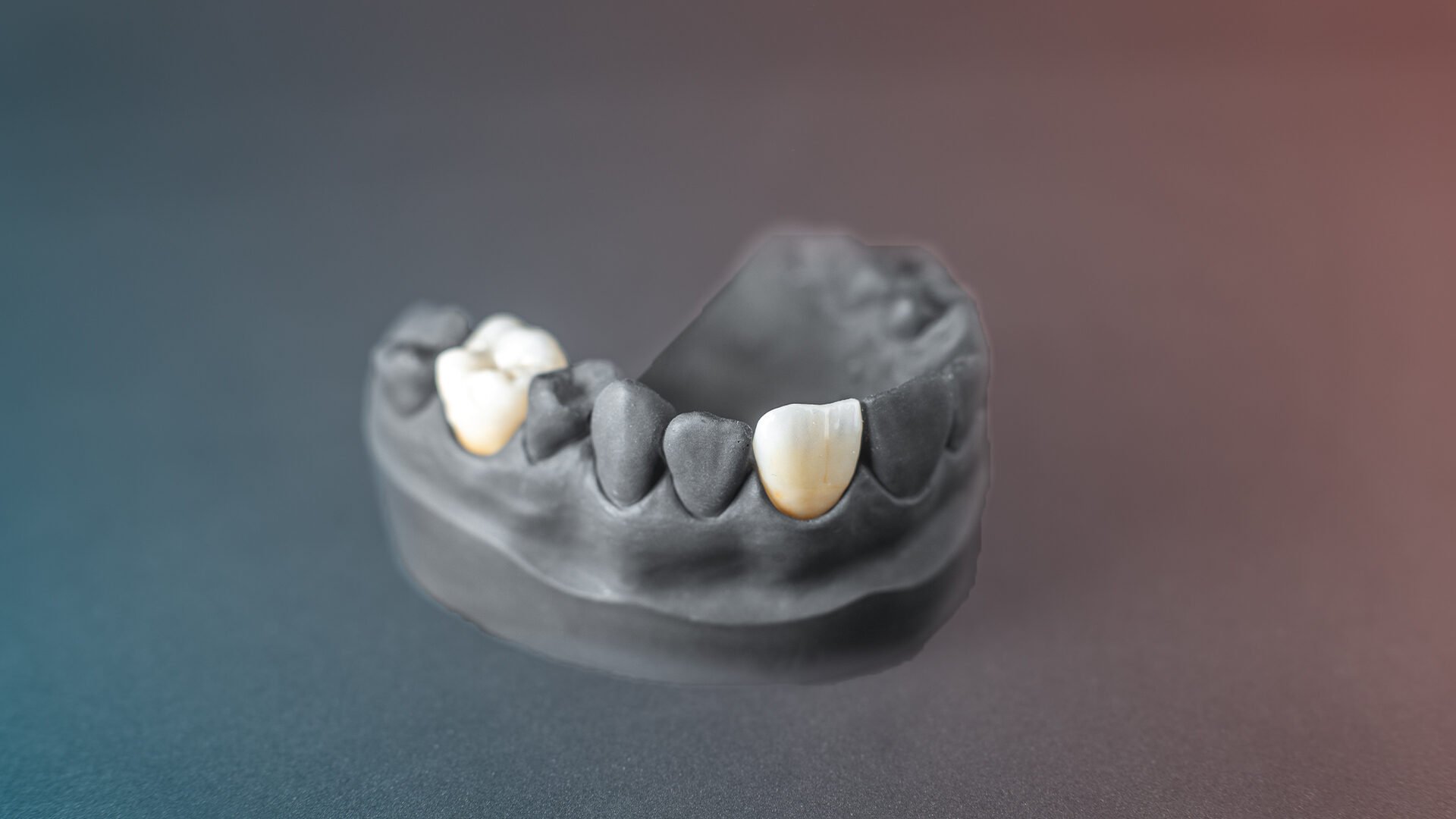
Zirconium coating, more precisely a zirconia crown, is a full-coverage restoration made from zirconium dioxide ceramic with no metal substructure, so no dark line appears at the gum margin. Zirconia is a material, not a technique: the tooth is prepared all the way round and the crown is cemented over it, the same way a metal-ceramic crown would be. In a meta-analysis of 64 studies reporting on 3,509 metal-ceramic and 8,051 all-ceramic tooth-supported single crowns, five-year survival was 96.8% for monolithic densely-sintered zirconia and 97.3% for veneered zirconia, against 97.1% for metal-ceramic (PubMed 41489982).
- 01Zirconia (zirconium dioxide, ZrO2) is the ceramic the crown is milled from; the crown itself is the restoration type. Comparing zirconia with a veneer or a bridge compares a material with a restoration type.
- 02Five-year survival of tooth-supported single crowns was 96.8% for monolithic densely-sintered zirconia, 97.3% for veneered zirconia and 97.1% for metal-ceramic, in a review of 64 studies (PubMed 41489982).
- 03Monolithic designs reduce the classic zirconia failure: monolithic lithium-disilicate and monolithic zirconia crowns showed significantly fewer ceramic fractures and chipping than veneered alternatives (PubMed 41489982).
- 04Older data were less favourable and the difference is instructive: an earlier review of 67 studies reporting on 4,663 metal-ceramic and 9,434 all-ceramic single crowns estimated five-year survival at 92.1% for densely sintered zirconia against 94.7% for metal-ceramic, with zirconia significantly worse in the posterior region (PubMed 25842099).
- 05Zirconia does not remove maintenance from the picture: in that earlier review, densely sintered zirconia crowns were lost to veneering ceramic fracture more often than metal-ceramic crowns and showed significantly more loss of retention (PubMed 25842099).
Today, one of the most preferred in the field of aesthetic dentistry is zirconium coating. Zirconium coating, which stands out with its durability, aesthetic appearance and biocompatible structure, offers results close to the appearance of natural teeth. In this article, we will discuss all the details about zirconium.
At Mosdent in Istanbul, a single crown runs from €170 to €210 per tooth, and what moves it is the material: monolithic zirconia sits at the lower end, chairside CAD/CAM zirconia at the upper. That is a starting price, not a quote: the figure that applies to you is written down after a free examination.
/ Zirconium Coating, Advantages and Suitable Candidates
Zirconium coating is a type of dental coating that is durable and highly light-transmitting, used to give teeth a more aesthetic appearance. This method, which offers a more natural appearance compared to metal-supported coatings, is often preferred because it has a color and structure very close to tooth enamel.
Zirconium coating has many advantages in terms of aesthetics and durability. Here are the main advantages of zirconium coating:
- Natural and Aesthetic Appearance
Thanks to the light transmittance of the zirconium material, an appearance very close to natural teeth is obtained. In this way, an artificial appearance is not formed.
- Durability and Long-Lasting Use
Zirconium is one of the most durable among dental coating materials. It can be used for many years with proper care.
- Biocompatible and Non-Allergic Material
Since it does not contain metal, the risk of allergic reactions is low and it has a structure compatible with the gums.
- High Gum Compatibility
Since zirconium coatings are in natural harmony with the gums, they do not cause problems such as gum recession over time.
- Resistant to Color Change
It is resistant to external factors such as tea, coffee, cigarettes and maintains its whiteness for a long time.
Zirconium coating is suitable for individuals with aesthetic concerns or various dental problems. Here are some situations where this method is recommended:
- People who experience color change and cannot get results with whitening
- People with broken or cracked front teeth
- People with excessive wear on their teeth
- Patients with metal allergies
- People with crooked or spaced teeth
- People who want to have a more aesthetic and healthy smile
/ Zirconium Coating Application, Aftercare and Prices
The zirconium coating process is usually completed in several stages. The process consists of the following steps:
- Examination and Planning
First, the patient's tooth structure is examined in detail and it is decided which teeth will be coated.
- Preparing the Teeth
The teeth to be coated are prepared for the placement of the coating by reducing them appropriately. At this stage, local anesthesia is applied to prevent the patient from feeling pain.
- Taking Impressions and Temporary Coating
Personalized coatings are prepared according to the impressions taken from the teeth. Temporary coatings are applied to reduce the patient's tooth sensitivity during this process.
- Preparing the Zirconium Coating
Zirconium coatings that are most suitable for the natural tooth form are produced in the laboratory based on digital impressions.
- Applying the Coatings to the Teeth
The prepared coatings are fixed to the teeth with special adhesives and final adjustments are made. At the last stage, the patient's comfort and bite functions are checked.
In order for zirconium coatings to last long, they need to be taken care of. Here are the things to consider:
- Regular daily brushing and flossing
- Avoiding biting hard foods
- Using night guards if you have a habit of grinding or clenching your teeth
- Going to regular dentist check-ups
Zirconium coating prices may vary depending on the quality of the material used, the experience of the dentist, the number of teeth to be applied and the location of the clinic. It is recommended that you consult a dentist to get up-to-date price information.
/ Frequently Asked Questions
- How long does a zirconium coating last?
It can last up to 15 years with regular maintenance and good oral hygiene.
- Does a zirconium coating harm teeth?
No, if applied correctly, it does not harm teeth and is compatible with gums.
- Do zirconium coatings look like natural teeth?
Yes, it is quite difficult to distinguish from natural teeth thanks to its light transmittance and natural white tone.
- Is there sensitivity after the coating?
There may be slight sensitivity in the first few days, but it disappears over time.
- Can a zirconium coating be applied to all age groups?
Yes, it is suitable for every individual whose teeth have completed their development.
It is recommended that you consult a dentist to get detailed information about zirconium coating and create a personalized treatment plan.
Let’s plan the right treatment together.
Free Assessment→- 1.Pjetursson BE, Pitta J, Balet A, Bjarnadottir GR, Sailer I, Romandini P. A Systematic Review and Meta-analysis Evaluating the Survival, Failure, and Complication Rates of Metal-Ceramic, Veneered, and Monolithic All-Ceramic Tooth-Supported Single Crowns-Part 1. Int J Prosthodont 2026;39:308-324. PubMed 41489982
- 2.Sailer I, Makarov NA, Thoma DS, Zwahlen M, Pjetursson BE. All-ceramic or metal-ceramic tooth-supported fixed dental prostheses (FDPs)? A systematic review of the survival and complication rates. Part I: Single crowns (SCs). Dent Mater 2015;31:603-23. PubMed 25842099