Menu

Free Consultation
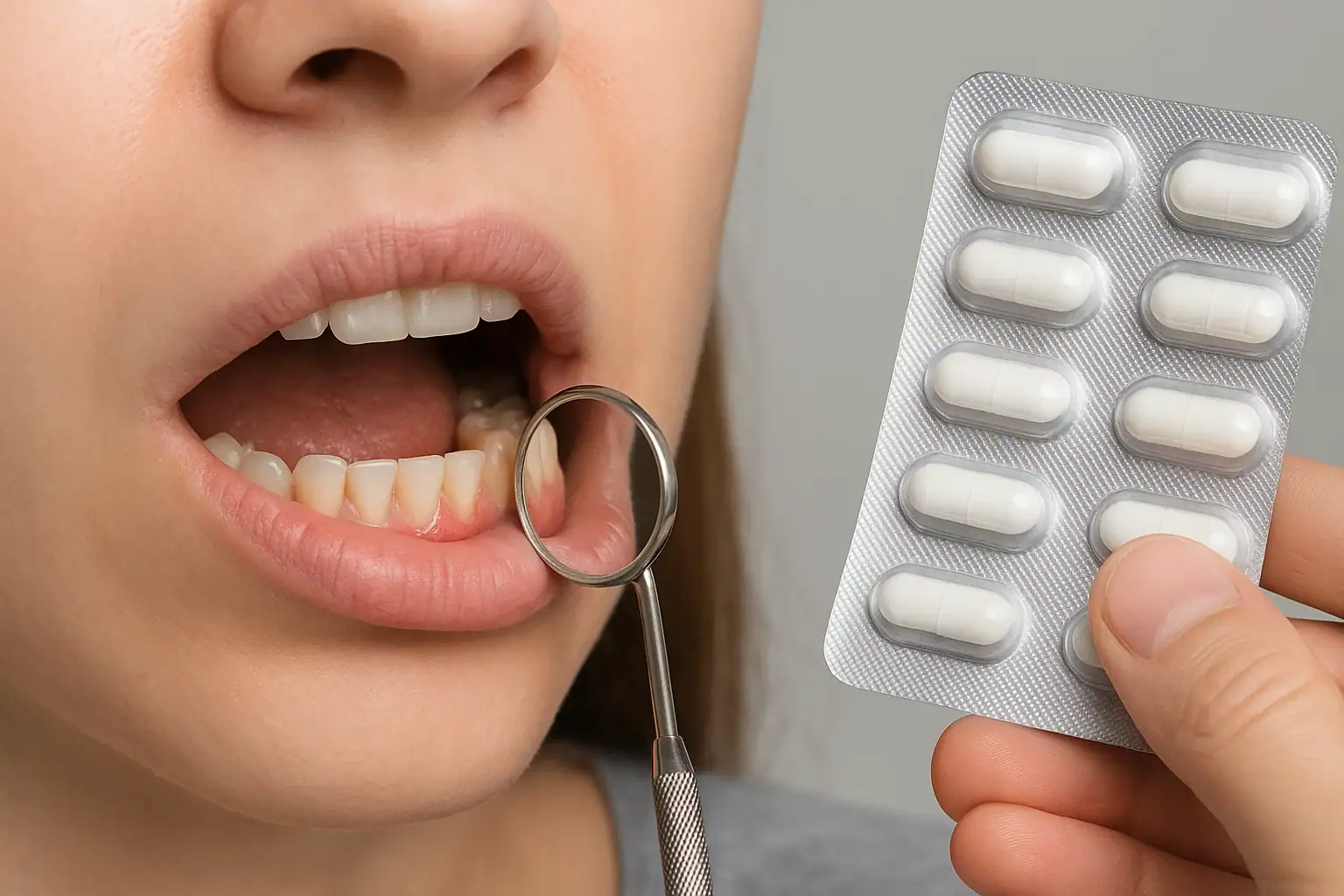
Many people who experience swollen, bleeding, or painful gums immediately search online for antibiotics for gum infection. It is one of the most common dental questions worldwide:
“Do I need antibiotics for a gum infection?”
The answer is not always and in many cases, antibiotics are not the right first line of treatment. In fact, incorrect antibiotic use can delay proper treatment, increase bacterial resistance, and make gum disease harder to control in the long term.
In this complete, medically accurate and SEO-optimized guide, you will learn:
This article is written using current periodontal guidelines, clinical studies, and evidence-based dentistry.
A gum infection, medically referred to as a periodontal infection, is an inflammatory condition caused by pathogenic bacteria accumulating beneath the gum line. These bacteria form biofilms (plaque) and release toxins that trigger inflammation in the surrounding soft tissues and bone.
Over time, untreated bacterial activity leads to:
There are two main types of gum infection, and the need for antibiotics depends heavily on which stage the patient is in.
Gingivitis is the earliest and mildest form of gum infection. It affects only the superficial gum tissue and does not involve bone loss.
Common clinical signs:
Gingivitis is fully reversible with proper plaque control and professional cleaning.
Critical medical fact:
Gingivitis is NOT treated with antibiotics because:
Professional scaling combined with daily brushing and flossing can completely reverse gingivitis within 7 to 14 days.
Periodontitis is a chronic, destructive bacterial infection that damages the supporting structures of the teeth, including:
Common signs and symptoms:
Unlike gingivitis, periodontitis is NOT fully reversible, but it can be controlled with proper periodontal therapy.
This is the stage where antibiotics may be considered in selected cases, but only as an adjunct to mechanical treatment.
Antibiotics are not routinely prescribed for gum infections. They are only indicated under specific medical conditions, including:
In these cases, antibiotics are used to control bacterial spread, not to cure the disease alone.
Key dental principle:
Most gum infections are caused by hardened plaque and tartar, not free-floating bacteria that antibiotics alone can eliminate.
Unnecessary antibiotic use causes serious long-term problems:
According to modern periodontal guidelines:
Antibiotics must never replace mechanical periodontal treatment.
They are only supportive tools in advanced infections.
More than 700 bacterial species exist in the human oral cavity. Only a fraction of these are responsible for periodontal disease, including:
These bacteria live in deep pockets where oxygen levels are low. This is why mechanical removal and oxygen exposure are essential for healing.
Only dentists and physicians are authorized to prescribe antibiotics for gum infections. The choice depends on bacterial profile, patient health, and allergy status.
| Antibiotic | Clinical Use |
|---|---|
| Amoxicillin | Broad-spectrum periodontal infections |
| Metronidazole | Anaerobic bacterial infections |
| Amoxicillin + Metronidazole | Severe or aggressive periodontitis |
| Clindamycin | Penicillin allergy |
| Azithromycin | Alternative therapy |
Important warnings:
This is the gold standard treatment for gum infections. It removes:
Laser energy destroys bacteria and promotes tissue regeneration without antibiotics.
These can reduce inflammation but do NOT cure infection:
Natural methods are supportive but never replace professional care.
A gum abscess is a localized collection of pus caused by advanced bacterial infection.
Signs:
A gum abscess always requires professional drainage and often requires antibiotics to prevent systemic spread.
Untreated gum disease is strongly linked to:
| Condition | Healing Time |
|---|---|
| Mild gingivitis | 7–14 days |
| Moderate periodontitis | 1–3 months |
| Severe periodontitis | Long-term maintenance |
| Gum abscess | Improvement within days after drainage |
Do antibiotics cure gum disease permanently?
No. They only reduce bacteria temporarily.
Can I take antibiotics at home for gum pain?
No. This delays correct diagnosis.
Is bleeding gums a sign I need antibiotics?
No. It usually indicates plaque-related inflammation.
Are antibiotics enough for periodontitis?
Never alone. Mechanical therapy is mandatory.
Antibiotics are:
The real solution is professional periodontal care, not medication alone.