Menu

Free Consultation
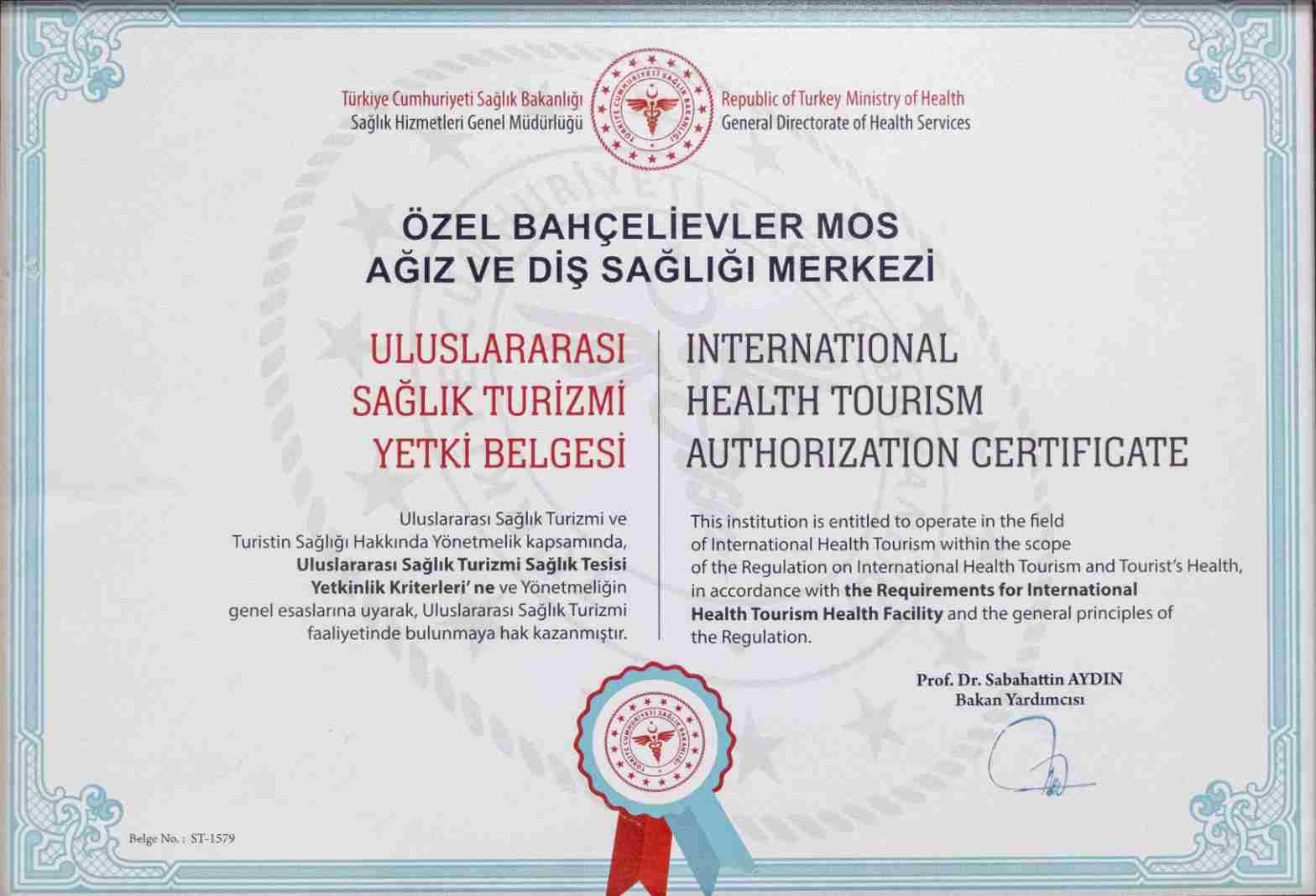
Dental implants are one of the most successful dental treatments available today. They can last decades and even a lifetime with proper implant care and daily hygiene. A common concern among patients, however, is:
👉 How to clean dental implants properly?
👉 What oral hygiene routine should I follow after implants?
👉 Is implant care different from natural teeth?
👉 What tools and techniques should I use?
This comprehensive guide answers questions such as "How to Clean Implant Teeth?" and "Implant Care," including how MosDent Hospital advises patients on implant care and repair.
Dental implants act as artificial tooth roots that support crowns, bridges, or full arch restorations. Unlike natural teeth, implants:
✔ Do NOT decay
✔ Can still accumulate plaque and bacteria
✔ Can develop peri-implant diseases if not cleaned properly
The critical goal of implant cleaning is not only cosmetic brightness, but preventing inflammation around the implant, particularly:
Peri-implant mucositis • Reversible gum inflammation
Peri-implantitis • Bone loss-associated inflammation
Both conditions are largely preventable with a correct hygiene routine.
Cleaning natural teeth and cleaning dental implants are similar in principle, but there are some key differences:
✔ Implant surfaces can be scratched by hard hygiene tools
✔ Gum structures around implants differ from natural teeth
✔ Special interdental brushes or floss may be required
✔ Implants require specific cleaning techniques to prevent peri-implant disease
In other words, implant care is not just brushing it’s targeted hygiene plus professional monitoring.
Here’s a full daily routine that covers both cleaning and maintenance:
Use a soft-bristled toothbrush (manual or electric) at least twice daily.
Why soft?
✔ Prevents scratching the implant surface
✔ Protects gum tissue
✔ Removes plaque safely
Electric toothbrushes with soft bristles can be particularly effective.
Standard floss may not reach around implants as effectively as specialized products. Options include:
✔ Threaded implant floss
✔ Super floss
✔ Waxed floss for implants
How to floss implants:
Interdental brushes are excellent for cleaning between implants or between an implant and a natural tooth.
✔ Use non-metal brushes
✔ Choose appropriate diameters (smallest that fits comfortably)
✔ Brush gently without forcing
These brushes remove biofilm from spots that toothbrushes miss.
In high-risk cases or after surgery, an antibacterial mouth rinse may be recommended.
Important notes:
Bacteria also accumulate on the tongue. A tongue scraper or soft brush helps reduce overall oral biofilm.
Daily routine is essential, but long-term implant success also depends on:
✔ Inspection of implant area
✔ Gentle interdental clean
✔ Observation of any redness, swelling or bleeding
At least twice a year, or more often if needed.
Professional tools can:
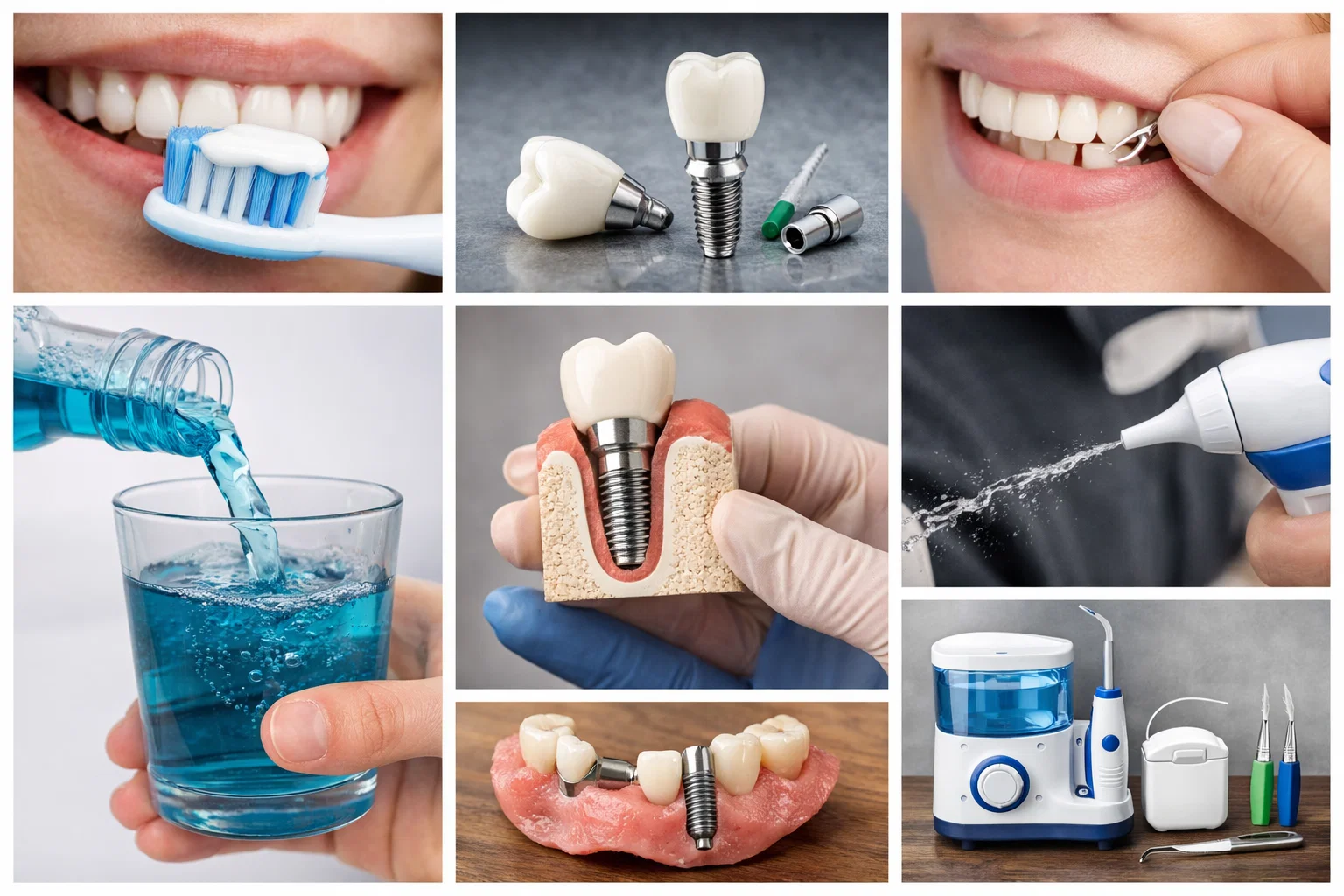
Using the right tools can make implant maintenance more effective and prevent complications:
✔ Soft toothbrush (manual or electric)
✔ Interdental brushes (non-metal)
✔ Implant-specific floss (super or threaded)
✔ Water flossers (oral irrigators) — with caution
✔ Antibacterial rinses (when advised)
❌ Hard-bristled brushes
❌ Metal picks or abrasive tools
❌ Toothpastes with heavy abrasives
Using the wrong tools can scratch the implant surface and make biofilm buildup more likely.
The method varies slightly depending on the restoration type:
Focus on:
Use soft brush + interdental brush + floss regularly.
This restoration replaces multiple teeth but creates areas where food can trap.
Recommended:
✔ Interdental brushes
✔ Floss threaders
✔ Water flosser (if advised)
These systems are stable but require attention under the bridge area.
Best approach:
Water flossers (oral irrigators) are very popular, but they are not a substitute for brushing and flossing.
Best practice: combine water flosser with brushing and interdental cleaning.
One of the most serious risks for implants is peri-implant disease, which includes:
Inflammation limited to soft tissues reversible with cleaning.
Inflammation with bone loss requires professional intervention.
Signs to watch for:
✔ Bleeding on brushing
✔ Persistent bad breath
✔ Red or swollen gums around implant
✔ Pus or discharge
✔ Implant mobility (late stage)
Early hygiene and frequent maintenance significantly reduce these risks.
Here are some searched phrases and their clarifications:
✔ False implants can accumulate biofilm just like natural teeth.
✔ False interdental cleaning and professional maintenance are required.
✔ False improper hygiene increases failure risk over time.
In the immediate healing phase (first few weeks), focus on:
✔ Gentle cleansing around the implant area
✔ Avoiding vigorous rinsing
✔ No tobacco or alcohol
✔ Cold compress for swelling when needed
✔ Soft diet to avoid irritation
Most implant patients are advised:
🔹 Every 6 months for regular checkup
🔹 Every 3–4 months if history of gum disease
🔹 Sooner if any signs of inflammation occur
Professional monitoring ensures early detection of complications.
At MosDent Hospital, implant care is part of a comprehensive treatment package:
✔ Personalized hygiene education
✔ Demonstration of correct brushing/flossing techniques
✔ Professional cleaning by implant specialists
✔ Digital monitoring (photography & scans if needed)
✔ Long-term maintenance plans
Personalized care significantly improves outcomes and reduces the risk of peri-implant complications.
Daily hygiene is vital, but systemic and lifestyle factors also matter:
Daily brush, floss, and interdental cleaning.
Avoid sticky sugars that feed bacteria.
Smoking increases the risk of peri-implantitis.
Saliva helps clean bacteria naturally.
Daily brushing, interdental cleaning, and regular professional checkups.
Yes peri-implantitis is a gum and bone infection around implants.
Yes floss or interdental brush is essential to clean around implant edges.
Brush twice daily and use interdental tools once daily, plus professional cleaning every 3–6 months.
Yes as a supplement to mechanical cleaning, not a substitute.
Dental implants are a long-lasting solution if cleaned properly.
✔ Brush gently but thoroughly
✔ Clean between teeth and implants daily
✔ Visit your dentist regularly
✔ Use the right tools
✔ Address inflammation early
At MosDent, implant care is not an afterthought it’s a core part of treatment success.