
Wisdom tooth extraction differs between teenagers and adults mainly in root development and healing speed: in teenagers the roots of the third molars are not yet fully formed and the surrounding bone is less dense, while in adults the roots are complete and lie closer to the inferior alveolar nerve and the sinus. The window usually described for extraction is 17 to 25 years. In a prospective cohort of 149 patients and 245 mandibular third molar extractions, older age was an independent predictor of alveolar osteitis with an odds ratio of 1.178, and postoperative morbidity rose with deeper impaction and longer operating time (PubMed 18940492).
- 01The extraction window usually described is 17 to 25 years, while third molar roots are still developing and bone is less dense than in later adulthood.
- 02In 245 mandibular third molar extractions, age was an independent predictor of alveolar osteitis (OR 1.178), together with lingual retraction (OR 11.293), while operating time predicted pain (OR 1.085) (PubMed 18940492).
- 03In a retrospective series of 339 single third molar extractions, perioperative complications occurred in 15.0% of cases and were most often inflammatory (PubMed 33789003).
- 04The evidence is not uniform: that same series found lower third molars and surgical removal with root separation to be the risk factors, with no significant association to patient age or sex (PubMed 33789003).
- 05Systemic conditions that grow more common with age complicate healing; in the 339-extraction series, 31 of the 51 complications were acute inflammation of the surrounding tissues (PubMed 33789003).
Wisdom tooth extraction is a rite of passage for many. It's an experience that marks the transition from adolescence to adulthood, but the journey can vary significantly between teenagers and adults. As these third molars make their grand entrance, they often bring challenges, some more daunting than others.
For teens, it might feel like just another step in growing up. However, the stakes for adults with added complexities and risks can be higher. Understanding the different healing processes and potential complications tied to age is crucial for anyone facing this dental procedure.
Whether you're a concerned parent or an adult contemplating your own wisdom teeth removal, knowing what to expect can ease anxiety and ensure smoother recovery. Let's dive into how age affects the wisdom tooth extraction experience!
/ Healing Process and Challenges of Wisdom Tooth Extraction in Teenagers
The healing process for teenagers after wisdom tooth extraction typically unfolds quickly. Their bodies are often more resilient, allowing them to bounce back faster than adults.
However, challenges still arise. Swelling and discomfort can be prevalent in the first few days. Teens might find it hard to stick to a soft diet, tempted by their favourite snacks.
Pain management is crucial during this time. Dentists usually prescribe pain relievers or recommend over-the-counter options that help mitigate discomfort effectively.
Another challenge involves maintaining oral hygiene while avoiding irritation at the extraction site. Teens need to follow post-operative care instructions diligently to prevent infections.
Peer pressure can also complicate recovery, friends may encourage returning to regular activities too soon, which isn't always advisable. Balancing social life with self-care becomes critical during this transitional period for young patients.
/ Risks and Difficulties of Wisdom Tooth Extraction in Adults
Wisdom tooth extraction in adults can present unique challenges. One significant risk is the possibility of complications due to age-related factors. Adults may have denser bone structures, making the procedure more complex.
Moreover, older patients often face a higher likelihood of pre-existing dental issues or systemic health problems. Conditions like diabetes or heart disease can heighten risks during and after surgery.
Healing times may also be longer for adults compared to teenagers. This slower recovery can increase discomfort and a greater chance of post-operative infections.
Additionally, nerve damage poses a concern during extractions. The proximity of wisdom teeth to vital nerves increases the risk of numbness or tingling in surrounding areas if an experienced oral surgeon does not manage carefully.
Understanding these risks allows adults to make informed decisions about their dental health and treatment options regarding wisdom tooth extraction.
/ What is the Ideal Age for Wisdom Tooth Extraction?
The ideal age for wisdom tooth extraction typically falls between 17 and 25. This window is crucial as the roots are still developing, making the procedure smoother.
Younger patients often experience fewer complications during recovery. Their bone structure is less dense, allowing easier removal of the teeth. Healing tends to be quicker in teenagers compared to older adults.
However, not everyone develops wisdom teeth at the same time. Regular dental check-ups can help track their growth and determine when extraction might be necessary.
Delaying this procedure past your early twenties may lead to potential issues such as impaction or overcrowding. These complications can cause pain and even affect nearby teeth.
Consulting with a dentist about your unique situation is critical in deciding the right timing for wisdom tooth extraction.
/ Orthodontic Needs for Wisdom Tooth Extraction in Teens and Adults
Wisdom tooth extraction often intersects with orthodontic treatment, impacting teens and adults differently. For teenagers, the eruption of wisdom teeth can disrupt the alignment achieved through braces or other orthodontic devices. Early removal may prevent future misalignment issues.
Adults face a different scenario. Many might have already undergone orthodontic work years prior. However, as wisdom teeth emerge later in life, they can still pose risks to existing dental structures. This disruption can lead to crowding or shifting of teeth that were previously straightened.
Orthodontists typically assess the position of wisdom teeth during routine check-ups. They consider age and growth patterns before recommending extraction for optimal oral health outcomes. Both age groups benefit from tailored approaches depending on their specific orthodontic needs and overall dental health status.
/ Age-Related Potential Complications in Wisdom Tooth Extraction
Wisdom tooth extraction can have complications, which often vary based on age. For teenagers, the roots of wisdom teeth are typically not fully developed. This makes extractions relatively more manageable and less complicated. Healing tends to be quicker because their bodies grow and regenerate tissues more efficiently.
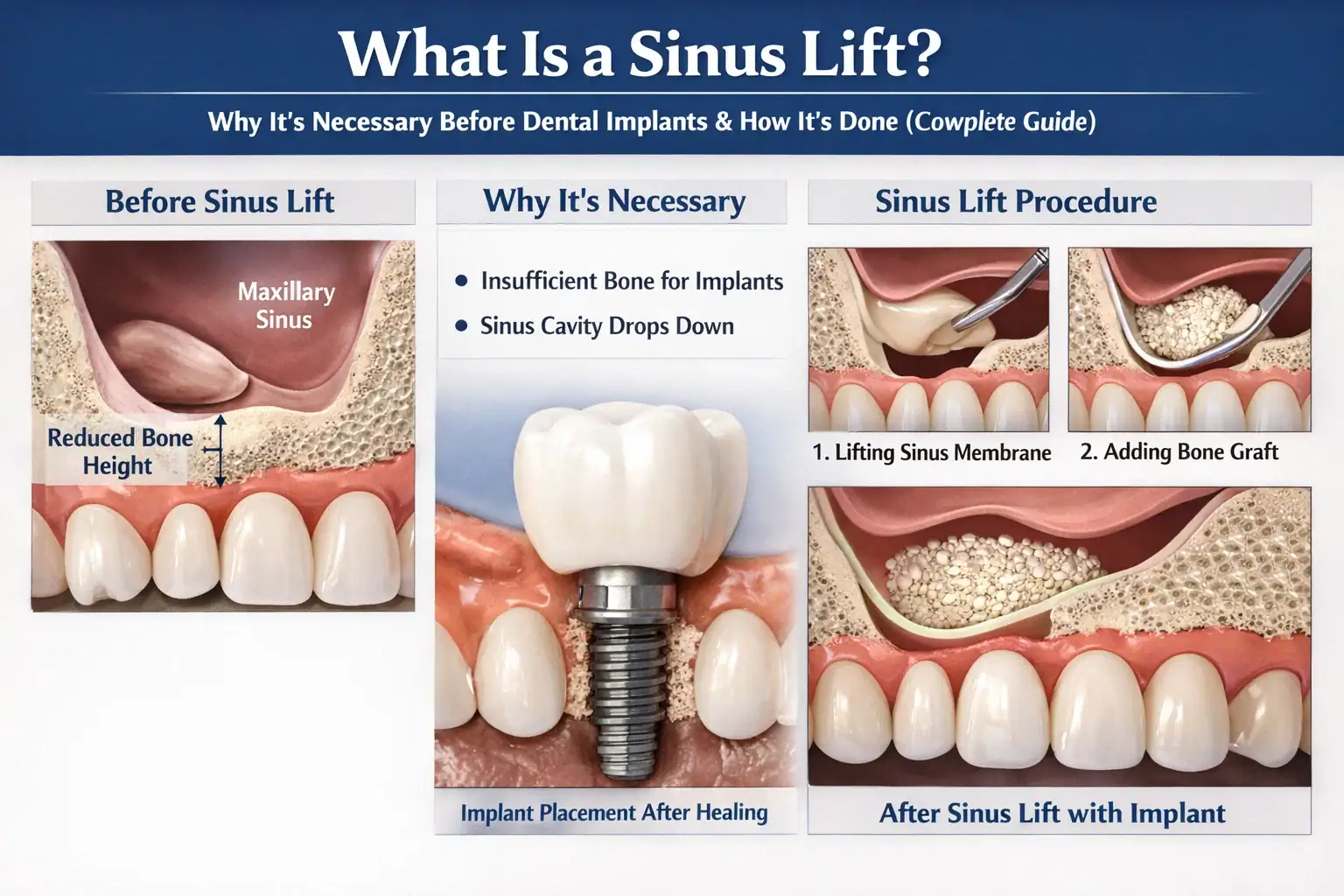
On the other hand, adults may face potential complications that stem from age-related factors. The root systems in adults are usually fully formed and positioned closer to vital structures like nerves or sinuses. This increases the risk of nerve damage during extraction and infections or prolonged healing times post-surgery.
Additionally, older adults might have underlying health conditions such as osteoporosis or diabetes that could complicate both the procedure itself and recovery afterwards. These factors must be considered when planning a wisdom tooth extraction for an adult patient.
Understanding these nuances is crucial for anyone facing this joint dental surgery. Both teens and adults should consult with their dentist to navigate their unique needs effectively.
Let’s plan the right treatment together.
Free Assessment→- 1.Baqain ZH, Karaky AA, Sawair F, Khraisat A, Duaibis R, Rajab LD. Frequency estimates and risk factors for postoperative morbidity after third molar removal: a prospective cohort study. J Oral Maxillofac Surg 2008;66:2276-83. PubMed 18940492
- 2.Kiencało A, Jamka-Kasprzyk M, Panaś M, Wyszyńska-Pawelec G. Analysis of complications after the removal of 339 third molars. Dent Med Probl 2021;58:75-80. PubMed 33789003