Menu

Free Consultation
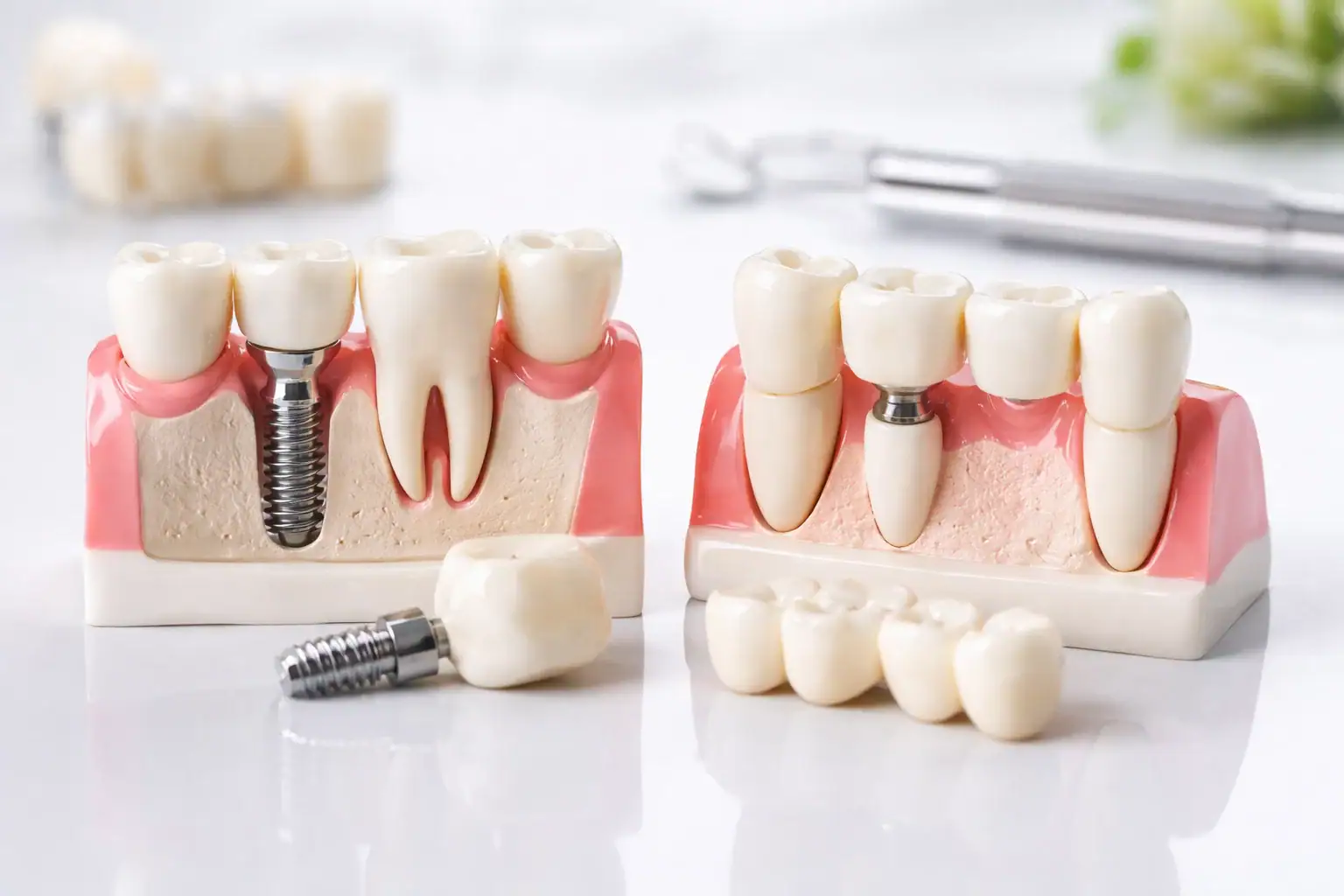
Missing teeth can affect your confidence, speech, chewing ability, and overall oral health. Two of the most common solutions for replacing missing teeth are dental implants and dental bridges. But which one is better? What are the real differences between implants and bridges?
In this comprehensive guide, you’ll learn:
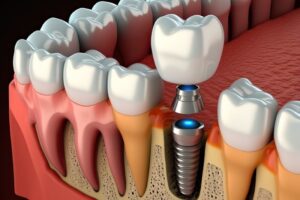
A dental implant is a titanium post surgically placed into the jawbone to act as an artificial tooth root. Once healed, a crown is attached on top, creating a natural-looking replacement tooth.
✔ Looks and feels like a natural tooth
✔ Prevents bone loss
✔ Does not affect nearby teeth
✔ Long-lasting solution
✔ Strong chewing power
✔ High success rate
Suggested Image:
A dental bridge is a prosthetic tooth (or teeth) held in place by crowns on adjacent natural teeth. These supporting teeth are reshaped to anchor the bridge.
✔ Faster treatment
✔ No surgery required
✔ Lower upfront cost
✔ Proven technique
❌ Healthy teeth must be shaved
❌ Does not prevent bone loss
❌ Shorter lifespan than implants
Suggested Image:
| Feature | Dental Implant | Dental Bridge |
|---|---|---|
| Adjacent teeth | Not affected | Must be trimmed |
| Bone preservation | Yes | No |
| Durability | 20+ years | 7–10 years |
| Surgery | Required | Not required |
| Aesthetics | Excellent | Good |
| Comfort | Very high | Moderate |
| Cleaning | Easy | More difficult |
Dental Implants
Dental Bridges
➡ Implants are the more permanent solution.
Ideal candidates:
✔ Good overall health
✔ Enough jawbone
✔ Non-smokers or light smokers
✔ Good oral hygiene
Not ideal:
✔ Patients who want quick results
✔ Patients with existing crowns
✔ Patients who cannot undergo surgery
✔ Budget-conscious patients
Implants
Bridges
Dental Implants
✔ Natural gum contour
✔ Perfect color match
✔ No dark metal edges
Dental Bridges
✔ Good cosmetic outcome
❌ Gum recession over time
❌ Possible metal shadows
Implants
Bridges
Prices depend on:
Dental Implant:
$1,500 – $4,000 per tooth
Dental Bridge:
$800 – $2,500
⚠ Although implants cost more initially, they last longer.
Dental implants:
✔ Prevent jawbone loss
✔ Protect neighboring teeth
✔ Maintain facial structure
Dental bridges:
❌ Bone loss continues
❌ Stress on support teeth
Dental implants mimic real teeth:
✔ Root replacement
✔ Natural chewing
✔ Independent structure
Dental bridges:
❌ Depend on other teeth
Implants
Bridges
These technologies increase:
✔ Precision
✔ Comfort
✔ Success rate
Implants are better long-term solutions.
Yes, if cement weakens.
Yes, with proper care.
Depends on provider.
Most cosmetic dentists prefer:
👉 Dental implants
because they:
✔ Preserve natural teeth
✔ Look more realistic
✔ Prevent bone loss
Choose dental implants if you want:
✔ Long-term solution
✔ Natural look
✔ Bone preservation
✔ Strong bite
Choose dental bridges if you want:
✔ Quick treatment
✔ Lower cost
✔ No surgery
1️⃣ Implant anatomy diagram
2️⃣ Bridge structure illustration
3️⃣ Implant vs bridge comparison chart
4️⃣ Before/after photos
5️⃣ 3D digital dental scan
Both dental implants and dental bridges are effective tooth replacement options. The best choice depends on:
Always consult a qualified dentist for a personalized treatment plan.