
Menu

Free Consultation
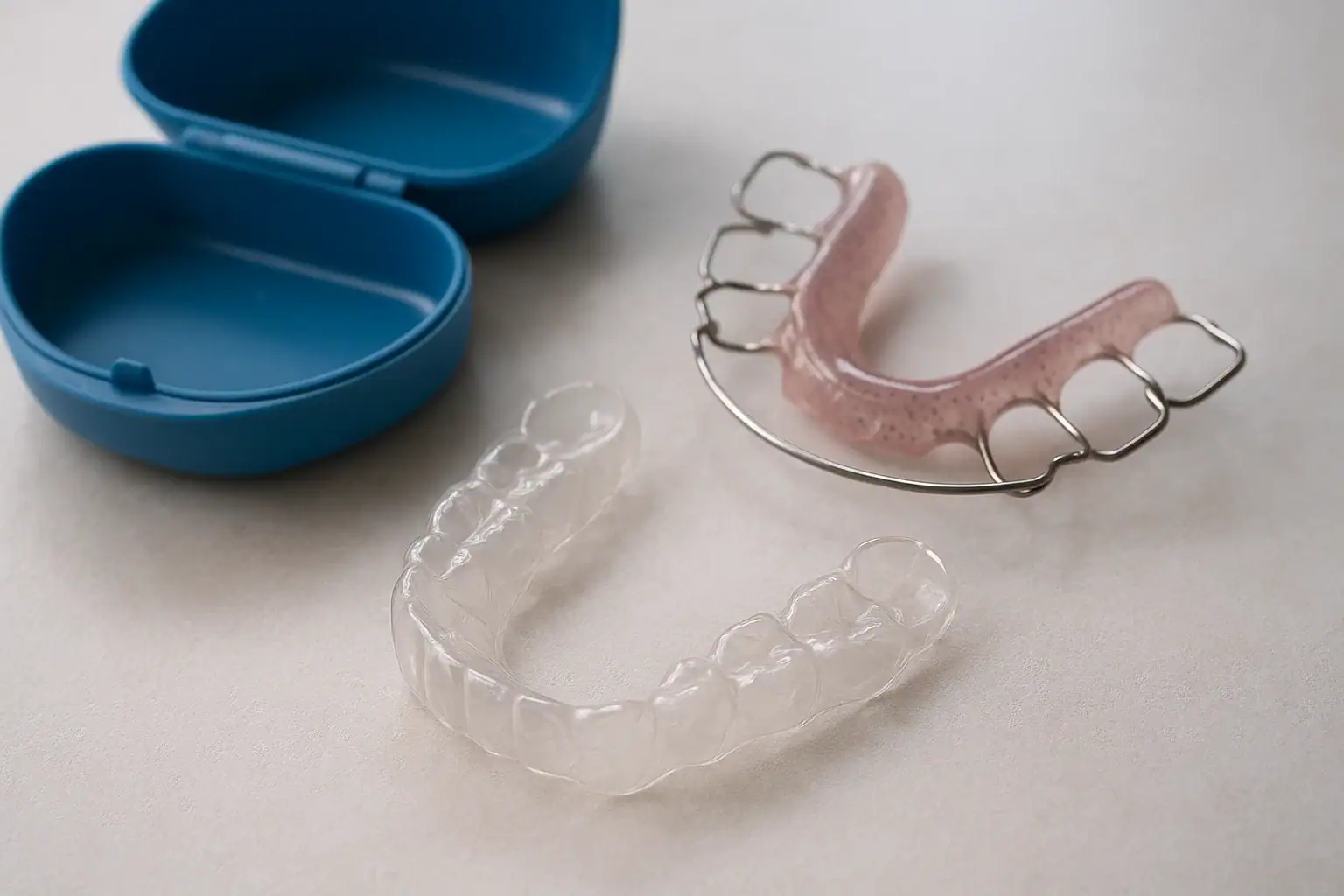
A beautiful smile doesn’t end when your braces or aligners come off it's only the beginning of a lifelong maintenance journey. Retainers for teeth are essential orthodontic devices designed to hold your teeth in their corrected positions after treatment. Without them, teeth naturally tend to shift back, undoing months or even years of orthodontic progress.
In this comprehensive guide, we’ll cover everything you need to know about retainers, including:
This article is inspired by the approach of MosDent Dental Hospital, where orthodontic retention protocols and digital dentistry techniques ensure long-lasting, stable results for every patient.
A retainer is a custom-made orthodontic appliance used to maintain tooth position after braces, clear aligners, or other orthodontic procedures. Retainers prevent teeth from shifting back due to natural forces such as:
Orthodontists often say:
“Braces move teeth. Retainers keep them there.”
Even after teeth are aligned:
Without a retainer, relapse can occur within weeks. In some cases, significant shifting can happen overnight.
Different patients require different retention strategies. Modern orthodontics uses three main categories.
These retainers consist of:
Essix retainers are transparent plastic trays that resemble Invisalign aligners.
Essix retainers are among the most popular cosmetic dentistry retention tools used worldwide.
These consist of a thin metal wire bonded behind the front teeth usually canine to canine.
Fixed retainers are often used along with removable retainers for maximum stability.
The fibers holding your teeth in place become stretched during orthodontic movement. These fibers have "memory" and try to pull teeth back similar to a stretched rubber band.
Retainers neutralize this force.
Orthodontic treatment changes bone structure. It takes 3–12 months for the bone to fully harden around your new tooth position.
Retainers maintain the position while bone stabilizes.
Teeth are influenced by:
A retainer helps retrain these forces.
One of the most common questions patients search is “how to clean retainers.”
Below is an in-depth guide for all types.
Avoid:
Use:
Most orthodontists recommend:
✔ Wear full-time (22 hours/day)
✔ Wear nightly
✔ Wear a few nights per week—for life
This is because teeth can shift at any age due to aging, bone resorption, or muscle habits.
Replace your retainer if:
Essix retainers typically last 1–3 years.
Hawley retainers can last 5–10 years.
Fixed retainers may last decades with proper care.
Possible reasons:
Solution: resume full-time wear for 2–5 days.
Stop using it and contact your dentist. Pain may indicate tooth movement.
This requires immediate repair—teeth may shift within days.
Retainers can trap bacteria if not cleaned properly, causing:
To prevent this:
Fact: Teeth will shift without retention.
Fact: Adults also experience orthodontic relapse.
Fact: Retainers protect teeth.
Use mild soap and a soft brush daily; deep-clean weekly.
Brush gently with liquid soap—not toothpaste.
Retained earnings is a finance term referring to accumulated profits in a business.
It is unrelated to dentistry, but often appears alongside “retainer” in search queries.
Retained Earnings = Beginning RE + Net Income – Dividends (Not related to dental retainers.)
Possible causes:
Modern clinics like MosDent Dental Hospital use:
Advantages:
If retainers are not worn:
| Device | Purpose | Duration | Removable? |
|---|---|---|---|
| Retainer | Stabilizes teeth | Lifelong maintenance | Yes/No |
| Bite plate | Jaw correction | Short-term | Yes |
| Expansion device | Widens palate | Growth phase | Yes |
| Orthodontic aligner | Moves teeth | Treatment phase | Yes |
Orthodontic treatment rewrites your smile, but retainers protect that investment for the rest of your life. Whether you choose a clear Essix retainer, a Hawley appliance, or a fixed bonded retainer, the key is consistency, proper cleaning, and regular dental checkups.
A well-maintained retainer:
✔ Preserves alignment
✔ Prevents relapse
✔ Protects cosmetic restorations
✔ Supports healthy bite function
✔ Ensures long-term orthodontic results
Your smile is a lifelong asset—protect it with the right retainers for teeth and proper care.