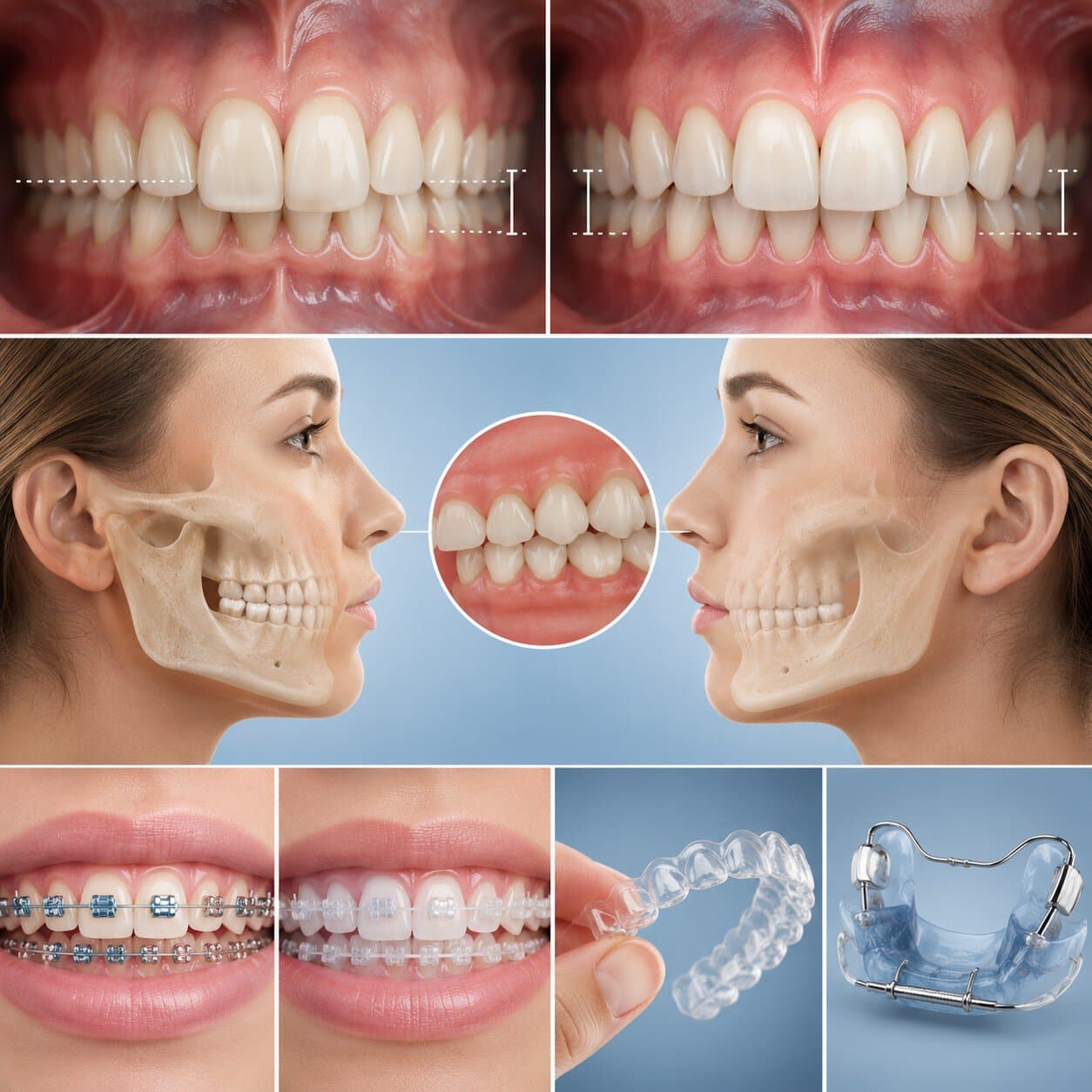
Braces and clear aligners are two ways of moving teeth into alignment. Braces are fixed metal or ceramic brackets bonded to the teeth and adjusted by an orthodontist; aligners are removable clear trays changed every one to two weeks. Braces are usually worn 18 to 36 months and handle severe crowding, large gaps and bite problems. Aligners run 6 to 24 months, suit mild to moderate cases and only work when worn 20 to 22 hours a day. A systematic review of ten studies, six of them randomised, found no significant difference in treatment duration between the two in mild to moderate crowding (PubMed 38607436).
- 01Braces are fixed appliances adjusted in the chair; aligners are removable trays the patient changes every 1 to 2 weeks, which makes compliance the deciding variable.
- 02Quoted durations differ: braces 18 to 36 months, aligners 6 to 24 months, with the shorter aligner figures belonging to simpler cases.
- 03A systematic review of 10 studies, 6 of them randomised and drawn from 3,537 screened records, graded the evidence as low and found no significant difference in treatment duration between clear aligners and fixed appliances in mild to moderate crowding (PubMed 38607436).
- 04Aligners must be worn 20 to 22 hours a day; braces work continuously without patient input, which is why they are the more reliable option for children and teens.
- 05Cost bands quoted for the two: braces 3,000 to 7,000 USD and aligners 2,500 to 6,000 USD, driven by case complexity, brand and duration.
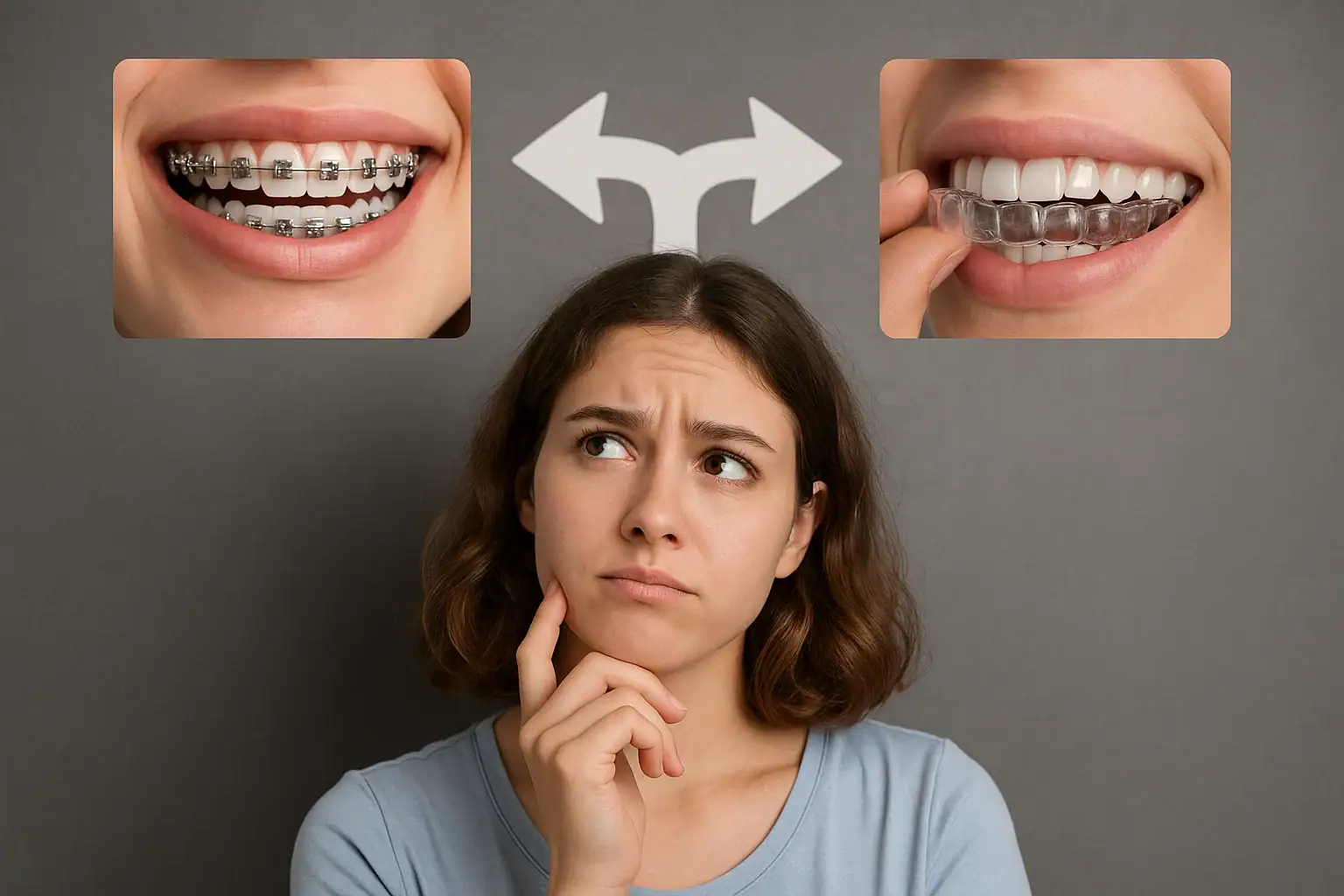
When it comes to straightening teeth and achieving the perfect smile, patients today are presented with two primary options: braces and aligners. Each has its strengths and limitations, and the best choice often depends on a variety of personal, medical, and lifestyle factors. In this comprehensive guide, we’ll explore the key differences between braces and clear aligners, their costs, benefits, treatment durations, and more.
What Are Braces?
Braces are traditional orthodontic devices consisting of metal brackets and wires that gradually shift teeth into proper alignment. Braces may also include rubber bands or other components, depending on the complexity of the case.
Common Features of Braces:
- Fixed in place and not removable
- Require regular orthodontic adjustments
- Effective for complex dental corrections
- Usually worn for 18–36 months
What Are Clear Aligners?
Clear aligners, such as Invisalign, are removable trays custom-made from clear plastic. They fit snugly over the teeth and are changed every 1–2 weeks to gradually guide teeth into the correct position.
Key Features of Aligners:
- Removable for eating, brushing, and flossing
- Virtually invisible when worn
- Comfortable and less likely to cause irritation
- Best for mild to moderate alignment issues
Braces vs. Aligners: A Side-by-Side Comparison
| Feature | Braces | Aligners |
|---|---|---|
| Visibility | Visible (metal or ceramic) | Virtually invisible |
| Comfort | May cause soreness or irritation | Smooth and comfortable |
| Maintenance | Challenging to clean | Easy to remove and clean |
| Diet Restrictions | Yes | No |
| Ideal for Complex Cases | Yes | Usually not |
| Treatment Duration | 18–36 months | 6–24 months |
Which Is More Effective?
Braces are often the better choice for treating severe overcrowding, large gaps, or significant bite problems. Aligners, on the other hand, are effective for less complex corrections and are preferred by adults and teens who want a more discreet treatment.
Braces vs. Aligners Cost
- Braces : $3,000–$7,000 (depending on case complexity and materials)
- Aligners : $2,500–$6,000 (depending on brand and duration)
Insurance may cover part of the cost for both options. Payment plans are often available through dental clinics.
Maintenance and Oral Hygiene
Braces require more intensive oral hygiene routines, as food can get trapped in the brackets. Aligners must be cleaned regularly, but they allow for easier brushing and flossing when removed.
Lifestyle and Aesthetic Considerations
For image-conscious patients or those in professional settings, aligners offer a less noticeable and more flexible alternative. However, for children and teens who may lose or forget to wear removable trays, braces offer better compliance.
Duration and Compliance
The effectiveness of aligners depends heavily on patient compliance. Aligners must be worn for 20–22 hours per day to work effectively. In contrast, braces are fixed and work continuously without patient intervention, which makes them more reliable in certain age groups.
Technological Advancements in Orthodontics
Modern orthodontics has evolved significantly. Digital impressions, 3D treatment planning, and accelerated orthodontics (like Propel or AcceleDent) can now enhance both aligner and braces treatments, improving comfort and reducing treatment time.
Additional Considerations
#### Can Teens and Children Use Aligners?
While aligners are often marketed to adults, teenagers can also benefit from clear aligner systems like Invisalign Teen, which includes compliance indicators and space for growing teeth. However, young patients may struggle with the discipline of wearing aligners 20–22 hours per day, making braces a more reliable option for this age group.
#### Environmental Impact: Are Aligners Eco-Friendly?
Aligners are made from medical grade thermoplastic and are typically discarded every 1–2 weeks. Though lightweight and convenient, they contribute to plastic waste. On the other hand, braces being fixed appliances have a lower overall material turnover, but their brackets and wires are not recyclable. Environmentally conscious patients may want to weigh these factors.
#### Can You Combine Braces and Aligners?
In certain cases, orthodontists may recommend a hybrid treatment plan starting with braces to address complex alignment issues, then transitioning to aligners for the final stage. This approach can deliver the precision of braces with the comfort and aesthetics of aligners during the later phase.
Questions Patients Often Ask
What are aligners vs. braces?
Aligners are removable plastic trays, while braces are fixed metal or ceramic appliances.
What is better: aligners vs. braces?
It depends on your case. Braces are better for complex issues, aligners for mild to moderate alignment.
Do aligners work faster than braces?
Aligners may be faster for simple cases, but braces are more effective for comprehensive correction.
How often do I need check-ups?
Both require regular follow-ups. Braces often need monthly visits, while aligners may require fewer.
Can I switch from aligners to braces or vice versa?
Yes, some patients transition between systems based on progress or comfort.
Choosing between braces and aligners is a personal decision that should be made with the guidance of an experienced orthodontist. Consider your lifestyle, aesthetic preferences, and the complexity of your dental issues. Whether you opt for traditional braces or modern aligners, the result is the same. A straighter, healthier, and more confident smile.
Still undecided? Book a consultation to discover which option is right for your case.
Let’s plan the right treatment together.
Free Assessment→