Menu

Free Consultation
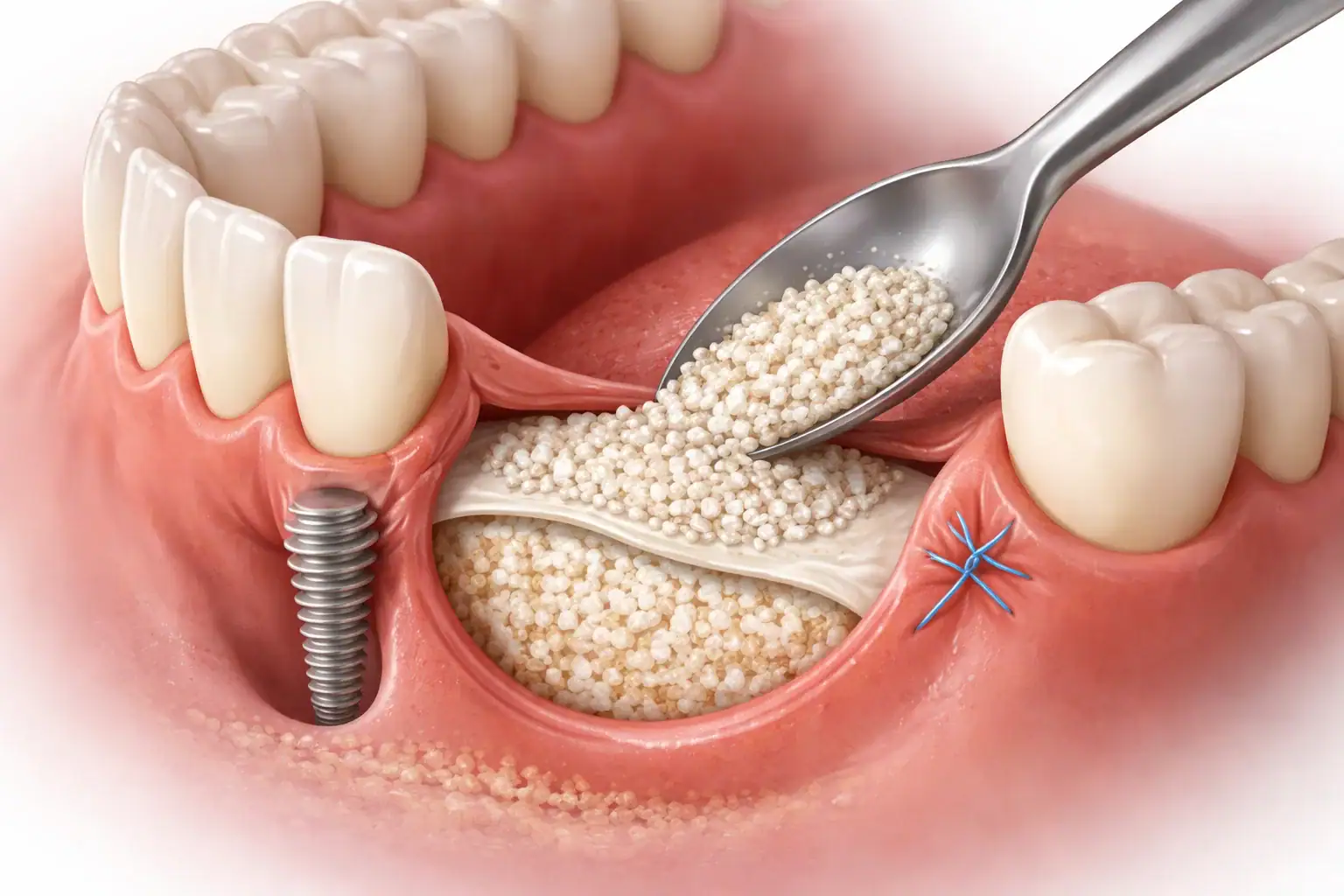
A bone graft dental procedure is one of the most important treatments in modern implant dentistry. Many patients who are planning to get a dental implant are told they need a bone graft dental treatment first and this often raises questions and concerns.
Common search questions include:
In this comprehensive guide, you’ll learn everything about bone graft dental procedures, including types, healing time, pain level, cost factors, and when it becomes necessary.
A bone graft dental procedure is a surgical treatment used to rebuild or replace missing jawbone in areas where bone volume is insufficient.
When a tooth is lost or extracted, the surrounding jawbone begins to shrink a process called bone resorption. Over time, this can lead to significant dental bone loss, making it difficult or impossible to place a dental implant without reinforcement.
A bone graft dental treatment restores the lost bone structure, creating a stable foundation for future implants.
The most common reason for a bone graft dental procedure is to prepare the jaw for dental implants.
A bone graft for implant placement is necessary when:
Without adequate bone density, implants cannot properly integrate with the jaw.
One of the most searched topics is bone graft after tooth extraction.
After a tooth is removed, the socket begins to collapse. Studies show that up to 50% of bone width can be lost within the first year.
A bone graft dental procedure performed immediately after extraction helps:
This is called socket preservation grafting.
There are different types of dental bone graft materials used in a bone graft dental procedure.
Bone taken from another part of your body (usually chin or jaw).
Pros:
Cons:
Processed human donor bone.
Pros:
Cons:
Usually bovine-based material.
Pros:
Lab-made materials.
Pros:
Each bone graft dental material is selected based on clinical needs.
When severe dental bone loss has occurred, a larger bone graft dental procedure called ridge augmentation may be required.
This treatment rebuilds:
Ridge augmentation is common when teeth have been missing for years.
In the upper jaw, especially in the molar area, there may not be enough vertical bone due to sinus anatomy.
A sinus lift bone graft elevates the sinus membrane and adds bone underneath.
This allows placement of implants in areas previously considered impossible.
A bone graft dental procedure is needed when:
A CBCT scan determines whether a bone graft for implant is necessary.
Healing time depends on:
Typical healing:
During healing, the graft integrates and transforms into natural bone.
Most patients report mild to moderate discomfort.
Pain level is usually:
Severe pain after 5–7 days may indicate infection.
Although highly successful, a bone graft dental procedure can carry minor risks:
Serious complications are uncommon when performed properly.
If a bone graft dental treatment is skipped when needed:
Long-term untreated dental bone loss can alter facial appearance.
Success rate of a bone graft dental procedure is very high typically over 90%.
Factors influencing success:
Post-operative instructions include:
Proper care dramatically improves healing.
Cost depends on:
A simple bone graft after tooth extraction costs less than full ridge augmentation.
No. Only when bone volume is insufficient.
Usually 3–6 months.
Rarely, but infection or smoking increases risk.
Yes, when performed by qualified professionals.
A bone graft dental procedure is a predictable and essential treatment in modern implant dentistry.
If you are considering dental implants and have been told you need a bone graft dental treatment, remember:
✔ It strengthens implant success
✔ It preserves facial structure
✔ It prevents further bone loss
✔ It increases long-term stability
Modern techniques make bone grafting safe, reliable, and highly successful.