Menu

Free Consultation
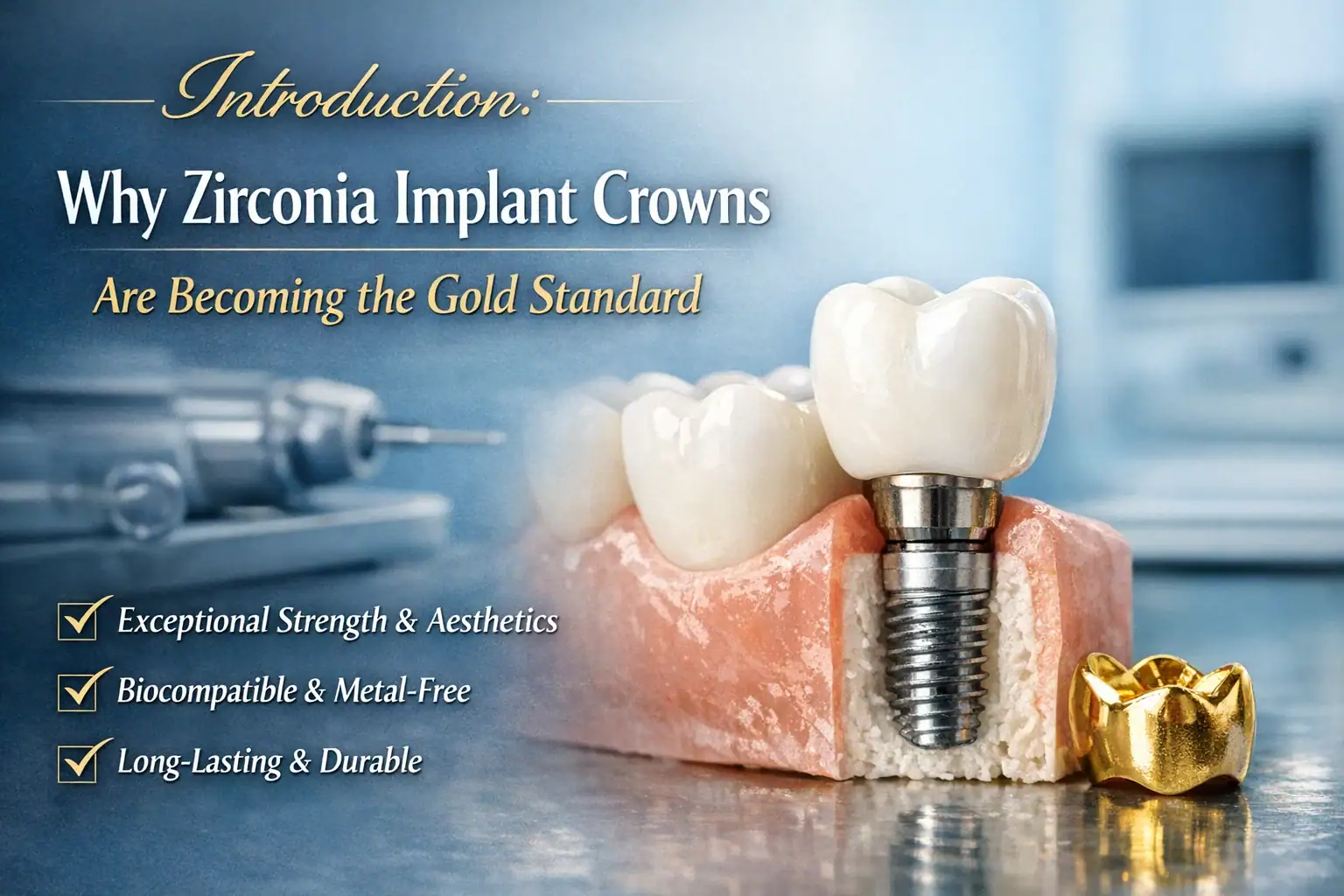
Dental implants are one of the most advanced solutions for missing teeth. However, many patients do not realize that the implant itself is only the “root.” The visible tooth on top is called the implant crown and the material used for this crown makes a huge difference in aesthetics, durability, and long term success.
In recent years, the zirconia implant crown has rapidly become the preferred option for patients seeking a natural, long lasting, and metal-free restoration. Clinics such as MosDent Hospital now use zirconia as a primary solution for implant restorations because of its superior strength and aesthetic performance.
This complete guide explains everything you need to know about zirconia crowns on dental implants from benefits and treatment steps to longevity and cost factors.
A zirconia implant crown is the visible tooth placed on top of a dental implant, made from zirconium dioxide an extremely strong and biocompatible ceramic material.
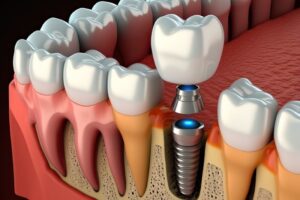
A dental implant restoration consists of three parts:
The zirconia implant crown is the final restoration that restores chewing function and aesthetics.
Patients often ask why dentists recommend zirconia over porcelain or metal ceramic crowns. The answer lies in its unique combination of strength and beauty.
These properties make zirconia one of the most advanced materials in modern dentistry.
One of the most searched questions online is:
Zirconia vs porcelain implant crown which is better?
Let’s compare.
| Feature | Zirconia Crown | Porcelain Crown |
|---|---|---|
| Strength | Extremely high | Moderate |
| Aesthetics | Very natural | Natural |
| Longevity | 15–20+ years | 10–15 years |
| Metal content | None | Often metal base |
| Stain resistance | Excellent | Good |
Zirconia crowns are often preferred for long-term implant restorations, especially in modern digital dentistry.
Zirconia is sometimes called “ceramic steel” because of its incredible durability. This makes zirconia implant crowns ideal for:
A zirconia implant crown mimics the translucency of natural enamel. This allows the crown to blend seamlessly with surrounding teeth.
This is especially important in smile design and aesthetic dentistry.
Traditional crowns may contain metal substructures. Zirconia crowns are:
✔ Hypoallergenic
✔ Biocompatible
✔ Ideal for sensitive patients
Gum tissue responds very well to zirconia. The material reduces inflammation risk and creates a natural gum line appearance.
A zirconia implant crown can last 15–20+ years with proper care, making it a long-term investment.
Zirconia implant crowns are ideal for:
Advanced 3D scans and digital planning are used to design the restoration.
The implant is placed surgically into the jawbone.
Osseointegration takes 2–4 months.
CAD/CAM technology creates the zirconia implant crown.
The crown is attached and adjusted for bite and aesthetics.
With proper care:
Longevity depends on:
Rather than fixed prices, costs depend on:
Daily care includes:
Yes — they are stronger, more durable, and more biocompatible.
Yes — they mimic natural enamel translucency.
15–20 years or more with proper care.
Yes — they are metal-free and highly biocompatible.
Zirconia implant crowns combine strength, aesthetics, and longevity. At MosDent, digital planning and premium materials ensure natural-looking, long-lasting implant restorations.