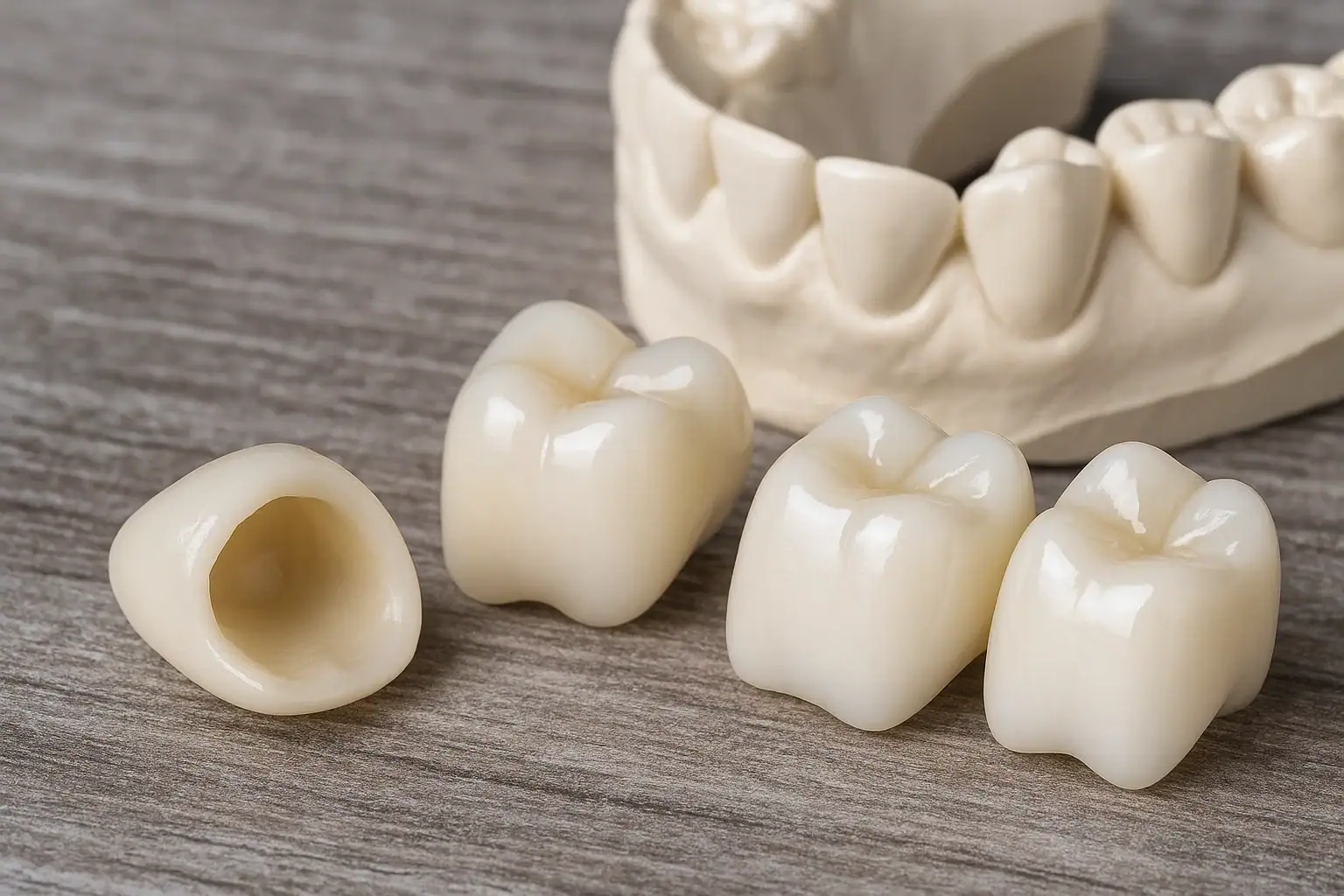
A zirconia crown is a metal-free cap milled in one piece from zirconium dioxide, usually stabilised with yttrium oxide and sintered to full density at around 1,450 °C. Strength depends on the grade: across 78 laboratory studies, translucent 4Y-PSZ zirconia averaged 803 MPa in flexural strength and 5Y-PSZ 570 MPa, and the authors supported 4Y-PSZ for three-unit bridges and 5Y-PSZ for three-unit bridges in the front of the mouth (PubMed 40738693). Because there is no metal substructure, no dark line appears at the gum. A systematic review of monolithic CAD/CAM zirconia single crowns reported survival between 91 and 100 per cent, with a mean exposure of about one year and follow-up of 0.3 to 2.1 years (PubMed 34615842).
- 01Zirconia is milled in one piece and sintered at about 1,450 °C; the block shrinks 20 to 30 per cent, which the milling design already allows for.
- 02Flexural strength depends on the zirconia grade: across 78 laboratory studies, translucent 4Y-PSZ averaged 803 MPa and 5Y-PSZ 570 MPa (PubMed 40738693).
- 033Y-TZP is the stronger, more opaque grade; 5Y zirconia is more translucent and is preferred for front teeth.
- 04A monolithic zirconia review found 91 to 100 per cent survival, but the mean exposure time was only about one year (PubMed 34615842).
- 05There is no metal substructure, so no grey margin at the gum line and no metal sensitivity.
Dental crowns play a vital role in restorative dentistry by capping damaged, decayed, or structurally compromised teeth. These “caps” restore the appearance of the tooth and its function too, helping to maintain chewing ability, shape, and bite alignment. Traditional crown materials include metal alloys, porcelain-fused-to-metal (PFM), and all-ceramic options, each with unique advantages and limitations.
In recent years, zirconia crowns have emerged as a standout modern alternative. Crafted from zirconium dioxide, a high-performance ceramic, zirconia crowns offer remarkable strength, color-matching translucency, and superior biocompatibility, ideal for patients seeking durable, metal-free solutions. Unlike PFM crowns, zirconia eliminates unsightly metal margins and allergic risks, while advanced CAD/CAM fabrication ensures precise fits and efficient production. As a result, zirconia crowns are reshaping the landscape of dental restoration, delivering both form and function in harmony.
Zirconia Crown Definition
A zirconia crown is a type of dental restoration used to entirely cap or cover a damaged tooth or implant. Unlike traditional crowns that combine different materials, zirconia crowns are crafted as a single-piece, full-contour restoration. Produced primarily through precision computer-aided design and manufacturing (CAD/CAM), they offer a blend of exceptional strength and natural-looking aesthetics.
Composition: Zirconium Dioxide (ZrO₂)
At its core, a zirconia crown is made from zirconium dioxide, a white, crystalline metal oxide ceramic known for its remarkable mechanical and optical properties. Often stabilized with small amounts of yttrium oxide (e.g., 3Y- or 5Y-stabilized zirconia), this material achieves enhanced toughness, flexural strength, and resilient durability. In a systematic review of 78 laboratory studies on translucent zirconia, flexural strength averaged 803 MPa for 4Y-PSZ and 570 MPa for 5Y-PSZ (PubMed 40738693).
These crowns are milled from pre-sintered zirconia blocks and then sintered to full density, yielding a monolithic restoration that maintains consistent physical characteristics throughout.
Comparison with Other Crown Materials
| Material Type | Composition | Strength & Durability | Aesthetics | Risks |
|---|---|---|---|---|
| Zirconia | Single-phase zirconium dioxide ceramic | Extremely high flexural strength; chip/crack resistant | High translucency; no metal margins | Low risk; no metal allergies |
| Porcelain-fused-to-metal (PFM) | Metal substructure + porcelain overlay | Strong, but porcelain layer prone to chipping; differing expansion rates can cause cracks | Natural appearance, but may show dark gumline | Possible metal sensitivity/allergy; visible margins |
| All-Ceramic (Porcelain alone) | Feldspathic or glass-ceramic | Brittle and less durable | Excellent aesthetics | Higher breakage risk on molars |
| Full Metal (Gold, base-metal alloys) | Metal alloys | Very durable; minimal prep | Metallic appearance | Biocompatible, but unesthetic |
Zirconia Crown Materials
Zirconia crowns are crafted predominantly from zirconium dioxide (ZrO₂) , a high-performance, white ceramic oxide prized for its exceptional strength and biocompatibility. It's the same material used in advanced dental restorations, known for durability and a natural tooth-like appearance.
Pure zirconium dioxide undergoes phase changes that cause volume shifts and cracking when heated or cooled. To prevent this, it's blended with small amounts of yttrium oxide (Y₂O₃), typically around 3–8 mol%, producing yttria-stabilized zirconia (YSZ) . This stabilizer locks zirconia in its strong tetragonal or cubic phase at room temperature, dramatically boosting its fracture toughness and physical stability. Common forms in dentistry include 3Y-TZP (tetragonal zirconia polycrystal) and 5Y-ZrO₂ , the latter offering enhanced translucency for anterior applications.
Manufacturing Process
- CAD/CAM Milling: Using digital scans and CAD/CAM dentistry , technicians design the crown digitally and mill it out of a pre-sintered zirconia block. These blocks are intentionally partially sintered hard enough to shape, yet soft enough to allow precise milling.
- Sintering (Densification): After milling, the crown undergoes sintering, a high-temperature firing process (around 1,450 °C). This causes the zirconia to densify, strengthen, and reduce porosity. Expect about 20–30% shrinkage , a factor already calibrated into the milling design.
- Finishing: Polishing & Glazing: Once sintered, the crown is polished to a smooth finish. An optional glaze enhances aesthetics and stain resistance. Finally, shade adjustments ensure a natural match with surrounding teeth.
This breakdown gives clarity on what zirconia crowns are made of , why those materials are used , and how the manufacturing process ensures strength, fit, and aesthetics .
Benefits of Zirconia Crowns
- Strength and Durability: Zirconia is among the toughest dental crown materials, boasting high fracture resistance and exceptional wear performance. This makes zirconia crowns ideal for both front (anterior) and back (posterior) teeth, capable of withstanding the significant forces generated during chewing and grinding, even in patients with bruxism.
- Aesthetic Appeal: Modern zirconia crowns offer a natural, lifelike look, especially with enhanced translucency in high-translucent and layered variants. Unlike porcelain-fused-to-metal (PFM) crowns, zirconia eliminates unsightly metal margins and allows for precise shade matching and custom staining or glazing, resulting in natural integration with your smile.
- Biocompatibility: Zirconia is highly biocompatible and metal-free, making it safe for those prone to metal allergies or sensitivities. Its smooth surface resists plaque buildup and promotes healthier gum tissue, minimizing irritation and supporting long-term periodontal health.
- Conservation of Tooth Structure: Thanks to its material strength, zirconia crowns can be crafted thinner than traditional crowns. This allows dentists to preserve more of your natural tooth during preparation, which supports long-term dental health and reduces the risk of future structural damage.
Quick Takeaway : Zirconia crowns combine high durability, superior aesthetics , excellent biocompatibility, and conservative preparation, making them a standout option in modern restorative dentistry.
Zirconia Crown Allergy and Sensitivity
True allergies to zirconia crowns are exceptionally rare. No confirmed cases of a classic immune-mediated zirconia allergy have been documented. However, since every person's immune system is unique, it's theoretically possible, though improbable, to develop a sensitivity to this material.
Sensitivities from Zirconia Dust During Adjustments
The most common “reaction” to zirconia is not an allergy, but rather irritation caused by dust particles released during adjustments (like grinding or polishing). Some patients have reported temporary symptoms such as hives, lip or gum irritation, or burning sensations shortly after crown adjustments. These symptoms often resolve once the fine particles are cleared.
Many healthcare professionals believe these symptoms are more likely due to burning mouth syndrome , triggered by dental stress or trauma, rather than a true allergy.
Importance of Consulting a Dental Professional
If you suspect a reaction to a zirconia crown, whether from persistent irritation, hives, or unusual oral sensations, consult your dentist or an allergist. They may recommend:
- Allergy testing (e.g., patch tests) to identify material sensitivities, covering zirconia as well as other components like adhesives or resin cements.
- Thorough evaluation of any bite misalignment or crown adjustment issues. An imbalanced bite can exacerbate discomfort, muscle tension, or jaw-related disorders like TMJ.
- Review of crown materials and handling , including the adhesives or cements used, as these could be the actual source of allergic responses rather than the zirconia itself.
Choosing Crown Material Zirconia for Tooth Location and Oral Habits
Choosing the right material for your dental crown is essential for long-term success. Here’s a helpful guide to determine if zirconia crowns suit your needs:
1. Location of the Tooth (Anterior vs. Posterior)
- Posterior teeth (molars and premolars): Zirconia is particularly well-suited here due to its exceptional strength , able to endure heavy chewing forces and bruxism. Monolithic (solid) zirconia crowns are commonly used in these areas for their unparalleled durability.
- Anterior teeth (front teeth): Translucent or layered zirconia can offer improved aesthetics for visible teeth. However, solid zirconia tends to be more opaque and may not blend as naturally in your smile zone.
2. Patient’s Oral Habits (e.g., Bruxism)
If you frequently grind or clench (bruxism), zirconia crowns, especially monolithic types, are ideal. Their flexural strength rivals that of metal crowns, making them resistant to chipping and cracking under pressure.
Caveat: Even with such strength, proper preparation (occlusal clearance, tapering, chamfers) is crucial to prevent crown failure.
3. Aesthetic Preferences
- Natural appearance needed? Choose translucent or layered zirconia; they mimic natural tooth color and translucency well, especially in the front teeth.
- Strength > looks? If bite forces are a concern, solid zirconia offers extra toughness but may appear less lifelike.
Dental Consultation and Final Verdict on Crown Material Zirconia
Consultation with Your Dentist
An accurate diagnosis by your dentist is vital. They’ll consider factors including:
| Consideration | Importance |
|---|---|
| Tooth position (front vs. back) | Determines the needed strength and aesthetics |
| Bruxism or heavy biting habits | Influences material choice |
| Esthetic expectations | Affects the type of zirconia used |
| Tooth preparation needed | Thinner prep is possible due to material strength |
| Budget constraints | Zirconia crowns typically cost more upfront |
Based on these, your dentist may recommend:
- Monolithic zirconia for strength in the back of the mouth, or for patients with bruxism.
- Translucent or layered zirconia for front teeth where looks are paramount.
- Alternative materials like lithium-disilicate for highly aesthetic cases with moderate bite force needs.
Final Verdict
Zirconia crowns offer a strong, biocompatible, and metal-free option suitable for many patients. They excel in durability for molars and are increasingly aesthetic in thinner, translucent forms for front teeth. But the right choice depends on:
- Crown location
- Oral habits like grinding
- Aesthetic goals
- Tooth preparation and fit
- Your budget
Ultimately, a tailored recommendation from your dentist will ensure the best outcome for both function and smile appearance.
If you are weighing this up from abroad, our zirconium dental crown page sets out the preparation depth, the number of visits and how the shade is agreed, and the neighbouring materials are listed under prosthodontics. Send a photograph and a recent panoramic X-ray and we will tell you in writing how many units your case needs before you book a flight.
Conclusion
Zirconia crowns represent a modern, durable, and aesthetically pleasing solution in restorative dentistry. Made from high-strength zirconium dioxide , these crowns offer exceptional fracture resistance , natural translucency , and biocompatibility , making them an excellent choice for many patients, especially those seeking a metal-free alternative.
Whether you need a crown for a back molar that requires strength or a front tooth that demands aesthetics, zirconia’s versatility makes it a reliable option. While true allergic reactions to zirconia are extremely rare, it’s still important to consult your dentist for a thorough evaluation, especially if you have sensitivities or specific oral habits like bruxism.
Ultimately, zirconia crowns strike the ideal balance between form and function , offering long-term performance without compromising the look of your smile. If you’re considering a dental crown, talk to your dentist about whether crown material zirconia is right for your unique needs.
Let’s plan the right treatment together.
Free Assessment→- 1.Leitão CIMB, Fernandes GVO, Azevedo LPP, Araújo FM, Donato H, Correia ARM. Clinical performance of monolithic CAD/CAM tooth-supported zirconia restorations: systematic review and meta-analysis. J Prosthodont Res 2022;66:374-384. PubMed 34615842
- 2.Pjetursson BE, Valente NA, Strasding M, Zwahlen M, Liu S, Sailer I. A systematic review of the survival and complication rates of zirconia-ceramic and metal-ceramic single crowns. Clin Oral Implants Res 2018;29 Suppl 16:199-214. PubMed 30328190
- 3.Mao Z, Beuer F, Hey J, Schmidt F, Sorensen JA, Prause E. Antagonist enamel tooth wear produced by different dental ceramic systems: A systematic review and network meta-analysis of controlled clinical trials. J Dent 2024;142:104832. PubMed 38211687
- 4.Bernauer SA, Lirgg NM, Ioannidis A, Zitzmann NU, Rohr N. Flexural strength of translucent zirconia for single crowns and fixed dental prostheses-A systematic review. J Prosthodont Res 2026;70:173-182. PubMed 40738693