
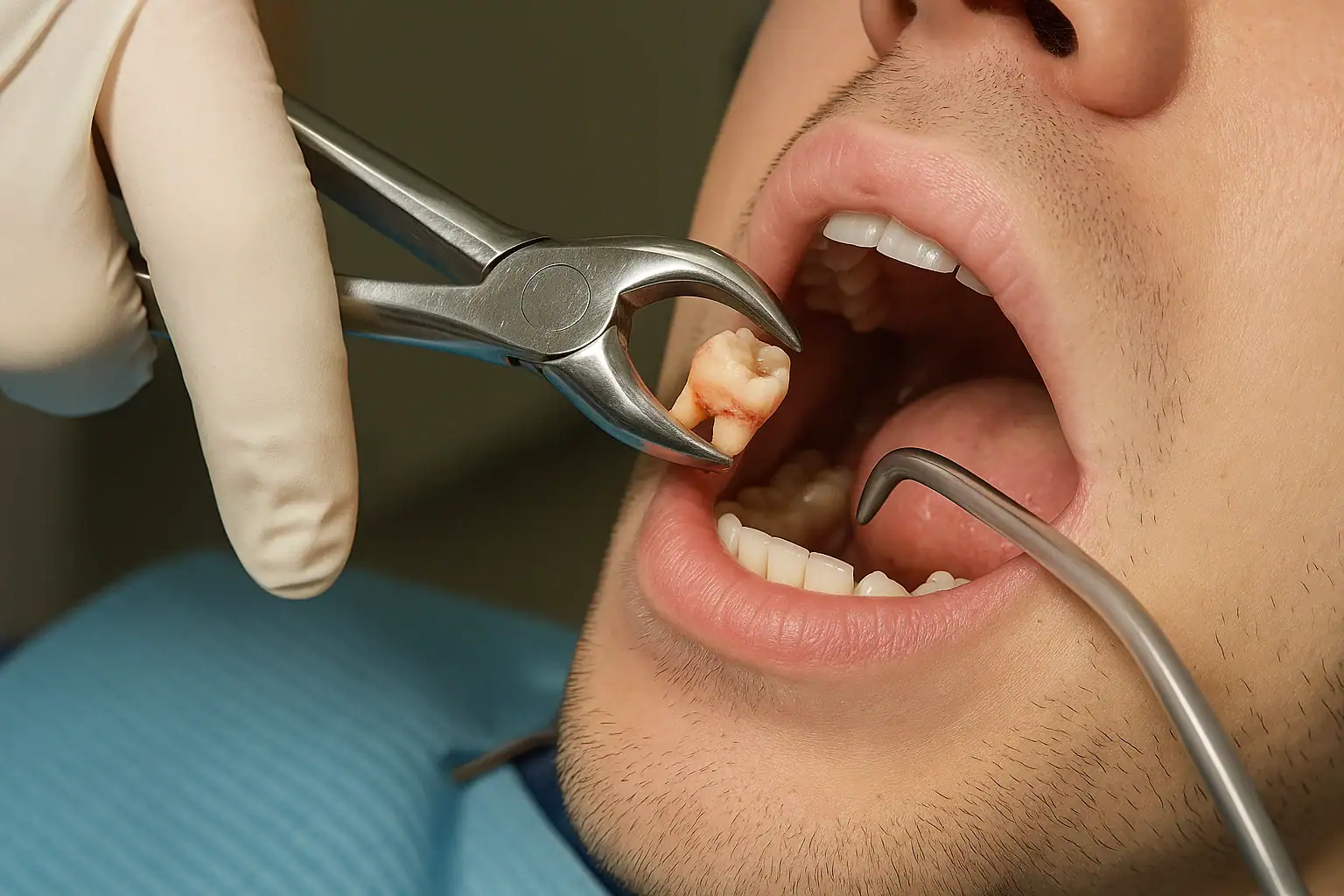
A wisdom tooth extraction site heals on two clocks: the gum closes over the socket in roughly two to three weeks, while the bone underneath keeps remodelling for three to six months. The blood clot that forms in the first hours is what protects the bone and nerve endings, and losing it produces dry socket. A 249-patient daily diary study mapped the curve: on day 1, 63.5 per cent rated their worst pain severe and 85 per cent had trouble chewing; by day 6 chewing trouble was down to 19 per cent, and swelling fell from 61 per cent on day 2 to 10 per cent by day 5 (PubMed 10555792).
- 01Soft tissue closes in about two to three weeks; full bone remodelling of the socket runs three to six months, which is why the site can feel normal long before it is structurally finished.
- 02The first week carries most of the discomfort: worst pain was rated severe by 63.5 per cent of 249 patients on day 1 and by 15 per cent on day 7 (PubMed 10555792).
- 03Swelling peaks on day 2 at 61 per cent of patients and drops to 10 per cent by day 5, with most people back to a normal routine around day 5 (PubMed 10555792).
- 04How hard the surgery was predicts how long recovery takes: operations lasting 30 minutes or more, and teeth sitting entirely below the occlusal plane, prolonged it, while age did not (PubMed 10555792).
- 05Chlorhexidine gel reduced alveolar osteitis across 10 trials with 862 participants (RR 0.43), but a later scoping review of 63 studies favours saline irrigation instead because of anaphylaxis risk and finds no support for routine prophylactic antibiotics (PubMed 28526078, PubMed 34625985).
Wisdom tooth extraction is a common dental procedure, but the healing process can vary greatly from person to person. Understanding what to expect after a wisdom tooth extraction and how to care for the site can make the recovery smoother and prevent complications.
In this guide, we’ll cover everything about extracted wisdom tooth healing, including timelines, what the healing process looks like, and tips for faster recovery.
/ Table of Contents
1. What Is a Wisdom Tooth Extraction?
2. Why Is Wisdom Tooth Extraction Necessary?
3. Types of Wisdom Tooth Extractions
4. What Happens Right After Extraction?
5. Stages of Wisdom Tooth Extraction Healing
6. How Long Does a Wisdom Tooth Extraction Take to Heal?
7. What Does a Healing Wisdom Tooth Extraction Look Like?
8. Factors That Influence Healing Time
9. Tips to Speed Up the Healing of Wisdom Tooth Extraction
10. Foods to Eat and Avoid During Healing
11. Common Complications During Healing
12. Additional Post-Op Care Tips
13. Emotional and Lifestyle Impact During Healing
14. When to See a Dentist During Recovery
15. FAQs on Wisdom Tooth Extraction Healing
- 01Conclusion: Patience Is Key to Full Healing After a Wisdom Tooth Extraction
/ What Is a Wisdom Tooth Extraction?
Wisdom tooth extraction is the surgical removal of one or more third molars located at the back of your mouth. These teeth often cause issues because they erupt late and may not have enough space, leading to impaction or crowding.
/ Why Is Wisdom Tooth Extraction Necessary?
Extraction is often necessary when:
- The tooth is impacted (trapped under the gum)
- It’s growing at an angle toward other teeth
- There’s not enough space in the jaw
- It’s causing pain, infection, or damage to nearby teeth
- Cysts or tumors develop around the tooth
/ Types of Wisdom Tooth Extractions
Not all wisdom tooth removals are the same. The healing timeline and care instructions can vary based on the type of procedure:
1. Simple Extraction
- Performed when the tooth is fully erupted
- Usually faster healing and less discomfort
2. Surgical Extraction
- Required when the tooth is impacted or below the gumline
- Involves cutting gum and possibly bone
- Longer healing time and more post-op care needed
/ What Happens Right After Extraction?
Immediately after surgery, a blood clot forms at the extraction site. This clot is essential for healing, as it protects the bone and nerve endings. If the clot becomes dislodged, it can lead to a painful condition called dry socket.
During the first 24 hours:
- You may experience bleeding and swelling
- Pain can be managed with medication
- A soft diet is recommended
- Ice packs can reduce inflammation
---
/ Stages of Wisdom Tooth Extraction Healing
The healing of a wisdom tooth extraction happens in several stages:
1. First 24 Hours: Clot Formation
- Blood clot forms
- Minor bleeding and swelling
- Soft foods and minimal activity recommended
2. Days 2–3: Early Healing
- Swelling peaks and begins to subside
- Discomfort persists but is manageable
- Clot remains in place
3. Days 4–7: Tissue Regeneration
- New tissue starts to grow
- Risk of infection reduces
- Stitches may dissolve or be removed
4. Week 2–3: Significant Healing
- Most discomfort fades
- Gum tissue heals over the socket
- Bone remodeling begins
5. Weeks 4–6 and Beyond: Full Recovery
- Jawbone solidifies
- Complete healing may take several months
- Site becomes indistinguishable from other gum tissue
/ How Long Does a Wisdom Tooth Extraction Take to Heal?
One of the most common questions is: “How long does a wisdom tooth extraction site take to heal?”
The general healing timeline is:
- Initial recovery: 3–7 days
- Gum tissue healing: 2–3 weeks
- Full bone healing: 3–6 months
However, individual recovery can vary based on age, health, complexity of the extraction, and aftercare.
/ What Does a Healing Wisdom Tooth Extraction Look Like?
During healing, the extraction site will evolve visually:
- Days 1–3: Blood clot is visible, gum may appear red and swollen
- Days 4–7: The clot stabilizes, and soft white or yellow tissue may form
- After 2 weeks: Gums appear pink and less swollen
- After 1 month: Site blends into surrounding tissue
Warning signs of complications:
- Pus or bad smell
- Severe pain after day 3
- Visible bone
- Persistent bleeding
/ Factors That Influence Healing Time
Several elements affect how quickly you heal from wisdom tooth extraction:
- Age: Younger people heal faster
- Health: Chronic illnesses slow recovery
- Smoking: Delays healing and increases infection risk
- Oral hygiene: Poor care can lead to complications
- Type of extraction: Surgical extractions take longer than simple ones
Tips to Speed Up the Healing of Wisdom Tooth Extraction
For optimal healing:
1. Keep the clot in place: Don’t spit or use a straw
2. Apply ice packs: Reduces swelling
3. Follow a soft diet: Soups, yogurts, mashed foods
4. Avoid tobacco and alcohol
5. Rinse gently with salt water after 24 hours
6. Take prescribed medications
7. Rest well
8. Avoid brushing directly on the site
/ Foods to Eat and Avoid During Healing
Nutrition plays a crucial role:
Recommended:
- Mashed potatoes, smoothies, soups, yogurt, scrambled eggs, applesauce
Avoid:
- Crunchy/hard foods, spicy dishes, hot beverages, acidic foods, alcohol
/ Common Complications During Healing
Be alert for:
Dry Socket:
- Severe pain, foul odor, visible bone
Infection:
- Swelling worsens, pus, fever
Nerve Damage (rare):
- Numbness in tongue, lips, chin
/ Additional Post-Op Care Tips
- Elevate your head while sleeping
- Don’t smoke or vape for 72 hours
- Stay hydrated
- Avoid blowing your nose after upper wisdom tooth removal
- Use antiseptic mouthwash only if prescribed
/ Emotional and Lifestyle Impact During Healing
- Sleep disruption
- Time off work/school
- Limited chewing/talking
- Temporary appearance anxiety
/ When to See a Dentist During Recovery
Call your dentist if:
- Pain worsens after day 3
- Swelling increases
- Fever develops
- Bleeding doesn’t stop
- Bad smell or pus appears
/ FAQs on Wisdom Tooth Extraction Healing
/ How long does it take to heal after wisdom tooth extraction?
/ 3–7 days for soft tissue; 3–6 months for bone
/ How long does it take to heal completely after wisdom tooth extraction?
/ Up to 6 months for full bone integration
/ What does a healing wisdom tooth extraction site look like?
/ White/yellow tissue at first, then pink gums over time
/ What are signs that a wisdom tooth extraction site has healed?
/ No pain, closed gum, normal function
/ Can I speed up the healing process?
/ Yes. With rest, good hygiene, and no smoking
Conclusion: Patience Is Key to Full Healing After a Wisdom Tooth Extraction
Healing after a wisdom tooth extraction is a gradual process. By understanding the timeline, practicing proper aftercare, and staying alert for complications, you can ensure a smooth recovery. Be kind to your body, and consult your dentist with any concerns.
Let’s plan the right treatment together.
Free Assessment→- 1.Conrad SM, Blakey GH, Shugars DA, Marciani RD, Phillips C, White RP Jr. Patients' perception of recovery after third molar surgery. J Oral Maxillofac Surg 1999;57:1288-94; discussion 1295-6. PubMed 10555792
- 2.Teshome A. The efficacy of chlorhexidine gel in the prevention of alveolar osteitis after mandibular third molar extraction: a systematic review and meta-analysis. BMC Oral Health 2017;17:82. PubMed 28526078
- 3.Ghosh A, Aggarwal VR, Moore R. Aetiology, Prevention and Management of Alveolar Osteitis-A Scoping Review. J Oral Rehabil 2022;49:103-113. PubMed 34625985