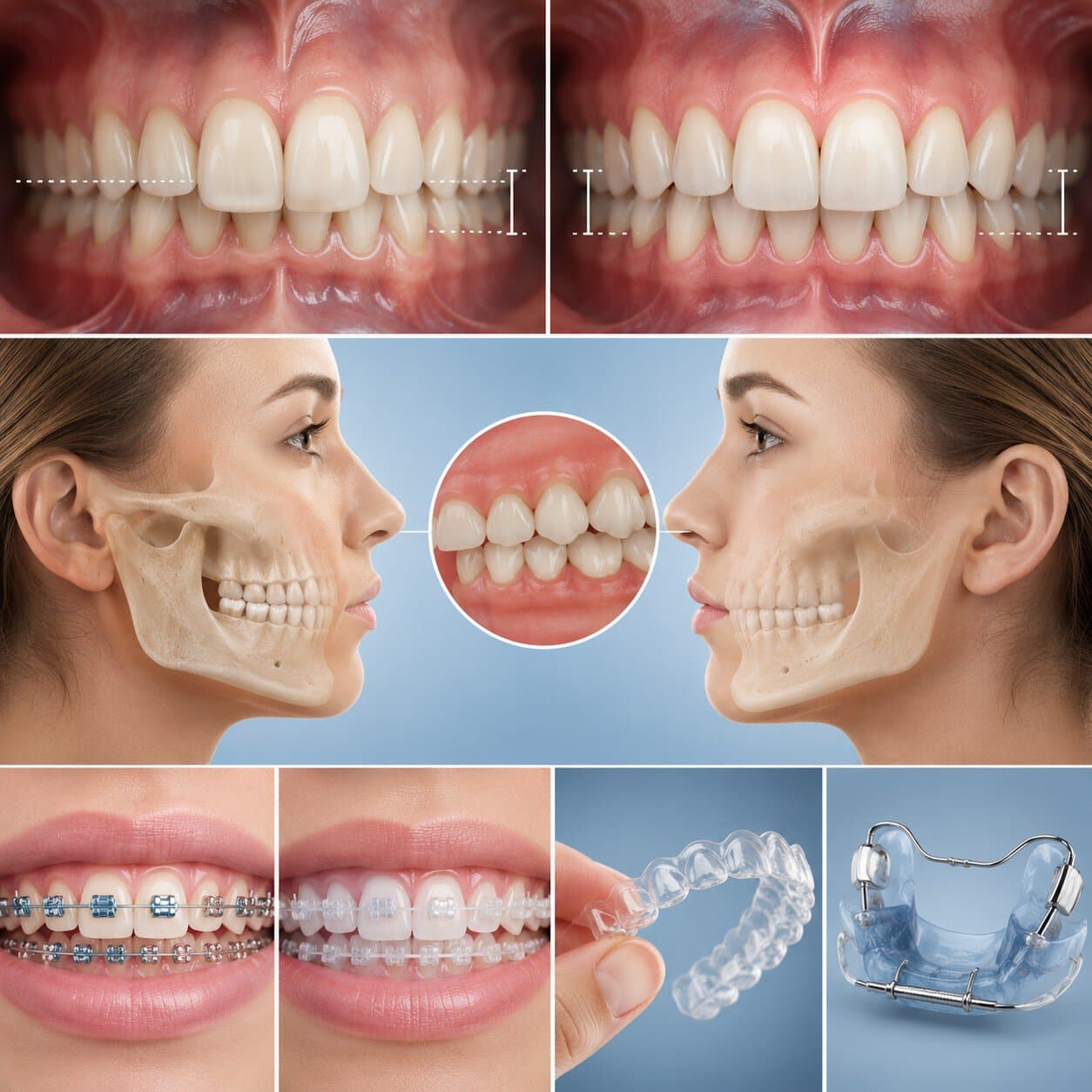
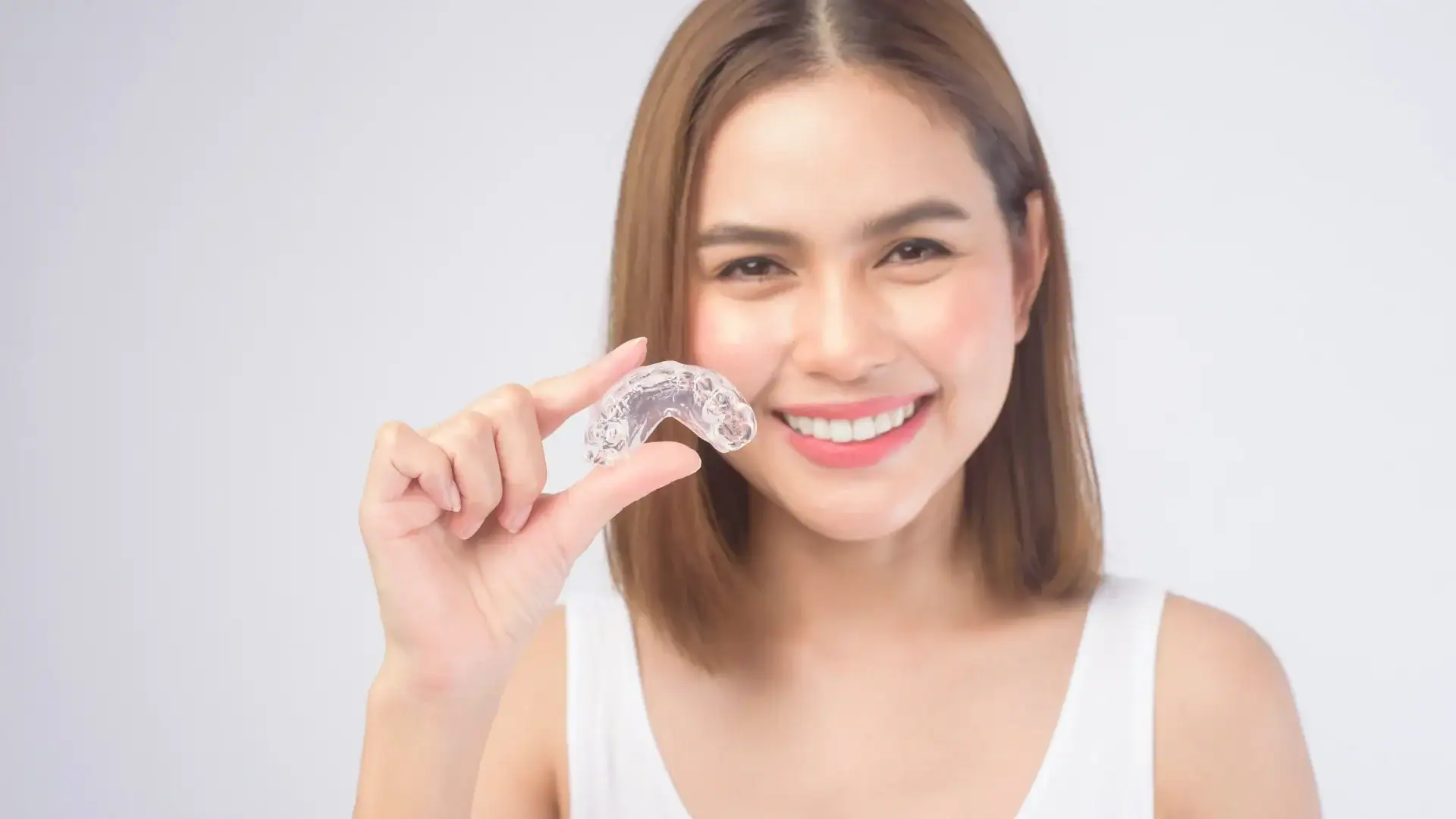
Invisalign is a clear aligner system: instead of fixed brackets and wires, a sequence of custom-made transparent trays is worn over the teeth and swapped on a schedule, each tray moving the teeth by a small increment. The trays come out for eating and brushing, which is the practical difference from fixed appliances. The conventional change interval is 14 days; a systematic review of six studies found that 7-day and 10-day protocols produced no significant difference in tooth movement efficacy, except for certain movements that did better on the 14-day protocol (PubMed 38666743).
- 01A clear aligner is a removable custom tray, not a fixed appliance: it can be taken out for meals and cleaning, which removes the dietary restrictions and the interdental cleaning difficulty that come with brackets.
- 02Aligners are worn 20 to 22 hours a day and changed on schedule; the wear time, not the number of trays, is what determines whether the planned movement happens.
- 03The standard change interval is 14 days: across six studies, three of them randomised, 7-day and 10-day protocols showed no significant efficacy difference, though one randomised trial favoured 14 days for posterior intrusion, distal tipping and buccal torque (PubMed 38666743).
- 04Aligners are not faster than braces in routine cases: in 10 studies on mild to moderate crowding, there was no significant difference in treatment duration between clear aligners and fixed appliances, with low certainty of evidence (PubMed 38607436).
- 05For anterior open bite in adults, meta-analysis of 12 studies found clear aligner therapy corrected the bite by 2.76 mm (95% CI 2.23 to 3.28), achieved mainly through incisor extrusion rather than molar intrusion (PubMed 39445659).
Are you dreaming of a dazzling smile without the hassle of traditional braces? If so, you're not alone. Many people are turning to Invisalign Treatment as a sleek, effective solution for teeth straightening. This innovative approach uses clear aligners that fit comfortably over your teeth, allowing you to achieve that perfect grin without drawing attention to your orthodontic journey.
Imagine sipping coffee or enjoying a meal without worrying about metal brackets or wires. Welcome to the world of Invisalign, where comfort meets confidence! Let's explore this transformative treatment and what it can realistically change about your smile.
/ What is Invisalign Treatment?
Invisalign Treatment is a modern orthodontic solution designed to straighten teeth discreetly. Unlike traditional metal braces, Invisalign uses a series of custom-made, clear aligners that are nearly invisible.
Each set of aligners is crafted from smooth plastic, making them comfortable to wear. They gently shift your teeth into the desired position over time.
The process begins with a consultation where your orthodontist creates a personalized treatment plan. Advanced 3D imaging technology allows you to visualize the projected results before starting.
You simply switch out your aligners every one to two weeks as directed. This gradual adjustment helps achieve the perfect alignment without compromising aesthetics during treatment.
Invisalign is suitable for various dental issues, including overcrowded teeth and gaps. Plus, they can be removed while eating or brushing, offering unparalleled convenience compared to traditional options.
Overall, Invisalign Treatment offers a discreet, comfortable, and convenient way to achieve a straighter smile.
/ Benefits of Invisalign over traditional braces
Invisalign offers a modern alternative to traditional braces that many find appealing. One of the most notable benefits is their invisibility. Unlike metal wires and brackets, clear aligners blend naturally with your teeth.
Comfort is another strong advantage. Invisalign aligners are made from smooth plastic, reducing irritation often caused by metal braces, which means fewer painful adjustments and less time spent at the orthodontist's office.
Hygiene plays a critical role in oral health, too. With removable aligners, maintaining proper dental care becomes more manageable. You can brush and floss without obstruction, promoting healthier gums and teeth during treatment.
Flexibility also stands out with Invisalign. Removing the aligners allows you to enjoy your favourite foods without restrictions. Something traditional braces can't offer. It's an easy way to maintain a normal lifestyle while achieving that perfect smile.
/ The Process of Getting Invisalign
Getting Invisalign is a straightforward journey that starts with an initial consultation. During this appointment, your orthodontist will assess your teeth and discuss your goals for treatment.
If you're a good candidate, the next step involves taking detailed scans or impressions of your mouth. This data helps create a customized treatment plan tailored to your needs.
Once the aligners are ready, you'll receive several sets designed to be worn over time. Each set shifts your teeth gradually into place.
For optimal results, you must wear the aligners for 20-22 hours daily. The aligners can be removed when eating or brushing but should remain in during most of the day.
Regular check-ins with your orthodontist throughout the process will ensure everything progresses smoothly and adjustments can be made if necessary.
/ Tips for Successfully Using Invisalign
To make the most of your Invisalign treatment, consider these practical tips . First, wear your aligners for at least 20 to 22 hours daily. Consistency is critical to achieving optimal results on schedule.
Keep track of your progress by checking in with your dentist regularly. They can provide guidance and adjustments as needed throughout the process. This helps ensure you stay on course with your treatment plan.
Maintaining good oral hygiene is essential while using Invisalign. Brush and floss after every meal before putting the aligners back in place. This will help prevent plaque buildup and keep your teeth and aligners clean.
Avoid consuming sticky or hard foods that could damage the aligners or compromise effectiveness. Also, be cautious about drinking sugary beverages while wearing them; removing Aligners during meals is best.
Embrace patience! Straightening teeth takes time, but following these tips will make the journey smoother and more enjoyable as you work towards a confident smile with Invisalign Treatment.
Let’s plan the right treatment together.
Free Assessment→- 1.Monisha J, Peter E. Efficacy of clear aligner wear protocols in orthodontic tooth movement-a systematic review. Eur J Orthod 2024;46. PubMed 38666743
- 2.Alhamwi AM, Burhan AS, Idris MI, Nawaya FR. Duration of orthodontic treatment with clear aligners versus fixed appliances in crowding cases: a systematic review. Clin Oral Investig 2024;28:249. PubMed 38607436
- 3.Correa E, Michelogiannakis D, Barmak AB, Rossouw PE, Javed F. Efficacy of Clear Aligner Therapy for the Treatment of Anterior Open Bite in Adults: A Systematic Review and Meta-Analysis. Orthod Craniofac Res 2025;28:261-270. PubMed 39445659