
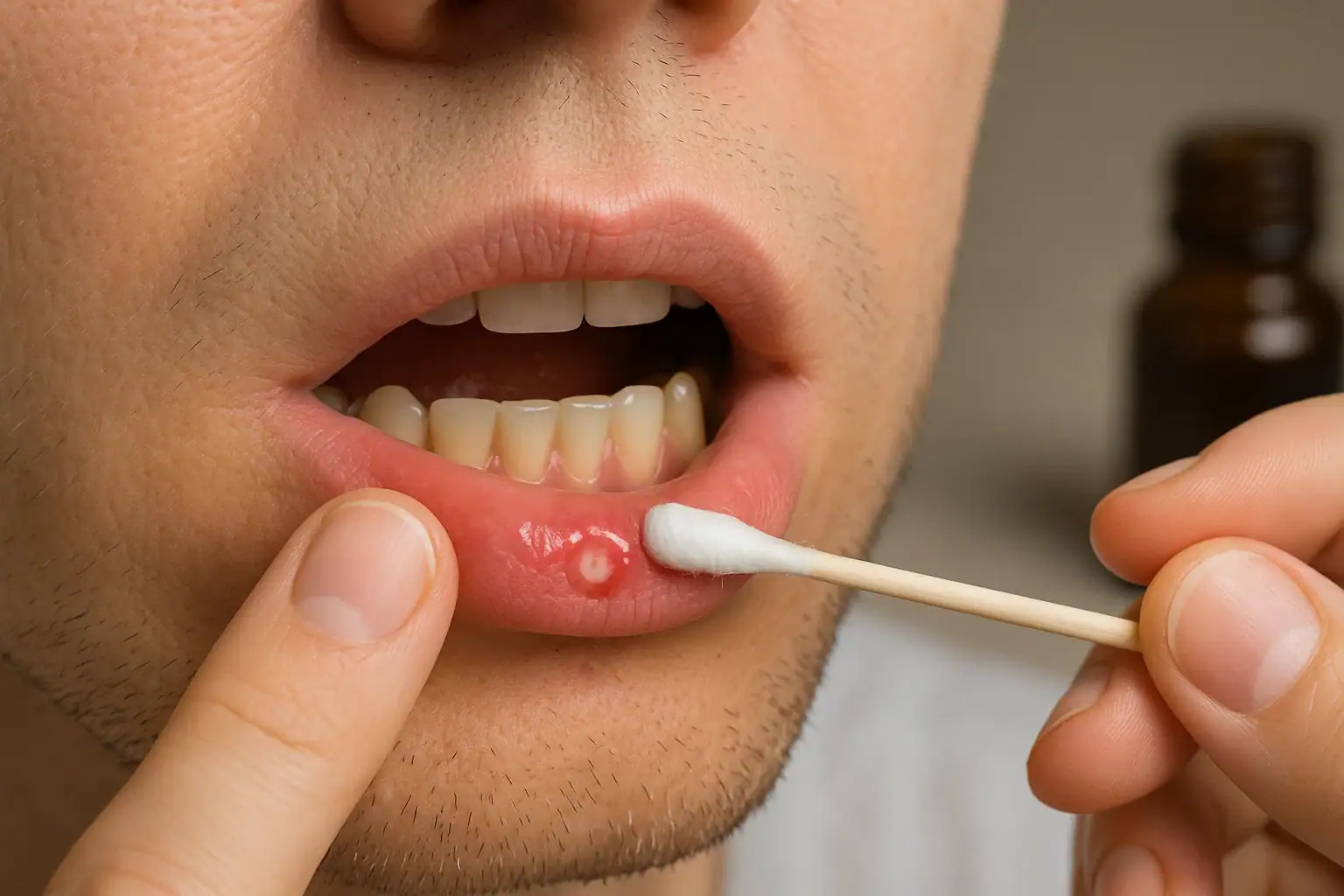
Aphthous ulcer treatment works on two separate goals: making the sore bearable and shortening the episode. Topical anaesthetics such as benzocaine, protective pastes and antiseptic rinses like chlorhexidine gluconate cover the pain, while topical corticosteroids are the first-line agents for recurrent aphthous stomatitis and are what a prescription usually contains (PubMed 38530258). Minor ulcers, smaller than 1 cm, heal in 7 to 14 days without scarring; major ulcers larger than 1 cm can take 2 to 6 weeks and are the ones that need the prescription route. None of these options removes the tendency to recur.
- 01Three types with three timelines: minor ulcers under 1 cm heal in 7 to 14 days without scarring, major ulcers over 1 cm take 2 to 6 weeks and can scar, herpetiform ulcers come in clusters and clear in 10 to 14 days.
- 02Topical corticosteroids are the first-line agents for recurrent aphthous stomatitis, with systemic medication kept for more severe cases (PubMed 38530258).
- 03Nutritional deficiency is a documented association: a meta-analysis of 9 case-control studies found higher frequencies of vitamin B12 deficiency (odds ratio 3.75), folic acid (7.55) and ferritin (2.62) in people with recurrent aphthous stomatitis (PubMed 38530258).
- 04Celiac disease is linked to it: a meta-analysis of 21 case-control studies reported recurrent aphthous stomatitis in 25 per cent of people with celiac disease against 11 per cent in controls, odds ratio 3.79 (PubMed 38530258).
- 05Prevalence in the general population is reported between 5 and 25 per cent with a peak in the second decade of life, and at present there is no curative treatment (PubMed 37357066).
Aphthous ulcers, commonly known as canker sores, are small, painful lesions that form inside the mouth. While they are not contagious, they can significantly affect a person’s quality of life by interfering with speaking, eating, and drinking. This comprehensive blog explores aphthous ulcer treatments, including causes, symptoms, medications, home remedies, and prevention strategies. We’ll also answer key questions like “What is aphthous ulceration?”, “What causes aphthous ulcers?”, and more.
/ What Is an Aphthous Ulcer?
An aphthous ulcer is a round or oval-shaped sore that develops on the non-keratinized mucosa of the mouth, such as:
- Inside the cheeks
- On the tongue
- Inside the lips
- Soft palate
- Floor of the mouth
These ulcers typically have a white or yellow center with a red inflamed border . Aphthous ulcers are a common form of recurrent oral ulceration and are usually not associated with viral infections .
What Is Aphthous Ulceration?
Aphthous ulceration refers to the recurring or chronic appearance of these non-infectious ulcers inside the mouth. It is one of the most common oral mucosal conditions affecting both adults and children.
/ Types of Aphthous Ulcers
Understanding the types of aphthous ulcers is crucial for choosing the appropriate treatment.
| Type | Size | Healing Time | Scarring | Frequency |
|---|---|---|---|---|
| Minor | < 1 cm | 7–14 days | ❌ No | Most common |
| Major | > 1 cm | Weeks | ✅ Yes | Less common |
| Herpetiform | Clusters | 7–10 days | ❌ Rare | Rare, but painful |
/ Aphthous Ulcer Symptoms
- Burning or tingling sensation before the ulcer appears
- Round or oval sores with white/yellow centers
- Red halos around the lesion
- Pain during eating or speaking
- In severe cases: fever, swollen lymph nodes, fatigue
/ What Causes Aphthous Ulcers?
Although the exact cause is unclear, several triggers are known to contribute to the development of aphthous ulcers.
Common Causes Include:
- Nutritional Deficiencies : Iron, folic acid, vitamin B12, and zinc
- Stress and Fatigue
- Hormonal Fluctuations
- Local Trauma : From dental work, brushing, or accidental biting
- Food Sensitivities : Citrus fruits, chocolate, coffee, gluten
- Immunologic Factors
- Genetic Predisposition
- Underlying Medical Conditions : Crohn’s disease, Celiac disease, Behçet’s disease
Questions Addressed:
- what causes aphthous ulcers
- what causes aphthous mouth ulcers
/ Aphthous Ulcer Treatments
1. Over-the-Counter (OTC) Aphthous Ulcer Treatment
Mild ulcers can often be treated with OTC products . These include:
- Topical anesthetics : Benzocaine (e.g., Orajel)
- Protective pastes : Orabase with hydrocortisone
- Antiseptic rinses : Chlorhexidine gluconate
- Mouthwashes : Hydrogen peroxide-based or saltwater rinses
2. Prescription Medications
For more severe or recurrent aphthous ulcers, doctors may prescribe:
- Corticosteroid ointments or rinses (e.g., dexamethasone, clobetasol)
- Topical immunosuppressants : Tacrolimus
- Systemic medications : Colchicine, thalidomide, or dapsone (for major or resistant cases)
3. Home Remedies and Natural Treatments
Home care can play a significant role in soothing pain and accelerating healing:
- Saltwater rinses : Reduce bacteria and inflammation
- Baking soda rinses : Neutralize mouth pH
- Milk of magnesia : Apply directly to ulcer to protect and relieve pain
- Honey : Known for antimicrobial and anti-inflammatory properties
- Chamomile tea : Anti-inflammatory and soothing when used as a rinse or compress
- Aloe vera gel : Healing and anti-inflammatory effects
A sore that keeps returning to the same spot is usually being held open by something mechanical: a sharp edge, an overhanging filling or a denture flange. Finding and removing it is part of gum and oral mucosa treatment, inside our periodontology service.
/ Aphthous Ulcers and Autoimmune Condition
Frequent or severe aphthous ulcers may be a symptom of an underlying autoimmune or systemic condition. If your ulcers occur more than 4–5 times per year or are accompanied by other symptoms (e.g., fatigue, eye inflammation, or joint pain), consult your doctor.
Potential related conditions:
- Behçet’s disease
- Celiac disease
- Systemic lupus erythematosus (SLE)
- Inflammatory bowel disease (Crohn’s, ulcerative colitis)
/ The Role of the Immune System in Aphthous Ulcers
Aphthous ulcers are thought to be an immune-mediated condition. In individuals with a hypersensitive immune response, the body may mistakenly attack the mucous membranes inside the mouth, leading to ulceration.
Some people have a genetic predisposition to this overactive response, making them more susceptible to recurrent ulcers. Especially during times of stress or illness.
/ Are There Seasonal or Environmental Triggers?
Though less commonly discussed, some studies and patient reports suggest that environmental factors may contribute to ulcer flare-ups. These may include:
- Cold weather or dry air, which dries the mucosa
- Pollen allergies or airborne irritants
- Changes in diet during holidays or travel
/ Aphthous Ulcers in Smokers vs. Non-Smokers
Interestingly, aphthous ulcers are reported to occur less frequently in smokers . While this does not suggest smoking as a treatment, it highlights a curious immunologic response to tobacco-related keratinization of oral tissues.
After smoking cessation, some individuals report an initial increase in ulcer outbreaks before normalization.
/ The Psychological Impact of Recurrent Aphthous Ulcers
For those who suffer from frequent and painful ulcers, the condition may also lead to psychological effects such as:
- Social withdrawal (due to speech discomfort or visible lesions)
- Anxiety related to meals or conversations
- Sleep disturbances (especially if pain is nocturnal)
/ How Long Do Aphthous Ulcers Last?
| Type | Healing Duration | Notes |
|---|---|---|
| Minor Ulcer | 7–14 days | Most common, heals without scarring |
| Major Ulcer | 2–6 weeks | May require corticosteroids |
| Herpetiform | 10–14 days | Often mistaken for viral infections |
/ Are Aphthous Ulcers Hereditary?
There is growing evidence that genetics play a significant role in the occurrence of aphthous ulcers. Studies have shown that individuals with a family history of recurrent mouth ulcers are significantly more likely to experience them as well.
If both parents have a history of aphthous ulceration, the likelihood in children increases substantially.
/ The Role of Oral Hygiene Products in Aphthous Ulcer Prevention
Common toothpaste ingredients like sodium lauryl sulfate (SLS) can cause or worsen ulcers in sensitive individuals. Switching to SLS-free toothpaste and alcohol-free mouthwashes can significantly reduce the frequency of outbreaks.
Additionally, soft-bristled toothbrushes and gentle brushing techniques help prevent trauma-induced lesions.
/ Aphthous Ulcer Research and Future Treatments
Current research is exploring:
- Biologic therapies to control immune response
- Genetic markers for predicting susceptibility
- New topical delivery systems for faster relief
As our understanding grows, future aphthous ulcer treatments may become more personalized and effective.
/ How to Prevent Aphthous Ulcers
Although prevention is not always possible, especially for genetically predisposed individuals, the following strategies help reduce outbreaks:
- Avoid food triggers : Like acidic, spicy, or abrasive foods
- Use SLS-free toothpaste : Sodium lauryl sulfate may irritate oral tissues
- Correct nutritional deficiencies : Through diet or supplements
- Reduce stress : Mindfulness, yoga, or adequate sleep
- Protect the mouth : Use mouth guards if necessary and brush gently
/ When to See a Doctor
You should consult a healthcare provider if:
- Ulcers last more than 2–3 weeks
- You experience frequent recurrences
- The pain is unmanageable
- Ulcers are larger than 1 cm or multiple in number
- You notice associated symptoms like fever, joint pain, or eye inflammation
/ Aphthous Ulcers in Children
Children are also prone to aphthous ulcers, especially during periods of stress, poor oral hygiene, or dietary imbalance.
Tips for Parents:
- Provide soft, non-acidic meals
- Ensure daily intake of vitamins and minerals
- Use child-safe OTC rinses or gels
- Monitor and manage stress, especially during school terms
/ Aphthous Ulcers vs. Other Oral Conditions
It’s essential to differentiate aphthous ulcers from other mouth lesions:
| Condition | Cause | Location | Contagious | Appearance |
|---|---|---|---|---|
| Aphthous Ulcers | Non-viral, immune | Inside mouth | ❌ No | White/yellow sore with red edge |
| Cold Sores | Herpes simplex virus | Lips, outer mouth | ✅ Yes | Fluid-filled blisters |
| Oral Thrush | Fungal (Candida) | Tongue, cheeks | Mildly | White, creamy patches |
/ FAQs About Aphthous Ulcers
What is an aphthous ulcer?
It is a small, non-infectious ulcer that appears inside the mouth, often painful but not contagious.
What is aphthous ulceration?
It refers to the condition of having recurrent aphthous ulcers or canker sores.
What causes aphthous ulcers?
Causes include stress, nutritional deficiencies, trauma, food sensitivities, and sometimes systemic disease.
What are the best aphthous ulcer treatments?
Mild cases respond well to topical OTC products and home remedies. Severe or recurrent cases may require prescription medications.
Are aphthous ulcers contagious?
No. Unlike cold sores, aphthous ulcers are not caused by a virus and cannot be transmitted.
/ Summary of Key Takeaways
- Aphthous ulcers are painful but non-contagious mouth ulcers
- Common triggers include stress, trauma, nutritional deficiencies, and immune factors
- Treatments range from OTC gels and rinses to prescription corticosteroids
- Home remedies like saltwater, honey, and aloe vera can help relieve symptoms
- Prevention includes stress management, dietary care, and SLS-free oral products
- Seek medical advice if ulcers are large, recurrent, or accompanied by other symptoms
/ Conclusion
Aphthous ulcers, while uncomfortable, are manageable with the right care and awareness. Understanding their triggers and knowing how to treat and prevent them can lead to faster healing and fewer recurrences. From OTC aphthous ulcer treatment to prescription medication and natural remedies, there are effective options for every severity level.
If you experience frequent or severe episodes, consult a healthcare professional to rule out underlying conditions and receive personalized treatment.
Let’s plan the right treatment together.
Free Assessment→