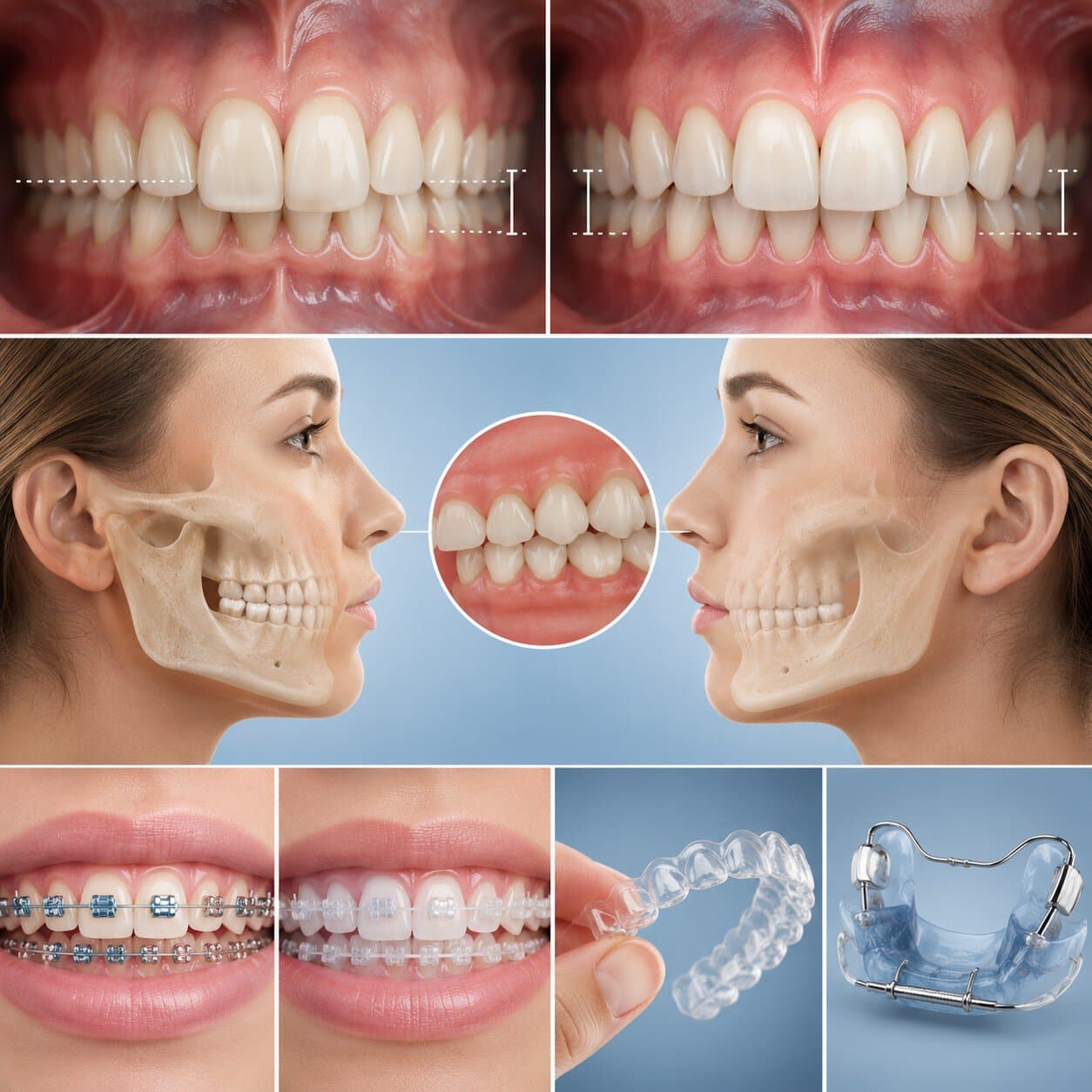
Early orthodontic treatment means starting a first phase between seven and eleven years of age rather than waiting for a single course in adolescence, and the evidence shows its benefit is specific rather than general. In Cochrane's synthesis of 27 randomised trials with 1,251 participants, early treatment with a functional appliance cut new incisal trauma to 19% against 30% in the late treatment group (odds ratio 0.56, 95% CI 0.33 to 0.95), while final overjet showed no difference once both groups had finished (mean difference 0.21, 95% CI -0.10 to 0.51). This is consistent with setting the first orthodontic check at age seven (PubMed 29534303).
- 01Early or two-phase treatment starts at seven to eleven years and is followed by a second phase; late or one-phase treatment runs once at around twelve to sixteen. The comparison between them is what the trial evidence addresses (PubMed 29534303).
- 02The measured benefit is trauma protection: new incisal trauma occurred in 19% (31 of 161) of early-treated children against 30% (51 of 171) treated late, odds ratio 0.56 (95% CI 0.33 to 0.95), on moderate-certainty evidence (PubMed 29534303).
- 03The headgear arm points the same way: 24 of 117 early-treated children had new incisal trauma against 44 of 120 treated late, odds ratio 0.45 (95% CI 0.25 to 0.80), at low certainty (PubMed 29534303).
- 04There was no other advantage. Final overjet (mean difference 0.21, 95% CI -0.10 to 0.51) and ANB angle (mean difference -0.02, 95% CI -0.47 to 0.43) did not differ between early and late treatment once both were complete (PubMed 29534303).
- 05The risk this protects against is measurable by size: children aged 0 to 6 with an overjet of 3 mm or more had 3.37 times the odds of dental trauma (95% CI 1.36 to 8.38), and twelve-year-olds with an overjet above 5 mm had 1.81 times the odds (95% CI 1.44 to 2.27), across 41 studies (PubMed 31062510).
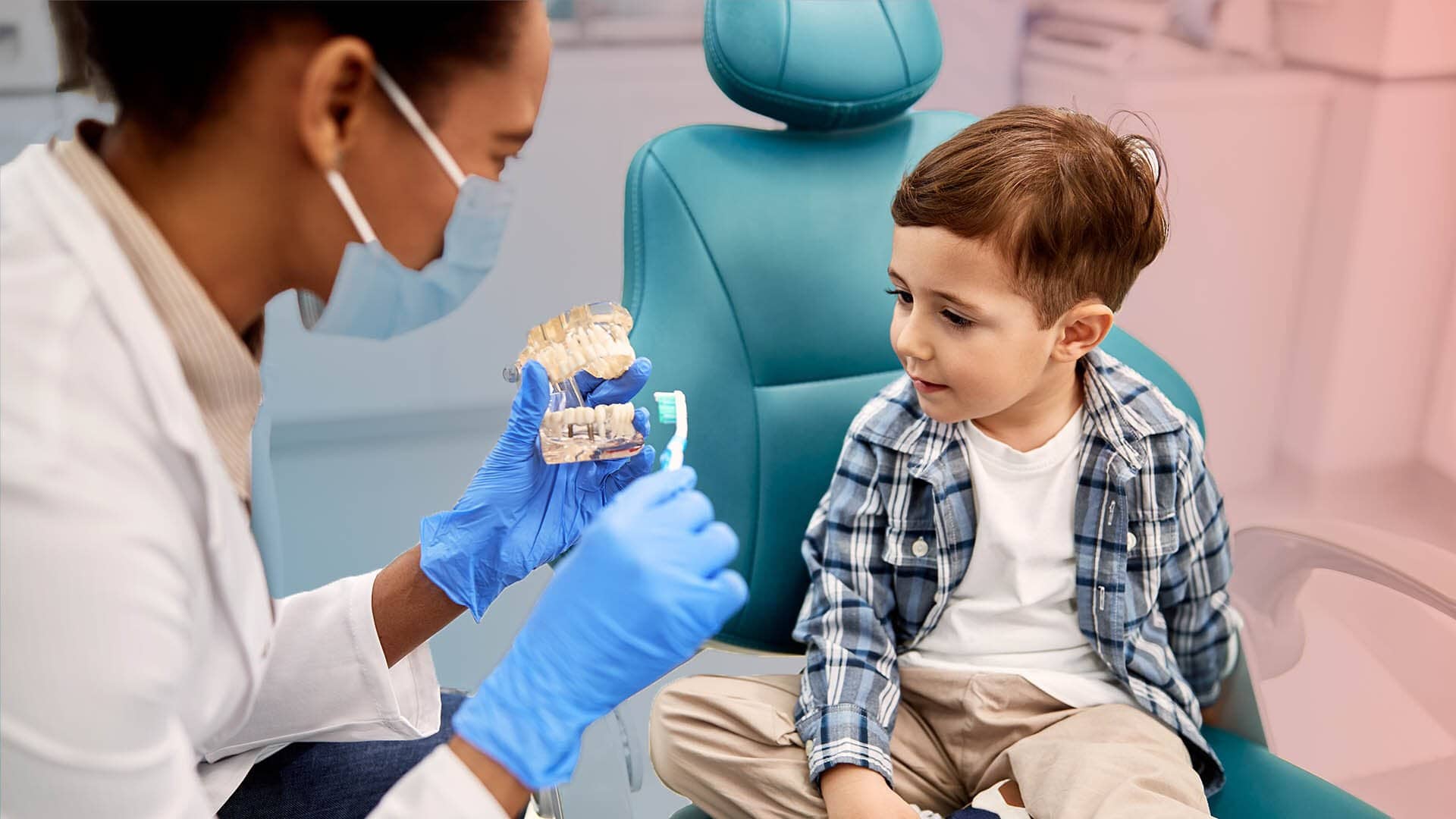
When it comes to orthodontic treatment, young people with braces usually come to mind. However, the first orthodontic treatment in children can start much earlier to ensure that the teeth and jaw structure develop correctly. Experts emphasize that early detection of orthodontic problems can prevent more complex and costly treatments in the future. So when should the first orthodontic examination be performed in children and in which cases is early treatment necessary?
/ What is Orthodontic Treatment
Orthodontic treatment is a dental specialty that ensures that the teeth and jaw are aligned ideally. Problems such as incorrect tooth alignment, crowding, and unbalanced position of the lower and upper jaws can be corrected with orthodontic treatment. Orthodontic treatments started at an early age can help solve problems without the need for more radical interventions in the future.
Orthodontic treatment is not only applied for aesthetic concerns. It also provides many benefits such as improving chewing functions, protecting teeth and jaw health, and preventing speech disorders. Defects in the tooth structure can also lead to gum disease and jaw joint disorders. Therefore, checkups at an early age are critical to preventing greater dental health problems in the future.
/ When Should Children Have an Orthodontic Examination?
According to the American Association of Orthodontics (AAO), children's first orthodontic examination should be performed at the latest at the age of 7. This age is the ideal time to detect hereditary or developmental orthodontic problems early. During this period, when permanent teeth begin to replace milk teeth, it should be evaluated whether the teeth and jaw structure are developing correctly.
Early diagnosis of orthodontic problems in children is important in ensuring that teeth grow properly in later years and in protecting oral health. In addition, some children may experience crooked teeth, jaw recession or advanced jaw structure. When such conditions are detected early, more effective results can be obtained with apparatus that direct jaw development or various orthodontic treatments.
/ In Which Cases is Early Orthodontic Treatment Necessary?
When some orthodontic problems are detected at an early age, the growth and development process can be positively intervened. Early orthodontic treatment may be required in the following cases:
- Crowding or incorrect positioning of teeth
- Loss of the lower jaw forward or backward
- Shifting of teeth that may require transparent plates or braces
- Long-term continuation of habits such as thumb sucking
- Early loss of baby teeth and inability to find space for permanent teeth
- Upper and lower teeth not fitting together properly (malocclusion)
- Jaw shifting and jaw joint disorders
- Breathing problems or constant mouth breathing
The aim of orthodontic treatment in children is to guide jaw development correctly, ensure that the teeth are aligned in a healthy manner, and prevent permanent disorders that may occur in the jaw structure in the future.
/ Advantages of Early Orthodontic Treatment
There are many benefits to early orthodontic treatment:
- Easier and Shorter Treatment: When intervention is made while the tooth and jaw structure is still developing, the correct positioning of the teeth is ensured and more complex treatments are prevented in the future.
- Aesthetic Appearance: Thanks to early intervention, children's self-confidence increases and concerns about the appearance of their teeth are reduced in the future.
- Healthier Oral and Dental Care: Properly aligned teeth are easier to brush and clean. This reduces the risk of cavities and gum disease.
- Supports Jaw Development: Imbalances that may occur in the jaw structure are corrected in advance, providing both an aesthetic and functional jaw structure.
/ Orthodontic Treatment Methods
Orthodontic treatment can be applied with different methods according to the needs of children:
- Fixed Braces: Metal or ceramic braces are used to bring the teeth into correct alignment over time.
- Clear Plates: These plates, used as an alternative to traditional braces, are more advantageous in terms of aesthetics.
- Removable Appliances: They are generally used to correct jaw development at an early age. Jaw expansion devices are very effective in directing the jaw bones of children.
- Functional Appliances: These are special appliances used to ensure the correct development of the lower and upper jaws.
/ Frequently Asked Questions
- When should orthodontic treatment begin for children? Experts recommend that the first orthodontic examination be performed around the age of 7. However, the age at which treatment begins may vary depending on the severity of the problem. If there is a significant problem with jaw development or tooth alignment, treatment can begin at an early age.
- Do you need to be old enough to wear braces? No, braces can be more effective during childhood because the teeth and jaw bones are still developing. Interventions at a young age can result in easier and shorter treatments in the future.
- Does a thumb-sucking habit lead to orthodontic problems? Yes, a long-term thumb-sucking habit can cause misalignment of the teeth and deformities in the jaw structure. If the thumb-sucking habit is not stopped at an early age, orthodontic intervention may be necessary.
- Is orthodontic treatment necessary at an early age? Orthodontic treatment is not necessary for every child, but some children require early intervention due to jaw structure or tooth position. After the orthodontic examination, the dentist will create the most appropriate treatment plan.
- Is orthodontic treatment painful? Orthodontic treatment is generally not a painful process. A slight pressure may be felt in the first days, but this is temporary.
Orthodontic treatment for children at an early age is of great importance in preventing serious dental and jaw problems that may occur in the future. One of the most important steps parents can take to ensure their children have a healthy and beautiful smile in the future is to have their dental health checked regularly.
Let’s plan the right treatment together.
Free Assessment→- 1.Batista KB, Thiruvenkatachari B, Harrison JE, O'Brien KD. Orthodontic treatment for prominent upper front teeth (Class II malocclusion) in children and adolescents. Cochrane Database Syst Rev 2018;3:CD003452. PubMed 29534303
- 2.Arraj GP, Rossi-Fedele G, Doğramacı EJ. The association of overjet size and traumatic dental injuries-A systematic review and meta-analysis. Dent Traumatol 2019;35:217-232. PubMed 31062510