According to the American Association of Orthodontists, a child's first orthodontic assessment should take place at age seven, because at this stage both baby and permanent teeth coexist and skeletal development is still responsive to guidance. An early assessment does not always mean braces; its purpose is to identify future problems in advance.
- 01The recommended age for a first orthodontic assessment is seven; there is no need to wait until all permanent teeth have come through.
- 02Early assessment is not about fitting braces immediately, but about identifying anomalies that would cause serious future problems and guiding them during the growth period.
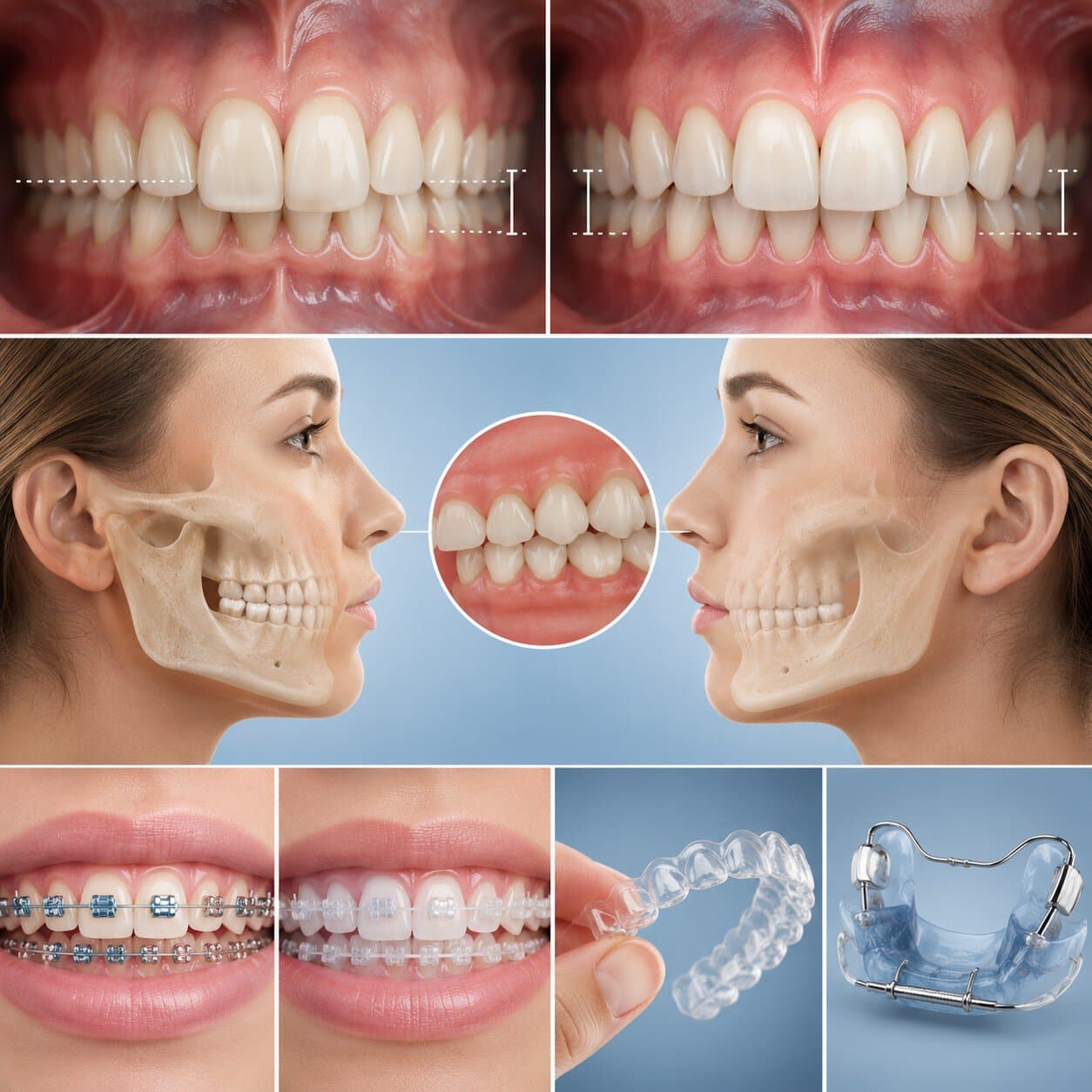
- 03Interceptive orthodontics is used for skeletal discrepancies between the jaws, narrowing of the upper arch, habits such as thumb-sucking and tongue thrusting, space-loss after early tooth loss, and certain Class II and Class III bite problems.
- 04Six months of appliance therapy at age seven can pre-empt two years of bracket treatment at age twelve, shortening comprehensive treatment or eliminating it entirely.
The most widespread parental misconception about orthodontics is: "There is no need for orthodontics until all the permanent teeth have come through." Yet the long-standing recommendation of the American Association of Orthodontists is a first orthodontic assessment at age seven. Because at this stage both baby and permanent teeth coexist in the mouth, and skeletal development is still responsive to guidance.
What early orthodontics is not: it does not mean fitting braces immediately. The real purpose of an early assessment is to identify anomalies that would cause serious problems in the future and, where possible, to mitigate them during the growth period with interceptive appliances. Some children will require no intervention at age seven; that too is valuable information.
In which cases is interceptive orthodontics used? Skeletal discrepancies between the jaws (upper or lower jaw positional differences), significant narrowing of the upper arch (addressable with a palatal expander), habit-related problems (thumb-sucking, tongue thrusting), space-loss issues following early tooth loss, and certain Class II and Class III bite problems all fall into this group.
At Mosdent, paediatric orthodontic assessment is supported by cephalometric analysis and a digital growth map derived from panoramic X-rays. This answers not only "what is present now" but also "what will occur in five years."
The greatest gain from early intervention: shortening the duration of comprehensive orthodontic treatment. And in some cases eliminating it entirely. Six months of appliance therapy at age seven can pre-empt two years of bracket treatment at age twelve. This means not only lower cost, but fewer restrictions on a child's school life.
Let’s plan the right treatment together.
Free Assessment→