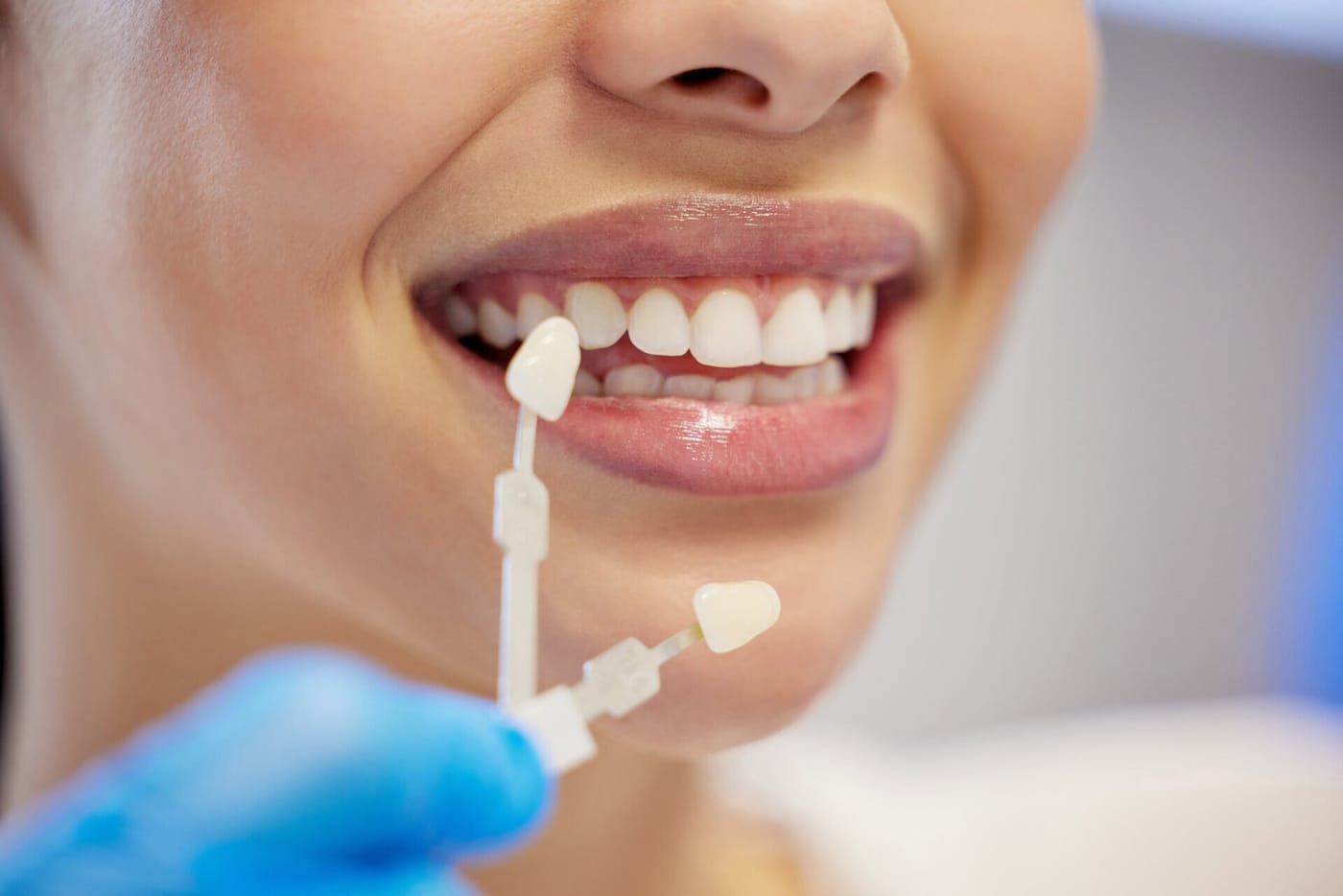
There is no single correct material: zirconia (zirconium dioxide) is the gold standard for posterior teeth exposed to high chewing forces, while E-max (lithium disilicate) gives the most natural aesthetics on anterior teeth thanks to its thin, light-transmitting structure. The right choice is made chairside, tailored to each guest, based on anterior versus posterior position, whether aesthetics or durability is the priority, the health of the remaining tooth structure, and the presence of bruxism.
- 01Zirconia (zirconium dioxide) is an exceptionally strong, metal-free ceramic whose colour is markedly more stable than composite: acidic drinks produced no perceptible change (PubMed 29302281), while coffee leaves a measurable shift that varies between products. It resists staining rather than being immune to it.
- 02Full-solid zirconia can occasionally appear overly opaque on anterior teeth, making it harder to replicate the translucency of natural tooth structure.
- 03E-max (lithium disilicate) carries the highest measured translucency and is the usual choice for anterior teeth, Hollywood Smile cases and laminate veneers; its fracture resistance sits below zirconia but the posterior region is not off limits — 627 monolithic crowns showed 97.93% survival at a mean of 48 months (PubMed 28740971).
- 04Traditional metal-ceramic (PFM) crowns can develop a grey line at the gum margin over time, so at Mosdent they are now reserved only for specific bridge cases where aesthetics are secondary.
/ Choosing The Right Crown
When it comes to choosing a dental crown, the question our clinical practice receives most often is: "Should I go with zirconium or porcelain?" The correct answer depends entirely on the context in which it is asked.
/ Zirconium For Strength
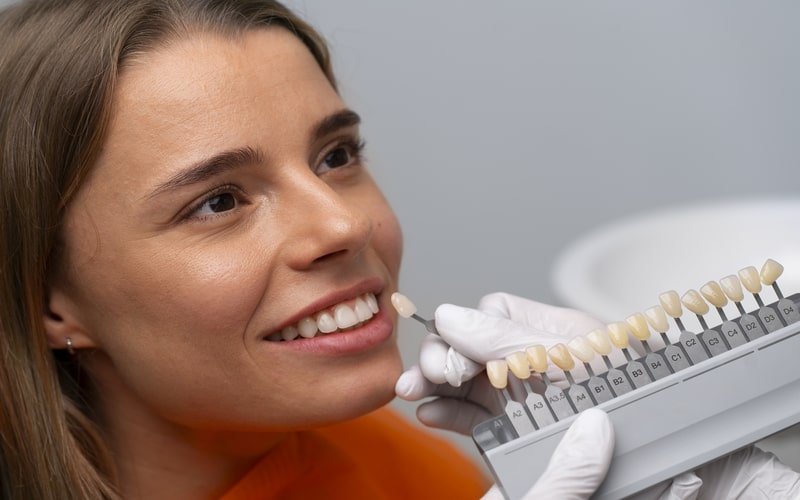
Zirconium (zirconium dioxide) crowns: an exceptionally strong, metal-free ceramic that reflects light well. Its higher fracture resistance is why it is chosen for posterior teeth, in regions exposed to high chewing forces. Its colour remains stable and is unaffected by chromogenic drinks such as tea and coffee. One limitation: monolithic zirconium can occasionally appear overly opaque on anterior teeth, making it harder to replicate the translucency of natural tooth structure.
/ E-max For Natural Appearance
E-max (lithium disilicate ceramic) crowns: a high light-transmission option. Thanks to its thin, light-transmitting structure, it gives a result close to the appearance of a natural tooth on anterior restorations. However, its resistance to chewing forces is lower than zirconium, and it is not recommended alone for posterior restorations. It is the material chosen for Hollywood Smile cases and laminate veneers.
/ Traditional Metal-Ceramic Crowns
Traditional metal-ceramic (PFM) crowns: the standard choice of ten to fifteen years ago. Porcelain is fused to a metal substructure. The drawback: the metal can become visible over time, and a grey line may appear at the gum margin. At Mosdent, metal-supported crowns are now reserved only for specific bridge cases where aesthetics are a secondary concern.
/ How The Decision Is Made
How is the decision made? Anterior or posterior? Is aesthetics the priority, or durability? How healthy is the remaining tooth structure? Is bruxism present? Depending on the answers to these questions, different materials may be chosen even within a single full-arch restoration. The right choice is made chairside, with digital analysis, tailored specifically to each guest.
Let’s plan the right treatment together.
Free Assessment→