
Gum Flap Surgery (Periodontal Flap Surgery)
Periodontal flap surgery lifts the gum, cleans the root under direct vision and stitches it back to close deep pockets that non-surgical cleaning left open.
- For advanced periodontitis
- Tissue and bone recontouring
- Preservation of tooth support
First consultation free · same-day reply · no price pressure
Written by: Dr Ferit Kaval, PhD · Medically reviewed by: Dr Hakan Kaval
Periodontal flap surgery lifts the gum, cleans the root surface under direct vision and sutures the tissue back; the point of it is to close a deep pocket that did not close without surgery. In a cohort of 172 patients followed for a mean of 11.3 years, a residual 6 mm pocket carried an odds ratio of 11.0 for tooth loss at tooth level against pockets of 3 mm or less, rising to 64.2 at 7 mm and above, and the authors classify a residual pocket of 6 mm or more as an incomplete treatment outcome (PubMed 18549447). Across 36 publications, access flaps reduced deep pockets 0.67 mm more than subgingival debridement (PubMed 31970821).
- 01In shallow pockets surgery costs rather than gains. In the same meta-analysis, the attachment level difference in 1-3 mm pockets ran against the flap at -0.43 mm (95% CI -0.56 to -0.28, seven studies), while in pockets of 6 mm or more the flap reduced probing depth by a further 0.67 mm (95% CI 0.37 to 0.97) in the short term and 0.39 mm (95% CI 0.09 to 0.70) in the long term (PubMed 31970821). A quote that lists flap surgery before a pocket chart exists is pricing a decision that has not been made.
- 02Where the bone defect is intrabony, the flap is not opened on its own. Across 79 randomised trials covering 3,042 patients and 3,612 intrabony defects, regenerative procedures added 1.34 mm of attachment gain (CI 0.95 to 1.73) over open flap debridement alone, with 1.27 mm for enamel matrix derivative and 1.43 mm for guided tissue regeneration, on low to moderate strength of evidence (PubMed 31860134).
- 03Patient-level risk is defined by two measurements. A residual pocket of 6 mm or more, and bleeding on probing at 30% or more of sites, were each risk factors for both disease progression and tooth loss in the same cohort, alongside heavy smoking and the initial diagnosis (PubMed 18549447). These are the numbers a second opinion can be checked against.
- 04Flap surgery is a step, not a starting point: non-surgical instrumentation comes first, and the flap follows only where pockets persist. Covering an exposed root and widening keratinised tissue is a separate surgical procedure, and removing excess tissue is a gingivectomy.
Periodontal Flap Operation
The advanced degree of gum disorders endangers not only the gums, but also the teeth. If periodontal diseases progress, the bone tissue and ligaments surrounding the teeth begin to be damaged. As a result, tooth loss may even occur. If this condition cannot be controlled with non-surgical periodontal treatments, it is necessary to resort to periodontal surgical procedures. The most commonly used periodontal surgical procedure is the periodontal flap operation.
Periodontal flap operation is a gum surgery performed in order to correct the pockets formed on the gums and ensure that the gums regain their old and healthy form. The gum pockets located under the gum line are the points where the gum tissue begins to separate from the tooth. The formation of gum pockets creates an area where harmful bacteria will grow and it is impossible to clean. The resulting bacteria can cause inflammation in the tissues, bleeding in the gums, tenderness and pain. If this problem is not treated, serious gum diseases, damage to the bone tissue that supports the tooth, and systemic health problems that can cause the entire body to be affected may come to the agenda.
For the treatment of gum pockets, first of all, dental calculus cleaning and root correction methods can be resorted to. These methods may not work from time to time, depending on the degree of the disease. In such cases, the flap operation may be on the agenda. Although the flap operation basically does not offer a permanent solution for periodontal diseases, it facilitates the maintenance of gum health.
| At a glance | |
|---|---|
| Duration | 1 session |
| Materials Used | Periodontal surgical sets |
How the Periodontal Flap Operation Is Performed and Why
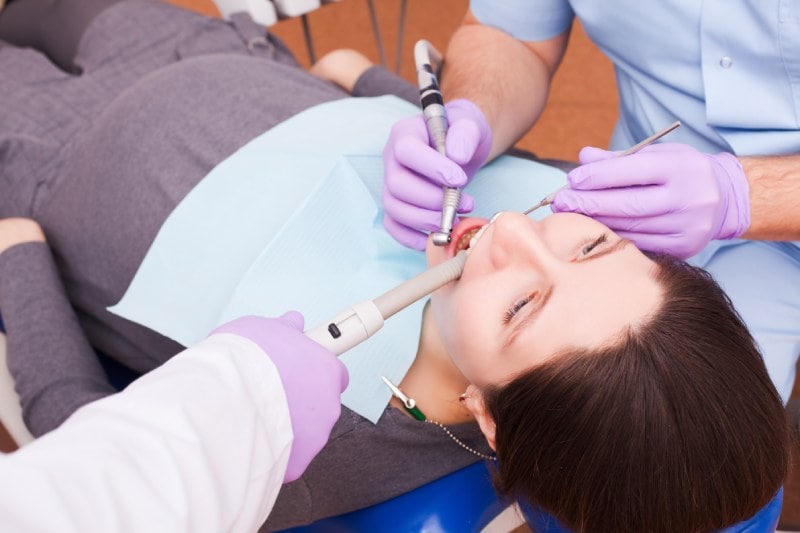
The main purpose of the periodontal flap operation is to destroy or reduce the gum pockets as much as possible. An incision is made into the gum tissue in order to reach the pockets. Diseased tissues are removed through the incision and the tooth roots are exposed in order to perform a thorough cleaning. The formation of unwanted layers of tartar, plaque and the like is cleaned and the incision is closed.
A periodontal flap operation can be performed to restore periodontal ligaments and bone tissue that have been lost due to inflammation. In this context, different techniques such as bone grafting or chemicals that cause growth can be applied. For such procedures, a patient-specific suitability assessment is performed. These approaches allow the gums to return to their normal form and function, creating healthier and safer dental protection.
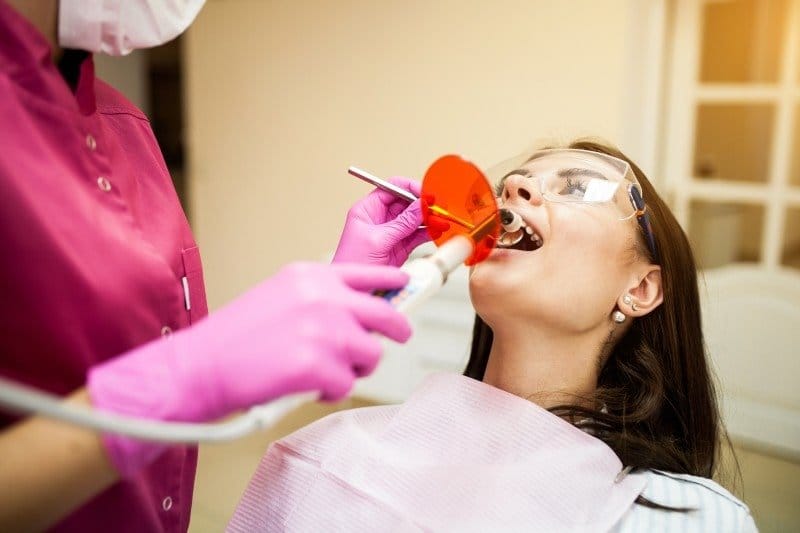
The periodontal flap operation is usually performed under local anesthesia, and where the patient needs it, an oral anti-anxiety medicine or a calming syrup may be given in addition to the local anesthetic. In addition, general anesthesia may also become an alternative if necessary. After the anesthesia takes effect, a small incision is made and the gum is separated from the tooth. The outer gum tissue is gently pushed back to provide access to the patient's tooth root, connective tissues and bone tissue.
The next stage of the periodontal flap operation is to clean the inflamed gum tissue. Diseased gum tissue is removed and the tooth root is cleaned. It is possible to apply antibiotic treatment to the area if deemed necessary. In cases where there is damage to the bone, graft material is used and an effort is made to repair the damage. After the necessary treatments, the incision is closed and the periodontal flap operation is completed.
Treatment Process
- 01Consultation: Initial examination and needs assessment; imaging where required.
- 02Treatment: Local anaesthesia, flap elevation, deep cleaning, suture.
- 03Follow-up: Outcome review and aftercare guidance.
Stages of Periodontal Flap Treatment
Periodontal flap treatment is usually completed with 6 stages. It is possible to list the stages of periodontal flap treatment as follows:
- Periodontal flap treatment, that is, before the surgical procedure is performed, the area to be operated on is cleaned using antiseptic products.
- Incisions are made, two vertical and two horizontal, on the edges of the gum area targeted for treatment. Then, the process of cleaning the granulations in the bone pocket is performed.
- The tartar accumulated in the root of the tooth is removed and the root of the tooth is brought to its original shape and polished.
- In cases where any damage to bone tissue is detected during periodontal flap treatment, graft materials can be used to restore it.
- The wound surface is washed using antiseptic solutions. The gums are sutured, periodontal bandage is applied and the operation is terminated.
- The stitches placed on the incisions are usually removed 10 days after the operation.
Things to Be Considered After Periodontal Flap Surgery
The period before and after the operation is of critical importance for optimal benefit from periodontal flap surgery. For this reason, care should be paid to the operation process as well as to the period before and after. Before and after periodontal flap surgery, it is important to fully comply with the points specified by the dentist in order to have a fast and healthy recovery process. Patients who follow the recommendations of the dentist can experience a comfortable recovery process after periodontal flap surgery and minimize the feeling of pain and discomfort.
As with all surgical procedures, periodontal flap surgery carries some risks. One of the things that should be done to minimize such risks is not to smoke after the operation. Smoking is the most important factor that triggers the re-occurrence of the disease treated by the periodontal flap operation.
After the periodontal flap operation, a cold compress should be applied to the wound surface for 20 minutes. It is necessary not to rinse the mouth and not to spit for the first 8 hours following the surgery. Gargling gently with salt water for a while may be recommended by the dentist. There should be no shower and bath with hot water for three days, intense physical exertion should be avoided.
In addition, it is important not to include solid foods in the nutrition program, and not to consume hot foods and drinks for a certain period of time. After periodontal flap surgery, attention should be paid to oral hygiene, and the oral and dental care routine should not be disrupted. But in this process, you should be gentle, the teeth should be brushed with a soft bristled toothbrush without damaging the gums in any way. In order to experience a fast and healthy healing process, all the medications prescribed by the dentist should be used regularly, routine dental examinations should not be neglected.
Side Effects and Risks of Periodontal Flap Surgery
The usual side effects of periodontal flap surgery are pain, swelling, bleeding and root sensitivity in the first weeks, together with some lowering of the gum line, while infection is uncommon. In a retrospective study of 121 patients, complications such as dentin hypersensitivity, excessive pain, infection and gum bleeding occurred in 44.63% of them; older age, greater attachment loss, smoking and a trapezoidal incision were linked with a higher rate (PubMed 41069512). Infection on its own is rarer: across 1,053 periodontal surgical procedures in 395 patients, 22 infections were recorded, a prevalence of 2.09%, and antibiotics given around the operation made no statistically significant difference (PubMed 15857064).
Root sensitivity is common after periodontal treatment. A systematic review found root sensitivity in 9-23% of patients before periodontal therapy and 54-55% after it, with its intensity rising over the first 1-3 weeks and then decreasing; the review rested on only two studies, mostly after scaling and root planing (PubMed 12787217).
Gum recession is part of how a deep pocket closes. In a meta-analysis of 27 trials with 734 intrabony defects treated surgically, probing depth fell by 2.80 mm at twelve months while recession increased by 1.26 mm, leaving more root surface exposed (PubMed 22117895). Operating on shallow pockets has its own cost: in pockets of 1-3 mm, non-surgical therapy resulted in 0.5 mm less attachment loss than surgery (PubMed 12787211), which is why flap surgery is kept for pockets that stay deep after non-surgical cleaning.
Recovery Timeline After Periodontal Flap Surgery
Recovery after periodontal flap surgery runs in stages: discomfort in the first days, root sensitivity over the first weeks, and a measured result months later, when the pockets are charted again.
| Time after surgery | What studies report |
|---|---|
| Days 1 to 14 | Bleeding, swelling and pain are the main complaints; across five kinds of dental surgery, the scores were generally low and fell to nearly zero over two weeks (PubMed 26970296) |
| 1 week | Complications were present in 15.6% of periodontal surgery patients at the one-week check (PubMed 26970296) |
| 1 to 3 weeks | Root sensitivity increases in intensity, then decreases (PubMed 12787217) |
| 12 months | After surgery for intrabony defects, probing depth reduced by 2.80 mm, recession increased by 1.26 mm and tooth survival was 98% (PubMed 22117895) |
| Years of maintenance | A residual pocket of 6 mm or more is classed as an incomplete treatment outcome and is a risk factor for tooth loss (PubMed 18549447) |
These figures come from groups of patients and describe the usual course rather than a promise for one mouth. Stitch removal, the return to normal food and the date of the first pocket chart are set by the periodontist at the review visit.
Preparation, Side Effects and Periodontal Flap Operation Prices
If general anesthesia is to be performed before the periodontal flap operation, food and beverage consumption should be stopped at least 12 hours before the operation. Thus, nausea and dizziness can be prevented after the anesthesia effect has passed. During the few days after the periodontal flap operation, swelling, slight redness and tenderness of the gums may be observed. As this is a normal situation, the use of simple painkillers prescribed by the dentist can help improve the patient's comfort.
Sensitivity to heat and cold may develop in the teeth on which the procedure is performed. The side effects that may occur after flap surgery usually disappear on their own within 1 to 2 weeks after the operation. In case of unexpected redness, bleeding or severe pain, it is necessary to consult the dentist who performed the operation without delay.
The recovery process after periodontal flap surgery may vary depending on various factors in the individual patient. However, although periodontal flap surgery is a simple and short-term procedure, it is a surgical procedure and patients should rest for at least 1 day after the operation.
Periodontal Flap Operation Prices
Periodontal flap operation prices may vary for each patient depending on the number of teeth to be applied, how advanced the inflammation is, and the structure of the teeth and gums. For this reason, it is not possible to mention the price of a standard periodontal flap operation. After the patient is examined in detail by the dentist and their needs and the details of the procedure are planned, the prices of the periodontal flap operation are determined.
- 1.Matuliene G, Pjetursson BE, Salvi GE, Schmidlin K, Brägger U, Zwahlen M, et al. Influence of residual pockets on progression of periodontitis and tooth loss: results after 11 years of maintenance. J Clin Periodontol 2008;35:685-95. PubMed 18549447
- 2.Sanz-Sánchez I, Montero E, Citterio F, Romano F, Molina A, Aimetti M. Efficacy of access flap procedures compared to subgingival debridement in the treatment of periodontitis. A systematic review and meta-analysis. J Clin Periodontol 2020;47 Suppl 22:282-302. PubMed 31970821
- 3.Nibali L, Koidou VP, Nieri M, Barbato L, Pagliaro U, Cairo F. Regenerative surgery versus access flap for the treatment of intra-bony periodontal defects: A systematic review and meta-analysis. J Clin Periodontol 2020;47 Suppl 22:320-351. PubMed 31860134
- 4.Gu H, Liu W, Xu X, Shen Y. Incidence and risk factors of postoperative complications following periodontal flap surgery: a retrospective study. Front Dent Med 2025;6:1668844. PubMed 41069512
- 5.Powell CA, Mealey BL, Deas DE, McDonnell HT, Moritz AJ. Post-surgical infections: prevalence associated with various periodontal surgical procedures. J Periodontol 2005;76:329-333. PubMed 15857064
- 6.von Troil B, Needleman I, Sanz M. A systematic review of the prevalence of root sensitivity following periodontal therapy. J Clin Periodontol 2002;29 Suppl 3:173-177. PubMed 12787217
- 7.Graziani F, Gennai S, Cei S, Cairo F, Baggiani A, Miccoli M, et al. Clinical performance of access flap surgery in the treatment of the intrabony defect. A systematic review and meta-analysis of randomized clinical trials. J Clin Periodontol 2012;39:145-156. PubMed 22117895
- 8.Heitz-Mayfield LJ, Trombelli L, Heitz F, Needleman I, Moles D. A systematic review of the effect of surgical debridement vs non-surgical debridement for the treatment of chronic periodontitis. J Clin Periodontol 2002;29 Suppl 3:92-102. PubMed 12787211
- 9.Yao J, Lee KK, McGrath C, Wu YN, Li KY, Mattheos N. Comparison of patient-centered outcomes after routine implant placement, teeth extraction, and periodontal surgical procedures. Clin Oral Implants Res 2017;28:373-380. PubMed 26970296
- 10.Felkai PP, Nakdimon I, Felkai T, Levin L, Zadik Y. Dental tourism and the risk of barotrauma and barodontalgia. Br Dent J 2023;234:115-117. PubMed 36707585

Planning your stay in Istanbul
Clinical sessions for Periodontal Flap Surgery: 1.
The exact schedule is written into your treatment plan after the examination.
Flights, arrival and follow-up after you fly home: how we plan your trip to Istanbul
What our guests say.
Real reviews from Google and Trustpilot; guests who had this treatment come first.

I visited for teeth cleaning and teeth whitening, and all of my procedures were completed quickly and professionally. I would like to sincerely thank the patient consultant, Ms. Ecran, for her kindness and support, Dr. Ferit for his excellent care, and Endodontic Specialist Dr. Melike for her prompt diagnosis and treatment. The entire team was friendly, attentive, and professional. I left the hospital very satisfied. Thank you to everyone for their outstanding service.
I recently had a gum graft procedure at Mosdent and had an excellent experience. The dentist was highly skilled, my contact person was very helpful and the overall cost was quite reasonable. The entire team was friendly and professional. I definitely recommend Mosdent.

I recently visited Mosdent for two different procedures—my daughter’s tooth extraction and my own dental implants—and I couldn’t be more impressed! From start to finish, the team was professional, caring, and highly skilled. They made my daughter feel completely at ease during her extraction, ensuring a smooth and pain-free experience. As for my dental implants, the entire process was handled with precision and expertise. The staff took the time to explain everything clearly, and the results have been fantastic! I truly appreciate their exceptional service, friendly approach, and high level of professionalism. If you’re looking for a trustworthy dental clinic that puts patient care first, I highly recommend Mosdent
Super pro and very friendly and concerned about your health not only about your money.
Who is this treatment for?
- Loss of tooth support due to advanced periodontitis
- Gum pockets that cannot be cleaned
- Bleeding, tenderness or pain in the gums
- A condition not controlled by non-surgical periodontal treatments
- Loss of periodontal ligaments and bone tissue due to inflammation
- Pocket depth over 5 mm with insufficient standard scaling
Doctors specialising in this treatment

Frequently asked
01When is flap surgery necessary?+
When pocket depth exceeds 5 mm and standard scaling is insufficient, flap surgery may be indicated. A 3D radiological assessment guides the decision.
02What is the recovery time?+
Soft food is recommended for 1-2 weeks post-operatively. Full healing takes 4-6 weeks.
03What are the side effects of dental flap surgery?+
Pain, swelling, bleeding and root sensitivity in the first weeks are the usual side effects, along with some lowering of the gum line. In a study of 121 patients, complications such as dentin hypersensitivity, excessive pain, infection and gum bleeding affected 44.63%, more often in older patients and smokers (PubMed 41069512). Infection itself is uncommon: 22 infections in 1,053 periodontal procedures, a prevalence of 2.09% (PubMed 15857064).
04Is periodontal flap surgery painful?+
The operation is done under local anaesthesia, which numbs the area during surgery. Afterwards, bleeding, swelling and pain are the main complaints; in a study comparing five kinds of dental surgery, these scores were generally low and fell to nearly zero over two weeks (PubMed 26970296). Root sensitivity can rise over the first 1-3 weeks before it eases (PubMed 12787217).
05What is the success rate of periodontal flap surgery?+
Success is measured by how far the pockets close and whether the tooth is kept. In a meta-analysis of 27 trials covering 734 intrabony defects, surgery reduced probing depth by 2.80 mm and gained 1.65 mm of attachment at twelve months, with tooth survival of 98% (PubMed 22117895). Where a pocket of 6 mm or more remains, the outcome is classed as incomplete (PubMed 18549447).
06What changes before and after periodontal flap surgery?+
Before surgery the problem is a deep pocket that non-surgical cleaning did not close; after it, the pocket is shallower and the gum line usually sits slightly lower. Twelve months after surgery for intrabony defects, probing depth was 2.80 mm less and recession 1.26 mm greater on average (PubMed 22117895). The lower gum line can leave more root surface exposed.
07How much does periodontal flap surgery cost in Turkey?+
At Mosdent, flap surgery is priced per quarter of the jaw: from €160, or from €300 with biomaterial included. The final quote depends on how many quarters need surgery, which a pocket chart taken after non-surgical treatment decides. In deep pockets of 6 mm or more, flap surgery reduces probing depth by a further 0.67 mm over subgingival debridement in the short term (PubMed 31970821).
08Is flap surgery better than deep cleaning for periodontitis?+
It depends on pocket depth. A meta-analysis of six randomised trials found that, 12 months after treatment, surgery gave 0.6 mm more pocket reduction than non-surgical therapy in pockets deeper than 6 mm, while in 4-6 mm pockets scaling and root planing gave 0.4 mm more attachment gain (PubMed 12787211). That is why deep cleaning comes first and surgery follows only where pockets stay deep.
09How soon can I fly after periodontal flap surgery?+
A 2023 review on dental tourism and air travel recommends waiting one week after most dental procedures before flying (PubMed 36707585). The authors note that the evidence comes mostly from military aircrew, whose flights differ from commercial travel, so the periodontist sets the flight date after checking how the surgical site is healing at the review visit.
Periodontology
Gum Surgery
Gum surgery rebuilds lost soft tissue: it covers an exposed root, moves a receded gum margin back up and widens the band of keratinised tissue.
Explore→02Gingivectomy
Gingivectomy cuts away excess or diseased gum tissue; it is used to correct a gummy smile, eliminate periodontal pockets and recontour an irregular gum line.
Explore→03Periodontology General
General periodontology is where gum treatment starts: pocket depths are charted, bleeding on probing recorded and the maintenance interval set from them.
Explore→04Tartar Cleaning
Tartar cleaning (scale and polish) removes hardened plaque that brushing cannot lift, using an ultrasonic scaler and hand instruments, then polishes.
Explore→05Gum Disease
Gum disease is two conditions: gingivitis stays in the gum and reverses with plaque control; periodontitis adds tissue and bone loss that does not reverse.
Explore→06Pink Aesthetics
Pink aesthetics corrects how much gum shows, its symmetry and colour; more than 2 mm of gum above the upper incisors at maximum smile counts as excessive.
Explore→Speak with your doctor about this treatment.
Not sure which treatment fits? Tell us what's wrong →