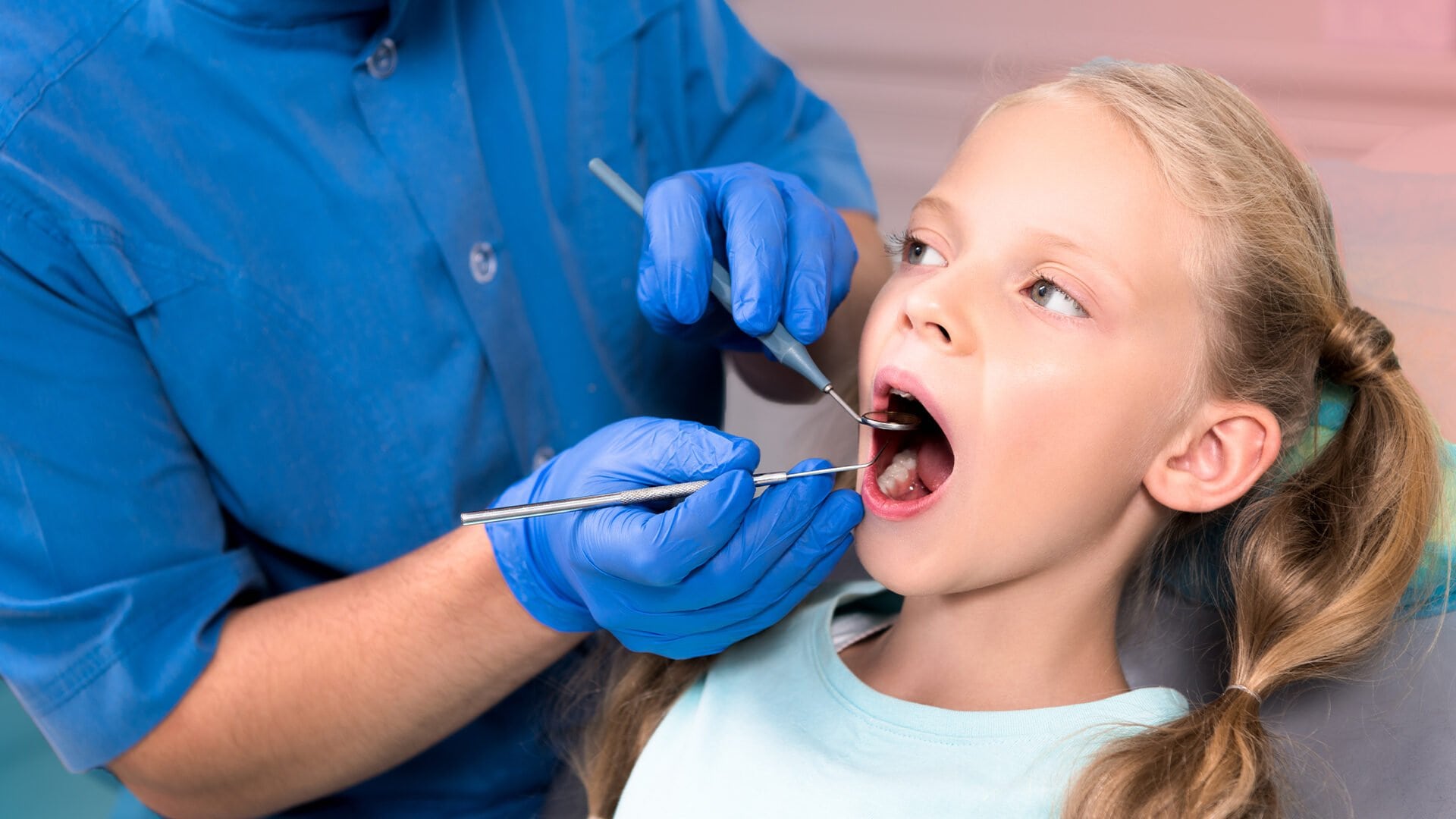
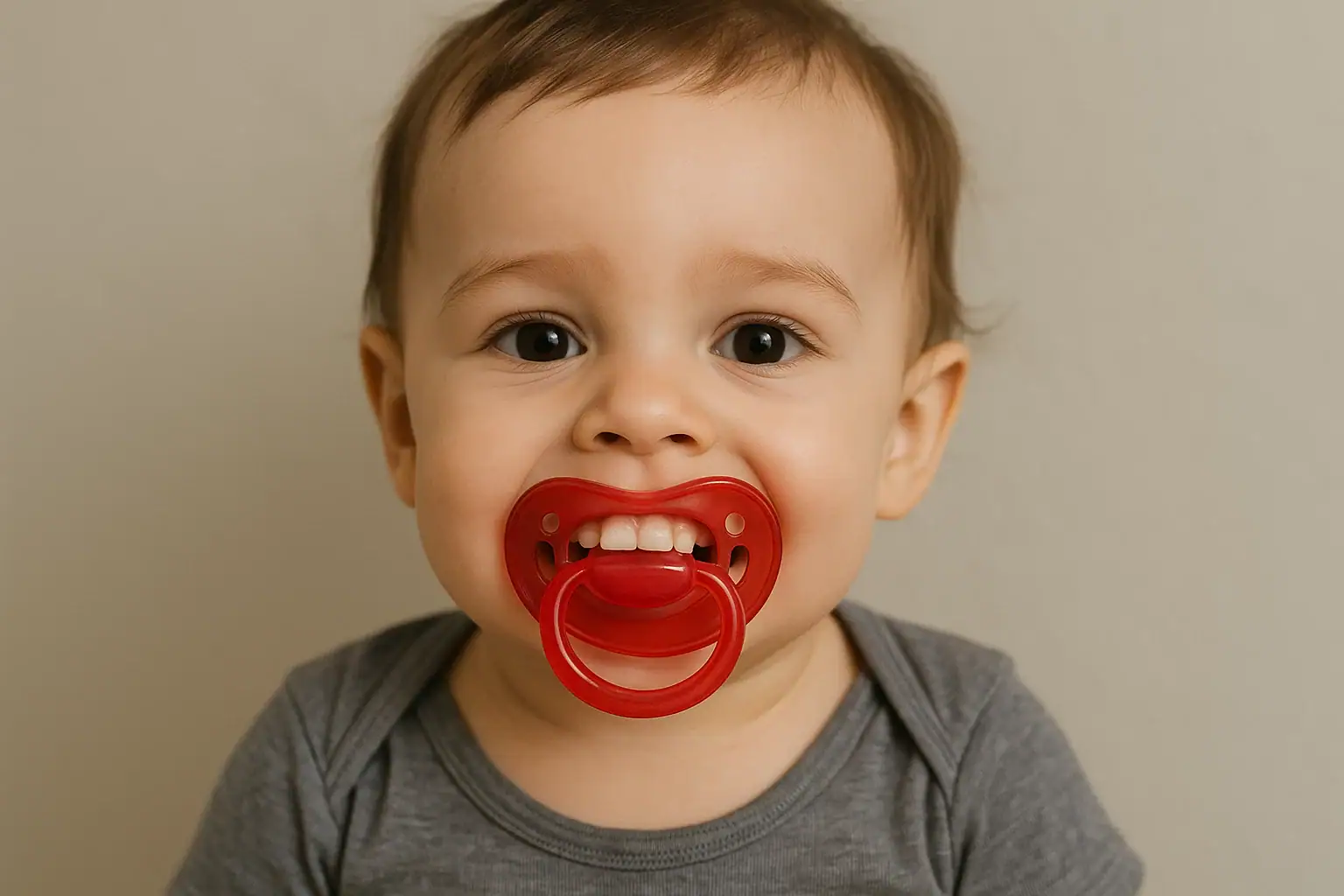
Pacifier teeth is the informal name for the bite changes that follow prolonged non-nutritive sucking: an anterior open bite, proclined upper front teeth and a narrowed palate. The risk tracks with how long and how often the habit continues rather than with the pacifier itself. In a meta-analysis of 33 studies, daily pacifier use was associated with anterior open bite at an odds ratio of 10.22 (95% CI 5.36 to 19.49), and longer habits carried greater risk than shorter ones (PubMed 40619361). Short, intermittent use in the first six months is generally treated as harmless, with weaning aimed at age two and at the latest three.
- 01Pacifier teeth is a pattern, not a diagnosis: anterior open bite, proclined upper incisors and a narrowed palate following non-nutritive sucking.
- 02Daily pacifier use was linked to anterior open bite at an odds ratio of 10.22 (95% CI 5.36 to 19.49) across 33 studies, and longer habits carried more risk than shorter ones (PubMed 40619361).
- 03The open bite often improves once the habit stops: 5 studies in children aged 4 to 12 reported 50% to 100% self-correction, although the certainty of that evidence was rated very low (PubMed 37080715).
- 04Orthodontic-shaped teats are marketed as the safer option, but a review that screened 1,041 records and pooled 3 comparative studies found no significant difference between orthodontic and conventional teats in their effect on the stomatognathic system (PubMed 27191883).
- 05The exposure timeline used in this article: 0 to 6 months generally safe, 6 to 24 months acceptable in moderation, risk rising after 24 months and significant beyond 36 months.
Pacifiers are a source of comfort for many infants, soothing them during sleep or fussy moments. However, prolonged or improper use of pacifiers can lead to a dental condition commonly referred to as "pacifier teeth." This comprehensive guide explores what pacifier teeth are, how they develop, how to prevent them, and treatment options available for correcting the condition.
/ What Are Pacifier Teeth?
Pacifier teeth refer to the misalignment or dental irregularities that can result from extended pacifier use, especially beyond toddler years. These abnormalities can affect both primary and permanent teeth.
Common Signs:
- Open bite (when front teeth don’t touch when the mouth is closed)
- Protruding front teeth
- Changes in the roof of the mouth (palate)
- Crooked teeth or delayed eruption
/ How Do Pacifiers Affect Teeth?
Pacifiers apply repeated pressure on developing jaws and teeth, which can affect their alignment over time. While short-term use is generally harmless, prolonged use increases the risk of dental issues.
Timeline of Impact:
- 0–6 months: Generally safe, especially when used intermittently.
- 6–24 months: Still acceptable, but moderation is important.
- After 24 months: Risk of dental effects increases.
- Beyond 36 months: Significant risk for permanent changes in dental structure.
/ Do Pacifiers Help with Teething?
Yes, teething pacifiers can provide relief by allowing babies to chew and apply pressure on their gums. However, it's crucial to choose the right type.
Best Pacifier for Teething:
- Orthodontic design
- BPA-free materials
- Ventilated shield for airflow
- Soft silicone nipples
/ Do Pacifiers Ruin Teeth?
Not necessarily. The key lies in timing, frequency, and the type of pacifier used. Dental effects are typically reversible if pacifier use is stopped early.
Contributing Factors:
- Duration of use
- Intensity (how often and vigorously used)
- Genetics and jaw development
/ How to Prevent Pacifier Teeth
1. Set a Stop Date
Aim to wean off pacifiers by age 2, and definitely by age 3.
2. Use Orthodontic Pacifiers
They are designed to support natural oral development.
3. Limit Use to Specific Times
Such as bedtime only, not during active hours or playtime.
4. Encourage Other Comfort Habits
Such as soft toys or soothing music.
/ Tips for Weaning Off Pacifiers
Smooth transitions can help avoid tantrums and reduce dental risks.
- Gradual reduction (only at naps → only at night → none)
- Offer alternatives like teething rings
- Praise and reward systems for pacifier-free days
/ Psychological Aspects of Pacifier Use
Prolonged pacifier use is often linked to emotional dependency. Addressing both the physical and emotional components of pacifier weaning can improve success rates.
- Introduce comfort objects gradually
- Reinforce positive behavior with praise
- Collaborate with pediatricians or child psychologists if needed
/ How to Fix Pacifier Teeth
If dental problems have already developed, early intervention can make a significant difference.
Treatment Options:
- Orthodontic Evaluation: Ideally around age 7
- Braces or Clear Aligners: For older children
- Palatal Expanders: To correct a narrow palate
- Behavioral Therapy: To prevent thumb-sucking or pacifier relapse
/ Frequently Asked Questions (FAQs)
How to fix pacifier teeth?
Treatment may involve orthodontics, depending on the child’s age and dental structure.
Do pacifiers help with teething?
Yes, especially when designed for gum relief.
Do pacifiers ruin teeth?
Not inherently. Issues arise with prolonged use and poor pacifier design.
Can a pacifier mess up teeth?
Yes, especially if used past the recommended age.
Do pacifiers affect teeth development?
They can influence jaw shape and tooth alignment if not used properly.
When should I take my child to a dentist if I’m concerned about pacifier teeth?
As early as age 1 for a general check-up, or sooner if you notice misalignment or speech issues.
/ Conclusion
Pacifiers can be a helpful tool for parents, but mindful usage is crucial to avoid long-term dental issues. By choosing the right pacifier, setting limits on usage, and seeking early dental advice if concerns arise, parents can protect their child’s smile. Early prevention and treatment are the keys to avoiding or correcting pacifier teeth while supporting overall oral health.
/ Final Thoughts
While pacifier use is common, informed decision-making makes all the difference. Understanding the psychological aspects and using proven weaning strategies ensures that your child enjoys comfort without compromising dental health. Don't hesitate to consult a pediatric dentist for personalized advice.
Let’s plan the right treatment together.
Free Assessment→- 1.Gao C, Wang M, He H, Lei H, Mei L. Association between Non-nutritive sucking habits and Anterior open bite: A systematic review and meta-analysis. BMC Oral Health 2025;25:1124. PubMed 40619361
- 2.Adriano LZ, Derech CD, Massignan C, Flores-Mir C, Porporatti AL, Canto GL, et al. Anterior open bite self-correction after cessation of non-nutritive sucking habits: a systematic review. Eur J Orthod 2023;45:235-243. PubMed 37080715
- 3.Corrêa Cde C, Bueno Mda R, Lauris JR, Berretin-Felix G. Interference of conventional and orthodontic nipples in system stomatognatic: systematic review. Codas 2016;28:182-9. PubMed 27191883