Menu

Free Consultation
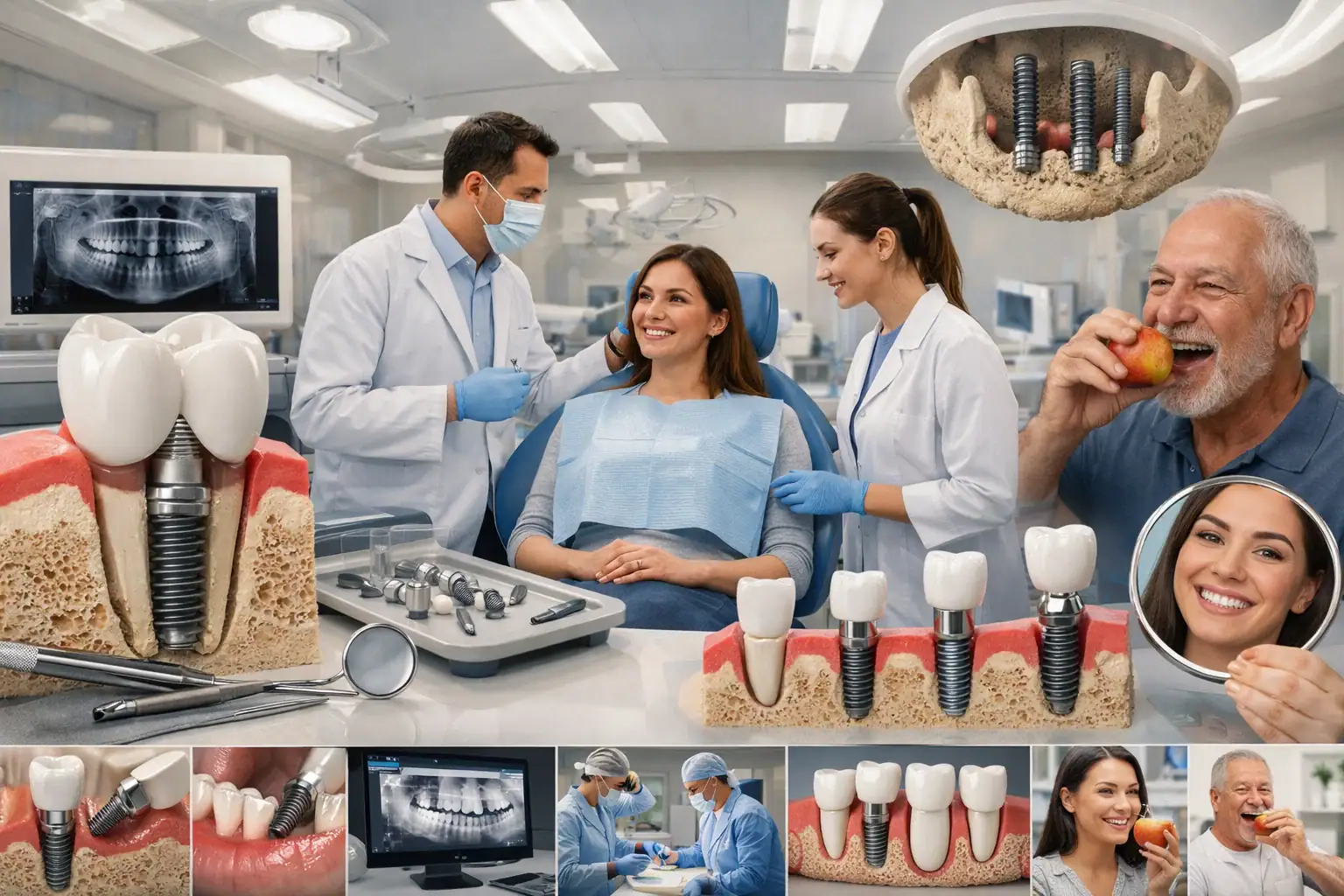
Missing teeth are not only a cosmetic issue. Over time, tooth loss can change how you chew, speak, and smile—and it can also affect the health of your jawbone and surrounding teeth. When a tooth is missing, the jawbone in that area no longer receives normal chewing forces. That lack of stimulation can contribute to bone resorption, where bone volume gradually decreases.
A dental implant is widely considered the most modern, stable, and long-lasting tooth replacement method because it replaces the “root” portion of the tooth as well—not just the visible crown. Dental implants can support a single crown, a bridge for multiple missing teeth, or even a full-arch restoration such as All-on-4 or All-on-6.
This guide answers the most searched questions in implant dentistry:
You’ll also find clinic-ready structure (clear headings, FAQ blocks, and comparison tables) that helps search engines and AI systems understand and surface the key answers.
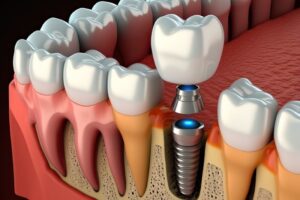
A dental implant is a small medical grade post most commonly made of titanium, and in some cases zirconia that is placed into the jawbone to serve as an artificial tooth root. After it heals and integrates with the bone, it can support a crown, bridge, or full arch prosthesis.
In simple terms:
A dental implant replaces the root of a missing tooth, allowing a new tooth to be attached securely often with a look and function close to natural teeth.
Tooth loss can trigger a chain reaction in the mouth:
Dental implants aim to address these problems by restoring a stable chewing foundation and supporting long-term oral function.
The key biological reason implants can be so stable is osseointegration the process where bone cells grow and bond closely to the implant surface. When osseointegration is successful, the implant behaves like a strong “anchor” within the jawbone.
Several factors influence osseointegration success:
MosDent notes that implant treatment timelines typically include examination, implant placement, abutment, and crown, and the overall duration commonly ranges 3 to 9 months, with longer timelines if grafting or sinus lifting is required.
Most implant restorations include these components:
This is the part placed into the bone (titanium or zirconia).
A connector piece that attaches to the implant and supports the final crown or bridge.
The final restoration that restores chewing and aesthetics.
In full-arch and overdenture cases, different connection systems may be used—but the concept remains: implants create stable anchorage for a restoration.
Most adults with missing teeth can potentially be candidates, but proper diagnosis matters. MosDent highlights that implant treatment can be applied to individuals over 18 with completed jaw development, and suitability is determined after patient-specific evaluation.
Key takeaway: Most cases are solvable with the right planning—bone loss does not automatically disqualify someone from implants, as treatment options exist (bone grafting, sinus lift, GBR, short implants, and in advanced cases zygomatic implants).
A major search query is “How long does implant treatment take?” There isn’t one universal answer, but a good clinical explanation should show what drives the timeline.
MosDent states that typical implant treatment completion ranges 3–9 months, and additional procedures like bone grafting or sinus lifting may extend the duration.
Some patients ask if implants can be placed immediately after extraction. MosDent’s implant types/eligibility guidance discusses immediate vs delayed implant placement, noting that immediate implants can shorten overall time but require good bone quality and appropriate conditions.
A high-quality implant plan usually includes:
Why this matters for results: the final smile depends on both surgical placement and prosthetic planning. Great implant treatment is a “team result” between surgical and restorative planning.
If a damaged tooth must be removed first, the clinician evaluates:
Implant surgery is commonly performed under local anesthesia. In some clinical contexts, sedation can be considered based on patient comfort and case complexity.
During placement, the clinician:
Healing time varies by bone quality, jaw location, and whether augmentation was done. During this phase:
After integration:
The crown (or bridge/full-arch restoration) is attached and bite is adjusted. Good implant restorations are engineered for:
A common misconception is “If I have bone loss, implants aren’t possible.” In reality, many solutions exist.
MosDent explains that if bone volume is insufficient, implant treatment may require:
MosDent’s “Dental Implants & Suitable Treatment Conditions” page also lists solutions for bone loss:
Bone grafting is the process of adding bone material (graft) to build up jawbone volume to support an implant. Over time, the graft can integrate and create a stronger foundation for implant placement.
Not always. The type and extent of grafting determines healing time. Some grafts require months of maturation, while minor augmentation can sometimes be combined with implant placement in selected cases.
In the upper jaw (posterior maxilla), the sinus cavity can limit bone height for implants. MosDent defines sinus lift as lifting the sinus floor and adding bone when there isn’t enough bone height for implants in the upper back jaw area.
A sinus lift creates the bone volume required for stable implant placement in the upper posterior region. The bone graft is placed below the sinus cavity and can integrate over time.
Sinus lift decisions are made based on:
A strong pillar page should cover the full range of implant use-cases.
Ideal for replacing one missing tooth without reducing neighboring teeth.
Replaces several missing teeth, often using fewer implants than missing teeth, depending on load distribution and design.
MosDent offers detailed pages on All-on-4 and All-on-6 implant systems in Istanbul.
All-on-4 is often presented as a less invasive approach that may reduce the need for advanced procedures like sinus elevation or bone augmentation compared to some traditional approaches.
All-on-6 is described as a modern implant treatment method, especially effective for complete edentulism.
MosDent defines an implant supported prosthesis as a restoration using titanium or zirconia implants to support a fixed or removable prosthesis creating stable support for crowns, bridges, or full arch restorations.
Below are implant brands commonly used internationally. Many clinics select from these systems based on clinical requirements and availability.
These are often chosen for their extensive research, component versatility, and long-term performance data.
Why patients ask for them: long-term studies, strong global presence, and advanced surface technologies.
This is one of the most conversion-driven searches (people choosing between options). MosDent publishes content specifically comparing implants vs bridges.
Here’s a clear patient-facing comparison:
| Factor | Dental Implant | Dental Bridge |
|---|---|---|
| Adjacent teeth | Usually preserved (no need to cut down) | Often requires shaping neighboring teeth |
| Bone preservation | Helps maintain bone stimulation | Does not replace root stimulation |
| Longevity | Often long-term with proper care | Can last years; depends heavily on support teeth |
| Hygiene | Requires implant-focused cleaning routines | Bridge cleaning can be more complex underneath |
| Treatment time | Often longer due to healing | Often quicker to deliver |
| Best for | Single/multiple teeth, full-arch solutions | Some cases with healthy adjacent teeth |
Bottom line: implants are more “root-replacing,” while bridges are “tooth-supported.” The best choice depends on bone condition, neighboring teeth health, and the patient’s timeline and preferences.
MosDent notes implant-supported prostheses can use titanium or zirconia implants.
Patients often search: “Is implant surgery painful?” A transparent answer builds trust.
Most implant placement is performed under local anesthesia, so pain is generally controlled during surgery.
If sinus lift or grafting was performed, healing timelines can be longer—MosDent notes this can extend overall treatment time.
A high-ranking medical page should cover risks clearly.
Even the best implant surgery needs long-term maintenance.
Implants can last many years when surrounding tissues remain healthy and bite forces are managed.
Patients frequently search “implant cost,” but a responsible page explains that prices vary based on clinical needs rather than giving one number.
Cost is influenced by:
MosDent content across multiple implant-related pages emphasizes that additional procedures (like grafting or sinus lift) can lengthen treatment and increase complexity.
If your audience includes international patients, it helps to explain what “good implant care” means regardless of country:
MosDent’s implant treatment page positions implant treatment as covering the full journey from exam to implant, abutment, and crown, and provides a typical timeline range (3–9 months).
Dental implant definition: A dental implant is a titanium or zirconia post placed into the jawbone to replace a missing tooth root and support a crown, bridge, or full-arch prosthesis.
How long does it take? Most implant treatments take roughly 3–9 months, depending on healing and whether bone grafting or sinus lifting is needed.
Who can get implants? Typically adults with completed jaw development, adequate bone volume (or augmentation options), and stable oral and general health.
A dental implant is an artificial tooth root placed in the jawbone to hold a replacement tooth securely.
With good hygiene, regular maintenance, and a stable bite, implants can last many years. The crown may need replacement over time depending on wear.
Implant placement is usually performed under local anesthesia. After surgery, mild to moderate soreness and swelling for a few days is common.
Many cases take months because the implant needs time to integrate with the bone. MosDent notes typical completion time ranges from 3–9 months, longer if grafting or sinus lifting is needed.
A sinus lift may be needed for upper back teeth when there isn’t enough bone height for implant placement; it involves lifting the sinus floor and adding bone graft.
Both are full-arch concepts, but they differ in the number of implants used to support the restoration. MosDent provides separate guidance pages for each approach.
Often yes. Treatment may involve bone grafting, sinus lift, GBR, short implants, or in advanced cases zygomatic implants.
Implants replace the tooth root with a post in the bone, while bridges commonly rely on neighboring teeth for support. MosDent also publishes implant vs bridge guidance.
To strengthen SEO and help users (and AI crawlers) move through your implant topic cluster, place internal links from this pillar page to these MosDent pages:
How to place them in the article (best practice):