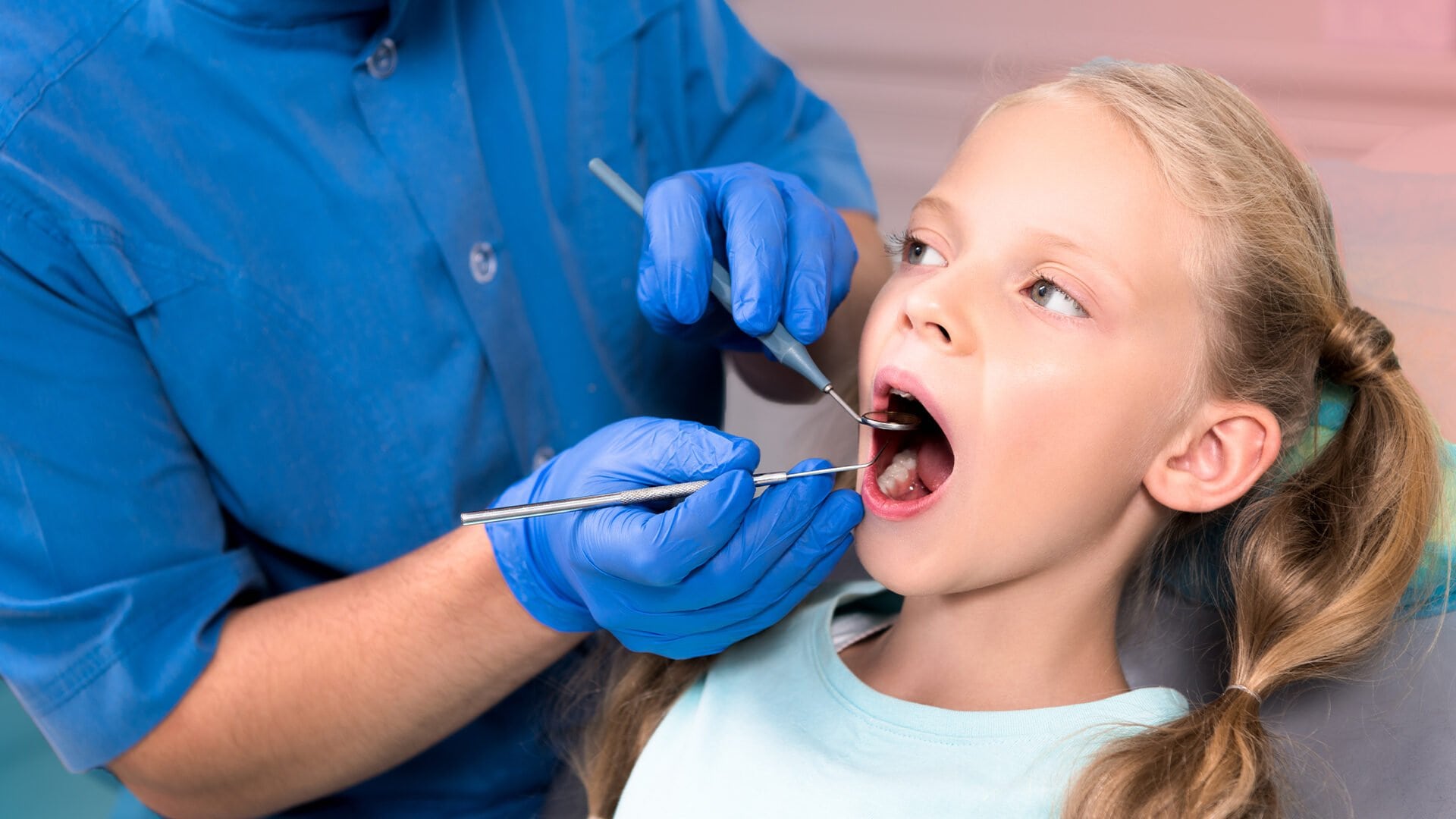

Pediatric dentistry is the dental specialty that manages oral health from the eruption of the first baby tooth through adolescence, built around prevention, monitoring of tooth and jaw development, and age-appropriate behaviour management rather than restorative work alone. Its central target is caries. A meta-analysis of 59,018 children across 29 countries, using WHO diagnostic criteria, put the pooled global prevalence of early childhood caries at 48 percent, 95 percent confidence interval 43 to 53 (PubMed 33735529). Preventive measures have measured effects: resin-based fissure sealants on permanent molars reduced caries by 11 to 51 percent at 24 months across 38 trials and 7,924 children (PubMed 28759120).
- 01Pediatric dentistry covers birth through the teenage years and is organised around prevention, eruption and bite monitoring, dental trauma, oral habits and behaviour management, not only fillings.
- 02Early childhood caries affects roughly half of preschool children: pooled prevalence 48 percent, 95 percent CI 43 to 53, measured with WHO dmft criteria in 59,018 children from 29 countries (PubMed 33735529).
- 03Resin-based fissure sealants on permanent molars reduced occlusal caries by 11 to 51 percent at 24 months, odds ratio 0.12 with 95 percent CI 0.08 to 0.19, across 38 randomised trials and 7,924 children (PubMed 28759120).
- 04Fluoride varnish has a pooled prevented fraction of 43 percent, 95 percent CI 30 to 57, on permanent tooth surfaces and 37 percent, 95 percent CI 24 to 51, on primary tooth surfaces across 22 trials and 12,455 children (PubMed 23846772).
- 05Baby teeth are space maintainers as well as chewing surfaces: they hold the arch length for permanent teeth and guide them into position, which is why early loss is followed by crowding and bite problems.
/ A Complete Guide to Children’s Dental Care, Pediatric Dentists, and Early Oral Health
A child’s smile signals more than happiness; it reflects their overall health and development. While many parents believe that baby teeth are temporary and therefore less important, modern dentistry proves otherwise. Pediatric dentistry plays a critical role in shaping a child’s oral health along with their confidence, comfort, and habits for a lifetime.
Pediatric dentistry, also known as children’s dentistry, is a specialized branch of dental care dedicated entirely to infants, children, and adolescents. From the eruption of the first baby tooth to the transition into adulthood, pediatric dentists focus on prevention, early diagnosis, and child-friendly treatment approaches.
In this comprehensive guide, you will learn:
- What pediatric dentistry is
- What pediatric dentistry covers
- Who a pediatric dentist is and what they do
- Why baby teeth are important
- Common dental problems in children
- Preventive pediatric dental treatments
- How to prevent dental fear in children
- Frequently asked questions parents search online
/ What Is Pediatric Dentistry?
Pediatric dentistry is a dental specialty that focuses on the oral health of children from birth through the teenage years. Dentists who specialize in this field are called pediatric dentists.
Unlike general dentistry, pediatric dentistry is designed specifically for:
- Growing teeth and jaws
- Child psychology and behavior
- Age-appropriate dental treatments
- Preventive care and education
Pediatric dentistry does not only treat dental problems it aims to prevent them before they begin.
/ What Does Pediatric Dentistry Focus On?
Many parents think pediatric dentistry only treats cavities. In reality, pediatric dentistry covers a wide range of oral health concerns, all tailored to a child’s developmental stage.
Areas Pediatric Dentistry Covers
- Baby teeth care and monitoring
- Tooth eruption and alignment tracking
- Children’s cavities and fillings
- Dental trauma from falls or sports
- Gum health in children
- Jaw growth and bite development
- Oral habits such as thumb sucking or pacifier use
- Preventive dental care
- Oral hygiene education for children and parents
Pediatric dental care considers the child’s overall growth, nutrition, speech development, and emotional comfort.
/ Who Is a Pediatric Dentist?
A pediatric dentist is a licensed dentist who has completed additional specialized training focused on children’s oral health.
After dental school, pediatric dentists receive advanced education in:
- Child behavior management
- Growth and development
- Pediatric oral diseases
- Special healthcare needs
- Anxiety and dental fear reduction
This training allows pediatric dentists to create a safe, calm, and positive dental experience for children.
/ What Does a Pediatric Dentist Do?
A pediatric dentist’s role goes far beyond treating teeth. Their responsibilities include prevention, education, early diagnosis, and building trust with young patients.
Responsibilities of a Pediatric Dentist
- Performing a child’s first dental examination
- Monitoring tooth development
- Treating cavities in baby teeth
- Providing pediatric root canal treatments when necessary
- Applying fluoride treatments
- Applying dental sealants (fissure sealants)
- Managing dental injuries
- Educating families on oral hygiene
- Helping children overcome dental fear
The goal is to guide children toward a lifetime of healthy oral habits.
/ Why Are Baby Teeth So Important?
One of the biggest misconceptions in children’s dentistry is that baby teeth do not matter because they will fall out. In reality, baby teeth play a crucial role in a child’s development.
Functions of Baby Teeth
- Enable proper chewing and nutrition
- Support speech and pronunciation development
- Maintain space for permanent teeth
- Guide permanent teeth into correct positions
- Contribute to facial structure and appearance
Early loss of baby teeth can lead to:
- Crooked permanent teeth
- Bite problems
- Jaw development issues
- Speech difficulties
/ Why Are Cavities Common in Children?
Dental cavities are one of the most common chronic diseases in childhood worldwide.
Main Causes of Children’s Cavities
- High sugar consumption
- Frequent snacking
- Inadequate brushing
- Nighttime feeding habits
- Prolonged bottle use
- Irregular dental check-ups
Pediatric dentistry focuses on early intervention and prevention, reducing the risk of long-term damage.
/ Preventive Pediatric Dental Care
Preventive care is the cornerstone of pediatric dental care.
Fluoride Treatments
Fluoride strengthens tooth enamel and increases resistance to cavities. Pediatric dentists apply fluoride in safe, controlled doses.
Dental Sealants (Fissure Sealants)
Sealants protect the deep grooves of molar teeth where cavities commonly form. They cause little to no discomfort and are highly effective.
Oral Hygiene Education
Children and parents receive guidance on:
- Proper brushing techniques
- Age-appropriate toothpaste use
- Flossing habits
- Healthy dietary choices
/ Managing Dental Fear in Children
Fear of the dentist often begins in childhood. Pediatric dentists use specialized techniques to create positive experiences.
Techniques Used in Pediatric Dentistry
- Child-friendly language
- Tell–Show–Do method
- Positive reinforcement
- Calm, colorful environments
- Gradual exposure to procedures
These approaches help children feel safe and confident during dental visits.
/ When Should a Child First Visit the Dentist?
According to international dental guidelines, a child’s first dental visit should occur:
- When the first baby tooth appears
- Or by the child’s first birthday
Early visits allow pediatric dentists to:
- Detect early issues
- Educate parents
- Build familiarity with dental care
/ Pediatric Dentistry for Children with Special Needs
Pediatric dentistry also plays a vital role in caring for children with:
- Autism spectrum disorder
- Developmental delays
- Medical conditions
- Physical disabilities
Pediatric dentists are trained to adapt treatment approaches to meet individual needs safely and compassionately.
/ Frequently Asked Questions (FAQ)
What age does pediatric dentistry cover?
Pediatric dentistry typically covers children from birth to age 13, sometimes into adolescence.
Should cavities in baby teeth be treated?
Yes. Untreated cavities can cause pain, infection, and damage to permanent teeth.
Can children receive root canal treatment?
Yes, pediatric root canal procedures may be performed when necessary to save a baby tooth.
Is fluoride safe for children?
Yes, when applied in appropriate doses by a professional.
How often should children see a pediatric dentist?
Every six months, unless otherwise recommended.
What is the difference between a pediatric dentist and a general dentist?
Pediatric dentists receive specialized training in child development and behavior.
When should brushing begin?
Brushing should start as soon as the first tooth erupts.
Can dental visits prevent orthodontic problems?
Yes, early monitoring can reduce future orthodontic complications.
/ The Long-Term Benefits of Pediatric Dentistry
Children who receive early and consistent pediatric dental care are more likely to:
- Maintain healthy teeth into adulthood
- Avoid dental anxiety
- Develop strong oral hygiene habits
- Require fewer invasive treatments later
Pediatric dentistry is an investment in lifelong oral health .
/ Conclusion: Pediatric Dentistry Shapes Healthy Futures
Pediatric dentistry is far more than treating cavities. It is about guiding children through healthy growth, preventing future dental problems, and building positive relationships with dental care.
By starting early and choosing a qualified pediatric dentist, parents can ensure their children grow up with healthy smiles, strong teeth, and confidence that lasts a lifetime.
Because a healthy smile begins in childhood.
Let’s plan the right treatment together.
Free Assessment→- 1.Uribe SE, Innes N, Maldupa I. The global prevalence of early childhood caries: A systematic review with meta-analysis using the WHO diagnostic criteria. Int J Paediatr Dent 2021;31:817-830. PubMed 33735529
- 2.Ahovuo-Saloranta A, Forss H, Walsh T, Nordblad A, Mäkelä M, Worthington HV. Pit and fissure sealants for preventing dental decay in permanent teeth. Cochrane Database Syst Rev 2017;7:CD001830. PubMed 28759120
- 3.Marinho VC, Worthington HV, Walsh T, Clarkson JE. Fluoride varnishes for preventing dental caries in children and adolescents. Cochrane Database Syst Rev 2013;2013:CD002279. PubMed 23846772