
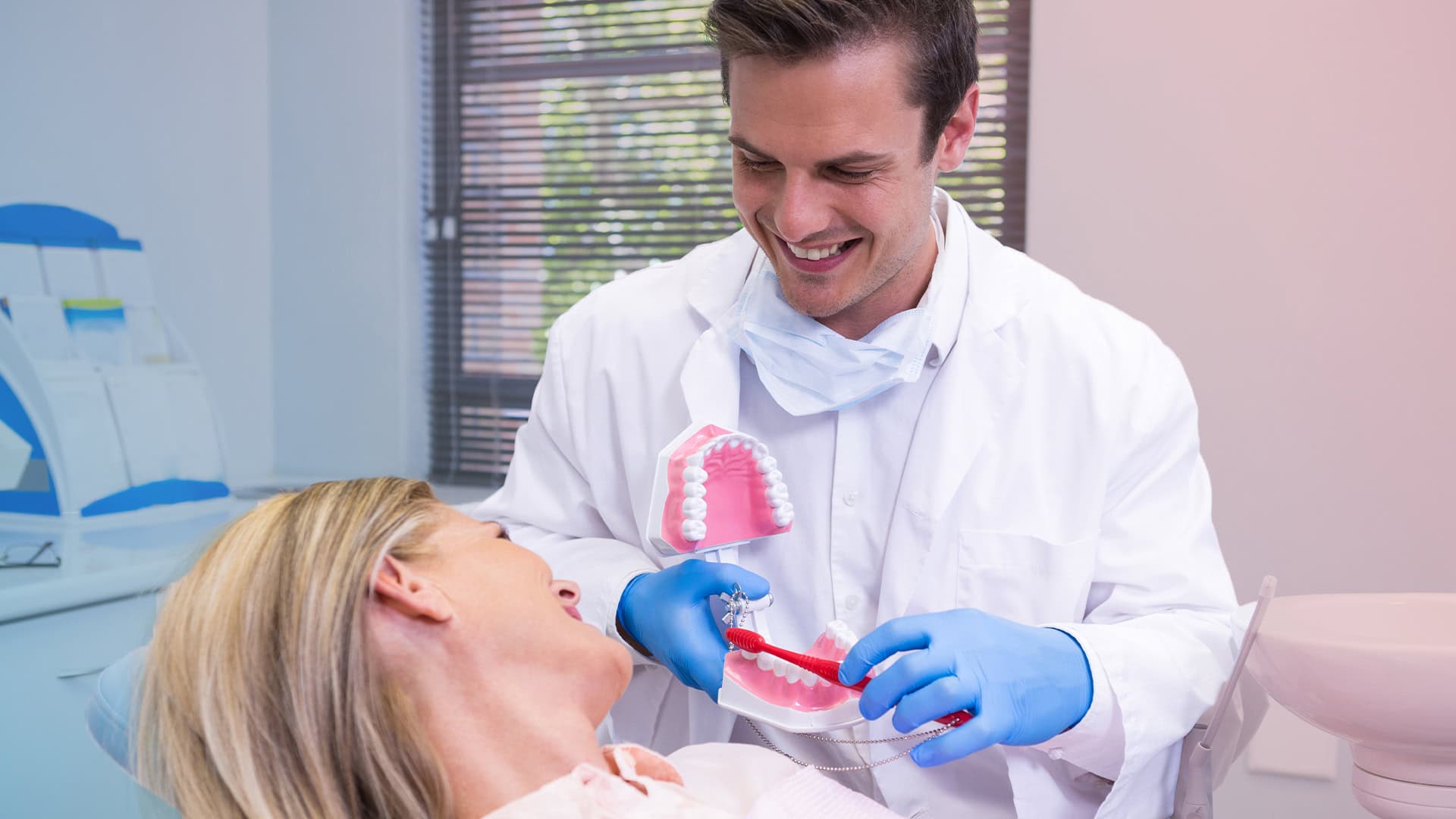
Alveoloplasty is the surgical reshaping and smoothing of the alveolar ridge after extractions or before a prosthesis, so that sharp bone edges and irregular contours do not sit under a denture. It changes bone shape rather than adding bone volume, which is what separates it from grafting. Reshaping matters because the ridge changes on its own: human re-entry studies pooled in a systematic review found 3.79 mm of horizontal and 1.24 mm of buccal vertical bone reduction six months after extraction (PubMed 22211303). The procedure itself usually takes 30 to 90 minutes, and most patients heal within three to four weeks.
- 01Alveoloplasty reshapes existing bone while bone grafting adds volume; the two answer different problems and alveoloplasty is most often done in the same visit as the extractions.
- 02The ridge does not stay still after extraction: pooled human re-entry data show 29% to 63% horizontal and 11% to 22% vertical bone loss at six months, with the fastest change in the first three to six months (PubMed 22211303).
- 03Instrument choice changes the patient experience: in 35 edentulous patients with bilateral bony spicules, piezosurgery alveoloplasty gave lower pain scores on day 2 and better healing index scores on day 7 than the conventional technique (P < 0.05) (PubMed 30693229).
- 04Reported operating time is 30 to 90 minutes depending on how much ridge is reshaped, with suture review usually at one to two weeks and healing in three to four weeks.
- 05Rare complications are documented, including sublingual emphysema after alveoloplasty reported as a single case, which is why instrument selection and flap technique are handled with care (PubMed 33088550).
Alveoloplasty is a common yet often misunderstood dental procedure that plays a crucial role in oral rehabilitation, particularly for patients requiring dentures or undergoing extensive extractions. Whether you're a patient preparing for tooth replacement or a caregiver seeking more information, this comprehensive guide will answer all your questions about alveoloplasty, its purpose, process, cost, and recovery.
/ What is Alveoloplasty?
Alveoloplasty is a surgical procedure that involves the reshaping and smoothing of the jawbone (alveolar ridge) after tooth extractions or before placing dental prosthetics. It ensures that the bone structure is even and contoured, providing a stable foundation for dentures, implants , or other restorations.
/ When is Alveoloplasty Necessary?
1. Following Multiple Tooth Extractions
- To remove sharp edges or bone spurs
- To reshape uneven bone after extractions
2. Before Denture Placement
- To enhance denture fit and comfort
- To prevent sore spots and instability caused by irregular ridges
3. In Conjunction with Oral Surgery
- Often performed simultaneously with tooth extractions
- Saves time and reduces overall recovery
/ Alveoloplasty in Dentistry: Clinical Importance
1. Improved Prosthetic Outcomes
A properly contoured ridge enhances the stability and retention of full or partial dentures.
2. Long-Term Comfort
Smoother bone reduces the risk of soft tissue irritation and pain during chewing or speaking.
3. Facilitates Healing
Well-contoured bone promotes better soft tissue adaptation and speeds up recovery.
4. Management of Alveolar Bone Contours
Shaping the ridge appropriately can help maintain bone height and prevent rapid resorption, particularly important in long-term prosthetic success.
/ Comparison: Alveoloplasty vs Bone Grafting
Purpose
- Alveoloplasty: reshapes and smooths existing bone.
- Bone Grafting: builds up new bone in areas of loss.
Timing
- Alveoloplasty is usually done immediately after extractions.
- Bone grafting may require additional time to heal before prosthetics.
Use Cases
- Alveoloplasty: for denture preparation or minor contouring.
- Bone Grafting: for implant support or severe bone loss correction.
/ Alveoloplasty Dental Codes Explained
CDT Codes Commonly Used:
- D7310 – Alveoloplasty in conjunction with extractions (per quadrant)
- D7320 – Alveoloplasty not in conjunction with extractions (per quadrant)
These dental codes help insurance providers categorize the treatment and determine coverage.
/ What to Expect During the Procedure
1. Anesthesia and Preparation
- Performed under local anesthesia, sedation, or general anesthesia depending on complexity.
2. Surgical Process
- The oral surgeon or dentist reshapes the alveolar bone using surgical instruments or rotary tools.
- Irrigation and suturing are performed as needed.
3. Duration
- Generally completed in 30–90 minutes, depending on the extent of reshaping.
/ Does Alveoloplasty Hurt?
Most patients report mild to moderate discomfort, similar to that of a routine tooth extraction. Pain is usually manageable with prescribed or over-the-counter medications. Swelling and minor bleeding may occur for a few days.
/ Alveoloplasty Recovery and Aftercare
1. Initial Healing
- Avoid chewing on the surgical site for a few days.
- Follow your dentist’s instructions on cleaning and medications.
2. Follow-Up Appointments
- Stitch removal or evaluation of healing typically occurs within 1–2 weeks.
3. Full Recovery Timeline
- Most patients heal within 3–4 weeks, but it can vary based on age, health, and surgical extent.
4. Diet and Activity Guidelines
- Stick to a soft diet (soups, mashed foods) for the first few days.
- Avoid strenuous activities that could increase bleeding or delay healing.
- Stay hydrated and avoid smoking, which can slow recovery.
/ Risks and Complications
1. Common Side Effects
- Temporary pain, swelling, bruising
2. Rare Complications
- Infection
- Nerve damage (if near sensory nerves)
- Delayed healing in smokers or diabetic patients
/ Is Alveoloplasty Necessary for Dentures?
Yes, in many cases. If the alveolar ridge is uneven or has sharp bony projections, dentures may not sit properly. Alveoloplasty provides the necessary adjustment to enhance function, fit, and comfort.
/ Alveoloplasty and Dental Tourism
Popular Destinations
- Turkey has become a global hub for affordable, high-quality dental care, combining advanced treatments with the warm hospitality and expertise that international patients trust.
Combined Procedures
- Alveoloplasty is often included in full-mouth restoration packages.
Considerations
- Verify clinic accreditations, doctor qualifications, and follow-up care policies.
/ Alveoloplasty Cost and Insurance Coverage
1. Average Cost
- Typically ranges from $300–$1,000 per quadrant
- Cost varies depending on complexity and location
2. Insurance
- Often covered if medically necessary or linked to extractions
- CDT codes (D7310, D7320) help validate coverage
3. Financial Planning and Assistance
- Some clinics offer payment plans or third-party financing options.
- Ask your provider about coverage limitations, pre-authorizations, and estimated out-of-pocket expenses.
/ Success Rate and Long-Term Outcomes
- Alveoloplasty has a high success rate when performed by experienced clinicians.
- Patients report better denture fit and fewer complications during healing.
- Proper post-op care improves long-term oral health and prosthetic results.
/ FAQs About Alveoloplasty
What is alveoloplasty?
A procedure to reshape and smooth the jawbone after tooth extractions or in preparation for dentures.
Is alveoloplasty painful?
Mild to moderate discomfort is normal, but pain is manageable.
Do I need alveoloplasty before getting dentures?
Yes, if your bone ridge is irregular or has sharp areas that would affect denture stability.
What’s the difference between alveoloplasty with or without extractions?
Performed either at the time of tooth removal or separately, depending on timing and treatment goals.
Alveoloplasty may not be as widely discussed as implants or veneers, but it is a foundational procedure in many dental restorations. By preparing the jaw for dentures or implants, it ensures a comfortable and functional result. If you’re planning tooth extractions or considering dentures, talk to your dentist about whether alveoloplasty is right for you.
Let’s plan the right treatment together.
Free Assessment→- 1.Tan WL, Wong TL, Wong MC, Lang NP. A systematic review of post-extractional alveolar hard and soft tissue dimensional changes in humans. Clin Oral Implants Res 2012;23 Suppl 5:1-21. PubMed 22211303
- 2.Gangwani KD, Shetty L, Kulkarni D, Seshagiri R, Chopra R. Piezosurgery Versus Conventional Method Alveoloplasty. Ann Maxillofac Surg 2018;8:181-187. PubMed 30693229
- 3.Dodge A, Kreh K, Kofina V, Rawal SY. Sublingual emphysema following alveoloplasty: A case report. Clin Case Rep 2020;8:2051-2054. PubMed 33088550